How much does a new bathroom suite cost in the UK?
 By Tom Ellis
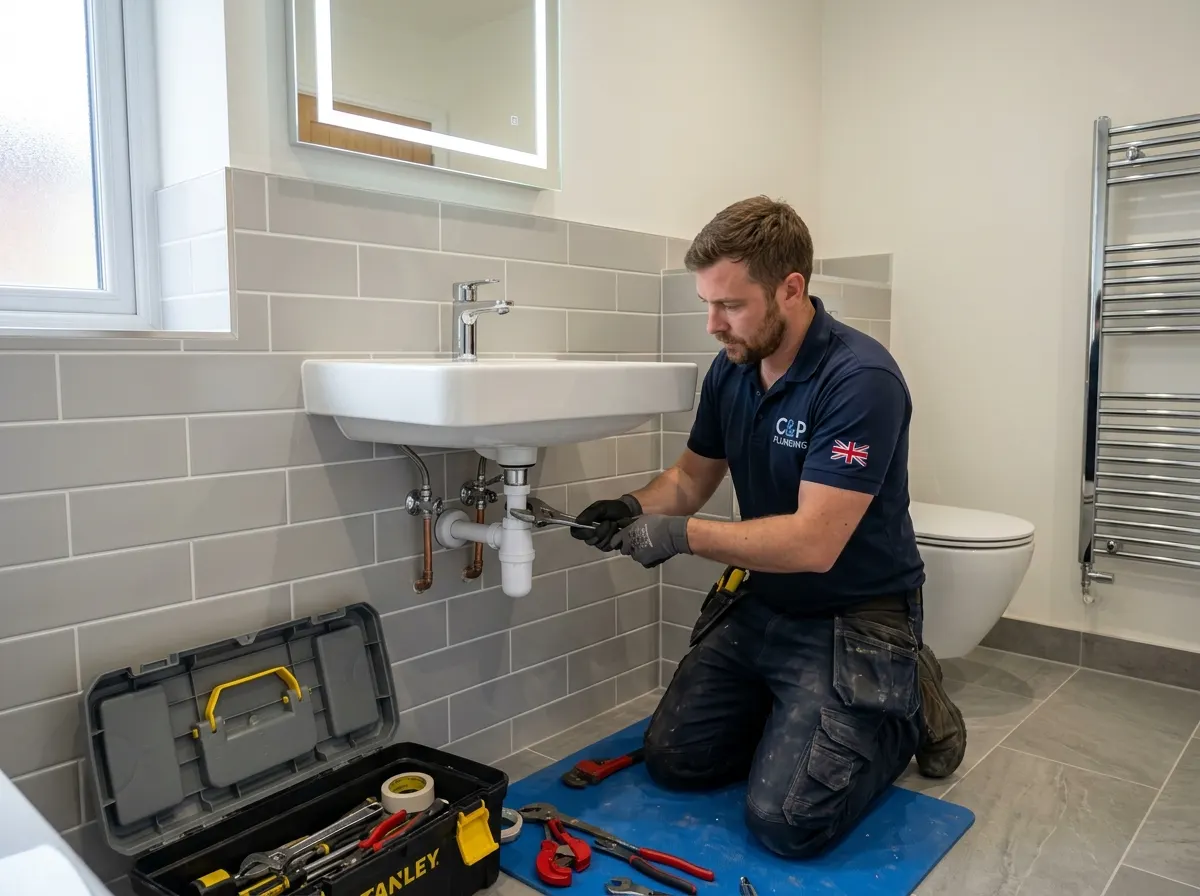
Fitting a new bathroom suite is the smartest way to refresh a tired bathroom without the massive expense and disruption of a full, back-to-brick renovation. By swapping out the sanitaryware (the bath, toilet, and basin) and updating the brassware, you can completely modernise the space.
A new suite typically costs between £1,000 and £5,000 fully fitted in the UK for 2026. The two biggest factors dictating your final bill are the quality of the ceramic fixtures you choose, and whether you are keeping the new suite in the exact same positions as the old one. "Like-for-like" swaps require minimal plumbing labour, keeping costs strictly controlled.
~£1,000
Basic specification. Supplying and fitting a standard acrylic bath, pedestal basin, and close-coupled toilet as a direct swap in their existing plumbing locations.
~£2,500
Mid-range finish. Upgrading to a vanity unit basin, a modern back-to-wall toilet, a reinforced bath, and new thermostatic mixer showers. Includes minor pipework adjustments.
£5,000+
High-end specification. Luxury freestanding stone bath, wall-hung rimless toilet with concealed cistern, premium brushed-brass taps, and extensive pipework rerouting.
Get an instant estimate for your bathroom suite
Types of Bathroom Suites
The style of sanitaryware you select alters the supply cost and determines how much structural woodwork the plumber has to do to fit it.
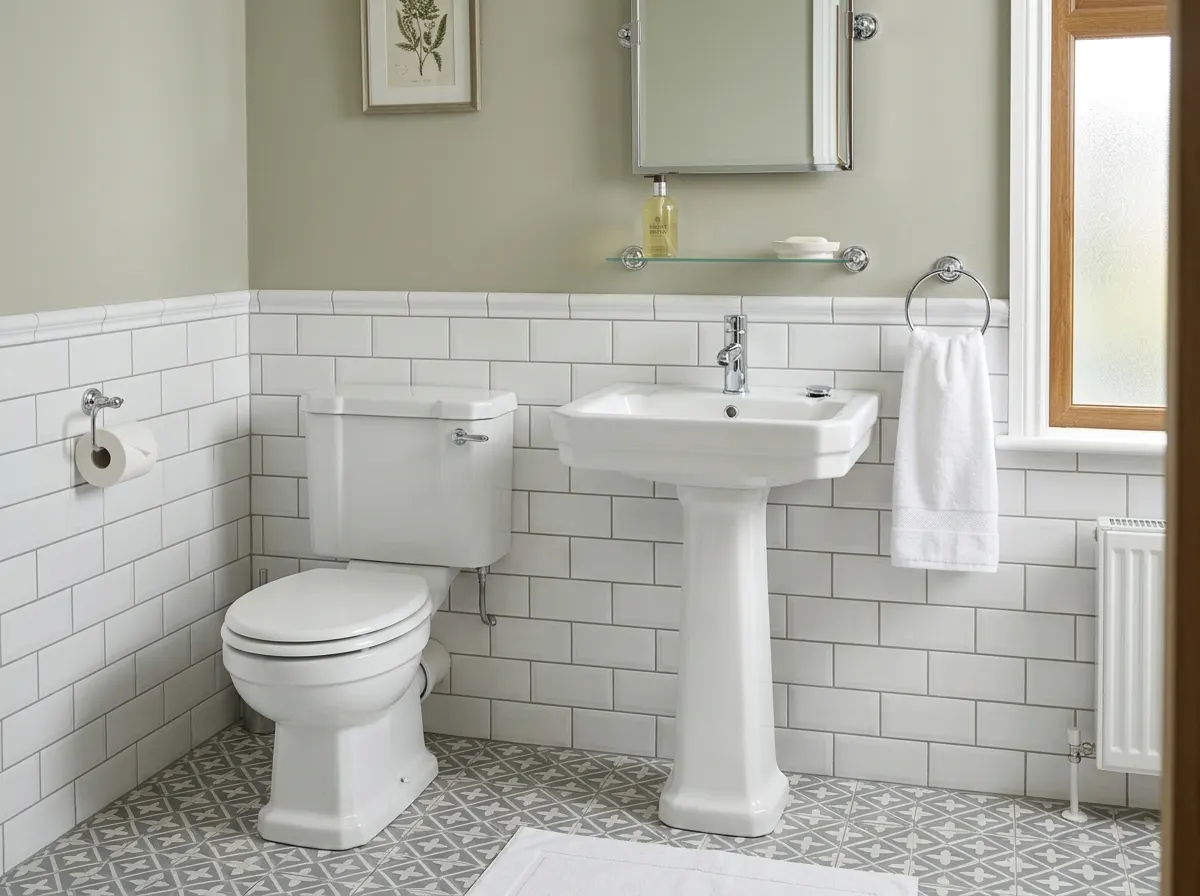
Standard / Close-Coupled
The traditional UK setup. The toilet cistern sits directly on the bowl, and the basin sits on a ceramic pedestal. Because all the pipework is exposed or housed within the ceramics themselves, plumbers can fit these incredibly quickly with no carpentry required.
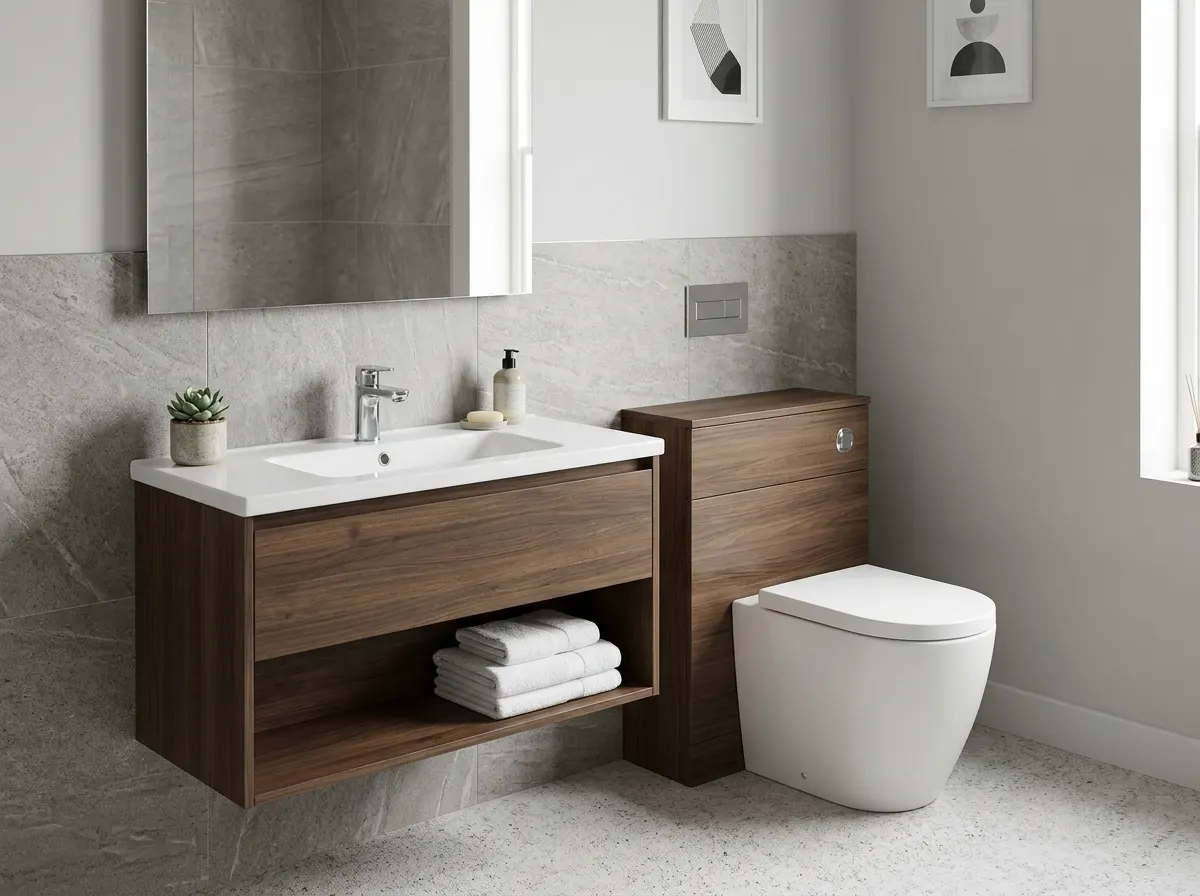
Fitted Furniture (Vanity)
The toilet cistern is hidden inside a wooden unit (back-to-wall), and the basin sits atop a storage cabinet. This provides excellent storage and hides ugly plastic pipework. It takes slightly longer to fit, as the cabinets must be built and scribed to the wall.
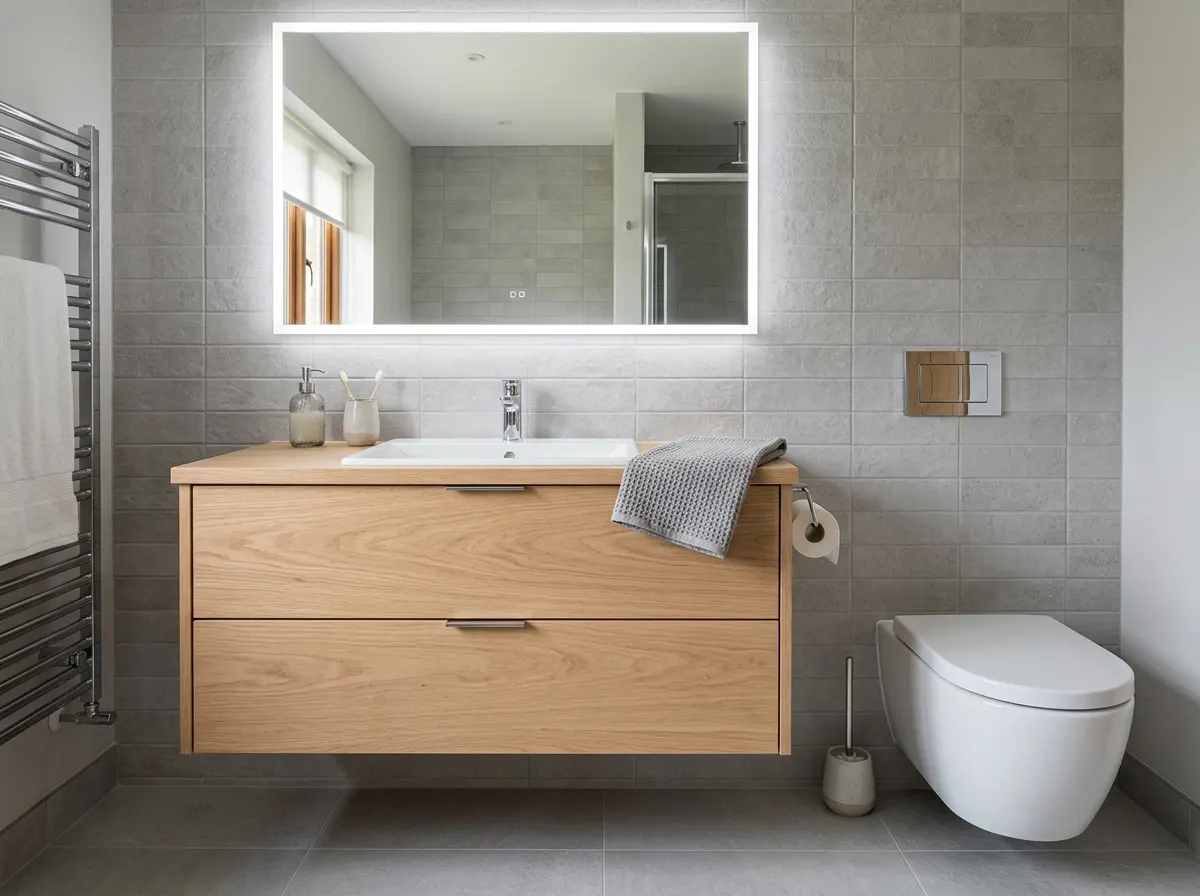
Wall-Hung / Concealed
The ultimate modern aesthetic. The toilet and basin float off the floor, making cleaning effortless. However, the plumber must build and secure heavy steel framing (Geberit frames) inside the wall cavity to hold the weight, drastically increasing labour and tiling work.
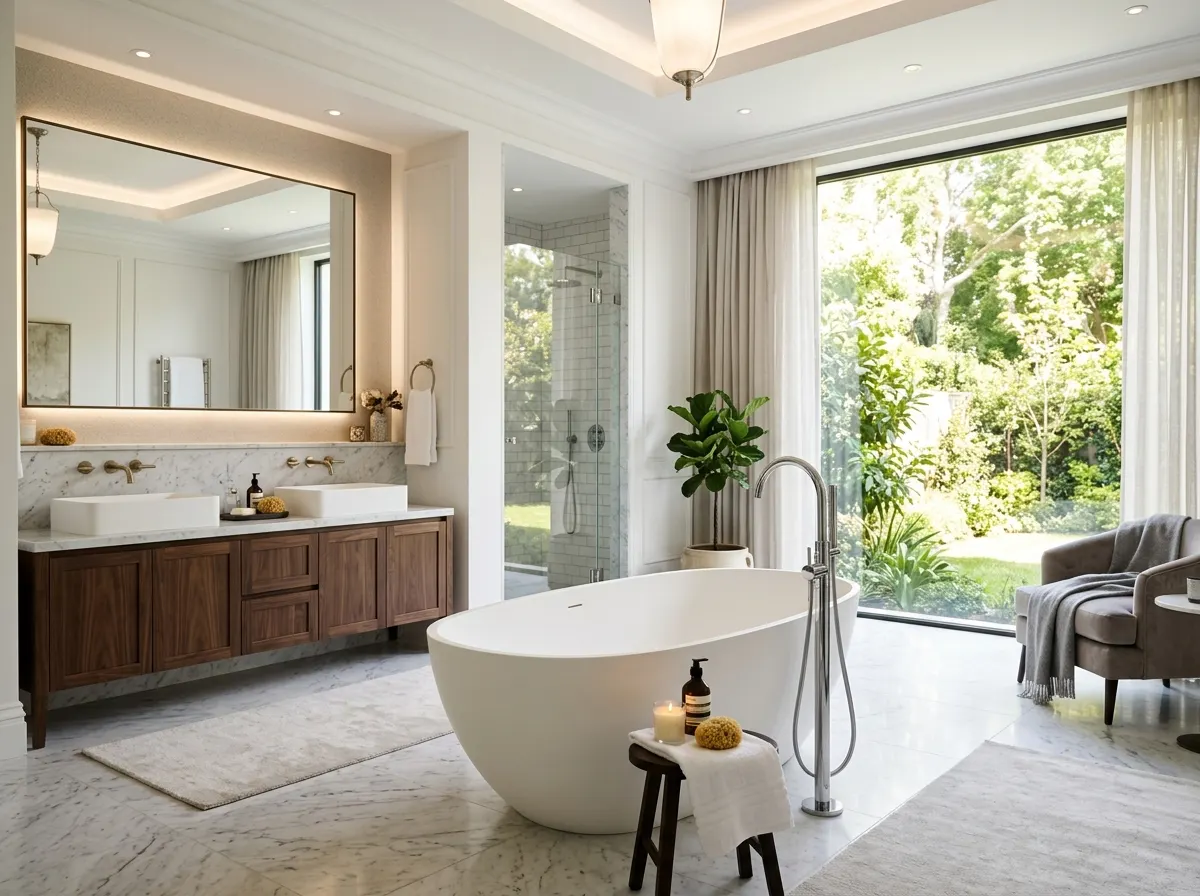
Luxury Freestanding
Features a statement standalone bathtub (often stone resin or cast iron) positioned away from the walls. Requires the floor to be taken up to route the waste pipe and hot/cold feeds specifically to the centre of the room, often requiring floor-mounted brassware.
Component Breakdown
The table below breaks down the typical UK supply cost for individual fixtures in 2026. Keep in mind that designer brands (like Laufen, Crosswater, or Burlington) will push these figures into the premium bracket.
| Component | Budget (Trade Brand) | Mid-Range | Premium (Designer) |
|---|---|---|---|
| Toilet (Pan, Cistern, Seat) | £100 – £200 | £200 – £400 | £500 – £900+ |
| Basin (Pedestal or Small Vanity) | £100 – £150 | £250 – £500 | £600 – £1,200+ |
| Standard Bath (Acrylic, no panels) | £150 – £300 | £300 – £600 | N/A |
| Freestanding Bath (Acrylic/Stone) | £500 – £800 | £800 – £1,500 | £2,000 – £4,000+ |
| Brassware (Basin & Bath Taps) | £50 – £100 | £150 – £300 | £400 – £800+ |
| Plumbing Consumables | Always budget £100 - £150 for hidden parts (wastes, traps, copper pipe, isolation valves, silicone). | ||
Sustainable & Ethical Choices
Upgrading an old bathroom suite is an excellent opportunity to drastically reduce your home's water and energy consumption.
Low-Flow & Dual Flush
Old toilets use up to 9 litres per flush. Modern dual-flush systems use just 4.5L or 3L, saving thousands of litres a year. Similarly, specifying taps with aerators mixes air into the flow, maintaining high pressure while cutting water usage by up to 50%.
Brassware Recycling
Old taps and copper pipes are highly valuable scrap metal. Check that your plumber responsibly recycles the heavy brassware from your old suite at a metal merchant, rather than throwing it into general landfill.
How long does a suite swap take?
Unlike a full bathroom renovation which takes weeks, a suite swap is highly targeted and rapid.
-
1
Like-For-Like (1 - 2 Days)
If the new bath, basin, and toilet are going into the exact same positions, the plumber does not need to alter the floorboards or soil pipe. The old suite is removed, isolation valves are fitted, and the new ceramics are connected and sealed instantly.
-
2
Minor Layout Changes (3 - 5 Days)
If you decide to swap the bath and the basin around, the plumber must pull up the floorboards, reroute the hot/cold feeds, and crucially, alter the thick plastic waste pipes to ensure gravity drainage. This often triggers a need for patching the floor or walls.
Plumbing Labour Rates
Most plumbers charge a day rate for a suite replacement rather than a fixed price, as removing old plumbing can uncover unexpected leaks or seized joints.
Red flags to watch out for
A poorly fitted bathroom suite will inevitably leak, causing catastrophic ceiling damage to the rooms below. Watch out for these issues:
Unbranded Internet Suites
Buying ultra-cheap, unbranded suites off the internet is a false economy. They often arrive with missing parts, non-standard European thread sizes that don't fit UK pipework, and paper-thin acrylic baths that creak and crack when stood in.
Ignoring Isolation Valves
A good plumber will install quarter-turn isolation valves on the hot and cold feeds to the basin, bath, and toilet. This means if a tap leaks in the future, you can isolate it with a screwdriver rather than shutting off the entire house's water supply.
Poor Silicone Sealing
A bath must be filled with water before the silicone sealant is applied around the edges. The weight of the water pulls the bath down to its lowest point. If sealed empty, the seal will instantly rip the first time someone takes a bath, causing a leak.
Can you DIY a suite swap?
Replacing a suite requires intermediate plumbing knowledge. While modern push-fit plastic pipes have made it easier, getting the waste fall correct and ensuring watertight seals is unforgiving work.
What you CAN DIY:
- ✓ Replacing Taps: If you have isolation valves fitted, shutting off the water and swapping a tired basin tap with an adjustable wrench is a quick 30-minute DIY job.
- ✓ Building Vanity Units: Many vanity units arrive flat-packed. Assembling the wooden cabinets yourself before the plumber arrives saves them time and saves you money.
Strictly Pro Only
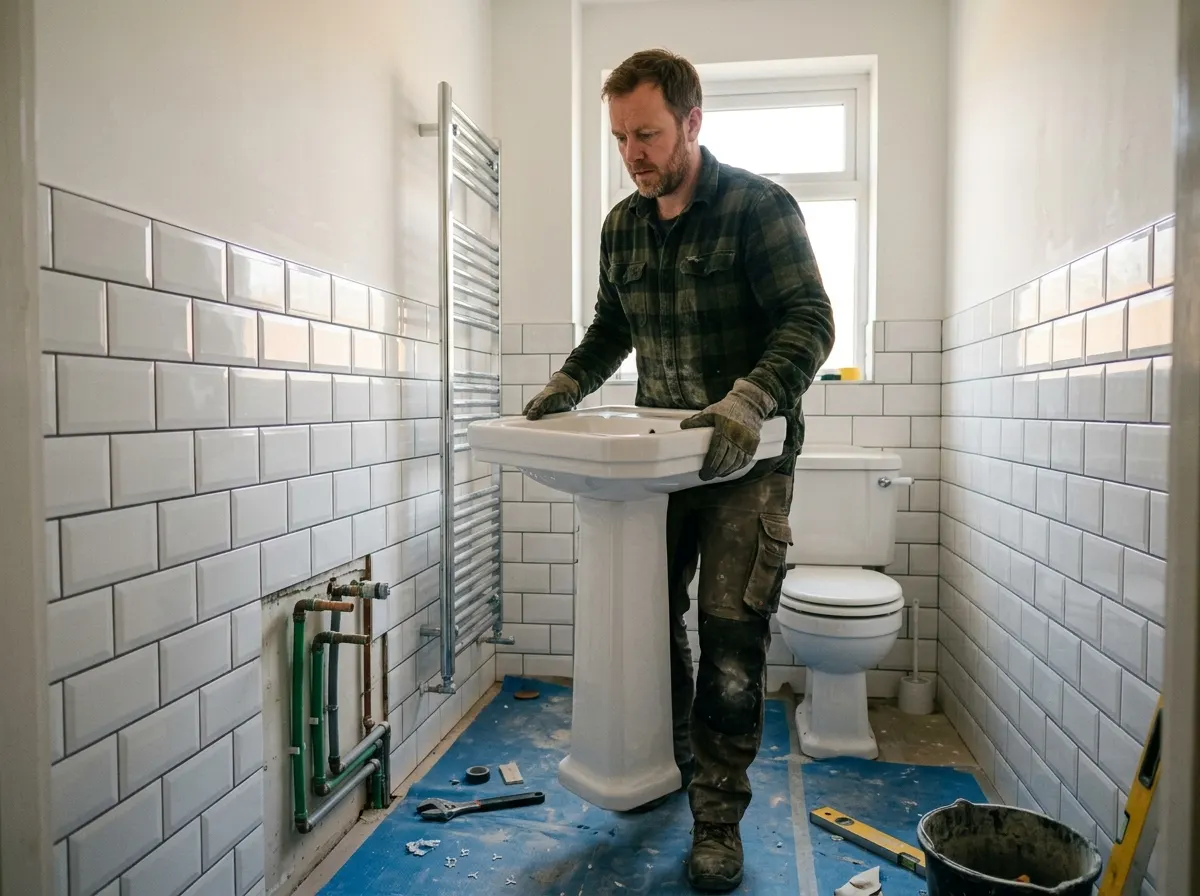
Do not attempt to fit a new bath yourself. Baths are heavy, awkward, and must be perfectly levelled on their legs. If the waste trap is fitted incorrectly beneath the bath, it will drip silently under the floorboards for months before causing a catastrophic ceiling collapse below.
Frequently Asked Questions
How much does it typically cost to fit a bathroom suite in 2026?
For a standard like-for-like bathroom suite installation in the UK, expect to pay between £500 and £1,000 for labour alone. If the job requires re-routing pipework, installing new tile backer boards, or updating flooring, labour costs generally range from £1,500 to £3,000+ depending on complexity.
How long does it take to fit a bathroom suite?
A straight like-for-like replacement (where no pipes move) takes 1-2 days for a professional plumber. If plumbing needs rerouting, or if wall patching and tiling is required after the old suite comes out, allow 3-5 days.
What is the difference between a suite replacement and a renovation?
A suite replacement only updates the sanitaryware (bath, toilet, basin) and taps. A full bathroom renovation involves stripping the room to the brick, re-plastering, fully re-tiling, fitting new floors, and altering the lighting circuits.
Will any new bathroom suite work with my current water pressure?
Not always. If you have a gravity-fed water system (a hot water cylinder and a cold water tank in the loft), you have low pressure. You must ensure your new taps and shower mixer are specifically rated for low pressure (usually 0.1 to 0.2 bar), or factor in the cost of adding a shower pump.
Can I move my toilet, bath, or basin to a different wall?
Moving sanitaryware is entirely possible but increases costs. Relocating a basin or bath is usually straightforward as the waste pipes are small (32-40mm). Moving a toilet is much harder because it requires altering the large 110mm soil pipe, which depends heavily on your floor joist direction and the location of the external soil stack.
Should I supply the suite or let the plumber buy it?
If you supply it, you control the budget and style perfectly. However, if a part is missing or faulty, you are responsible for paying the plumber for their wasted time. If the plumber supplies it (often using trade discounts), they take responsibility for ensuring all fittings are correct and handling any faulty parts.
Can I replace my existing bath with a walk-in shower?
Yes, removing a bath to install a large shower enclosure or wet-room tray is a very common upgrade. Keep in mind that a shower tray has a different footprint than a bath, so you will likely need to adjust the waste pipework beneath the floor and replace the wall tiles where the bath previously sat.
Can I keep my old tiles when replacing a suite?
Yes, but only if the new suite has the exact same (or slightly larger) footprint as the old one. If your new basin pedestal or toilet cistern is narrower or shorter than the old ones, it will expose untiled, bare plaster behind it that will need to be patched.
Ready to refresh your bathroom?
Use our AI to get a precise estimate based on your chosen suite and plumbing layout, then connect with Pricing Penguin Accredited plumbers near you.
Did you find this page helpful?
Let us know if this guide helped you plan your project.