How to handle non-paying customers and recover unpaid invoices.
 By Tom Ellis
Nothing drains the life out of a trade business faster than a customer who refuses to pay upon completion. Cash flow is the oxygen of your company; when an invoice goes unpaid for weeks, it threatens your ability to pay your suppliers, cover material costs, and pay yourself.
Many UK tradespeople make the critical mistake of handling late payers informally or, worse, taking the law into their own hands by entering a property to repossess materials (which can land you in serious legal trouble). Under UK law, you have powerful statutory rights, late payment compensation entitlements, and clear legal frameworks to recover your money. This guide breaks down what to do, what your rights are, and how to bulletproof your contracts so it never happens again.
Statutory Rights
Understanding the Late Payment of Commercial Debts (Interest) Act 1998 and statutory interest charges you can legally add to overdue bills.
The Recovery Process
From formal Letters Before Action (LBA) to filing a claim through HM Courts & Tribunals Service (Money Claim Online).
Prevention & Contracts
Setting up staged payments, retention clauses, and clear terms of business so you never get caught out by bad payers again.
The Step-by-Step Recovery Timeline
When an invoice hits its due date and remains unpaid, escalate your response in a controlled, professional, and legally sound manner.
The Friendly Reminder
Often, late payment is an oversight rather than malicious intent. Send a polite, automated text message or email statement:
"Hi [Name], just checking if you received the final invoice for the bathroom installation? It was due on [Date]. Let me know if you need it resent!"
Keep it light and professional.
Formal Overdue Notice
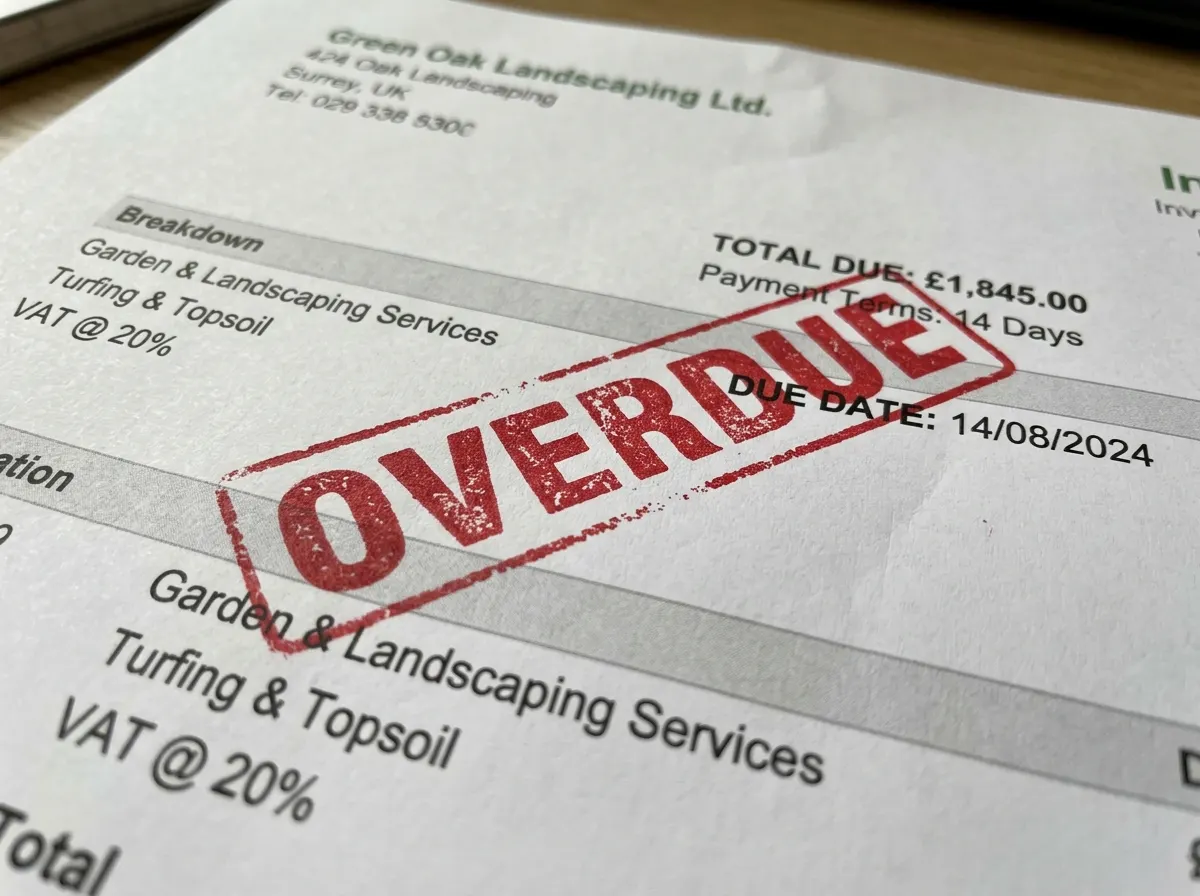
If reminders are ignored, switch to a firmer tone. Send a formal statement marked OVERDUE. State clearly that payment is now past its terms. Remind them of the agreed completion date and attach copies of all signed job sheets or correspondence confirming satisfaction with the work.
Letter Before Action (LBA)
This is your final formal warning before taking legal action. A Letter Before Action states that if payment is not received within 14 days, you will initiate proceedings through the County Court. Letters issued with legal formality prompt payment in over 80% of cases.
Your Legal Rights: Adding Late Fees & Interest
Did you know you don't just have to sit and wait for your money? UK law gives you the right to charge compensation and interest on overdue invoices.
Commercial Customers (B2B)
If you did work for a business, shop, or landlord, you are protected by the Late Payment of Commercial Debts (Interest) Act 1998. You can legally charge statutory interest at 8% over the Bank of England base rate, plus a fixed debt-recovery sum between £40 and £100 depending on the size of the invoice.
Residential Customers (B2C)
For domestic homeowners, you cannot charge commercial statutory interest unless it was explicitly written into your Terms of Business agreed upon before work started. This is why having a signed contract with clear late payment clauses is vital for protecting your cash flow.
Stop dealing with bad payers.
Join the Pricing Penguin network. Our platform ensures clear pricing, transparent terms, and pre-qualified homeowners who respect professional trade agreements.
Red Flags: What You Must NEVER Do
When anger takes over, tradespeople sometimes make illegal moves that turn them from the victim into the offender in the eyes of the law.
Entering Property to Take Back Materials
If you installed a boiler or laid a patio and the customer hasn't paid, you cannot simply let yourself into their house or garden to rip it out. Once materials are fixed to a property, entering without permission is considered trespass or criminal damage. Let the courts handle recovery.
Harassment and Abuse
Constantly calling a client 20 times a day, standing outside their house shouting, or posting abusive comments on their personal social media pages constitutes harassment under the Protection from Harassment Act 1997. It gives the client legal grounds to report you to the police.
Withholding Keys or Locking Doors
If you are working inside a property and refuse to give the house keys back to the owner because they haven't paid your interim bill, you can be charged with unlawful imprisonment or prevention of access. Always stay within civil law boundaries.
Threatening Physical Action
Never make veiled threats about damaging their property or vehicle ("I know where your car is parked"). One text message containing a perceived threat can be used by their solicitor to completely wipe out your invoice claim and ruin your reputation.
Going to Court: Money Claim Online (MCOL)
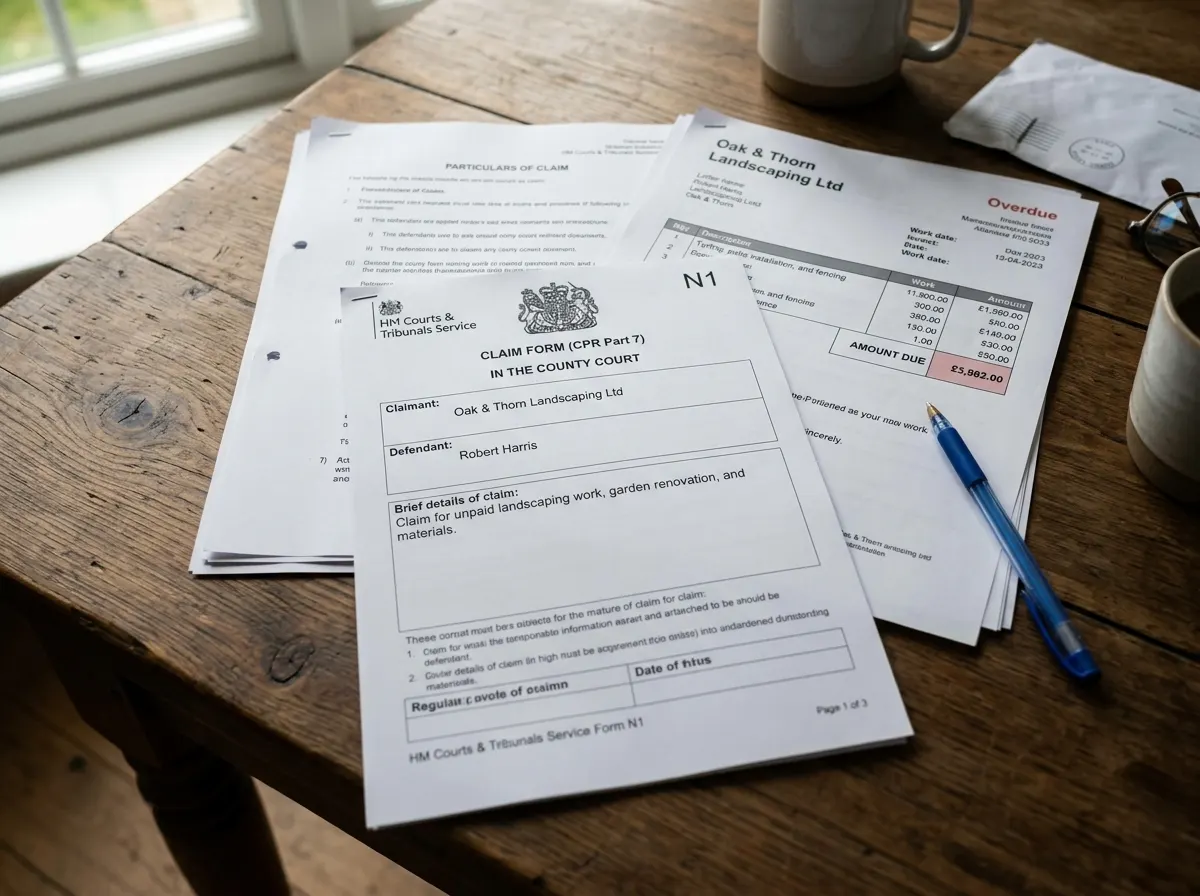
If your Letter Before Action expires and the customer still ignores you, your formal legal remedy is the Small Claims Court, handled online via HM Courts & Tribunals Service (Money Claim Online).
How it works:
- ✓ Low Cost: For claims under £10,000, court fees are relatively low and scale based on the debt amount. You can legally add these court fees directly onto the total debt claimed from the customer.
- ✓ No Solicitor Needed: The small claims track is designed so everyday people and sole traders can represent themselves without paying expensive solicitor fees.
- ✓ CCJ Enforcement: If the judge rules in your favour and the customer still refuses to pay, you obtain a County Court Judgment (CCJ). You can then send High Court Enforcement Officers (bailiffs) to recover the debt directly from their assets.
Prevention: How to Stop Bad Payers Before They Start
The easiest debt to recover is the debt you never allowed to happen in the first place. Implement these three rules on every single job.
1. Staged Payments
Never finance a massive job out of your own pocket. For any project lasting longer than a week, structure your payments in stages: e.g., 30% deposit upfront for materials, 40% midway through installation, and 30% final sign-off upon completion. If they refuse staged payments, walk away.
2. Signed Terms of Business
Never start work on a verbal handshake. Always send a formal digital quote that includes your Terms of Business, explicitly outlining your payment terms (e.g., "Payment due strictly within 7 days of invoice"), your late fee policy, and your right to suspend work if interim payments are missed. Have them sign it digitally.
3. Daily Sign-off Sheets
The oldest trick in the book for bad payers is claiming at the very end: "I'm not happy with the work, so I'm not paying." Defeat this by getting the client to sign a quick digital or paper sign-off sheet at the end of each major milestone confirming they are satisfied with the progress so far.
The "Bulletproof" Quote Footer
A written quote is a legally binding contract once accepted by the customer. To protect your cash flow and give yourself real legal leverage against non-payers, you must include specific clauses at the bottom of your quotes before the job starts.
- ✓ Payment Windows: Clearly state when the final invoice is due (e.g., strictly within 7 days of completion).
- ✓ Late Interest: Set the expectation that ignoring an overdue invoice will incur statutory daily charges.
- ✓ Retention of Title: Legally state that all materials remain your physical property until they are paid for in full.
Legal Disclaimer
The template provided is a structural example of standard trade practices. You should always have your Terms of Business drafted or reviewed by a qualified UK solicitor to ensure they fully comply with the Consumer Rights Act 2015.
Example Terms (Copy & Paste to Quotes)
Terms of Business & Payment Agreement
1. Acceptance: By signing below or instructing us to commence work based on this quotation, you agree to these Terms of Business.
2. Payment: A [XX]% deposit is required to secure the booking. The final balance is due strictly within 7 days of the final invoice date upon practical completion.
3. Late Payment: We reserve the right to charge statutory interest on all overdue balances at a rate of 8% plus the Bank of England base rate, calculated daily, alongside fixed debt recovery compensation.
4. Retention of Title: Legal and beneficial ownership of all materials supplied remains entirely with [Your Company Name] until the invoice is paid in full. We reserve the right to recover uninstalled materials if payment is not received.
I confirm I have read, understood, and agree to the quotation and terms stated above.
Customer Signature:
Date:
Frequently Asked Questions
Can I legally turn off or remove equipment I installed if they don't pay?
If the equipment (like a boiler or security system) has been fully installed and wired into the property, removing it without a court order can be treated as criminal damage or trespass. However, if the items are unattached and merely sitting on-site, check your contract's "Retention of Title" clause, which states that materials remain your property until paid for in full.
How long do I have to take a non-paying customer to court?
Under the Limitation Act 1980, you have up to 6 years from the date the invoice became due to launch a legal claim in the County Court for breach of contract. However, you should never wait that long—evidence fades, and customers can move house or become insolvent.
What is a Retention of Title clause?
A Retention of Title (RoT) clause is a legal statement in your terms of business specifying that ownership of all supplied materials remains with your company until the customer pays the invoice in full. This gives you stronger legal standing to reclaim uninstalled materials if payment falls through.
Can I name and shame a non-paying customer on social media?
No. Naming and shaming a bad payer on local Facebook community groups is highly risky. It can lead to the customer suing you for defamation or breaching GDPR data protection laws. Even if they genuinely owe you money, a public dispute looks unprofessional to future clients and gives the debtor legal leverage against you. Always stick to the formal debt recovery process.
What if a customer refuses to pay by claiming the work is poor quality?
This is a common tactic to delay payment. If a customer raises a dispute over the quality of the trade work (snagging), ask them to detail the specific issues in writing. Offer a practical timeline to inspect and rectify any genuine faults. If the work meets industry standards and they still refuse to pay, you can proceed with a County Court claim, using your daily sign-off sheets and time-stamped completion photos as solid evidence.
Can I charge for the time I spend chasing an unpaid invoice?
If your customer is a commercial business (B2B), the Late Payment of Commercial Debts Act allows you to claim a fixed sum (between £40 and £100) specifically to cover the administrative cost of recovering the debt. For residential homeowners (B2C), you can only charge late payment administration fees if they were clearly stated and agreed upon in your signed terms of business before the work commenced.
Should I hire a debt collection agency?
For stubborn residential debts over £1,000, professional debt recovery agencies or solicitors specialising in trade disputes can be very effective. Many operate on a "no win, no fee" or commission basis (usually taking 10% to 20%), saving you the headache of dealing with the client personally.
Ready to fill your diary with quality jobs?
Connect with serious homeowners who value reliability over the absolute cheapest quote. Join our network of accredited UK tradespeople today and let our AI estimators filter out the time-wasters for you.
Did you find this guide helpful?
Let us know if these legal tips will help protect your trade business.