Tax advantages and allowances for trade businesses.
 By Tom Ellis
Important Legal & Financial Disclaimer
The information provided on this page is for general educational and informational purposes only and does not constitute formal financial, tax, or legal advice. UK tax law is complex, subject to frequent change by HMRC, and applies differently depending on your specific business structure (Sole Trader vs. Limited Company). You should always consult a qualified, registered accountant before claiming any tax allowances or restructuring your business finances. Pricing Penguin accepts no liability for decisions made based on this content.
Too many tradespeople hand over thousands of pounds in unnecessary tax every year simply because they do not know what they are legally entitled to claim. HMRC provides specific frameworks designed to encourage businesses to invest in better tools, safer vans, and modern machinery.
From the permanent £1 million Annual Investment Allowance to specific uniform rebates for your labourers, understanding these mechanisms is the easiest way to improve your bottom line without having to win a single new quote. Here is a breakdown of the active tax advantages currently available to UK trades in 2026.
Writing Off Major Equipment
When you buy a long-lasting asset (a commercial van, a digger, a scaffold tower), you cannot simply put it down as an everyday expense like a bag of cement. You must use Capital Allowances to deduct the cost from your tax bill. HMRC currently offers two massive incentives.
Annual Investment Allowance (AIA)
The AIA allows you to deduct 100% of the cost of qualifying plant and machinery from your profits before tax is calculated, up to a massive limit.
- ✓ Who gets it: Sole Traders, Partnerships, and Ltd Companies.
- ✓ What it covers: Commercial vans, heavy plant, power tools, workshop machinery.
- ✓ Condition: Can be used for brand new OR second-hand equipment.
Full Expensing
Introduced to encourage major corporate investment, Full Expensing also offers a 100% first-year deduction, but without the £1 million cap of the AIA. However, the rules are much stricter.
- ✓ Who gets it: Limited Companies ONLY (No sole traders).
- ✓ What it covers: Plant and machinery (including commercial vans).
- ✗ Condition: Must be strictly BRAND NEW and unused. Second-hand vans do not qualify.
Which should you use?
For 99% of trade businesses, your total equipment purchases will fall well under the £1 million limit. Therefore, your accountant will almost always use the AIA, as it is more flexible and allows you to claim 100% tax relief on second-hand vans and used heavy plant.
Stop paying for dead leads.
Join the Pricing Penguin network. We provide UK tradespeople with high-intent, pre-qualified customers who already understand the true cost of quality craftsmanship.
The 2025 Double-Cab Pick-Up Tax Trap
HMRC has fundamentally changed how trade vehicles are taxed. Getting your vehicle type wrong today will cost you thousands of pounds in personal Benefit-in-Kind (BiK) tax.
Double Cab Pick-Ups Are Now "Cars"
Historically, double-cab pick-ups (like the Ford Ranger or Toyota Hilux) were treated as commercial vans, meaning you paid a very low, flat-rate BiK tax for private use. This changed on 6 April 2025.
HMRC now strictly classifies double-cab pick-ups as company cars. Because they are heavy diesel vehicles with high CO2 emissions, they attract the maximum 37% BiK tax rate.
Financial Impact: If you buy a £45,000 double-cab pick-up today through a Ltd company, you could personally face an income tax bill of over £6,600 a year for driving it. Furthermore, you can no longer claim the 100% AIA on them.
Genuine Commercial 4x4s & Single Cabs
To retain the massive tax advantages of a commercial vehicle (100% AIA write-off and low flat-rate BiK), you must buy a vehicle that HMRC still classes as a genuine van.
- ✓ Single Cab Pick-Ups: With no rear passenger seats, these remain commercial vehicles.
- ✓ Commercial SUVs: Vehicles like the Land Rover Defender Hard Top or Discovery Commercial. Because they are manufactured with blanked-out rear windows, a flat load bay, and no rear seats, HMRC still classifies them as vans for tax purposes.
- ✓ Grandfathering Rule: If you bought your double-cab pick-up before April 2025, you keep the old commercial tax benefits until April 2029 (or until you sell it).
Everyday Reliefs for Tradespeople
These are the smaller, routine tax reliefs that you or your PAYE employees can claim. They don't require huge capital investments, but they add up to significant savings over the financial year.
Uniform & Laundry Relief
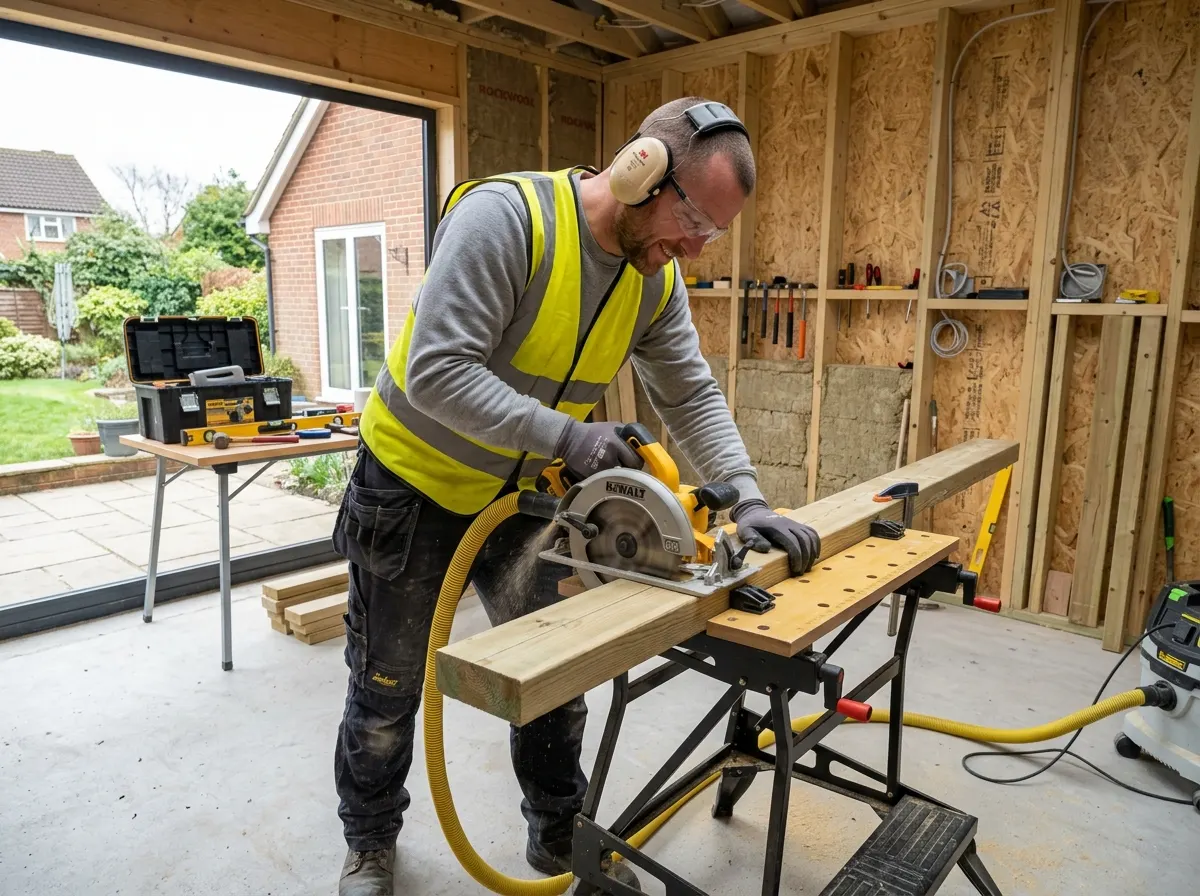
If you have to wear a uniform with a company logo, or protective clothing (like steel-toe boots and hi-vis), you can claim tax relief for the cost of washing, repairing, and replacing it yourself.
Flat Rate: Typically £60 a year for basic trades, but HMRC has specific higher industry rates (e.g., Joiners and Builders can claim up to £120 per year).
Working From Home
If you run your trade business from your kitchen table (invoicing, quoting, accounting), you can claim a proportion of your household utility bills against your tax.
Method 1: Claim the HMRC flat rate of £6 a week (£312 a year) with no receipts needed.
Method 2: Have an accountant calculate a strict percentage based on room size and usage hours.
Training & Upskilling
HMRC allows you to claim the cost of training courses against your tax, provided they update or improve existing skills relevant to your trade (e.g., Gas Safe renewals, advanced CAD design for builders).
Trap: Historically, learning an entirely new trade (e.g., a plumber paying to learn bricklaying from scratch) was not allowable. Speak to your accountant regarding the latest sole trader training updates.
Frequently Asked Questions
Do I have to use the VAT Flat Rate Scheme?
No, it is entirely optional. The Flat Rate Scheme simplifies your accounting by allowing you to pay a fixed percentage of your turnover to HMRC, rather than calculating exact VAT on every receipt. However, for trades that buy large amounts of expensive materials (like builders or landscapers), it is often financially worse. It generally only benefits "labour-only" trades with very low material costs.
Can I write off my lunch as a business expense?
Usually, no. HMRC strictly states that "everyone must eat to live," so ordinary lunches while working on local sites are not allowable expenses. You can only claim for food (subsistence) if you are working away from your normal place of work on an overnight stay, or travelling significantly far outside your standard operating area.
What happens when I sell a van I claimed AIA on?
Because you claimed 100% of the van's value against your tax when you bought it, its value on your tax books is technically £0. If you sell it 4 years later for £10,000, that £10,000 is treated as a taxable "balancing charge." This means it is added back onto your profits for that year and taxed. Your accountant will manage this calculation.
Should I claim exact van expenses or the flat-rate mileage allowance?
If you are a sole trader, you can choose to claim the HMRC flat-rate mileage allowance (45p per mile for the first 10,000 miles, and 25p thereafter) instead of calculating exact fuel, insurance, and repair receipts. However, there is a catch: if you choose the flat-rate mileage, you cannot claim Capital Allowances (AIA) on the purchase price of the van. Once you pick a method for a specific vehicle, you cannot change it until you change the van.
Are small hand tools treated the same as heavy machinery?
No. Small, everyday hand tools (like trowels, hammers, drill bits, or tape measures) that have a short lifespan are classed as everyday "allowable business expenses." You simply deduct their full cost directly from your turnover on your tax return. Capital Allowances (like the AIA) are specifically reserved for larger, long-lasting assets like commercial vans, cement mixers, and expensive heavy-duty power tools.
How do I claim back the CIS tax deducted from my pay?
If you work as a subcontractor and a main contractor deducts 20% from your invoices under the Construction Industry Scheme (CIS), this is an advance payment towards your personal tax bill. When you or your accountant submit your annual Self Assessment tax return, you declare these deductions. HMRC will subtract the CIS tax already paid from your final tax bill. If your deductions exceed what you actually owe, HMRC will issue you a cash refund.
How does Making Tax Digital (MTD) affect my trade business?
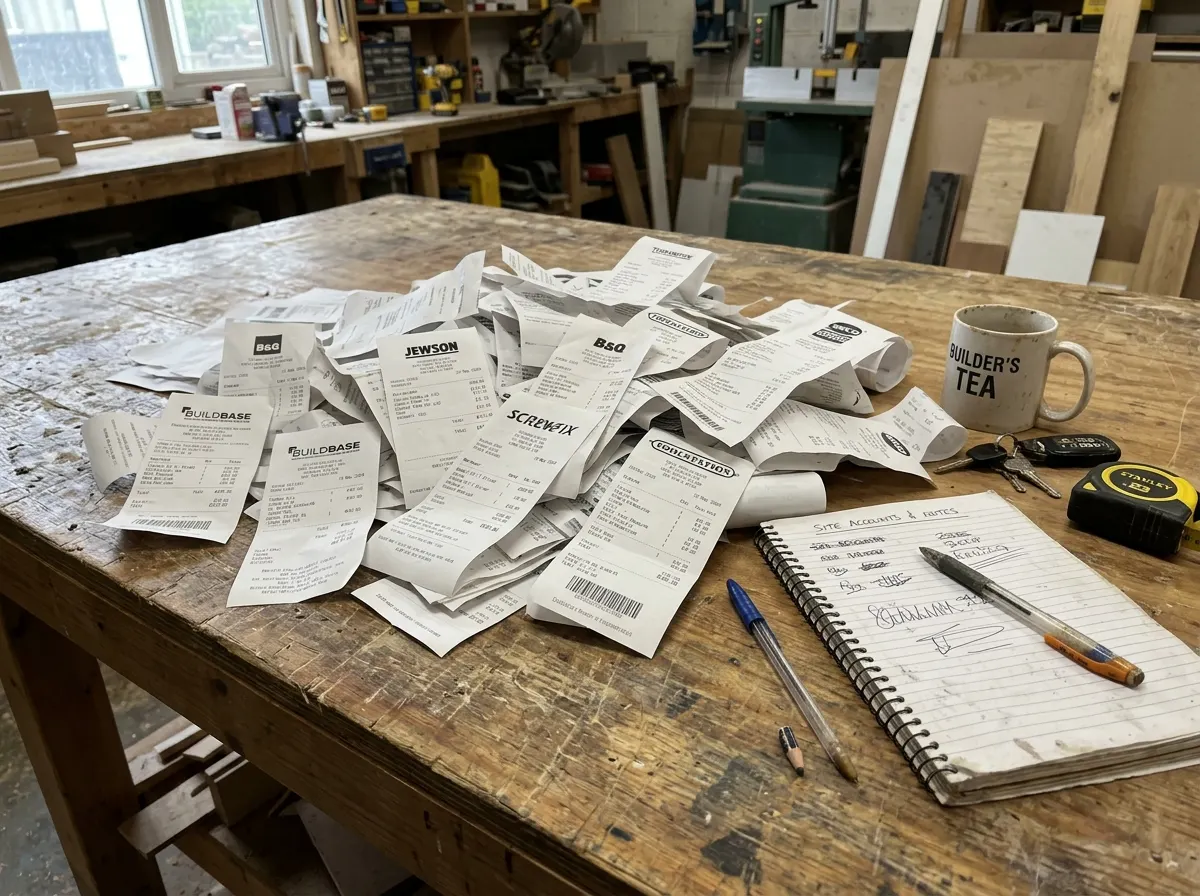
Making Tax Digital for Income Tax Self Assessment (MTD for ITSA) represents a massive shift for sole traders. Depending on your turnover threshold, you are legally required to keep digital accounting records and submit quarterly updates to HMRC using approved software (like Xero or QuickBooks), rather than filing one single paper return at the end of the year. You can no longer legally manage your trade accounts by handing a shoebox of paper receipts to an accountant.
Can I claim tax relief on my dog?
This is a common trade myth. You cannot claim the cost of buying or feeding a pet dog against your tax. The only strict exception is a specifically trained, certified working guard dog kept exclusively at a commercial premises (like a large scaffolding yard) to protect stock. A dog sitting in the passenger seat of your transit van does not qualify.
Ready to fill your diary with quality jobs?
Connect with serious homeowners who value reliability over the absolute cheapest quote. Join our network of accredited UK tradespeople today and let our AI estimators filter out the time-wasters for you.
Did you find this guide helpful?
Let us know if these business tips will help your trade business.