The ultimate guide to trade vans: signwriting, presentation & setup.
 By Tom Ellis
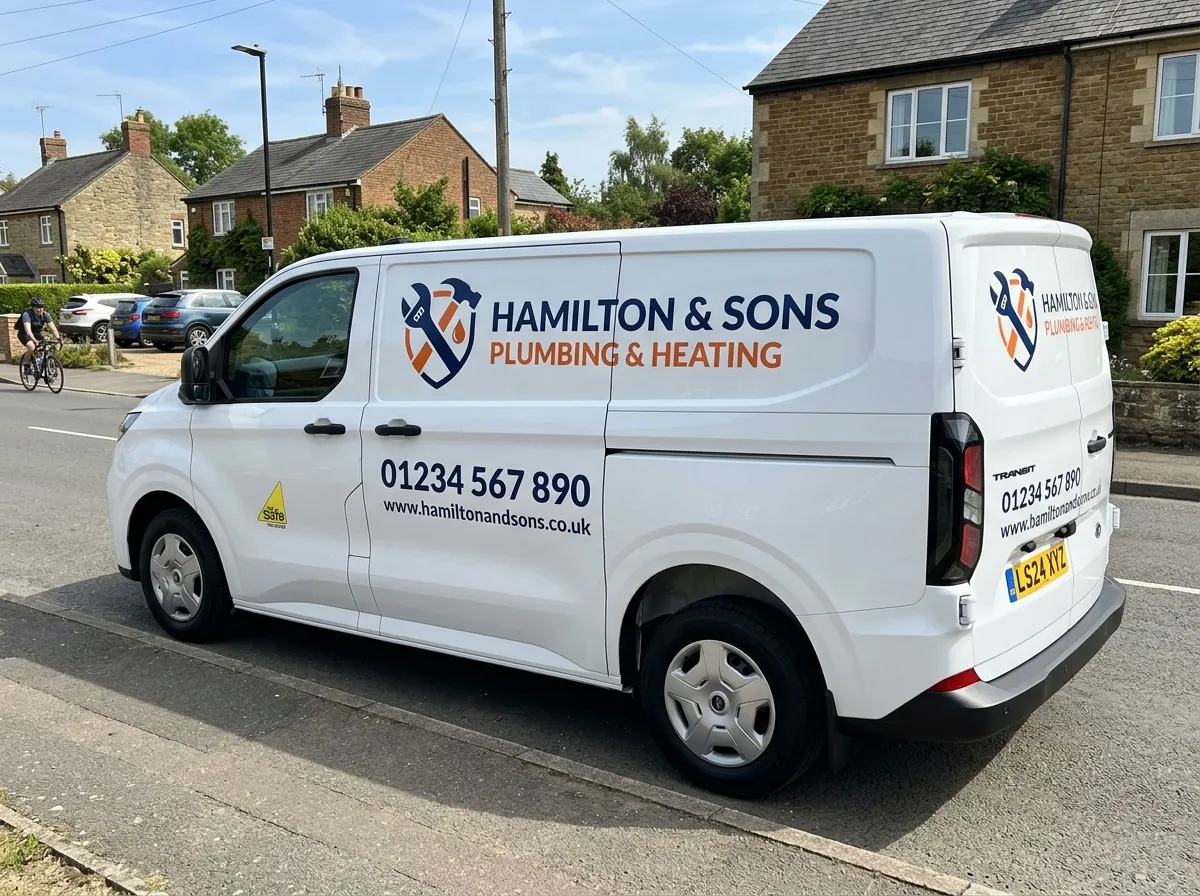
Your van is the most important physical asset your trade business owns. It is not just a tool for transporting materials; it is a rolling billboard, a mobile office, and the very first impression a homeowner receives before you even knock on their door.
If you want to quote for high-end extensions or premium bathroom installations, you cannot turn up in a battered, dirty vehicle with a dashboard covered in fast-food wrappers. This guide breaks down exactly how to optimise your van's signwriting for local SEO, maintain a professional appearance, and organise the interior to save you hours of wasted time every week.
High-Impact Signwriting
Turning your vehicle into a local lead-generation machine using bold, legible, and minimalist branding that can be read at 40mph.
Pristine Presentation
The psychology of cleanliness. Why a tidy dashboard and a washed exterior subconsciously convince clients to accept higher quotes.
Functional Racking
Stopping the daily treasure hunt. Proper internal storage systems save tradespeople an average of 45 minutes a day in lost productivity.
How to Signwrite Your Van Properly
Most tradespeople try to cram way too much information onto their vans. When a potential customer drives past you in traffic, they have roughly three seconds to process your advert. Simplicity is mandatory.
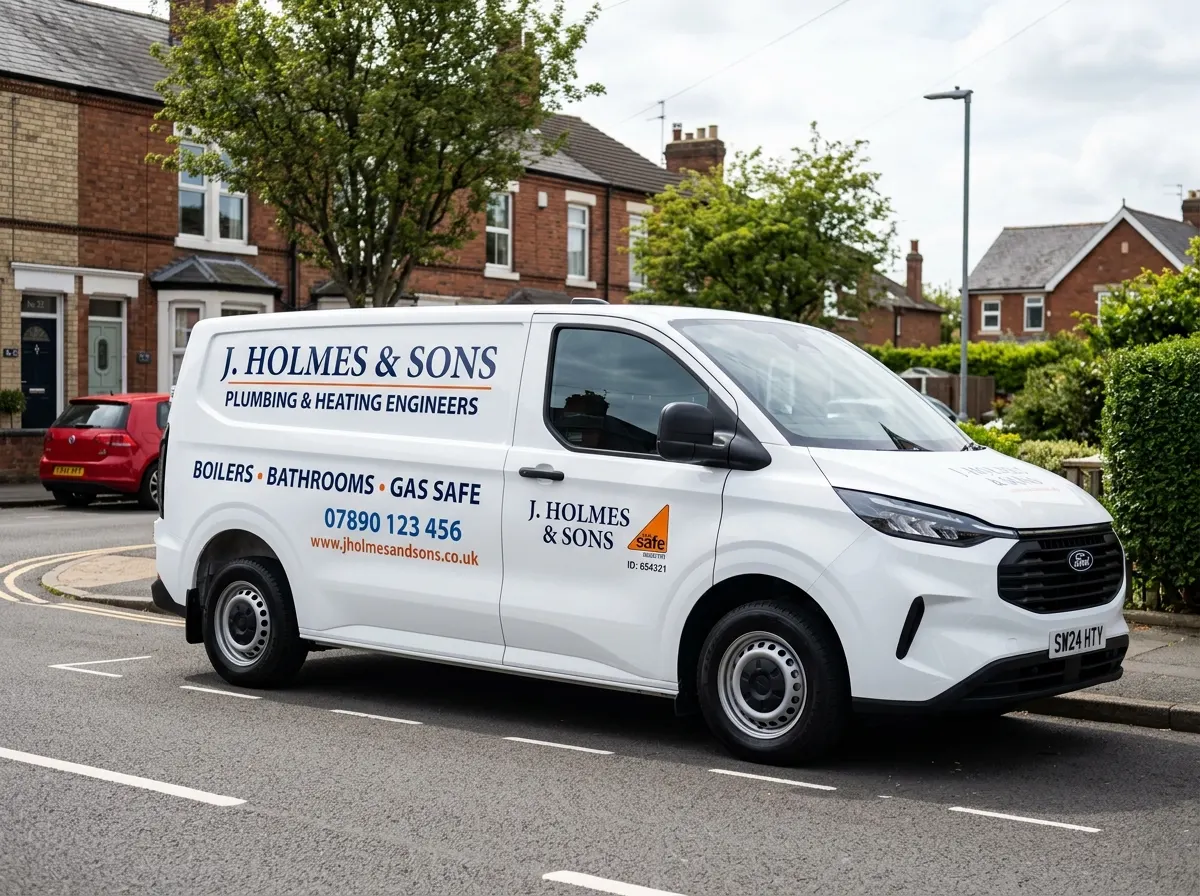
What Makes Great Signwriting
- ✓ The Rule of Three: Your van should display your Logo/Name, your core Trade (e.g., "Electrical Contractors"), and your Website or Phone Number. Nothing else is necessary for the side panels.
- ✓ Maximise the Back Doors: The rear of the van is your highest-converting real estate. When sitting in a traffic jam, the driver behind has minutes to stare at it. Put your accreditations (Gas Safe, NICEIC) and full website URL prominently here.
- ✓ High-Contrast Typography: Dark blue or stark black lettering on a white van, or bright white lettering on a dark van. Avoid elaborate, cursive fonts. Use thick, bold, sans-serif fonts that are highly legible from a distance.
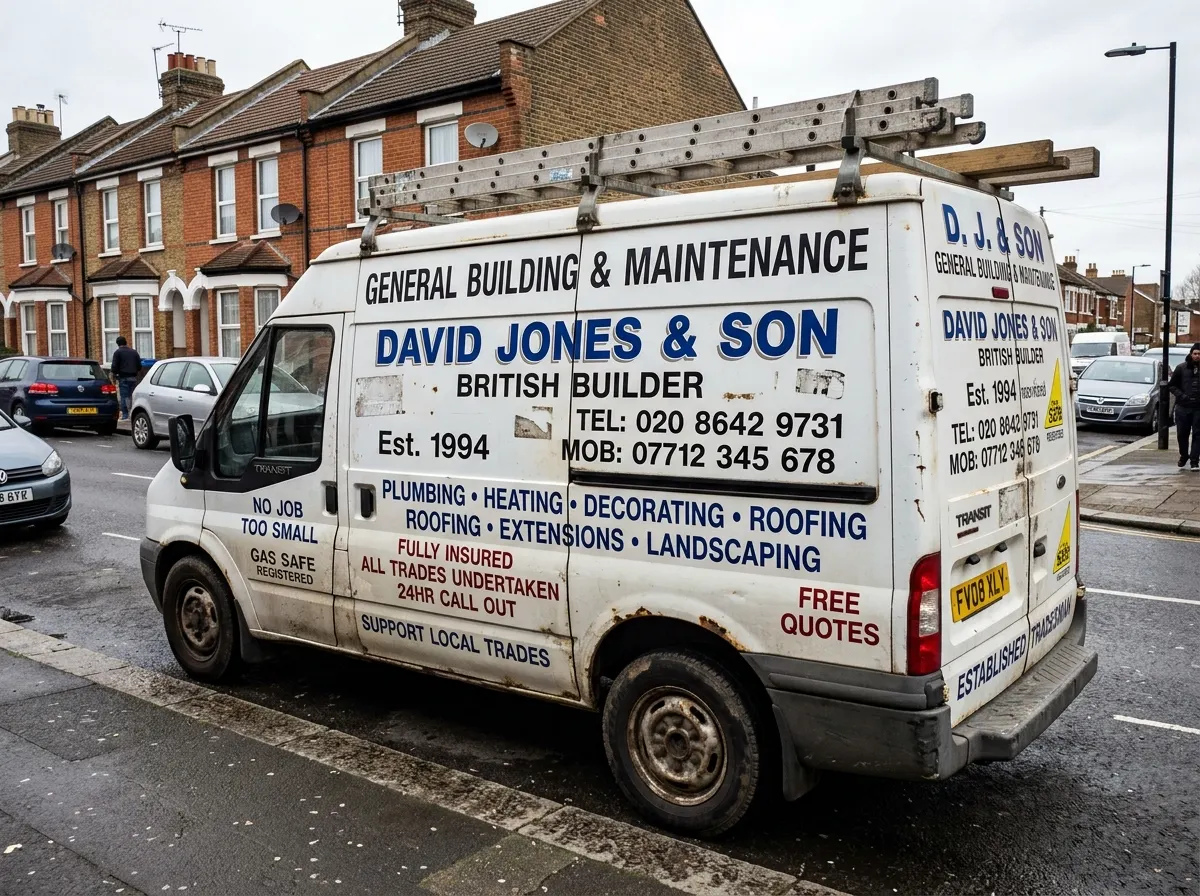
What Destroys Credibility
- ✗ Bullet-Point Overload: Listing every single minor job you do ("Tap washers changed, drains unblocked, tiling...") down the side of the van looks cluttered, desperate, and is impossible to read in motion.
- ✗ Unprofessional Contact Details: Displaying an "@hotmail.com" or "@yahoo.co.uk" email address instantly flags you as a small-time operation. Buy a proper domain name.
- ✗ Peeling or Faded Vinyl: If your signwriting is peeling at the edges or has faded heavily in the sun, you must replace it. Damaged branding subconsciously tells the client your actual trade work will be sloppy and unmaintained.
The Psychology of Cleanliness
Homeowners are terrified of two things: getting ripped off, and tradespeople making a mess of their house. Your van's presentation proves to them you are clean before you even walk through the door.
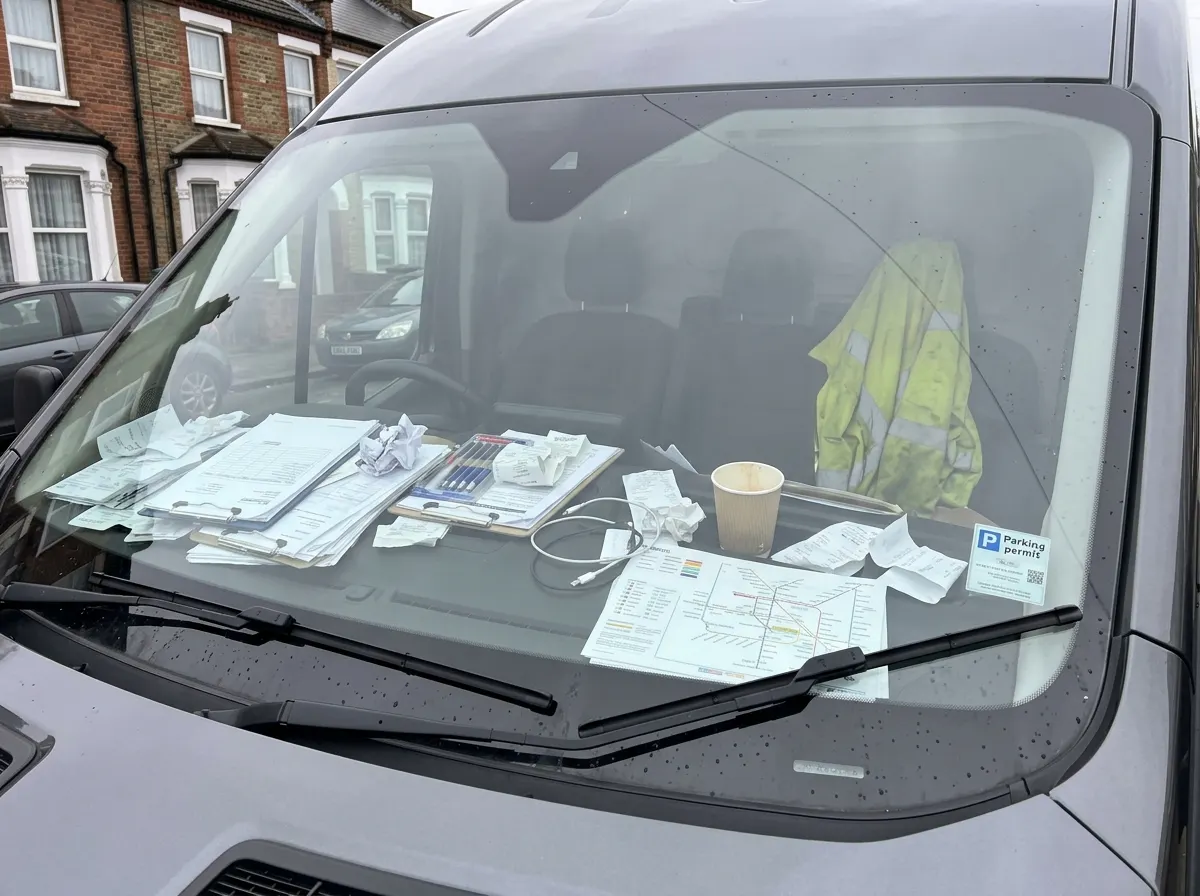
The Dashboard Test
When a customer walks out to their driveway to meet you, they will look through the windscreen. If your dashboard is littered with empty energy drink cans, fast-food wrappers, and crumpled invoices, they immediately assume you will treat their living room with the exact same lack of respect. Keep the cab completely spotless. It is your mobile office.
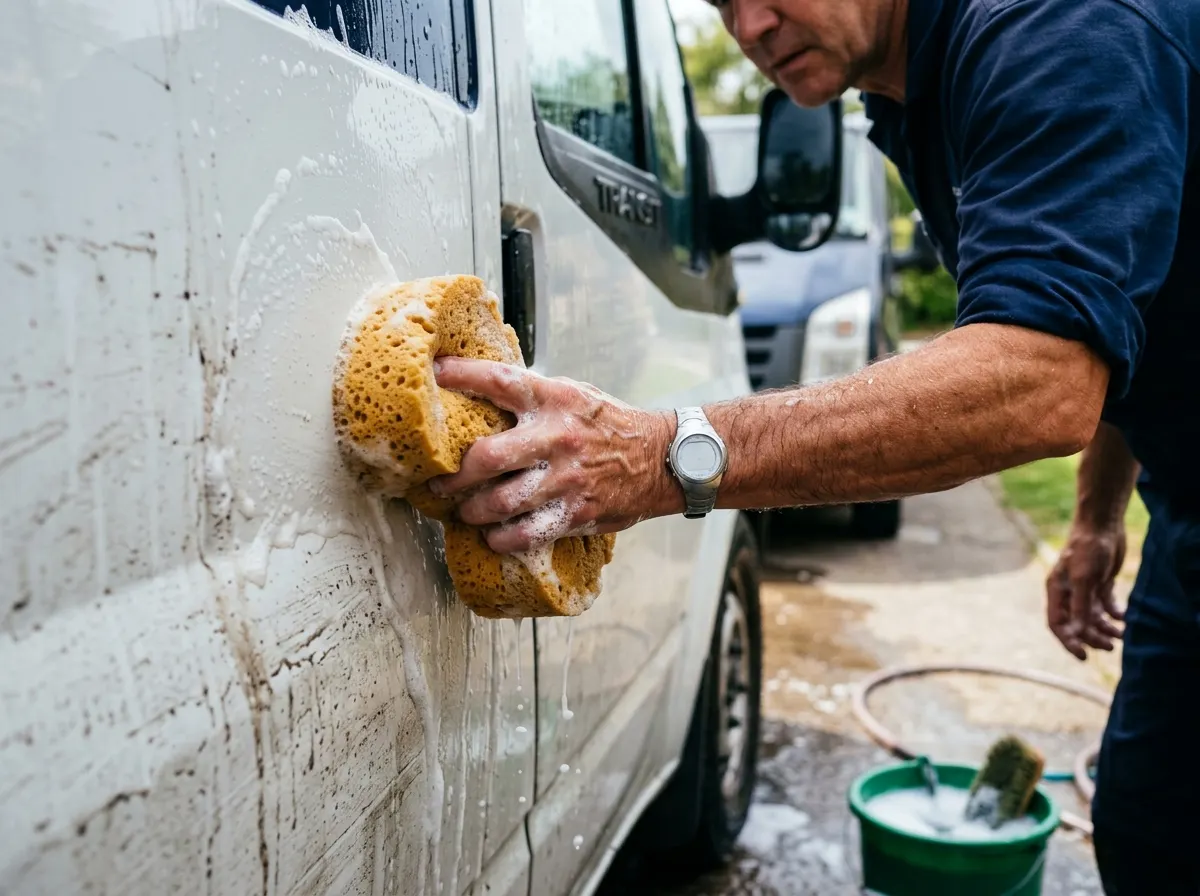
Washing the Exterior
During winter, UK roads will cover your van in salt and grime within days. A filthy van obscures your expensive signwriting and looks unprofessional. Make it a strict habit to run the van through a jet wash every single Friday afternoon. A sparkling clean van parked on a residential street is a magnet for high-end neighbours.
Stop paying for dead leads.
Join the Pricing Penguin network. We provide UK tradespeople with high-intent, pre-qualified customers who already understand the true cost of quality craftsmanship.
The Flatbed Trap: Avoid the "Scrap Dealer" Look
If you operate a tipper or a flatbed transit (common for landscapers and roofers), you must be hyper-vigilant about waste management.
Driving around with a flatbed permanently overloaded with broken bricks, old soil, and general building rubbish is commercial suicide. It makes your business look like an unlicensed fly-tipping operation. High-end residential clients will not hire a company that parks a mobile rubbish tip outside their £800k house for two weeks.
The Fix: Tip your waste daily. If you must store waste on the vehicle overnight, ensure it is securely sheeted or netted to present a neat, uniform appearance. If you generate massive amounts of waste, factor commercial skips or grab-lorries into your quotes instead of using your primary vehicle as a bin.

Functional Racking & Storage
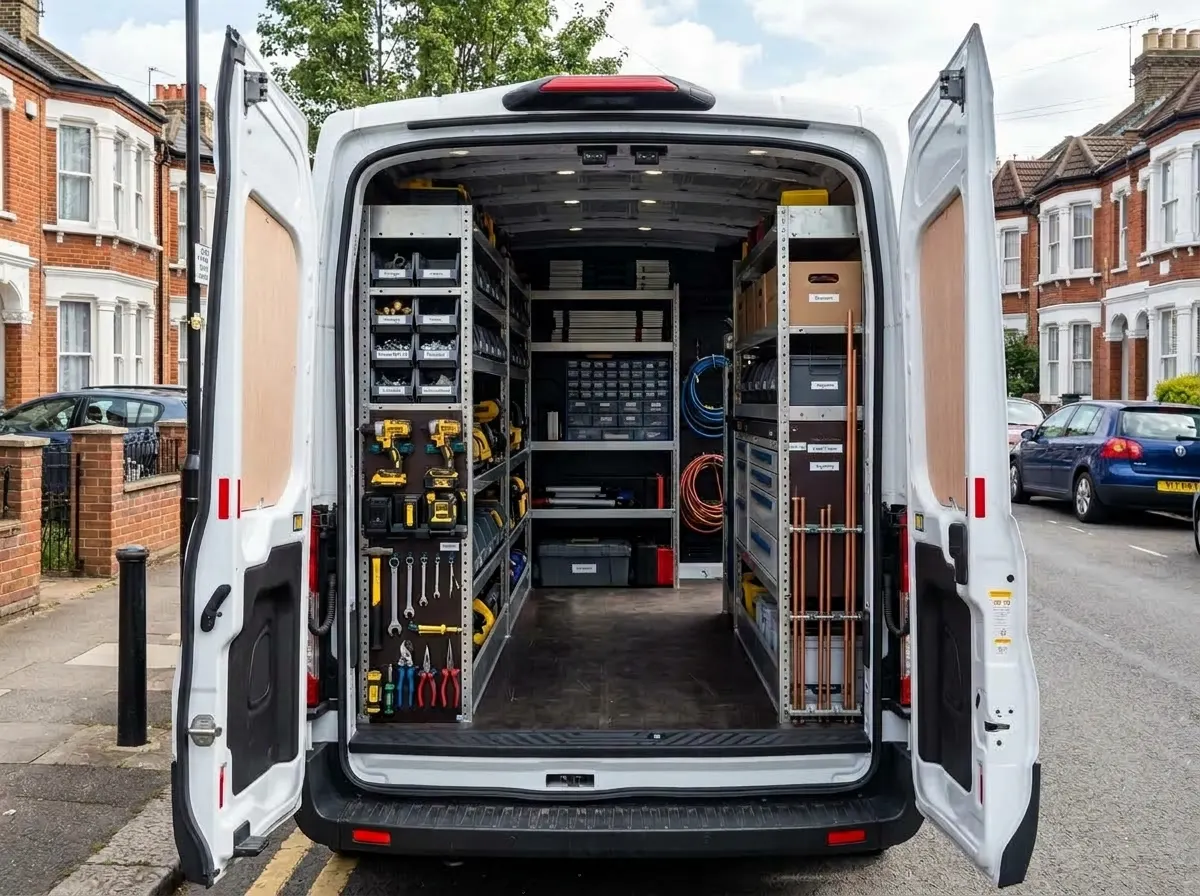
A chaotic load area costs you money every single day. If you spend 20 minutes every morning digging through a pile of cables to find a specific drill bit, you are throwing away billable hours.
Setup essentials:
- ✓ Custom Plywood or Metal Racking: Invest £500 - £1,000 in professional racking. Everything must have a specific, dedicated home. Copper pipes on one side, power tools secured on the other.
- ✓ Internal LED Lighting: During the UK winter, it is pitch black by 4 PM. Hardwiring bright LED strip lights into the roof of the cargo area stops you fumbling around with a phone torch when packing up.
- ✓ Visible Security: Tool theft is an epidemic. Fit highly visible external deadlocks or hook locks to all doors. Store your most expensive tools in a bolted steel vault box inside the van, and stick a clear "No tools left in this vehicle overnight" sticker on the rear.
Upgrading: ULEZ & The Success Perception
Running a 15-year-old rusty transit might save you money on finance, but it costs you heavily in other areas.
The ULEZ Factor
With Clean Air Zones (CAZ) and Ultra Low Emission Zones (ULEZ) expanding rapidly across UK cities, running an older diesel van incurs massive daily charges (£12.50+ per day). Upgrading to a Euro 6 compliant diesel, or an electric van, is now an essential financial consideration to protect your margins.
The Perception of Success
A modern, new-shape van sub-communicates success. When customers see an up-to-date, clean vehicle, they subconsciously think: "They must be good at what they do to afford a nice van." It justifies higher pricing and builds instant authority before you even provide a quote.
Frequently Asked Questions
How much does van signwriting cost?
Basic cut-vinyl lettering on the sides and rear of a medium transit van usually costs between £250 and £450. A partial wrap (where large sections of the van are covered in printed vinyl) will cost £800 to £1,500. It is a one-off marketing cost that pays for itself rapidly.
Do I need to tell my insurer about signwriting?
Yes. Adding signwriting or a vinyl wrap is considered a vehicle modification. While it rarely increases your premium (some insurers actually lower it, as branded vans are statistically driven more carefully and are easier to spot if stolen), failing to declare it can invalidate your commercial insurance.
Is custom van racking worth the cost?
Absolutely. If you value your time at £40 an hour, and you waste 15 minutes a day looking for tools in a messy van, that costs you £50 a week (£2,600 a year). Professional racking pays for itself in retrieved billable time within the first few months.
What are the best van locks to prevent tool theft?
Tool theft is a massive issue for UK trades. Factory-fitted locks are rarely enough to stop a determined thief. Investing in aftermarket deadlocks (for overnight security) or slam locks (perfect for multi-drop trades like couriers or emergency plumbers) adds a huge physical and visual deterrent. Always store high-value items in a steel vault bolted directly to the van's chassis.
Are magnetic van signs a good alternative to vinyl?
Magnetic signs are only useful if you regularly act as a 'white label' sub-contractor for larger firms and need to hide your own branding temporarily, or if you use the van for personal weekend use. However, for your primary business vehicle, they look significantly cheaper than permanent cut-vinyl and can severely scratch your paintwork if grit gets trapped behind them.
Is it better to lease or buy a trade van?
Leasing (Contract Hire) requires a much lower upfront deposit and ensures you are always driving a reliable, brand new, ULEZ-compliant vehicle, with the monthly payments being fully tax-deductible. Buying a van outright or via Hire Purchase (HP) means you eventually own the physical asset, but you become fully responsible for its rapid depreciation, MOT failures, and mechanical wear and tear.
Should I put prices on the side of the van?
Never put exact pricing (e.g., "Boiler services £60") permanently in vinyl. Inflation changes, materials go up, and you will be stuck honouring an old price or having to pay to re-wrap the van. Stick to branding and contact details only.
Ready to fill your diary with quality jobs?
Connect with serious homeowners who value reliability over the absolute cheapest quote. Join our network of accredited UK tradespeople today and let our AI estimators filter out the time-wasters for you.
Related Guides
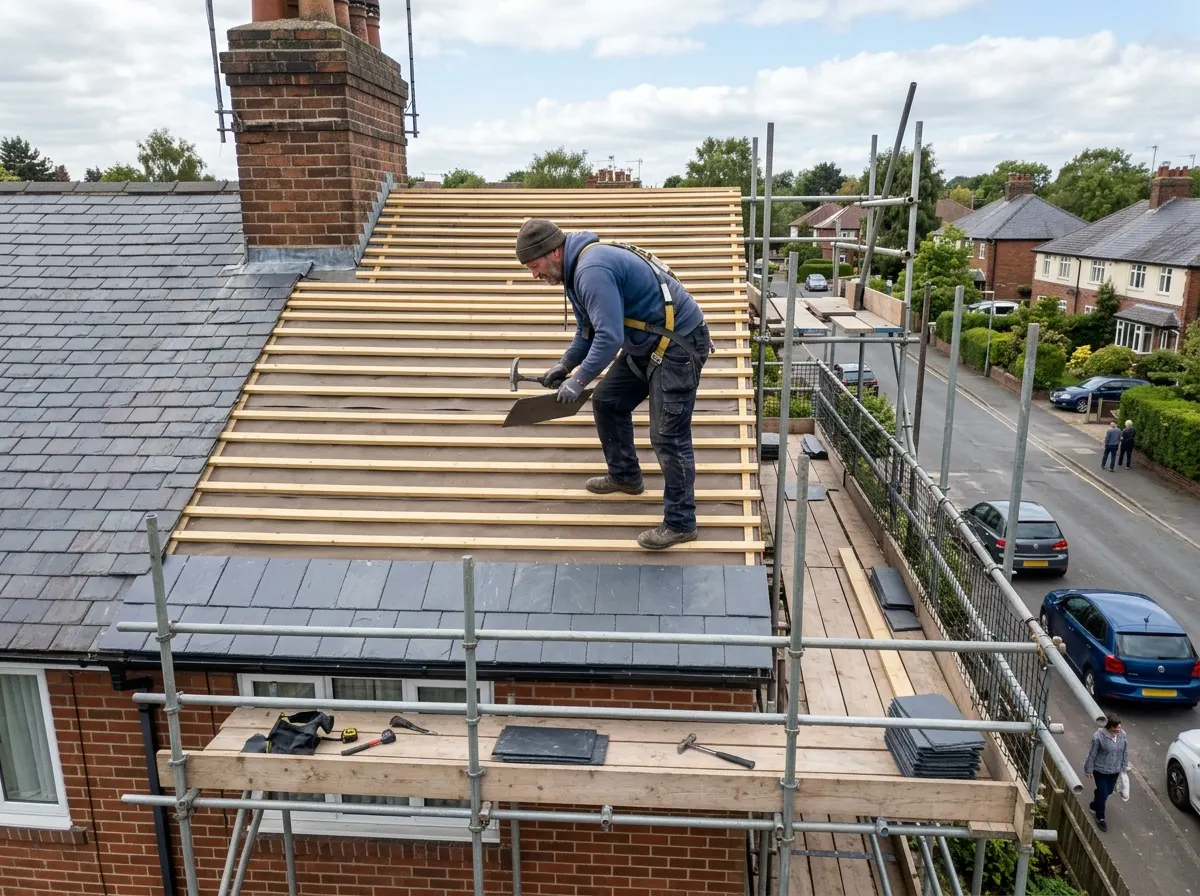
Starting a Roofing Business
Everything involved with starting a roofing business.
Social Media Marketing
Ways of marketing your trade business on social media.
Vans
All about the perfect trade vans for your business.

Health and Safety
Health and safety for tradespeople.
Did you find this guide helpful?
Let us know if these marketing tips will help your trade business.