How much do internal doors cost in the UK?
 By Tom Ellis
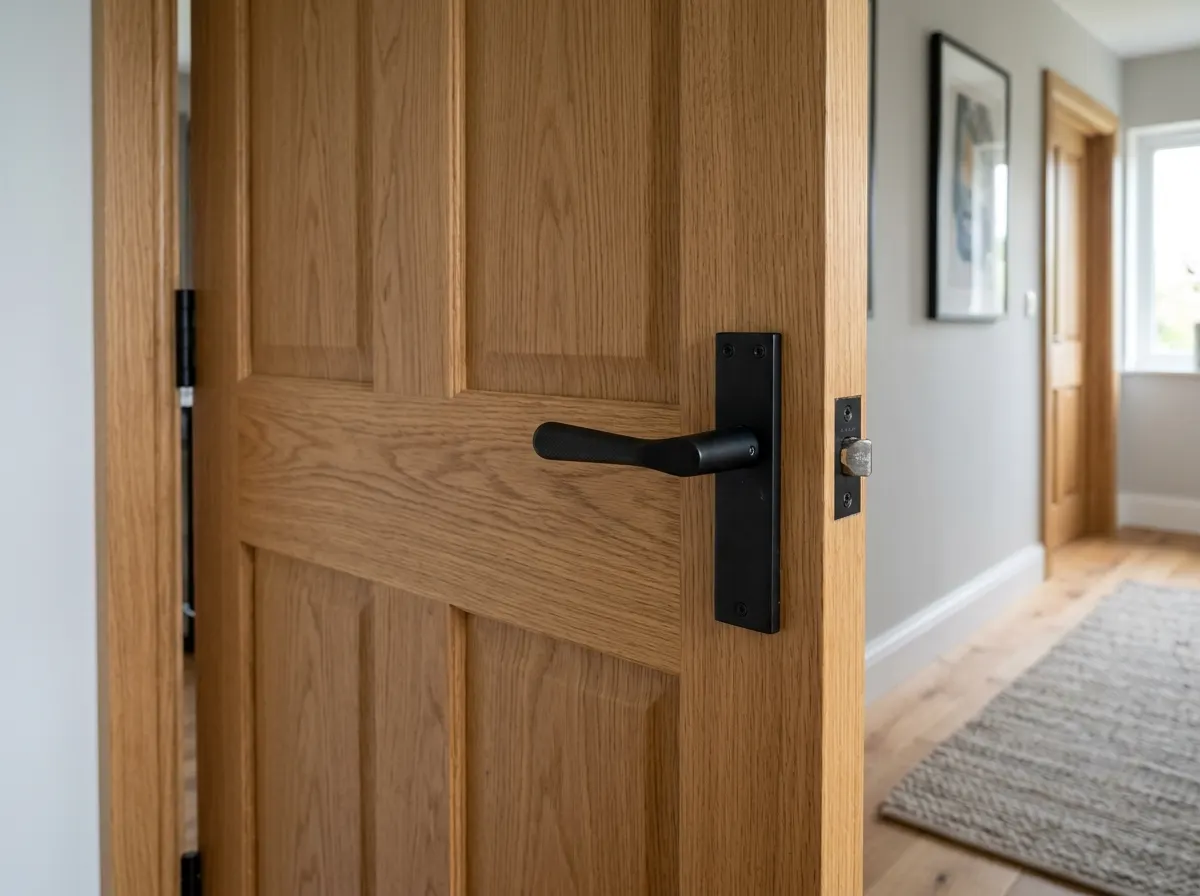
Replacing the internal doors in your home is one of the most underrated interior design upgrades. Upgrading from hollow, flimsy, yellowing doors to heavy, modern solid-core doors not only drastically modernises the visual aesthetic of your hallways, but completely transforms the acoustic soundproofing between rooms.
In 2026, replacing an internal door in the UK costs between £90 and £450+ per door, fully fitted. If you buy basic hollow-core moulded doors from a DIY store and hang them yourself, you can do it for under £50 a door. However, the most popular choice—hiring a carpenter to supply and fit heavy "solid-core" oak veneer doors with new premium handles and hinges—typically averages £180 to £250 per door.
~£110
Budget specification. A lightweight, hollow, white primed 4-panel or 6-panel door. Price includes the door (£35), cheap latch/hinges (£15), and professional carpenter fitting (£60).
~£220
Mid-range finish. A heavy, sound-insulating solid core door finished in real oak veneer (e.g. Suffolk or Shaker style). Includes premium ball-bearing hinges, lever handles, and fitting.
£350+
Premium specification. FD30 rated fire doors (mandatory for loft conversions) or doors featuring large toughened glass panels to let light into hallways. Heavily built and slower to hang.
Get an instant estimate for your internal doors
Hollow Core vs Solid Core
A door might look identical from the outside, but what lies beneath the painted surface dictates how it feels to close and how much sound it blocks.
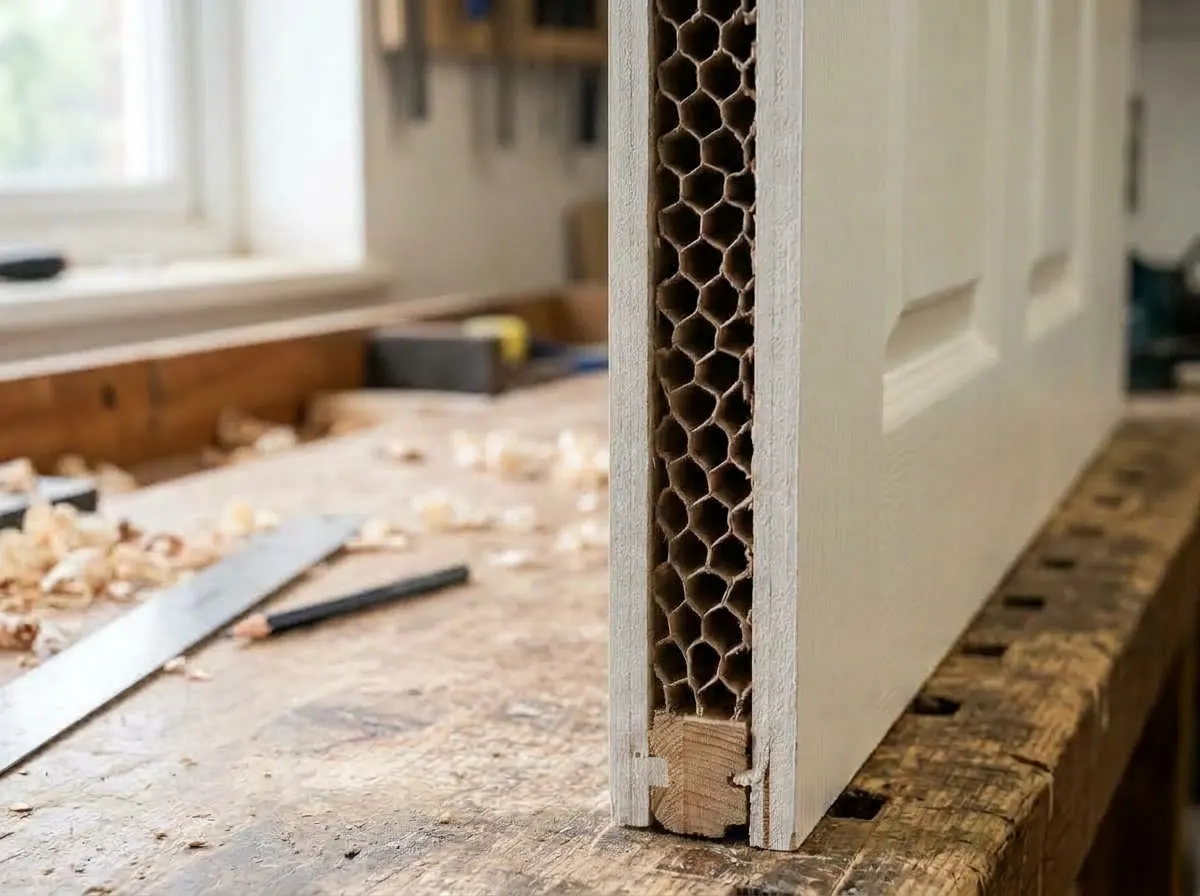
1. Hollow Core
The absolute cheapest option. A thin timber frame filled with a cardboard "honeycomb" structure, skinned in hardboard. They weigh very little, making them easy to hang, but they block almost zero sound and feel flimsy/cheap when slammed.
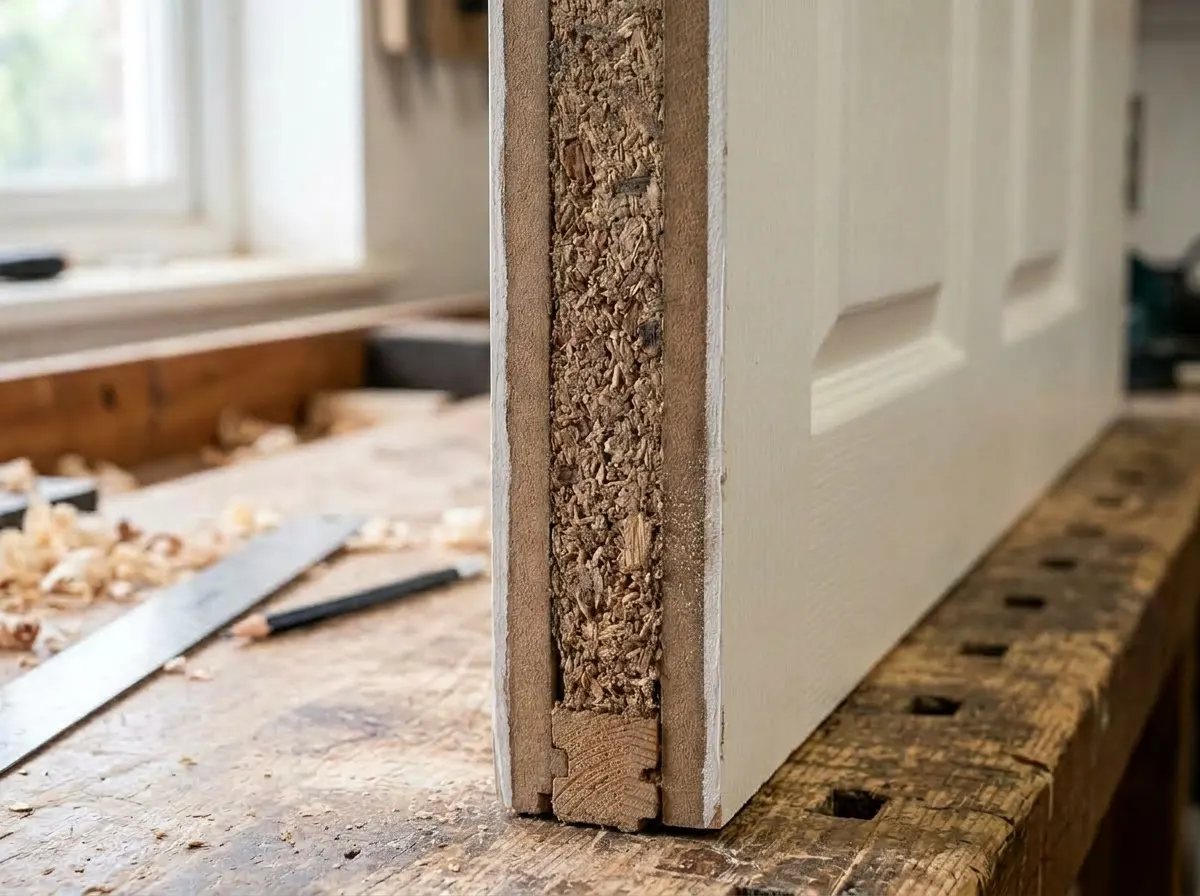
2. Solid Core (Engineered)
The modern "Goldilocks" standard. These feature a high-density particleboard or flaxboard solid core, wrapped in a thin timber or oak veneer skin. They are incredibly heavy, offer fantastic acoustic soundproofing, and feel deeply premium to close without the warping risks of solid wood.
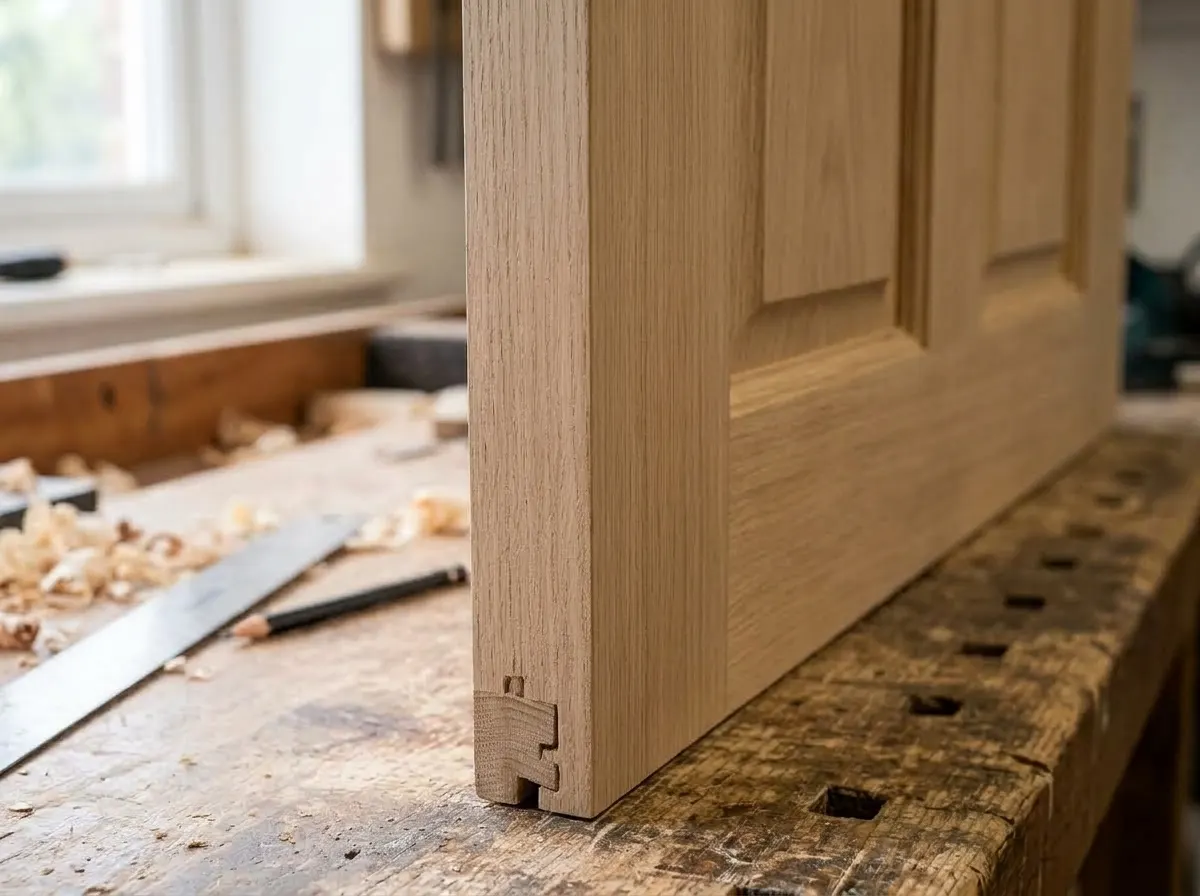
3. 100% Solid Wood
Made entirely from solid pieces of timber (like Oak, Pine, or Walnut). Highly traditional and incredibly beautiful, but very expensive. Solid wood doors are actually prone to swelling, shrinking, and warping as the humidity/heating in your house changes between seasons.
Styles of Internal Doors
The style you choose should reflect the architecture of your house. Mixing Victorian panel doors in an ultra-modern extension often clashes.
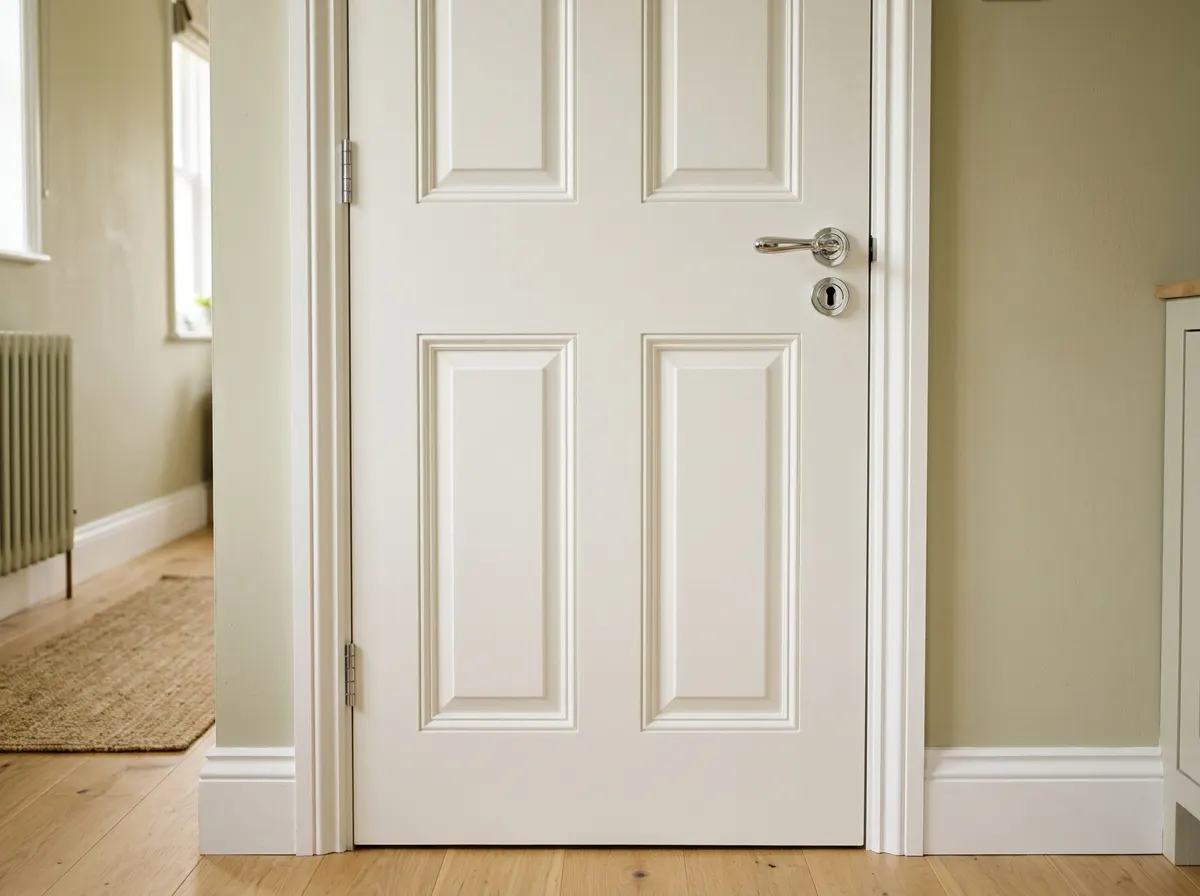
Panel Doors
The traditional standard. Usually features 4 or 6 recessed rectangular panels. "Shaker" style panel doors (with sharp, square, flat recesses) are currently the most popular choice for modernising older homes.
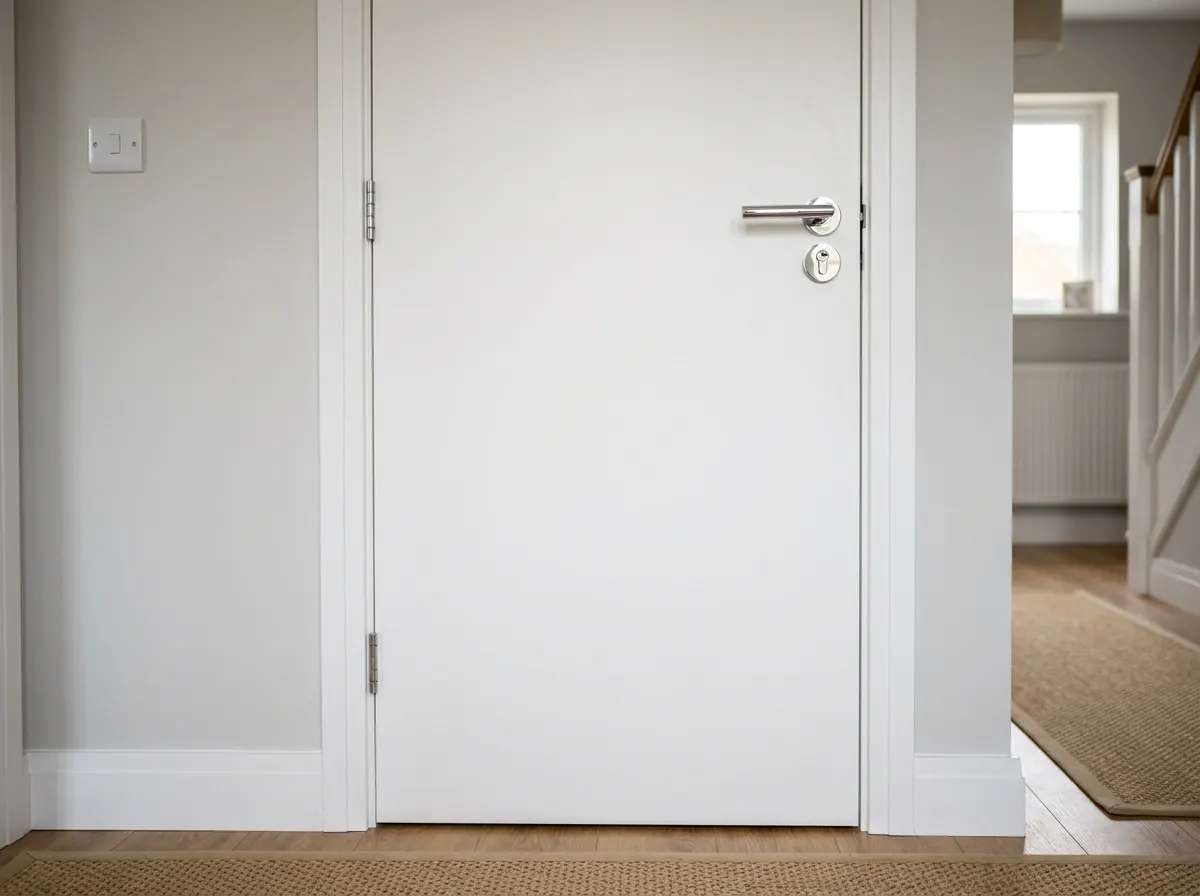
Flush Doors
A completely flat, smooth surface with no panels or detailing. Extremely minimalist. Looks incredibly premium in dark oak or walnut veneers in modern apartments, but can look cheap if painted plain white.
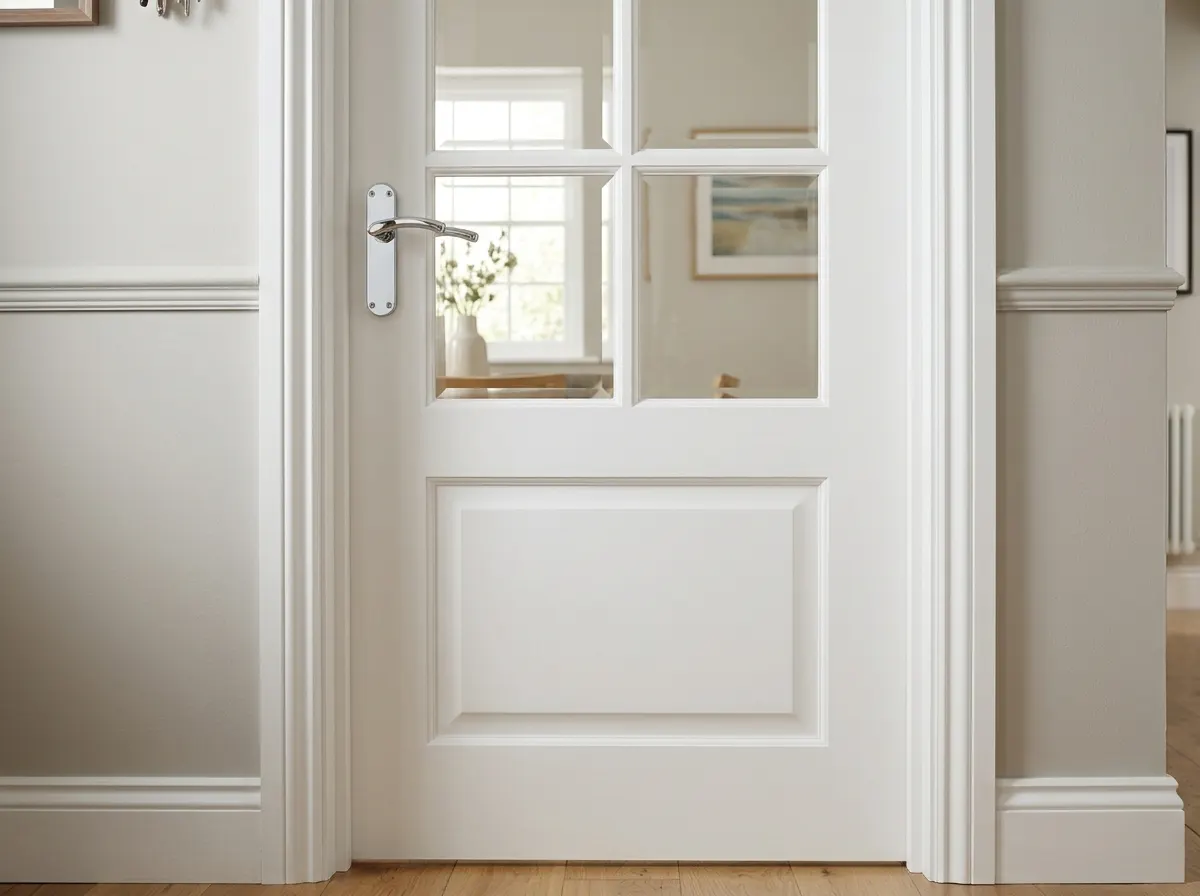
Glazed Doors
Doors featuring cut-outs filled with toughened safety glass (clear or frosted). Perfect for downstairs rooms like kitchens or dark hallways to allow natural light to flow through the property. Adds ~£50-£100 to the door cost.
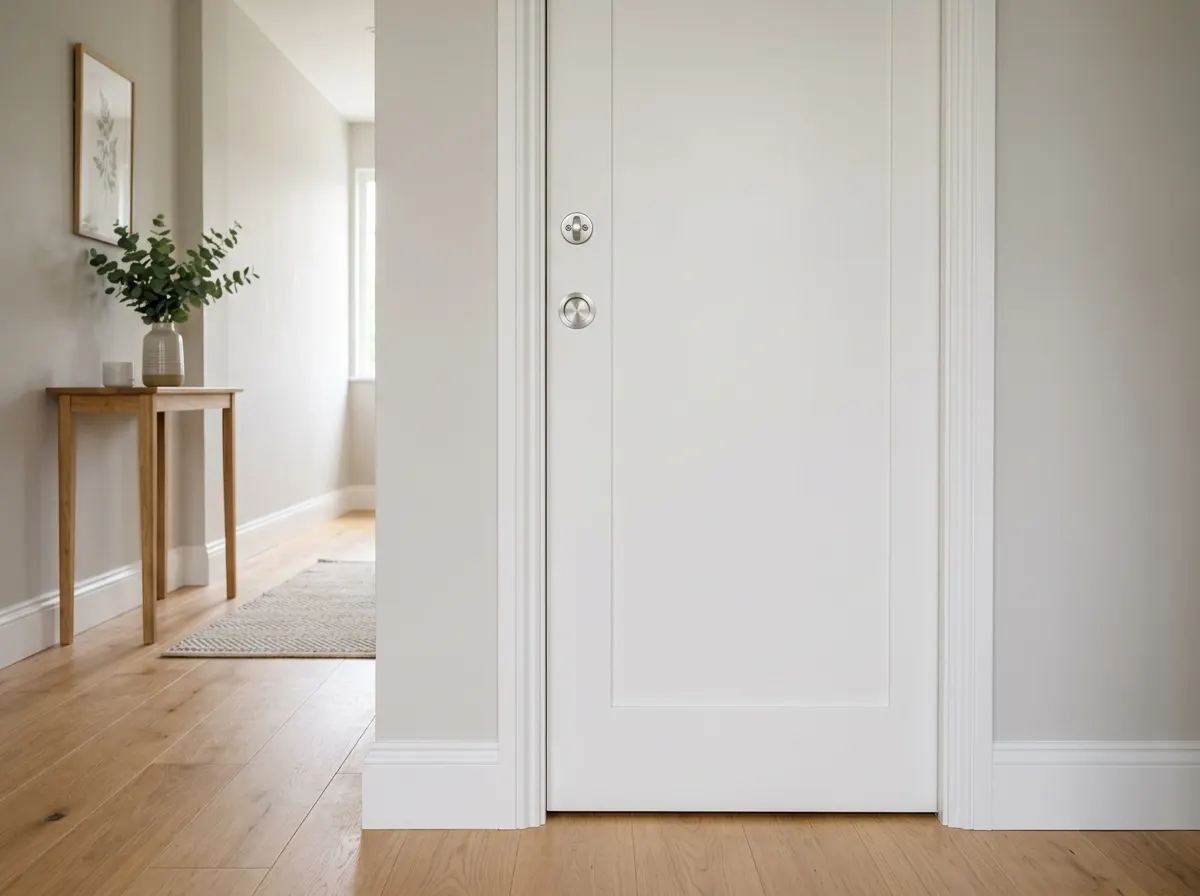
Pocket & Sliding
Space-savers for en-suites or tight galleys. A pocket door literally slides inside the wall cavity, vanishing completely. Installing the tracks and building the hollow stud wall to house it significantly increases carpentry labour costs.
Handles, Hinges & Hardware
A new £150 oak door looks terrible if you use cheap £5 handles. Budgeting for high-quality hardware ("door furniture") is essential to the final feel.
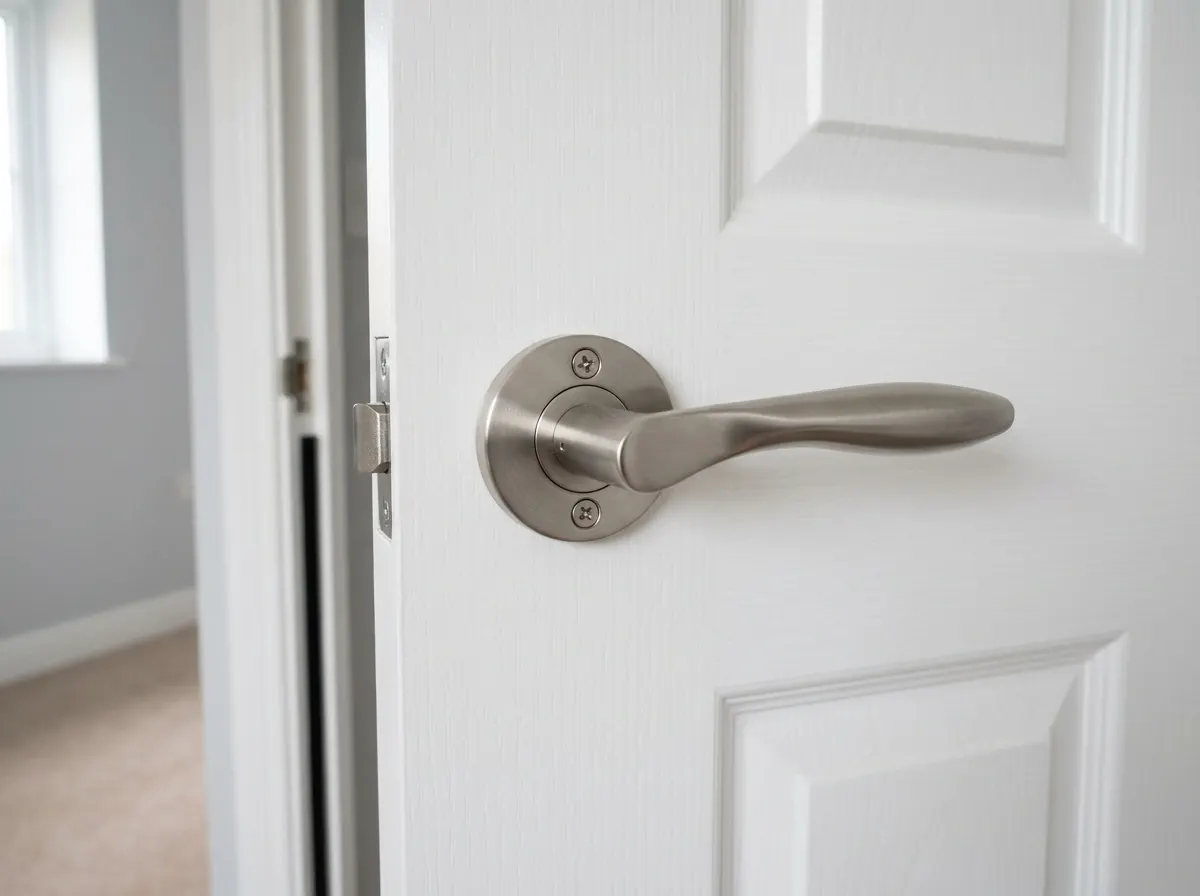
Door Handles & Knobs
Lever on Rose: The modern standard. A handle on a small round circular plate. Very sleek.
Lever on Backplate: A handle on a tall rectangular plate. Often used to cover up old holes when retrofitting.
Mortice Knobs: Traditional round knobs. Note: you must buy a longer latch (100mm) so you don't scrape your knuckles on the doorframe when turning them.
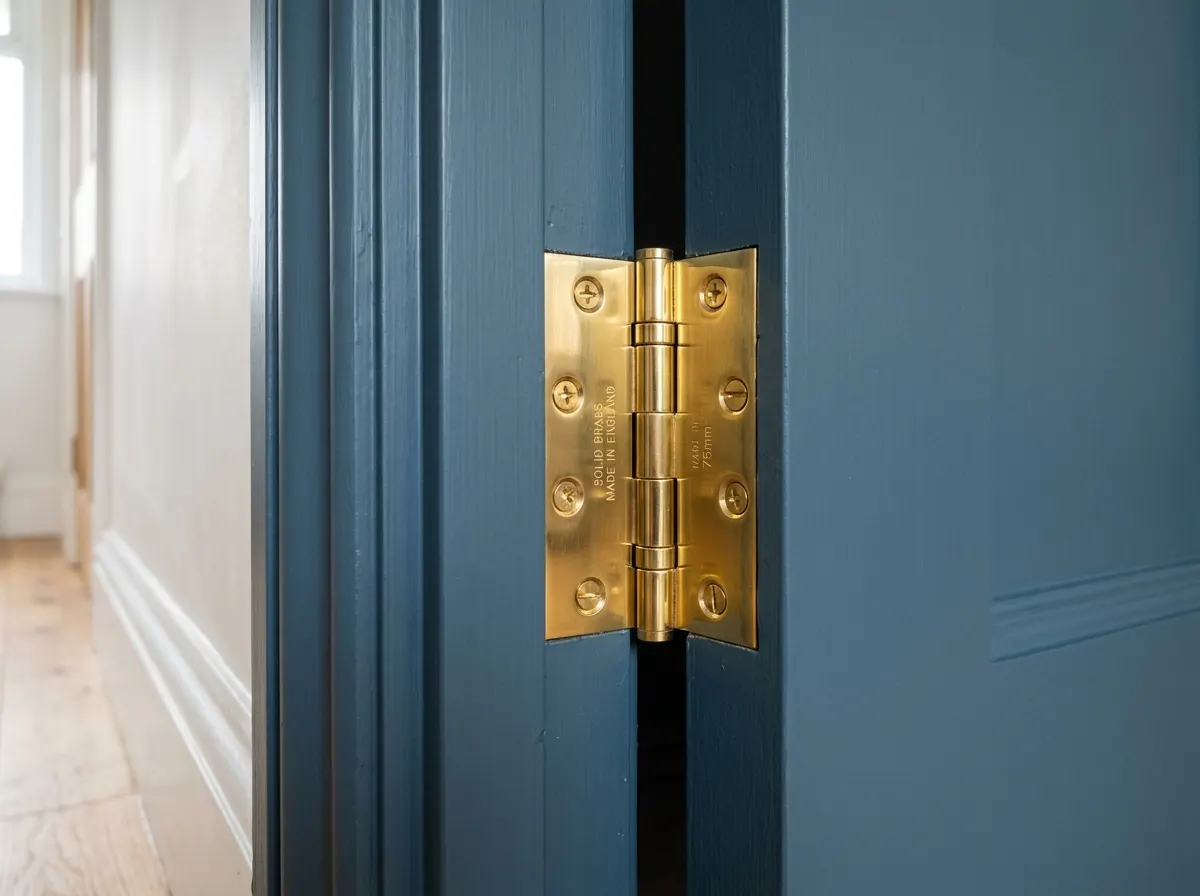
Latches & Hinges
Do not re-use your old painted-over hinges. If you buy heavy solid core doors, standard cheap hinges will sag. You MUST buy Ball Bearing Hinges (3 per door) for a smooth, squeak-free swing. You also need a new tubular latch mechanism inside the wood to catch the door frame.
Cost: £10 to £20 per door setFull Cost Breakdown per Door (2026)
The table below outlines total estimated costs for supplying and fitting a single internal door. Note: Carpenters often offer a discounted "day rate" if you are replacing 5+ doors at once.
| Component / Task | Budget (Hollow) | Standard (Solid Core Oak) |
|---|---|---|
| The Door (Raw Material) | £30 – £50 | £100 – £150 |
| Hardware (Handles, Hinges, Latch) | £10 – £20 | £30 – £50 |
| Carpenter Labour (To Hang) | £50 – £70 | £60 – £80 |
| Total Estimated Cost (Per Door) | £90 – £140 | £190 – £280 |
The Law: Fire Doors (FD30)
You cannot always just put any door wherever you want. UK Building Regulations (Part B) strictly dictate fire safety in certain areas of the home.
When do you NEED a Fire Door?
If you have a 3-storey house (or a 2-storey house with a loft conversion), every single door leading to the main staircase escape route must be an FD30 rated fire door. Additionally, the door between an integral garage and the main house must always be a fire door.
What is an FD30 Door?
An FD30 door is guaranteed to hold back flames and smoke for 30 minutes. They are exceptionally thick (44mm instead of the standard 35mm), very heavy, and must be fitted with three fire-rated hinges, a self-closing mechanism, and intumescent strips around the frame that expand to seal the gap when heated.
Can you hang a door yourself?
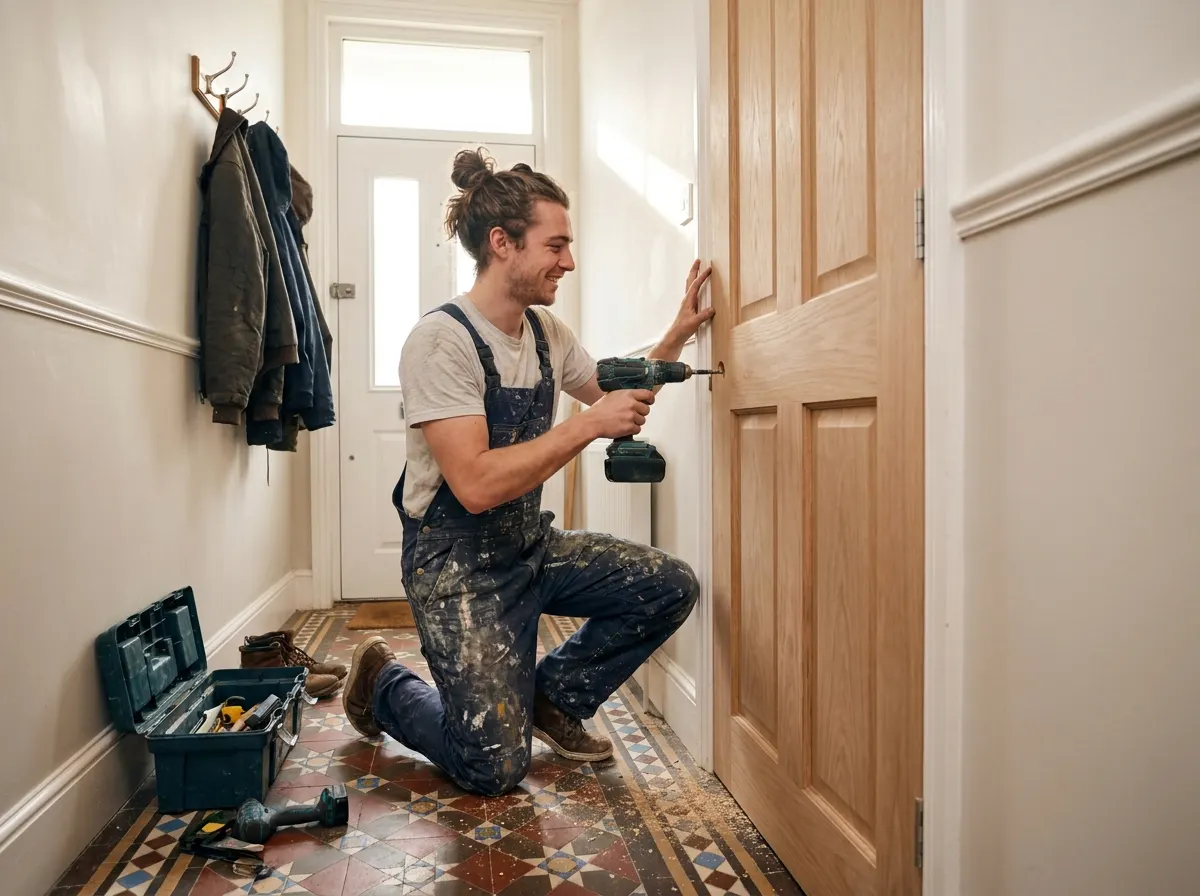
Yes, but it is notoriously frustrating for beginners. Door frames in UK houses are rarely perfectly square, meaning a new door never just "slots in." It usually requires planing or shaving down to fit the wonky frame.
The challenge of routing:
You cannot just screw hinges to the edge of the door. You have to "chop out" or route a shallow recess into the edge of the door and the wooden doorframe so the metal hinges sit perfectly flush. You also have to drill a deep, perfectly straight hole into the door edge to house the tubular latch mechanism. Getting this wrong destroys the door.
The Verdict: Hire a Carpenter
If you are replacing one hollow door to a bedroom, you can watch a YouTube tutorial and attempt it. If you are replacing 7 heavy solid oak doors for the whole house, a carpenter has the jigs, routers, and skills to hang them all perfectly in one or two days for ~£350 in labour. It is money well spent.
Frequently Asked Questions
What are standard UK internal door sizes?
The most common standard internal door size in the UK is 1981mm high x 762mm wide (roughly 6'6" x 2'6"), with a standard thickness of 35mm. Metric sizes (such as 2040mm x 726mm x 40mm) are also increasingly popular on modern builds. Narrower options (686mm) are typically used for small bathrooms or airing cupboards. Always measure your existing doors precisely before ordering.
How much does it cost to supply and fit internal doors in 2026?
In 2026, fully hanging a standard internal door typically costs between £100 and £180 per door in carpentry labour alone. If you are supplying the doors and hardware (handles, hinges, latches), a complete house package of 6 to 8 internal doors usually costs between £1,200 and £2,500 total for supply and professional installation.
Can I trim a wooden door to fit an uneven or smaller frame?
It depends entirely on the door's internal construction. Solid wood and engineered doors can be shaved down significantly on all sides. However, hollow-core or cheap flush doors only feature a thin solid timber edge batten (usually 10mm to 15mm thick). If you plane off more than this allowance, you will expose the hollow cardboard honeycomb inside and completely ruin the structural integrity of the door.
What is the difference between hollow core, solid core, and solid wood doors?
Hollow core doors are lightweight and budget-friendly but offer poor soundproofing. Solid core doors feature a dense particleboard or timber infill, providing heavy weight, premium feel, and great acoustic insulation at a mid-range price. Solid wood doors are crafted entirely from natural timber (like oak or pine), offering unmatched luxury and durability but at a much higher cost and weight.
How long does it take an experienced carpenter to hang a door?
An experienced carpenter equipped with professional jigs and routers can hang a single internal door—including routing hinges, cutting the latch recess, and fitting handles—in approximately 45 to 60 minutes. Replacing a full set of doors throughout an entire property is typically a 1 to 2-day job for a skilled tradesperson.
Do I need to replace the internal door frames (linings) too?
Usually, no. Unless the existing timber door frames are heavily warped, damaged, or rotting, a carpenter will simply hang the new doors directly within the existing frames. Replacing door frames is highly destructive work that involves removing architraves, cutting into plaster, and requiring a plasterer to make good the surrounding walls afterward.
Are heavy solid-core doors better for soundproofing a home?
Yes, absolutely. Physical mass is the single most important factor in blocking airborne sound waves. A solid-core door weighs upwards of 35kg, blocking significantly more noise transfer between bedrooms and home offices than a lightweight 12kg hollow-core door. Upgrading to heavy doors is one of the best improvements you can make for a quiet household.
Do internal fire doors legally need to be installed in UK homes?
Under UK Building Regulations (Approved Document B), internal fire doors (typically FD30 rated to withstand fire for 30 minutes) are legally required for all habitable rooms leading off a stairwell in newly built or three-storey loft-converted homes. They are also mandatory between an integral garage and the main house hallway for safety.
Related Projects & Guides
Upgrade your home's feel.
Use our AI to get a precise estimate based on your door count, core material preference, and handle choice, then connect with Pricing Penguin Accredited carpenters near you.
Did you find this page helpful?
Let us know if this guide helped you plan your project.