How much does skirting board installation cost in the UK?
 By Tom Ellis
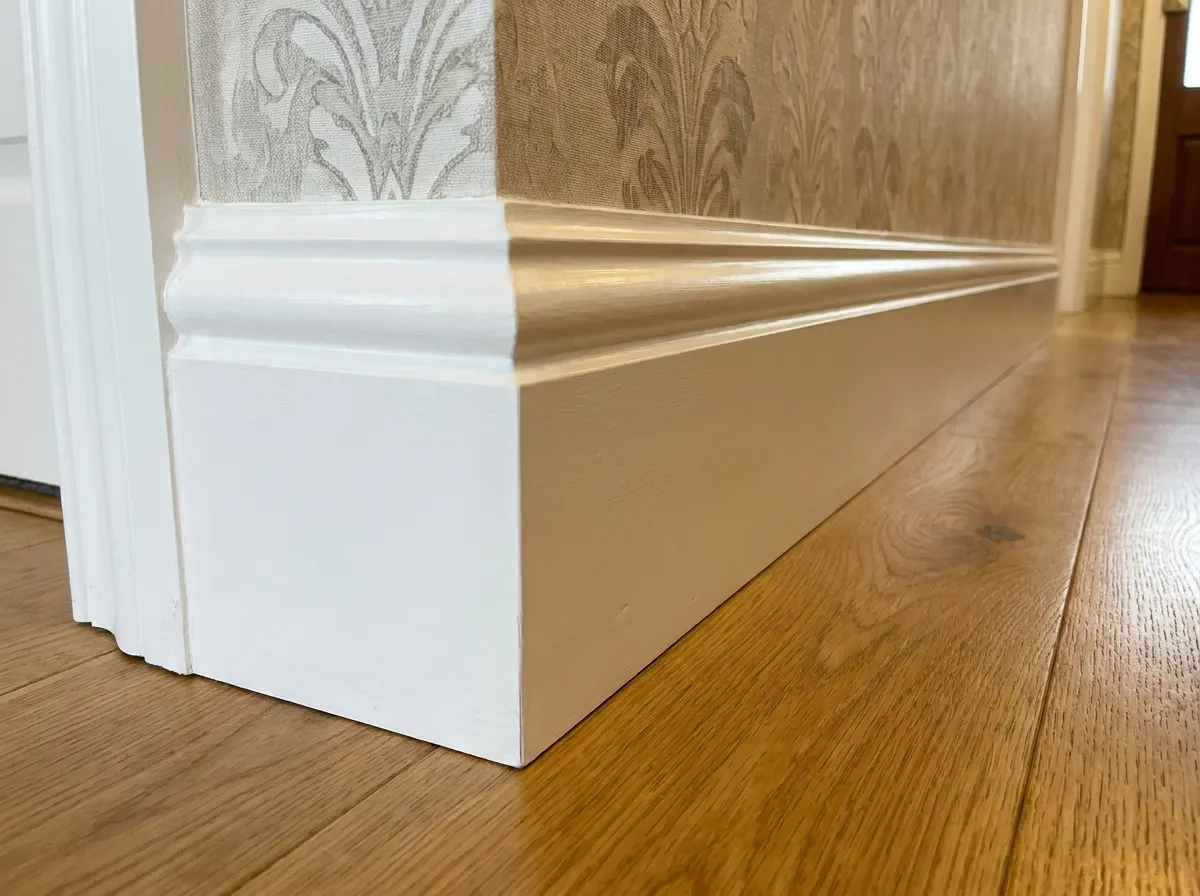
Skirting boards do far more than provide a decorative transition between your walls and flooring. They protect soft plasterboard from vacuums and shoe scuffs, conceal the messy expansion gaps left around laminate or hardwood floors, and can even hide unsightly network cables or house pipework.
In 2026, the average cost to supply and install skirting boards in the UK ranges from £8 to £30 per linear metre, with a typical 4m x 4m bedroom costing between £180 and £350. Prices vary widely based on material and profile: standard pre-primed Moisture-Resistant (MR) MDF is the most cost-effective, while solid oak or period tall Victorian pine requires greater material spend and precision joinery. Homeowners looking to reclaim wall space are also turning to heated skirting boards (such as ThermaSkirt), which double as central heating radiators at £65 to £130+ per metre.
~£220
Standard single room (approx. 14–16 linear metres). Fitted with pre-primed MR-MDF in a Torus or Bullnose profile. Includes adhesive, mitred/scribed joints, and carpenter labour.
~£1,250
Complete replacement across a 3-bedroom semi (approx. 70–85 linear metres). Removal of old skirting, pre-primed MDF supply, multi-room scribed fitting, caulking, and waste disposal.
£2,800+
Premium specification. Solid European Oak with matching architrave, or innovative radiant heated skirting boards (ThermaSkirt) plumbed into your central heating system to replace wall radiators.
Get an instant estimate for your skirting boards
Popular Skirting Board Profiles
The profile you choose sets the tone for your room. Modern new-builds favour clean, sharp lines, while period properties demand tall, decorative curves.
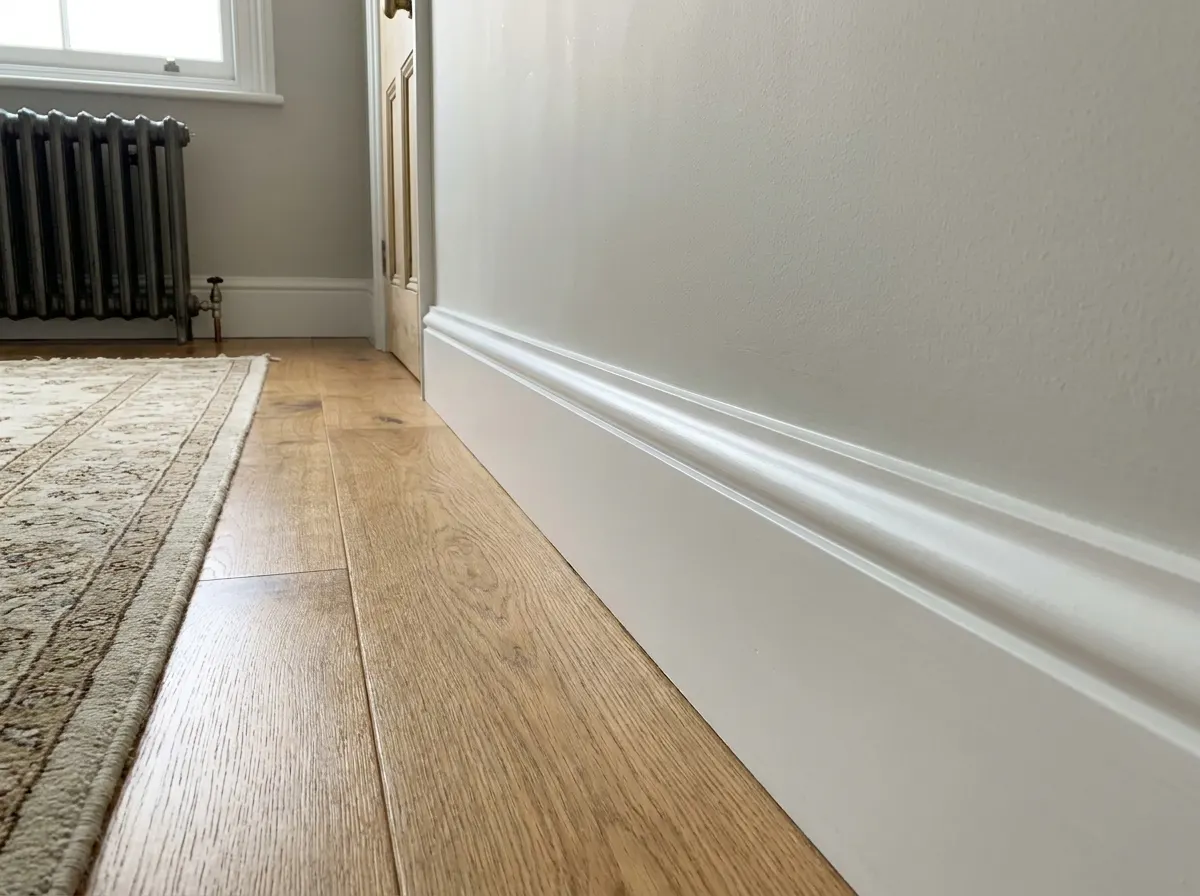
Torus Profile
UK #1The UK's most widely installed profile. Features a prominent semi-circular curved bulge (the torus) above a shallow scooped groove. Works effortlessly in modern and period homes alike.
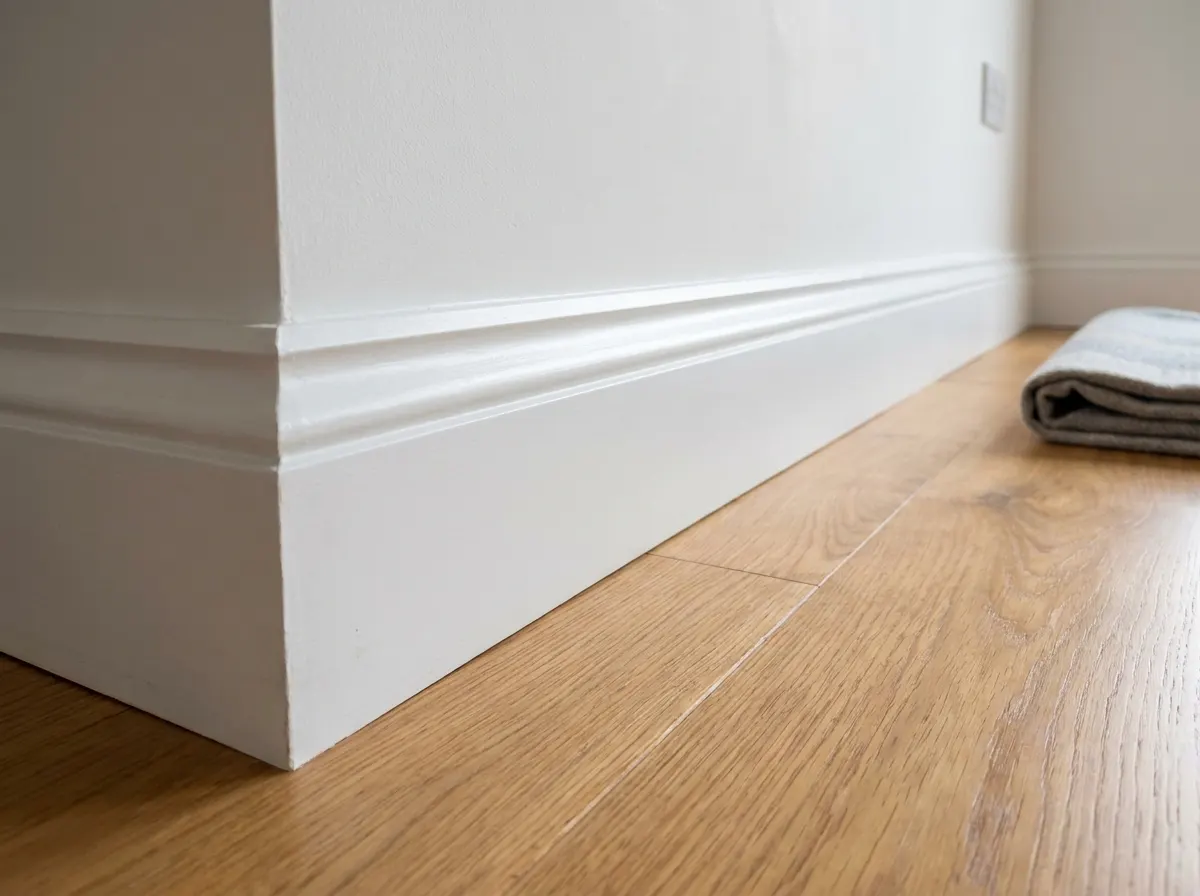
Ogee Profile
TraditionalCharacterised by a flowing 'S'-shaped double curve. More formal and decorative than Torus, Ogee is the hallmark of Edwardian and late-Victorian restorations with higher ceilings.
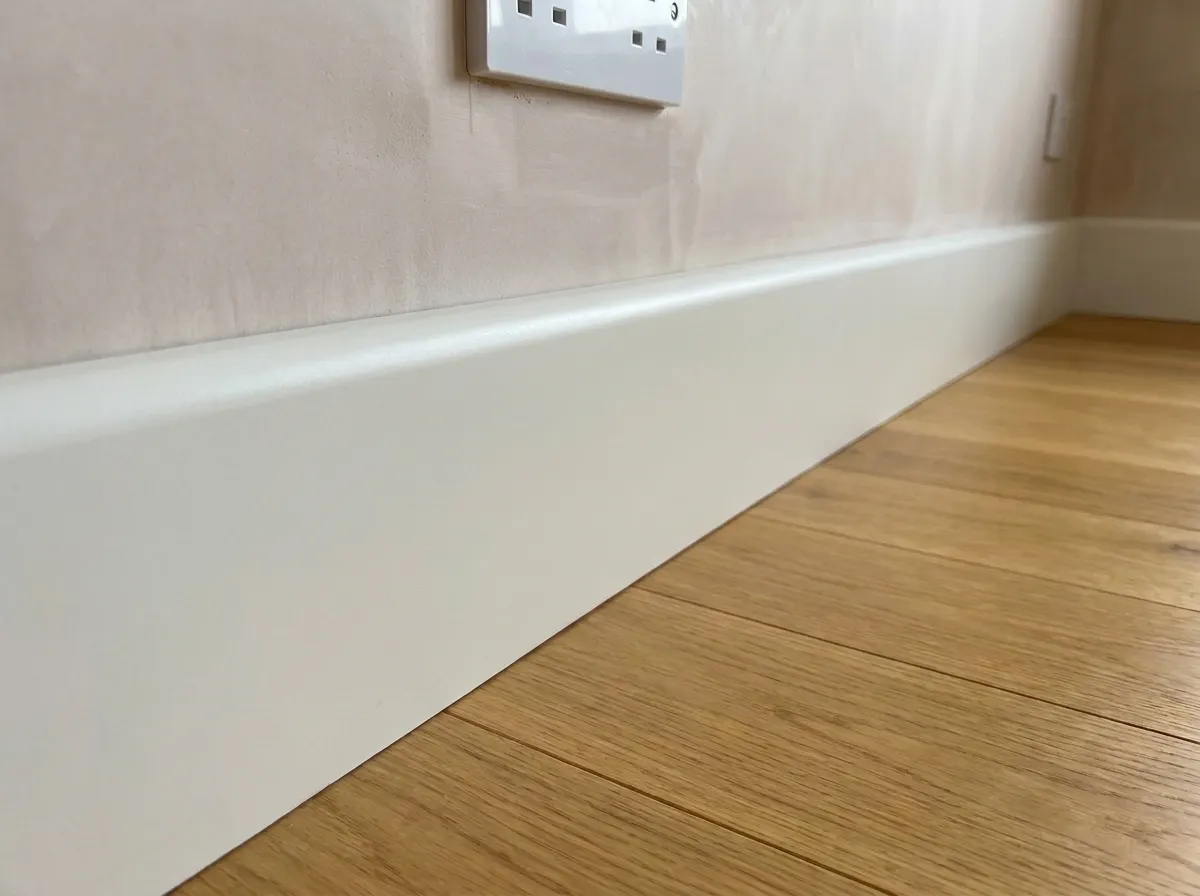
Bullnose (Pencil)
ModernA completely flat board with a gentle quarter-round or softened radius on the top corner. Highly contemporary, sleek, and easiest to paint and wipe clean.
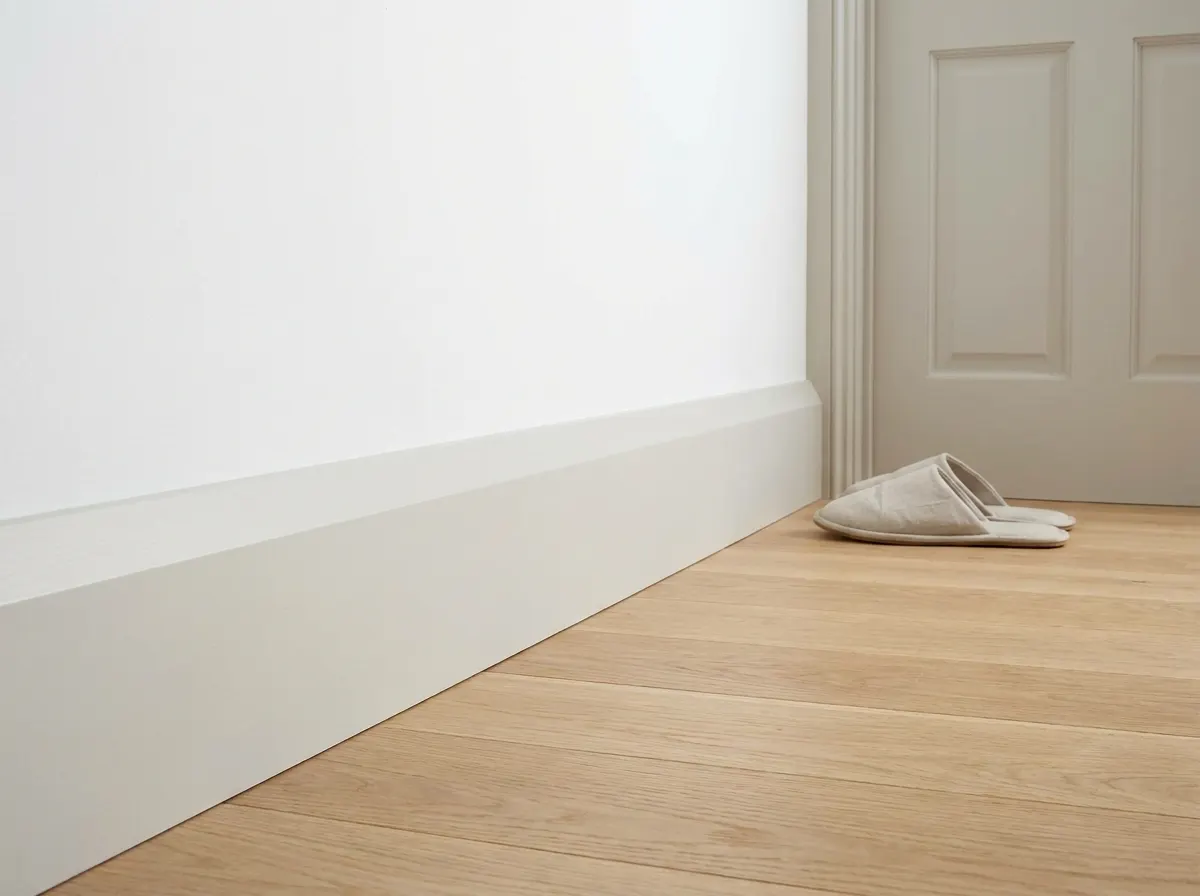
Chamfered
Clean LinesFeatures a sharp 45-degree sloping bevel along the top edge. The sloping flat surface prevents dust from collecting, making it favoured in rental properties and busy modern family homes.
Heated Skirting Boards (ThermaSkirt)
Why sacrifice wall space for bulky white metal radiators when your skirting boards can heat the room instead? Radiant heated skirting (popularised by systems like DiscreteHeat ThermaSkirt) replaces ordinary skirting with aluminium alloy profiles carrying hidden heating pipes or electric elements.
Why UK Homeowners Are Upgrading:
- ✓ Total Wall Freedom: Removes radiators entirely, freeing up uninterrupted wall space for sofas, bookshelves, and fitted wardrobes.
- ✓ Superior Heat Distribution: Warms rooms evenly from floor level all the way around the perimeter, eradicating cold spots and draft loops.
- ✓ Heat Pump Compatible: Highly responsive aluminium operates exceptionally well with low-temperature flow systems like air-source heat pumps.
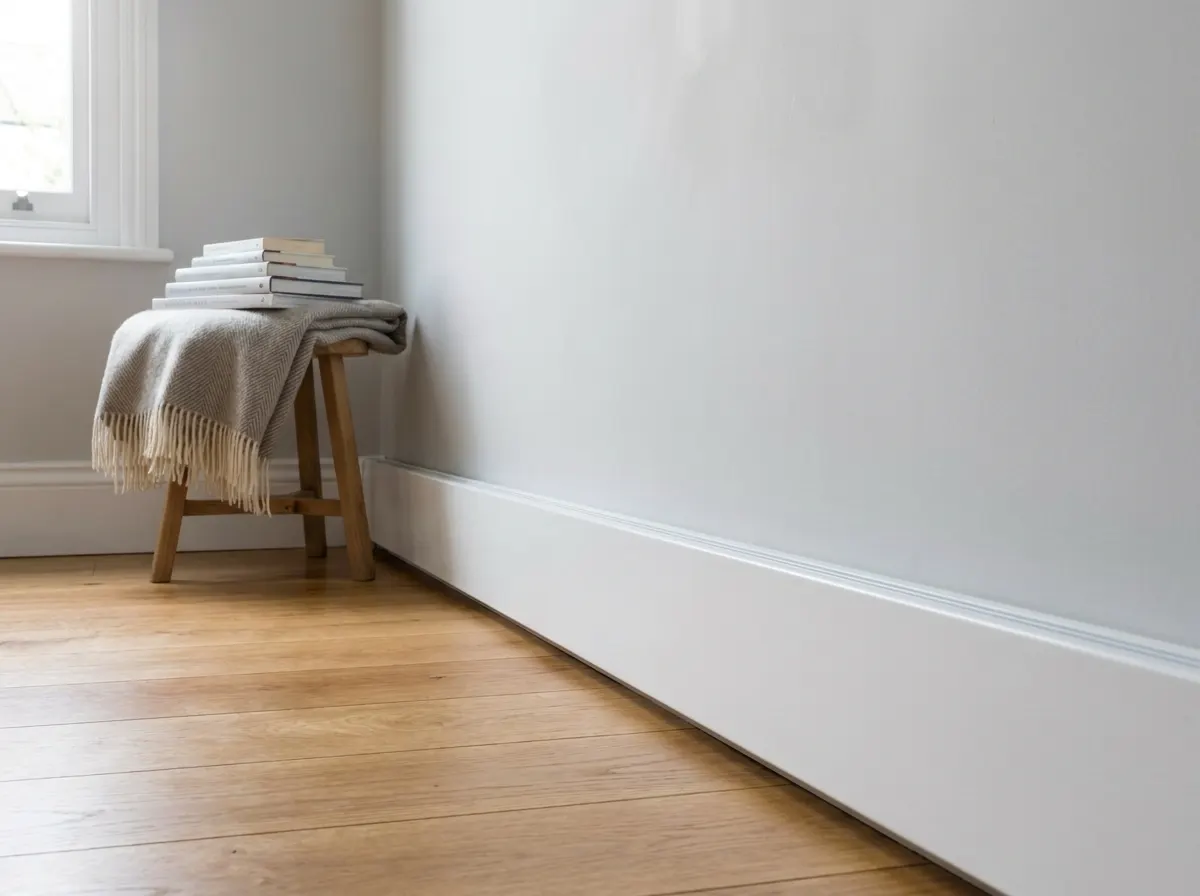
MDF vs Pine vs Solid Oak
The substrate material dictates longevity, moisture resistance, and whether your boards will twist and warp over time.
MR-MDF (Pre-Primed)
Top ChoiceMoisture-Resistant Medium Density Fibreboard is used in over 80% of UK homes. It has zero knots, will never warp, shrink, or split, and comes pre-primed ready for top-coating with satinwood or gloss paint.
Softwood (Pine)
Natural WoodSolid Scandinavian redwood pine. Can be stained, varnished, or painted. However, natural wood moves with central heating humidity, can cup or twist, and natural knots must be sealed with knotting solution to stop sap bleeding through paint.
Solid Hardwood (Oak)
LuxurySolid European Oak offers magnificent natural grain, dense durability, and immense impact resistance. Finished with Osmo oil or clear matt lacquer to match solid wood or engineered oak flooring.
The Mark of a Good Carpenter
The difference between a flawless professional installation and a sloppy amateur job comes down to corner joints and hidden functional rebates.
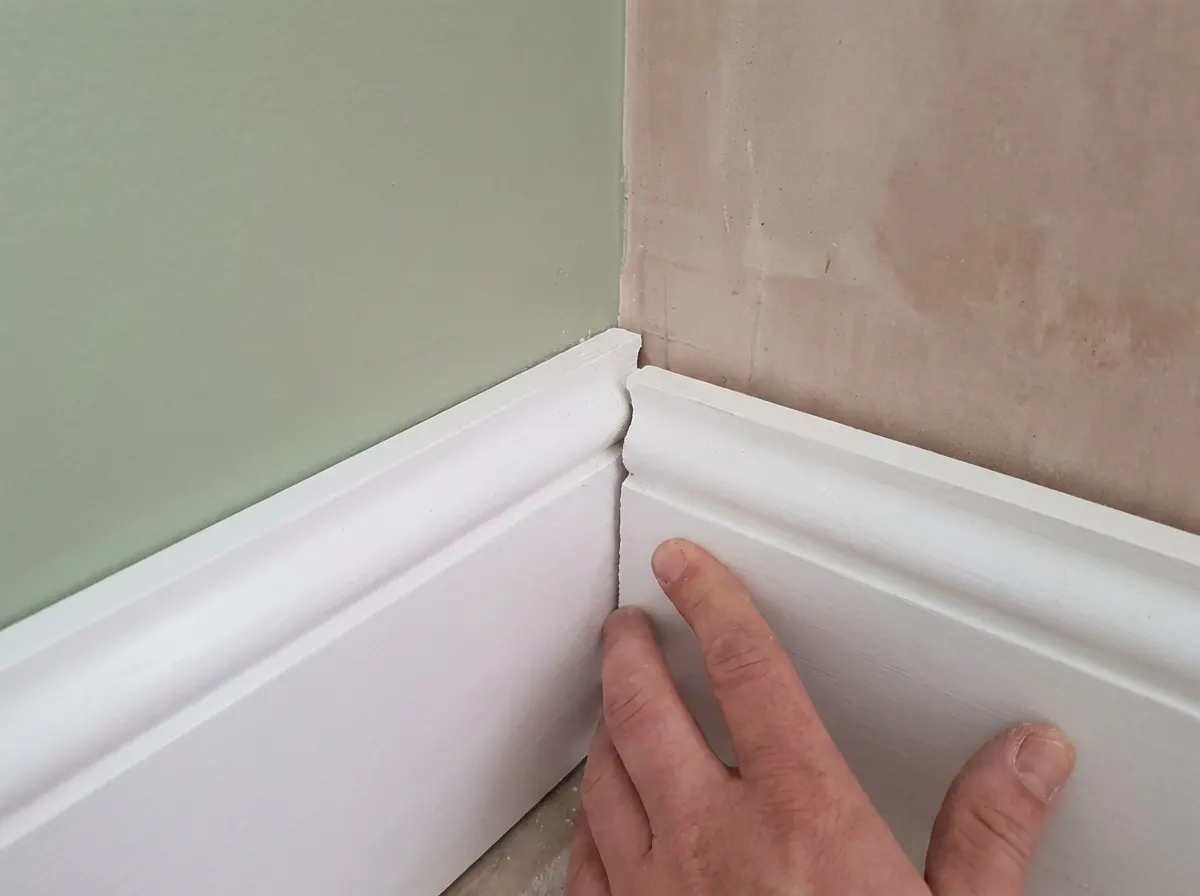
Scribing Internal Corners
Amateurs try to cut internal corners at 45-degree mitres. Because room corners in UK houses are never 90 degrees, mitres will gap open the moment the heating turns on. A true professional cuts a scribed (coped) joint, cutting the exact silhouette of the moulding with a coping saw so it interlocks seamlessly over the adjoining piece.
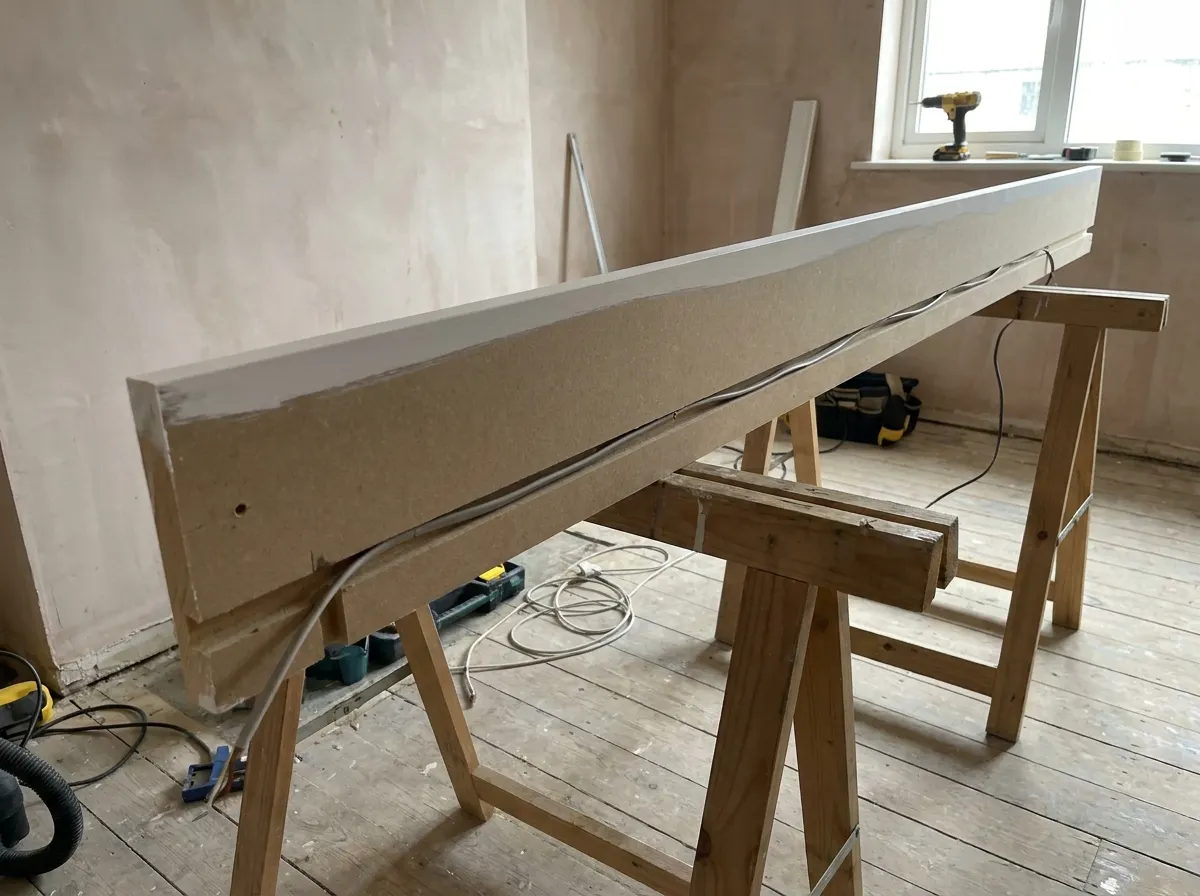
Rebates (Cable Tidy)
Many modern MDF skirting boards can be ordered with a rebated back—a 10mm–15mm recessed channel milled along the rear. This allows you to tuck Ethernet cables, coaxial aerial wires, or 10mm microbore heating pipework behind the skirting without having to chase out brick walls.
Adhesive vs Screws
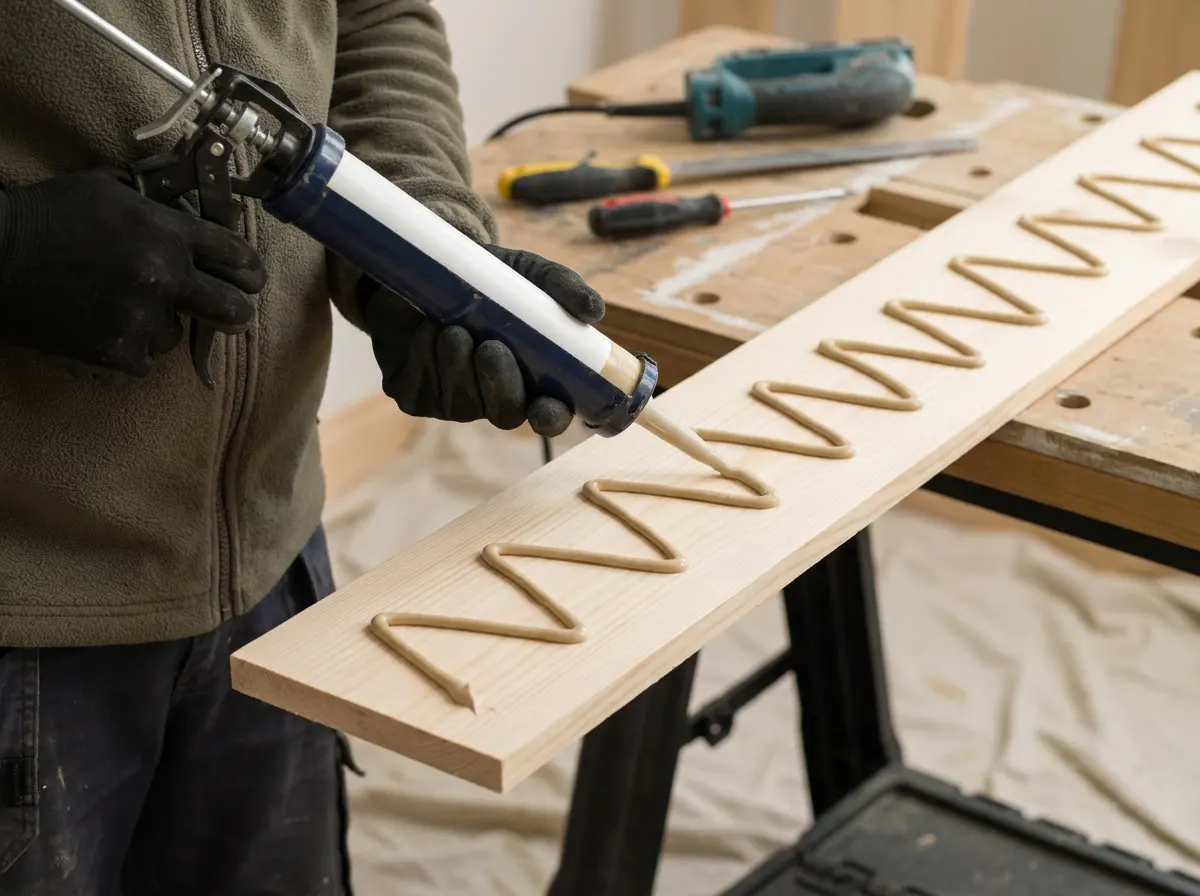
Modern skirting is fixed using hybrid polymer grab adhesives (like Gripfill, Pinkgrip, or CT1) paired with discrete 16-gauge second-fix nail guns. On bowed or wonky Victorian masonry walls, carpenters will drill and countersink masonry screws into rawlplugs to physically pull the board flat against the brick.
Complete Cost Breakdown (2026)
The table below breaks down real-world UK carpentry labour rates, material supplies, and removal costs across different home sizes.
| Scope of Work | Estimated Meterage | Materials (MR-MDF) | Total Fitted Cost |
|---|---|---|---|
| Single Bedroom / Living Room | 14 – 16 metres | £55 – £90 | £180 – £320 |
| Hallway, Stairs & Landing | 18 – 25 metres (Angled cuts) | £80 – £140 | £300 – £550 |
| Full 3-Bed Semi (Ground & 1st) | 70 – 85 metres | £280 – £480 | £1,050 – £1,650 |
| Full 4-Bed Detached Home | 110 – 140 metres | £450 – £750 | £1,600 – £2,600 |
| Carpenter Labour (Day Rate) | A qualified 2nd-fix carpenter charges £220 to £320 per day. A skilled carpenter can remove and fit 35 to 45 linear metres of straight MDF per day. | £220 – £320 / day | |
Crucial Do's and Don'ts
Skirting board fitting looks deceptively simple, but corner cuts and floor expansion traps can ruin an entire installation.
DO fit skirting AFTER hard floors.
Always fit new laminate, LVT, or hardwood flooring before installing the skirting boards. The skirting then sits neatly on top of the flooring, hiding the mandatory 10mm perimeter expansion gap cleanly. This eliminates the need for cheap-looking, dust-trapping "beading" (scotia).
DO leave a gap for carpets.
If you are fitting carpets, the skirting boards must be fitted first, elevated roughly 10mm to 15mm off the floorboards using timber offcut packers. This allows the carpet fitter to tuck the carpet edge neatly under the skirting and into the gripper rods.
DON'T mitre internal corners.
Never allow a fitter to cut internal corners at 45 degrees. Corners are almost never square. Scribed (coped) joints must be used so that when timber moves or boards settle, the joint stays tightly interlocked with zero visible gaps.
DON'T use standard silicone for tops.
Always use acrylic flexible decorator's caulk along the top of the skirting board to seal it against the wall. Never use silicone sealant; silicone cannot be painted over, causing emulsion paint to bead, crack, and peel off.
Can you fit skirting boards DIY?
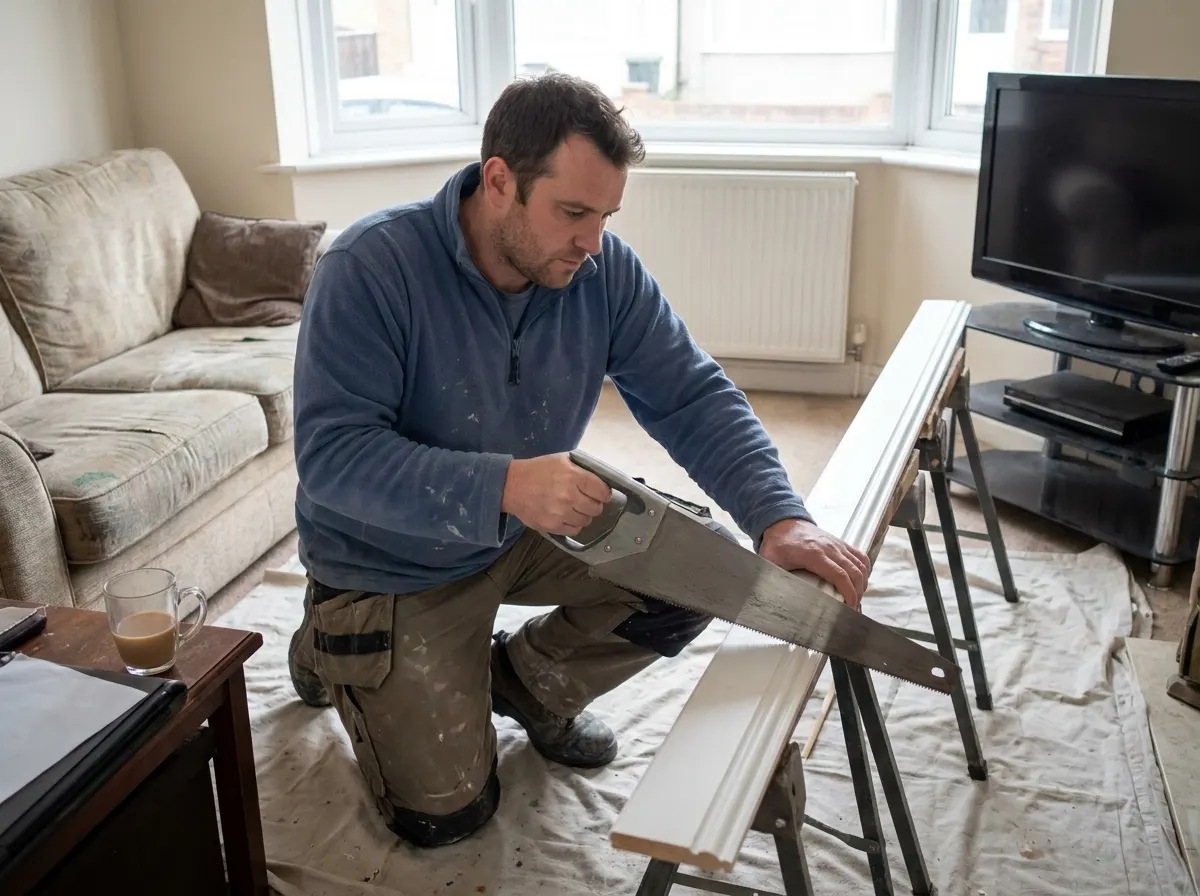
Yes, but only if you have the right cutting tools. Cutting long 4.2m lengths of MDF with a manual hand saw will result in jagged, crooked cuts. To achieve clean joints, you need a compound sliding mitre saw and a coping saw.
What you CAN safely DIY:
- ✓ Removal & Stripping: Carefully wedging a bolster chisel and pry bar behind old skirting to pull it off the wall saves labour hours and reduces your quote by £100+.
- ✓ Caulking & Painting: Filling the pin-nail holes with wood filler, running a neat bead of caulk along the top edge, and applying two coats of satinwood is straightforward weekend DIY.
Hire a Chippy For:
Bowed Victorian Walls: Plaster walls in older homes are rarely straight. A carpenter knows how to "scribe" boards to the floor, notch the rear, and fix into masonry anchors to make warped walls look straight.
Stairs & Mitred Returns: Cutting the compound angles where skirting runs up stair stringers and terminating decorative moulding neatly with "mitred end-returns" requires seasoned joinery experience.
Frequently Asked Questions
How much does a carpenter charge per linear metre to fit skirting boards in the UK in 2026?
In 2026, professional carpentry labour costs to supply and fit or install skirting boards typically range from £7 to £16 per linear metre for standard straight runs. Complex hallways, staircases with angled rakes, and intricate external or internal mitred corners are usually priced closer to the carpenter's standard daily rate of £220 to £350.
Is Moisture-Resistant MDF better than natural pine for skirting boards?
For any painted finish, yes. Moisture-Resistant (MR) MDF is completely knot-free, perfectly straight, dimensionally uniform, does not warp or twist under continuous radiator heat, and is supplied pre-primed. Natural softwood timber like pine is only recommended if you explicitly intend to stain, oil, or wax the natural wood grain.
What is the standard skirting board height in UK homes?
The most common modern UK skirting board heights are 119mm (approx. 5 inches) and 145mm (approx. 6 inches). Contemporary new-build apartments often feature shorter 95mm boards for minimalist proportions, whereas period Victorian or Edwardian properties with soaring 3-metre ceilings traditionally feature tall 170mm to 220mm+ profiles.
How does heated skirting work and is it worth it?
Heated skirting (such as ThermaSkirt) replaces conventional timber skirting boards with an aluminium profile containing oval copper heating pipes connected to your central heating system or an electric element. Heated skirting circulates warm water around the exact perimeter of the room, radiating comfortable warmth evenly while freeing up valuable wall space currently taken up by radiators.
What is a mitred return and why is it used on skirting?
When a skirting board run terminates abruptly without meeting a door architrave or adjoining wall (such as at an open hallway threshold or room entrance), a skilled carpenter cuts a precise 45-degree angled "mitred return" piece. This wraps the decorative profile back into the wall, neatly concealing the raw cut edge of the MDF for a professional finish.
Should you paint skirting boards before or after fitting them?
It is best to apply primer and your first undercoat before installation while the boards are laid flat on work trestles (saving your back and knees). Once the carpenter has cut, fixed, punched nail holes, filled imperfections, and caulked the top gap against the wall, you apply the final glossy or satin top coat in situ.
How do you fix skirting boards to uneven or bowing walls?
Fixing rigid boards to wavy or bowed plaster walls requires a combination of heavy-duty grab adhesive (like PinkGrip or Stixall) and mechanical fixings (masonry nails orrawl plugs and screws). For severe gaps, carpenters pack behind the board with thin timber shims before screwing it tight, and then run a neat bead of flexible decorators caulk along the top edge.
What is the difference between Torus, Ogee, and Bullnose skirting profiles?
Skirting profiles define the decorative top shape. Bullnose features a simple, smooth rounded top for ultra-modern or contemporary homes. Torus features a classic convex semi-circular curve popular in 1990s and traditional builds. Ogee features an elegant, flowing "S-shaped" classical cyma reversa curve favoured in period properties and high-end refurbishments.
Related Projects & Guides
Internal Doors Cost
Matching architraves and doors to new skirting.
Underfloor Heating
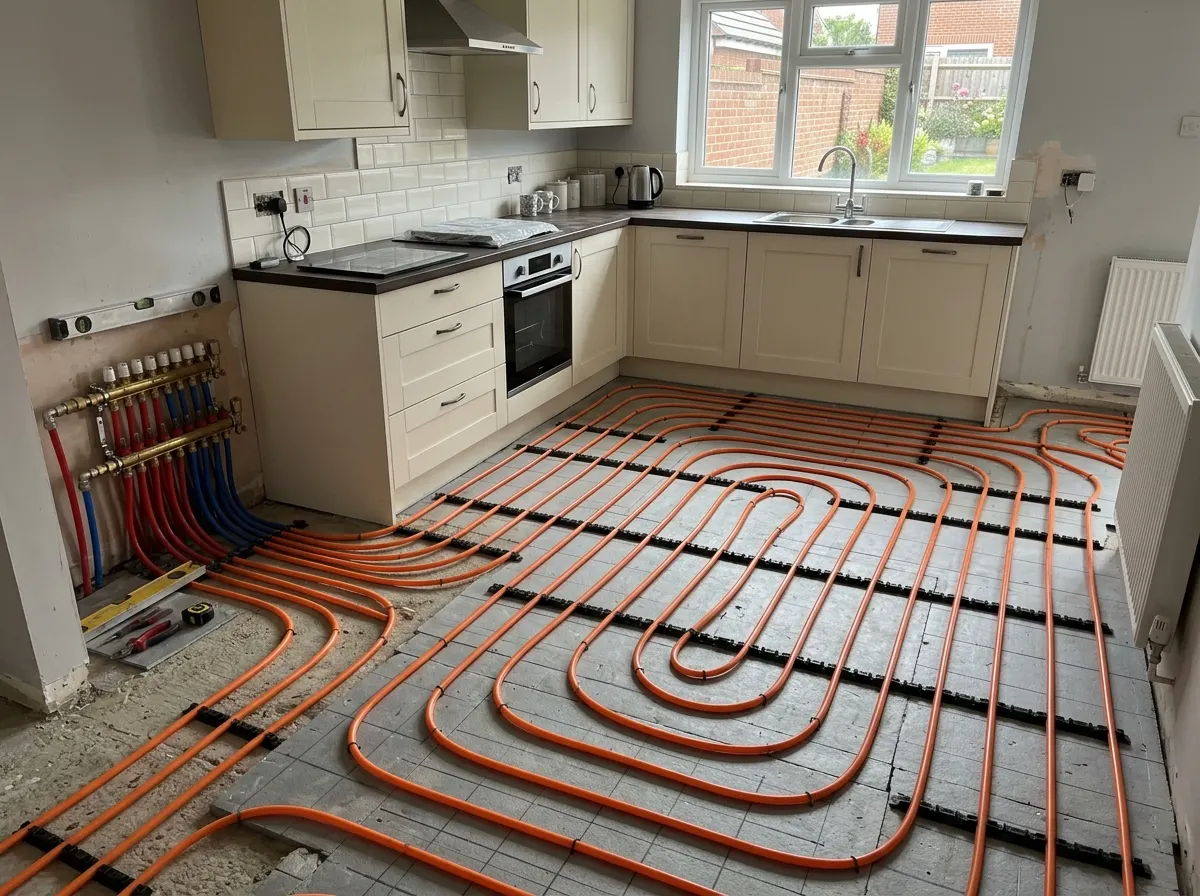
Comparing radiant floor heat to heated skirting.
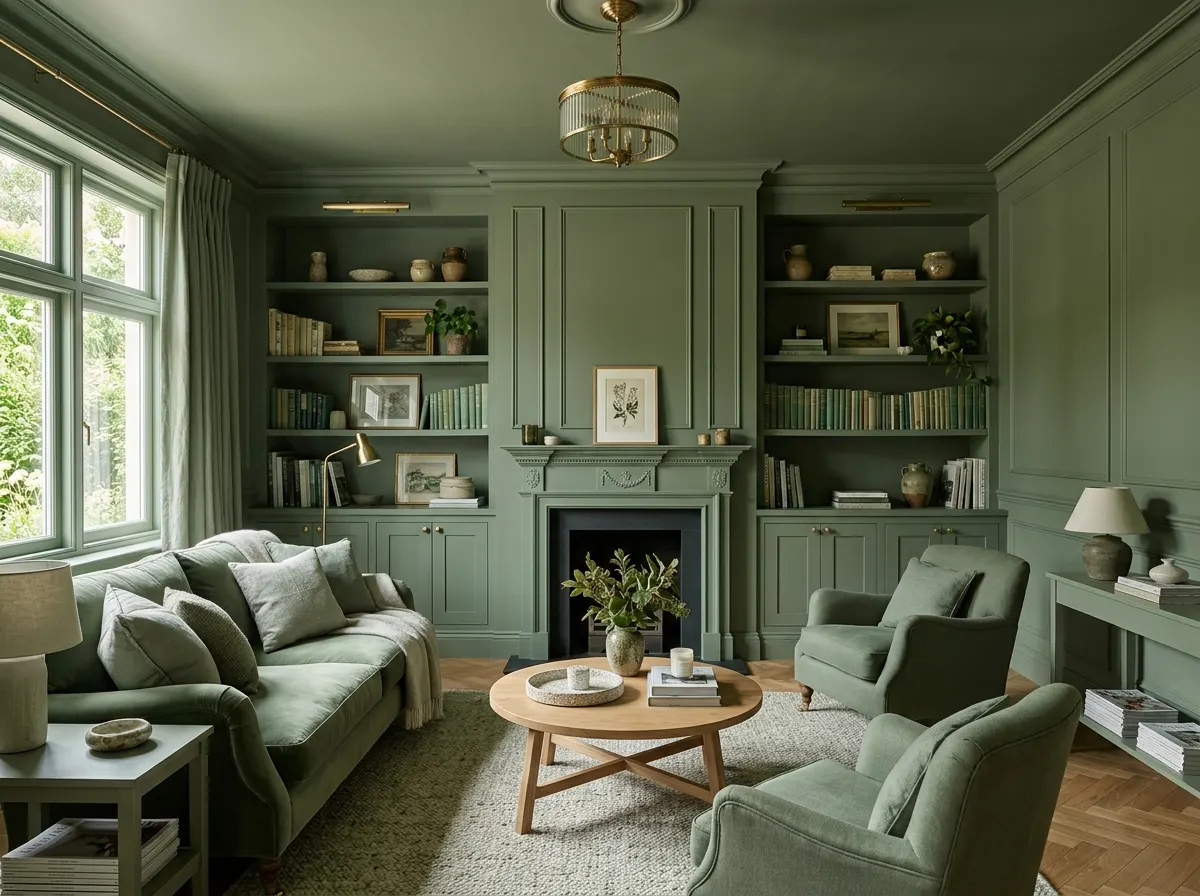
Decorating
Painting and decorating costs.
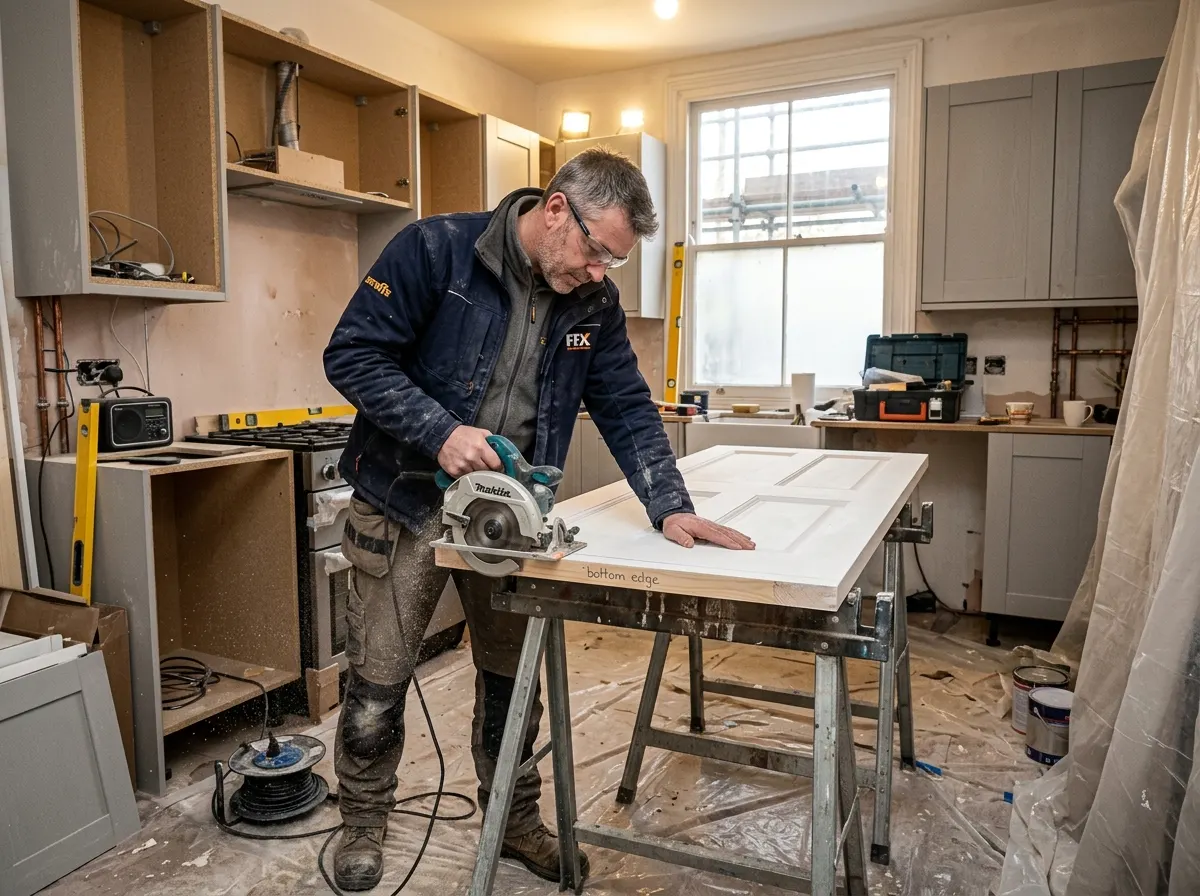
Carpentry & Joinery
Carpenter day rates and second-fix timber.
Get crisp, flawless skirting fitted.
Use our AI to calculate a precise estimate based on your room meterage, chosen profile, and material preference, then connect with Pricing Penguin Accredited carpenters near you.
Did you find this page helpful?
Let us know if this guide helped you plan your project.