How much does a painter and decorator cost in the UK?
 By Tom Ellis
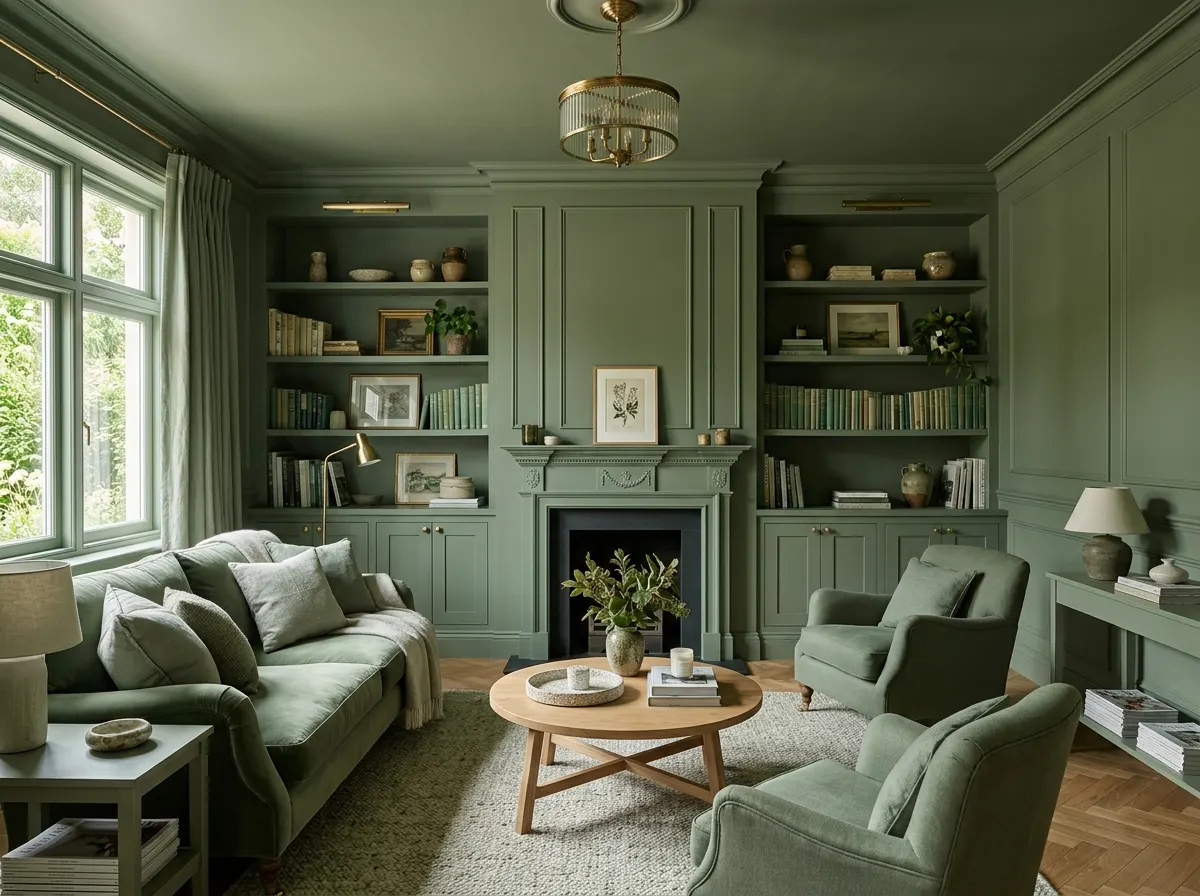
Professional painting and decorating can completely transform your home. While it is one of the most accessible DIY jobs, achieving a flawless, durable finish with razor-sharp lines requires a professional's touch and weeks of experience.
Costs depend heavily on room sizes, ceiling heights, the quality of paint you choose, and crucially, the amount of surface preparation required. In 2026, experienced UK decorators charge an average day rate of £200 to £350, with a standard room typically costing between £400 and £550.
~£450
Standard medium-sized bedroom (approx 15m²). Includes minor prep, two coats of trade emulsion on walls/ceiling, and undercoat/gloss on basic skirting.
~£2,500
Full interior repaint of a standard 2-bedroom flat. Includes living room, hallway, bathroom, and kitchen using durable, mid-range paints.
£5,000+
Full redecoration of a 4/5-bed house. Extensive prep work, repairing cracks, premium paints (Farrow & Ball), and detailed heritage woodwork restoration.
Get an instant estimate for your decorating
Interior Decorating Styles
The way a room is painted significantly affects the labour required. Here are the most requested decorative finishes for 2026.
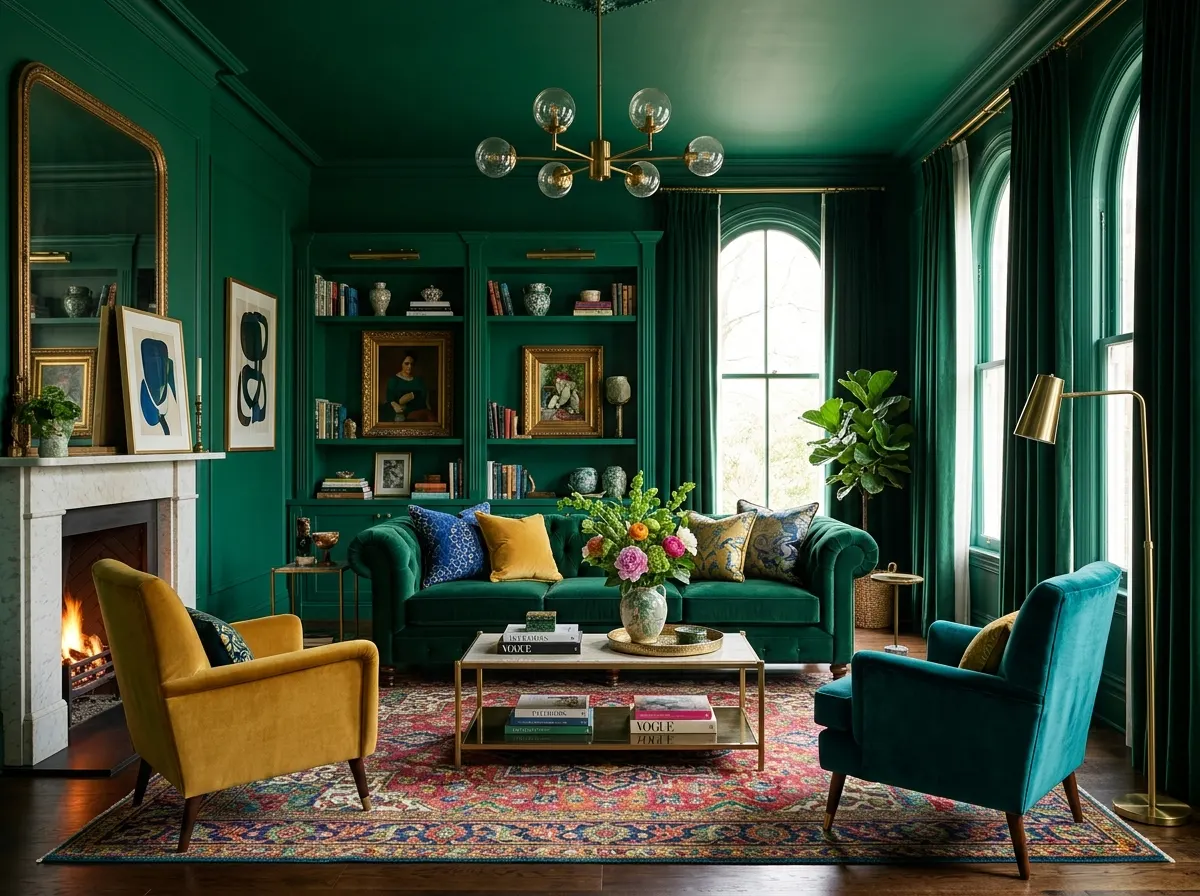
Colour Drenching
A highly popular modern trend where the walls, ceiling, doors, radiators, and skirting boards are all painted the exact same colour. It creates a bold, immersive space and surprisingly makes small rooms feel larger.
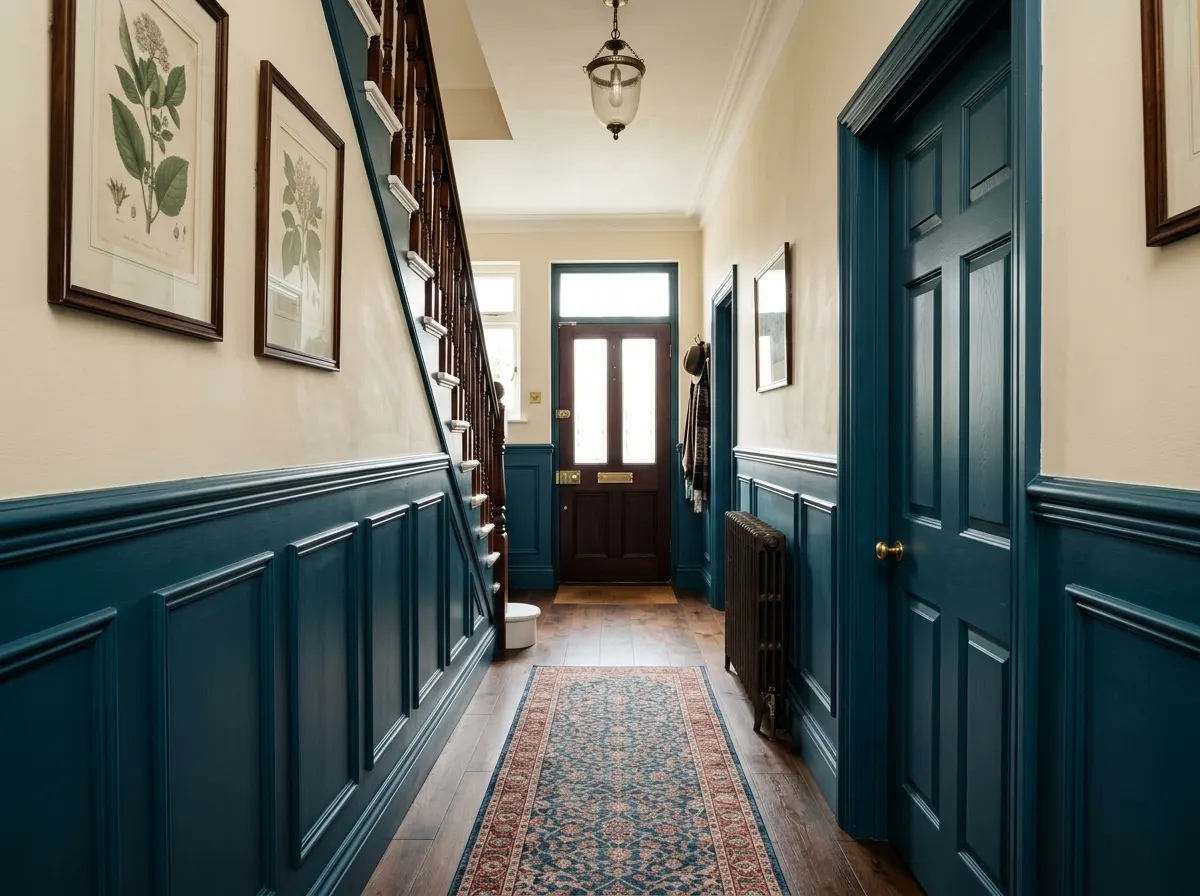
Wood Panelling / Wainscoting
Decorators apply MDF strips to the lower half of the wall (or full feature walls) before caulking, priming, and painting in a durable eggshell finish. Adds instant character to plain new-build homes.
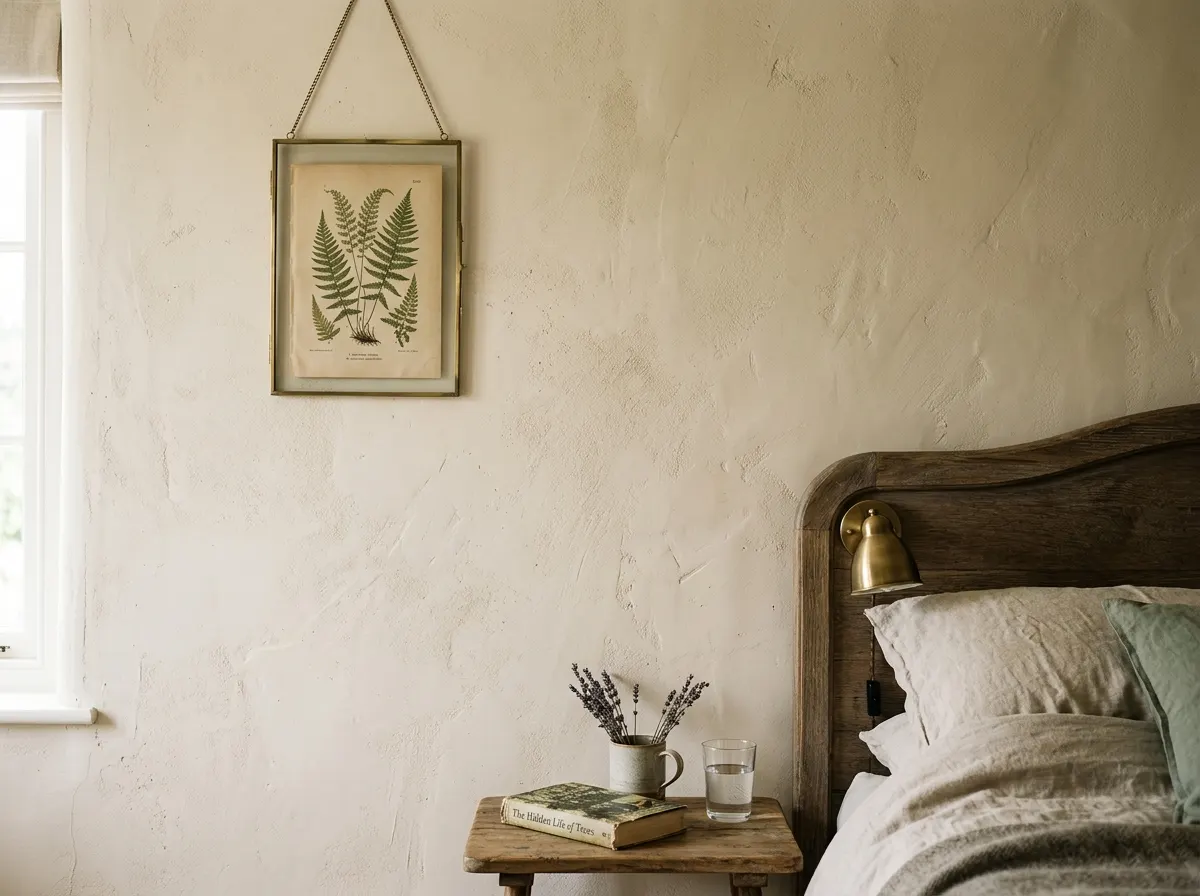
Limewash & Textured Finishes
Brands like Bauwerk have brought traditional limewash back. Applied with a large masonry brush in a criss-cross pattern, it creates a cloudy, matte, suede-like texture that hides wall imperfections beautifully.
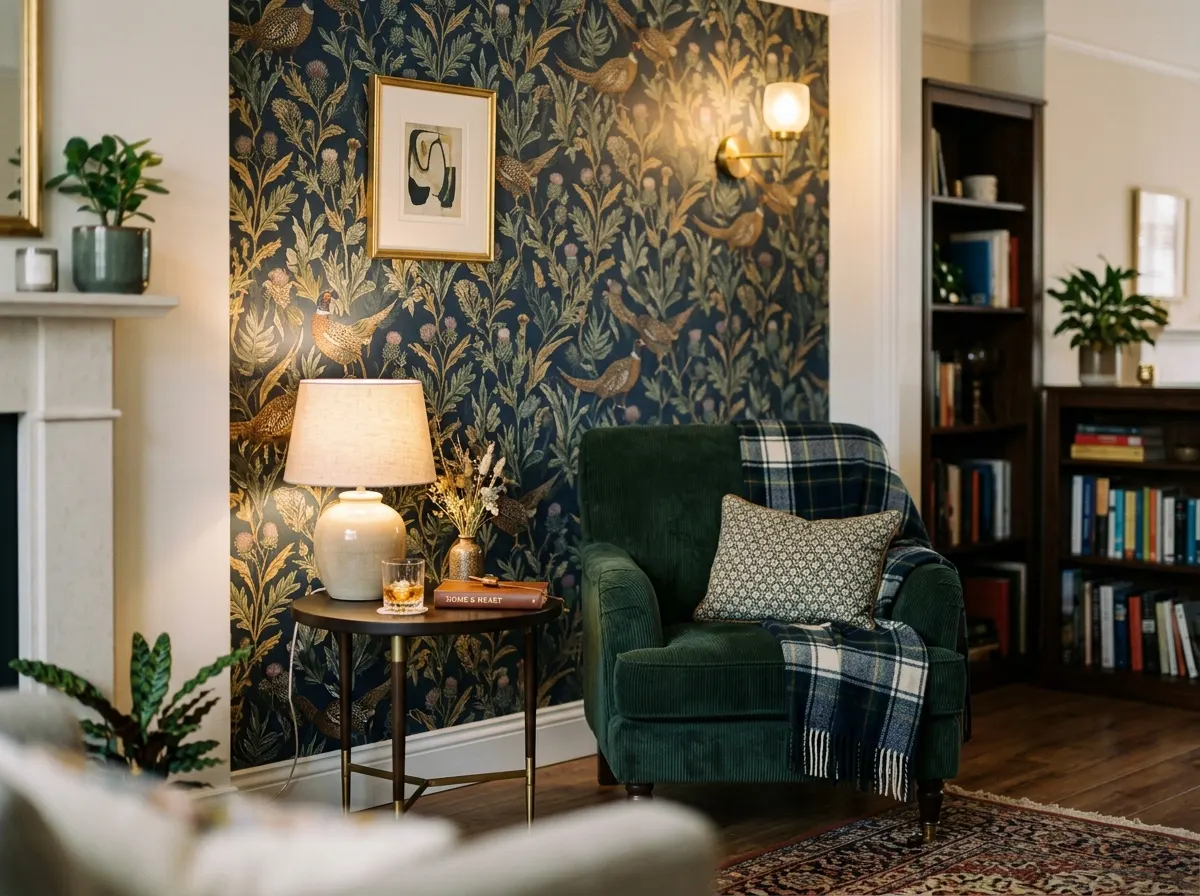
The Wallpaper Feature Wall
Hanging wallpaper is a distinct skill from painting. Many decorators charge per roll (£30-£60) to hang premium patterned paper on a single chimney breast or headboard wall, alongside painted adjacent walls.
Costs by Room & Element
Decorators price jobs based on square meterage, ceiling height, and the condition of the walls. These figures represent averages for standard trade-quality work in 2026.
| Job Description | Typical Scope | Rest of UK | London & SE |
|---|---|---|---|
| Small Room (e.g. Box room) | Walls, ceiling, and basic skirting. | £350 – £450 | £420 – £580 |
| Medium Room (e.g. Bedroom) | Walls, ceiling, skirting, one window frame. | £400 – £550 | £480 – £700 |
| Large Living / Through-Lounge | Large area, high ceilings, multiple doors/windows. | £600 – £1,000+ | £750 – £1,300+ |
| Hallway, Stairs & Landing | High access required, lots of intricate woodwork (spindles). | £600 – £1,200 | £800 – £1,500 |
| Internal Doors (Both sides) | Sanded, primed, and two coats of eggshell/satinwood. | £80 – £100 ea | £100 – £130 ea |
| Exterior House Painting | Masonry paint for a 3-bed semi (excluding scaffolding). | £1,300 – £1,500 | £1,800 – £2,500 |
| Full 3-Bed House Repaint | All interior walls, ceilings, and basic woodwork. | £3,000 – £5,000 | £3,800 – £6,500 |
Paint Brands & Finishes Explained
The paint you choose impacts the price, durability, and final look. Professional decorators rarely use standard B&Q retail paint.
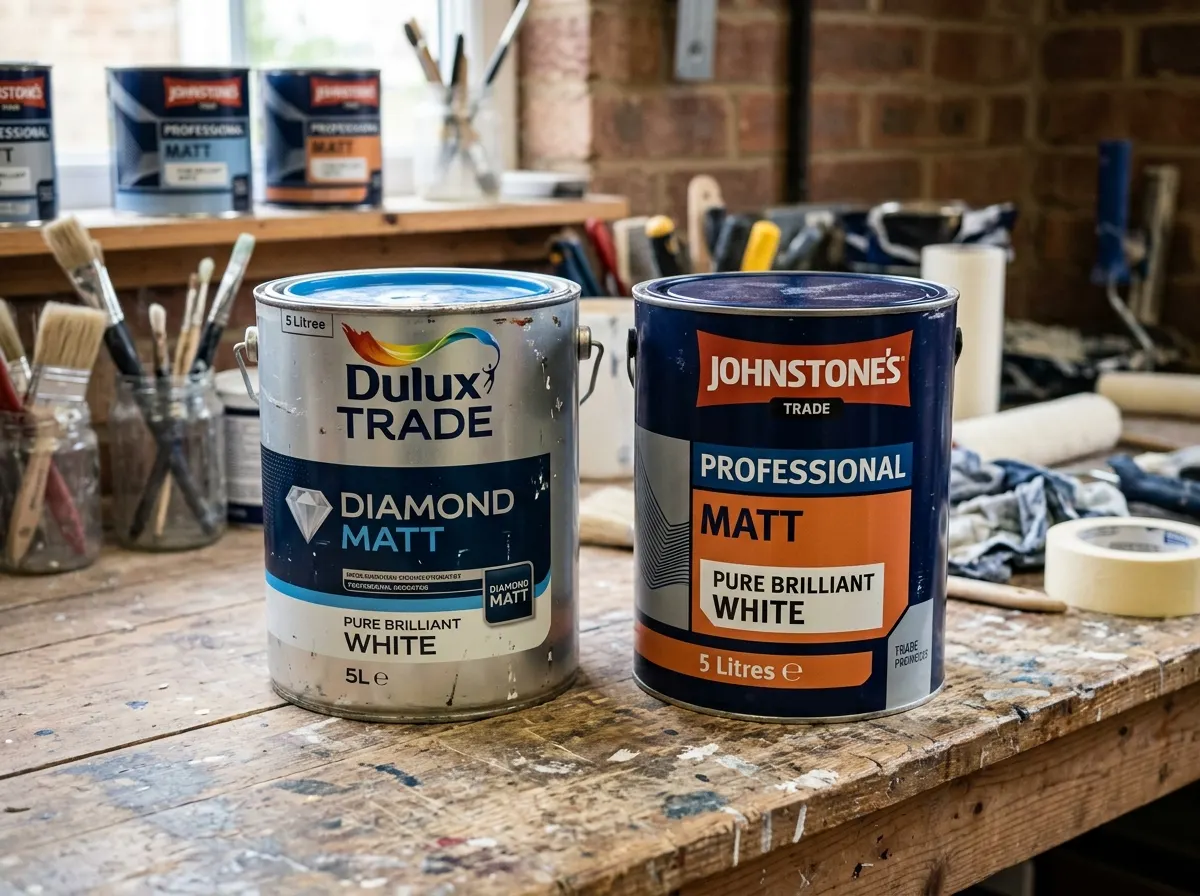
Trade Paints (The Standard)
Brands like Dulux Trade, Johnstone's Trade, and Crown Trade. This is what 90% of decorators use. It is vastly superior to retail DIY paint—it covers better, goes further, and is far more durable. Available in Vinyl Matt for walls or Diamond/Acrylic for high-traffic areas.
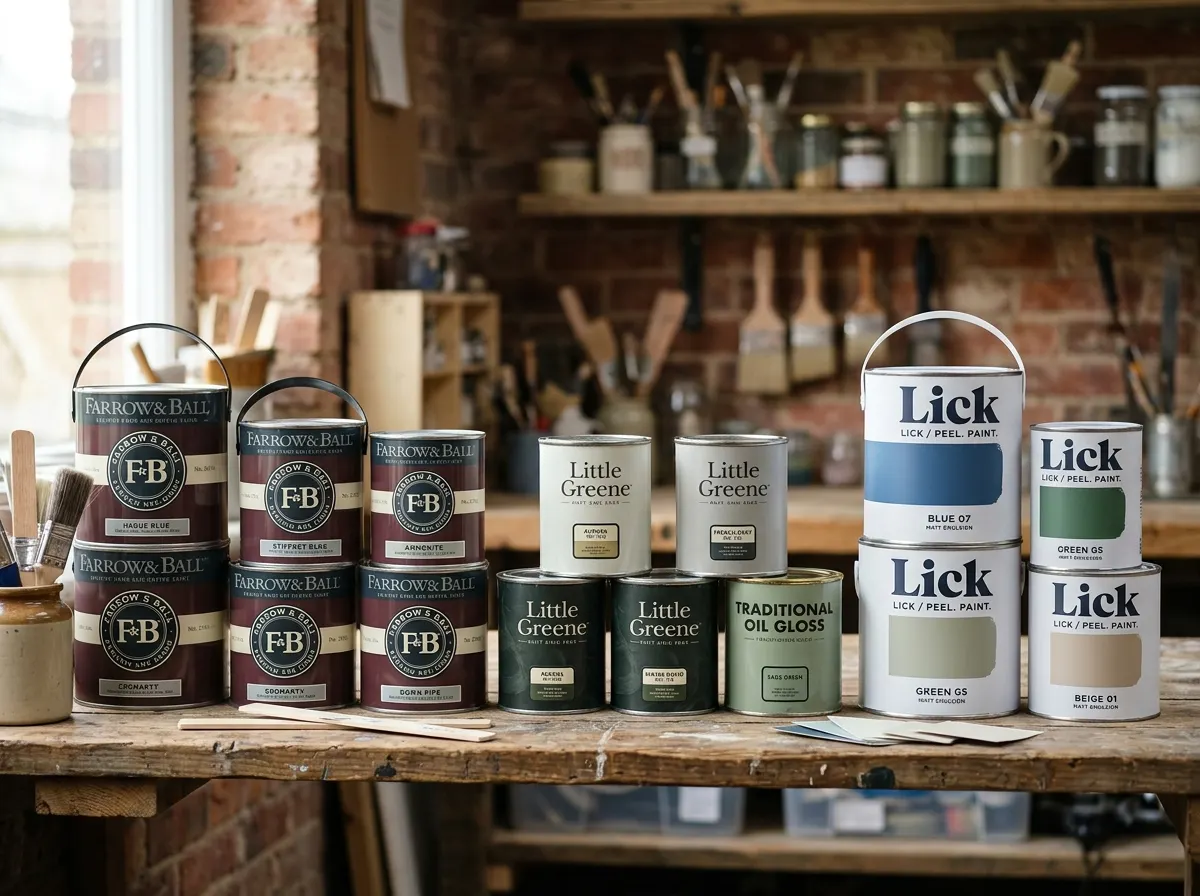
Designer / Premium Paints
Brands like Farrow & Ball, Little Greene, COAT, and Lick. Highly pigmented for rich, deep colours that change in the light. However, they are expensive, and some classic chalky finishes (like Estate Emulsion) are prone to scuffing and require careful application.
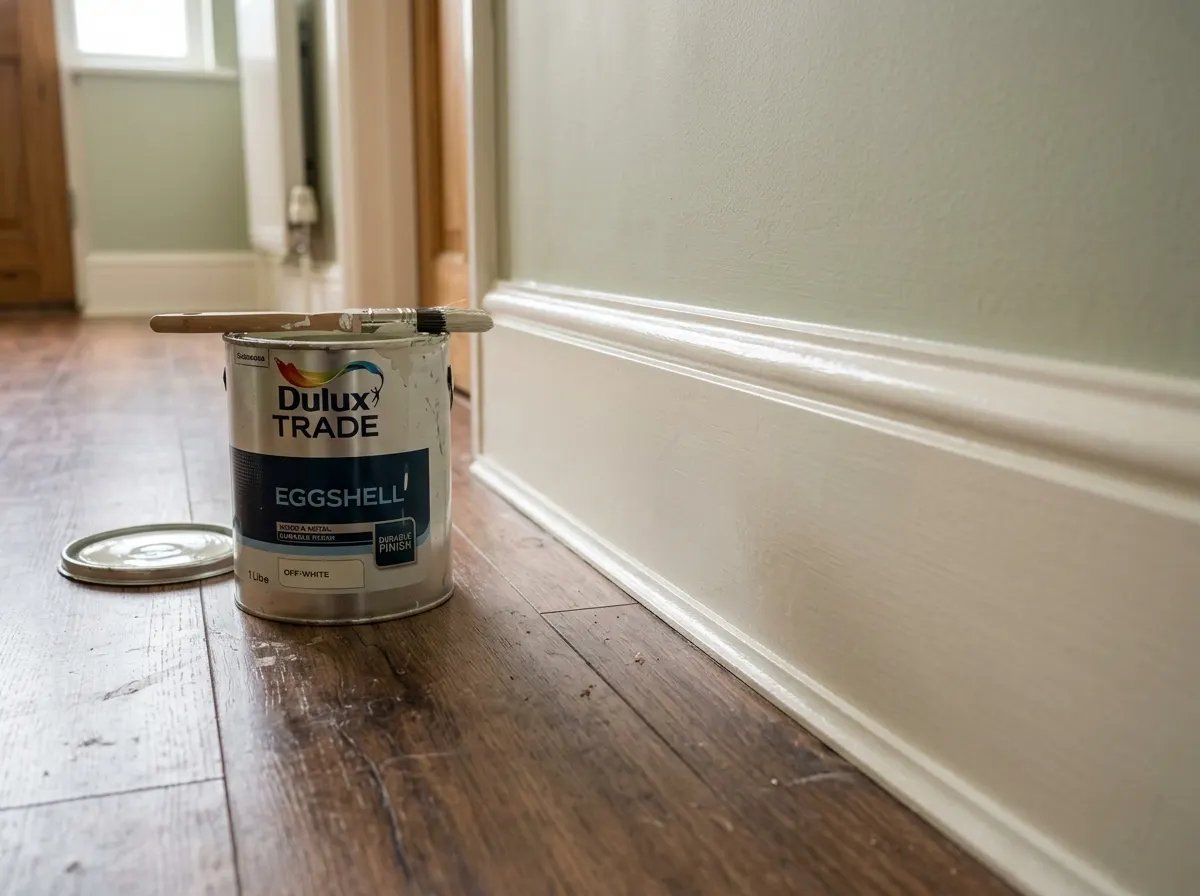
Woodwork Finishes
For skirting boards, doors, and architraves. Gloss is highly shiny and durable but has fallen out of fashion. Satinwood offers a mid-sheen glow, while Eggshell provides a flat, modern, low-sheen finish that is currently the most requested style.
Exterior Masonry & Silicate
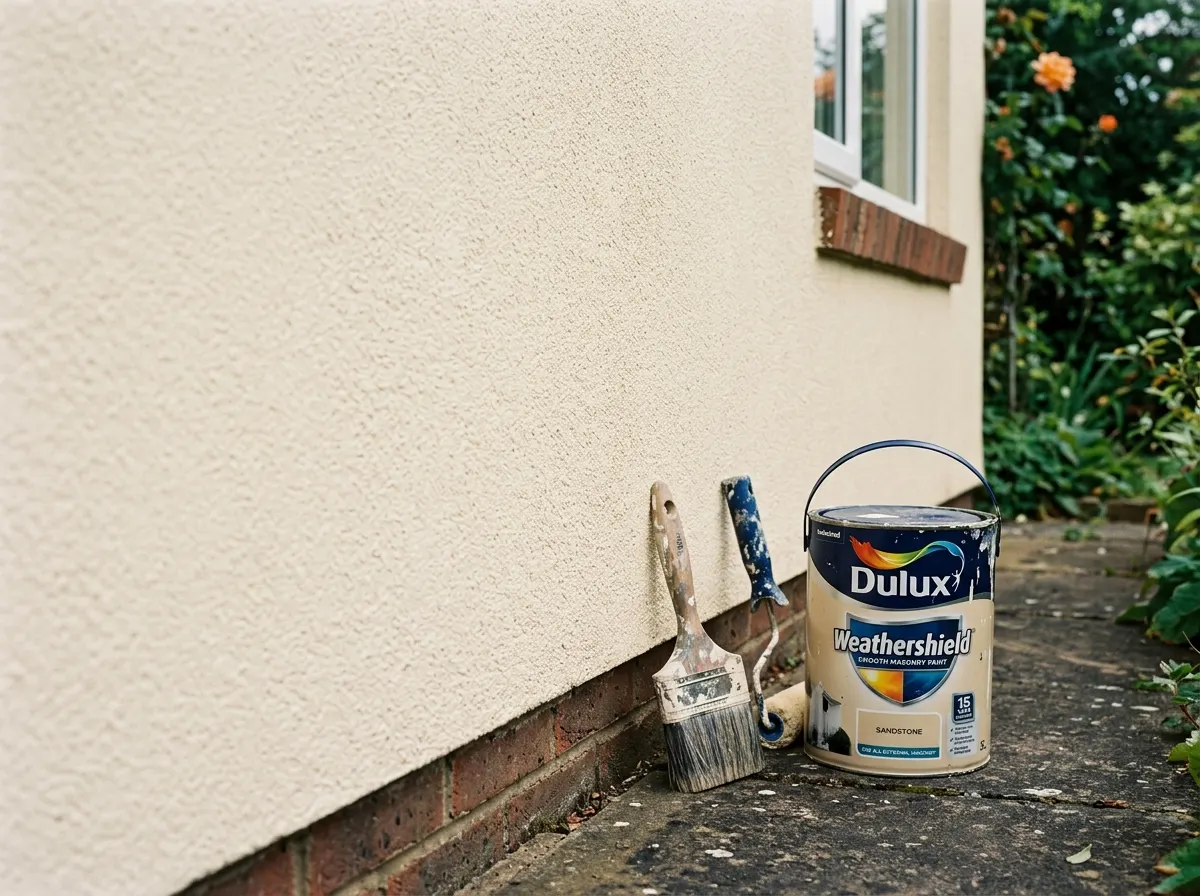
Standard trade masonry paint costs £8-£15/m² to apply and lasts ~10 years. Premium breathable Silicate paints (like Keim or Beeck) chemically bond to brickwork, lasting 25+ years but costing up to £45/m² to apply.
Why does it take so long?
If you've ever wondered why a decorator needs two to three days to paint a medium bedroom, it's because "painting" is only 20% of the job. Flawless results come from obsessive preparation.
Protection & Sanding
Floors are heavily sheeted and taped. Sockets are loosened. Walls and woodwork are washed with sugar soap to remove grease. Everything is then mechanically sanded using dustless extraction systems (like Mirka or Festool) to completely remove the sheen from old paint, creating a mechanical "key" for the new coats.
Filling & Caulking
Every crack, dent, and old rawlplug hole is raked out and filled (often twice, as filler shrinks when drying). Woodwork is repaired with hard two-pack filler. Flexible decorator's caulk is run along the edges of all skirting boards and door frames to close expansion gaps and ensure perfectly sharp, seamless lines.
Cutting In & Rolling
Bare filler patches are "spot-primed" so they don't flash through. The ceiling gets two coats. The decorator then "cuts in" the wall edges by hand using an angled brush. The main wall bodies are rolled off. The cutting-in and rolling process is repeated for a solid, opaque second coat.
Woodwork & Snagging
Skirting boards, doors, and frames are given a coat of adhesion primer (if going over old oil gloss), followed by two coats of modern water-based satinwood or eggshell. Tape is carefully pulled while paint is slightly tacky. The room is hoovered, inspected with a high-lumen spotlight, and touched up.
Timeline by Room Size
Painting is heavily dictated by drying times. A decorator cannot rush the next coat before the first is dry without ruining the finish.
| Project Size | Typical Scope | Expected Timeline |
|---|---|---|
| Small Room | Standard box room or small study. Basic prep. | 1.5 – 2 Days |
| Medium Room | Master bedroom or average dining room. | 2 – 3 Days |
| Hallway, Stairs & Landing | Complex high access, lots of doors, intricate stair spindles. | 3 – 5 Days |
| Full 3-Bed House | All rooms, ceilings, and woodwork top to bottom. | 2 – 3 Weeks |
What causes delays and adds cost?
A "quick lick of paint" rarely exists in older homes. The following factors will significantly increase both the timeline and your final quote.
Wallpaper Stripping
The ultimate time-killer. Stripping old woodchip or heavily painted lining paper can take a decorator 1-2 full days per room. Often, stripping old paper reveals crumbling plaster underneath, which then triggers a massive plastering repair bill before painting can even begin.
Radical Colour Changes
If you are painting over a dark navy blue wall with a brilliant white or pale cream, two coats will not be enough. The decorator will have to apply three to four coats (or use a specialist obliteration primer) to kill the old colour, doubling the application time.
Heritage & Intricate Woodwork
Sanding and painting a simple, modern flat skirting board takes minutes. Sanding and painting intricate Victorian picture rails, ornate dado rails, ceiling roses, and 50+ individual staircase spindles takes hours of painstaking, manual hand-cramping work.
Cluttered Rooms
An empty room can be prepped and painted in half the time of a fully furnished one. If the decorator has to constantly maneuver around beds, dismantle heavy wardrobes, and shift fragile items, they are billing you skilled rates to act as a removal team.
How to control your decorating budget
-
Clear the Room Completely
Decorators charge for their time. If they have to spend 2 hours moving heavy wardrobes, detaching beds, and taking down curtains, you are paying skilled trade rates for manual labour.
-
Strip the Wallpaper Yourself
Stripping old woodchip or multiple layers of wallpaper is a miserable, time-consuming job. Hiring a steamer for £25 and doing it yourself over a weekend will save you hundreds of pounds off the quote.
-
Leave the Ceilings White
If your ceiling is already white and in good condition, don't ask to repaint it unless necessary. Painting ceilings requires scaffolding/platforms, covers everything in micro-splatter, and drastically increases the "cutting-in" time.
Regional Considerations
Because painting requires minimal heavy materials, the total cost of your job is almost entirely dictated by regional labour rates.
How to hire a reliable decorator
A brilliant decorator is worth their weight in gold. Look out for these signs of a genuine professional:
Dustless Sanding Equipment
Ask if they use a "dustless" extraction system (like Festool or Mirka). A good decorator will attach their sander to a vacuum unit, meaning your home won't be covered in a fine layer of white dust for weeks.
Detailed Paint Specifications
Their quote should explicitly name the paint brand and finish (e.g. "2x coats of Dulux Trade Vinyl Matt to walls"). If the quote just says "Paint included", they might be using watered-down budget retail paint.
Mist Coating on New Plaster
If you have newly plastered walls, ask how they treat them. A pro will always apply a watered-down "mist coat" (or specific bare plaster paint) first to soak into the porous plaster. If they just slap standard emulsion on, it will peel off in sheets.
Clarify the Woodwork
Make sure the quote specifies if skirting boards, architraves, and interior doors are included. Hand-painting 6 panel doors takes a massive amount of time, and is often left off basic quotes to make them look cheaper.
Red flags to watch out for
Painting quotes that are 30% cheaper than the local average are usually hiding cut corners. Look out for:
"Flash Patching"
Instead of fully prepping and filling a wall, cowboy painters will just dab filler into the worst holes, not sand it properly, and paint right over it. You won't notice until the light hits the wall and it looks lumpy.
No Undercoat on Wood
If they try to paint modern water-based eggshell directly over 1990s yellowed oil-based gloss without sanding and using a specialist adhesion primer (like Zinsser BIN), the new paint will simply scratch off with a fingernail.
Painting Over Damp
If you have dark damp patches or mould, painting over it with standard emulsion won't fix it. It will bleed through in weeks. A proper decorator will insist on diagnosing the damp, letting it dry, and treating it with a stain-blocker.
Can you DIY the decorating?
Absolutely. Painting is one of the most cost-effective DIY jobs. A room that costs £450 to have painted professionally will only cost £50–£100 in materials if you do it yourself. The trade-off is your time and the precision of the finish.
Essential DIY Equipment:
- ✓ Purdy / Harris Angled Brushes: Don't buy cheap £1 brushes. A £15 angled synthetic brush is the secret to cutting-in sharp lines without masking tape.
- ✓ Medium Pile Microfibre Roller: Crucial for a smooth finish without "orange peel" stippling on the walls.
- ✓ FrogTape (Delicate): Standard cream masking tape rips paint off walls. Invest in yellow or green FrogTape for sharp lines.
When you MUST call a pro
Painting high stairwells is incredibly dangerous without proper podium platforms; leaning a ladder against a freshly painted wall above a staircase is a recipe for disaster. Leave this to professionals.
Likewise, hanging expensive patterned wallpaper (where you must match the pattern drop perfectly) is an art form. If you make a mistake, you've wasted £100+ per roll of paper.

Frequently Asked Questions
How much does it cost to paint a room in the UK in 2026?
A standard room costs between £350 and £600 to paint professionally in 2026. This typically includes basic wall preparation, painting ceilings, walls, and woodwork (skirting boards and architraves). Larger bedrooms, high ceilings, intricate period cornicing, or extensive wall plaster repairs will push costs toward the higher end.
What is the average day rate for a painter and decorator?
Outside of London, expect to pay £200 to £350 per day for an experienced professional painter and decorator. In London and the South East, day rates jump significantly to between £280 and £460+ per day depending on the complexity of the finish and trade demand.
How long does it take to paint the interior of an entire house?
A standard 3-bedroom UK house typically takes 8 to 12 working days for a professional decorator to thoroughly prep, fill, sand, and paint all walls, ceilings, doors, and woodwork. A single average-sized room can usually be completed in 1.5 to 2 days including drying times between coats.
Is paint included in a professional decorating quote?
Not always, so it is vital to check your written estimate. Decorators usually supply standard trade white or neutral emulsion within their flat price. However, if you specify premium designer brands like Farrow & Ball, Little Greene, or specialist heritage paints, you will typically be charged separately for the paint materials.
What is the difference between trade paint and retail paint?
Trade paint (purchased from specialist centres like Brewers or Dulux Decorator Centre) contains a much higher concentration of solids and pigments. This means it offers superior opacity, covers darker colours in fewer coats, and is far more durable than standard DIY retail paint bought off supermarket or hardware store shelves.
Should I hire a decorator or paint my house myself?
Painting yourself is much cheaper in upfront material costs, saving hundreds of pounds. However, professional decorators bring specialist tools, dustless sanding systems, ladder safety equipment, and years of experience that eliminate roller marks, bleeding tape lines, and uneven brush strokes, delivering a flawless finish in a fraction of the time.
How much does exterior house painting cost?
Painting the exterior render, masonry, and windows of a standard 3-bedroom semi-detached house typically costs between £1,500 and £3,000 fully finished. The exact price depends heavily on scaffolding access requirements, repairing cracked render, and whether the walls require fungicidal washes or stabilising primers.
Why does wall preparation matter so much before painting?
Professional decorators spend 70% of their time on preparation rather than actual painting. Washing down greasy surfaces, filling hairline cracks, scraping flaking paint, sanding filler smooth, and applying a primer-sealer ensure that the top coat bonds properly and doesn't peel, bubble, or reveal surface imperfections under angled room lighting.
Related Projects & Guides
Plastering Cost
Skimming walls and ceilings before painting.
Flooring Installation
LVT, laminate, and wood floors.
Kitchen Renovation
Full kitchen fit-outs.
Bathroom Fitting
Tiles, plumbing, and suites.
Skirting boards
New skirting boards installed.
Ready to refresh your home?
Use our AI to get a precise estimate for your exact rooms and finishes, then connect with Pricing Penguin Accredited decorators near you.
Did you find this page helpful?
Let us know if this guide helped you plan your project.