How much does garden decking cost in the UK?
 By Tom Ellis
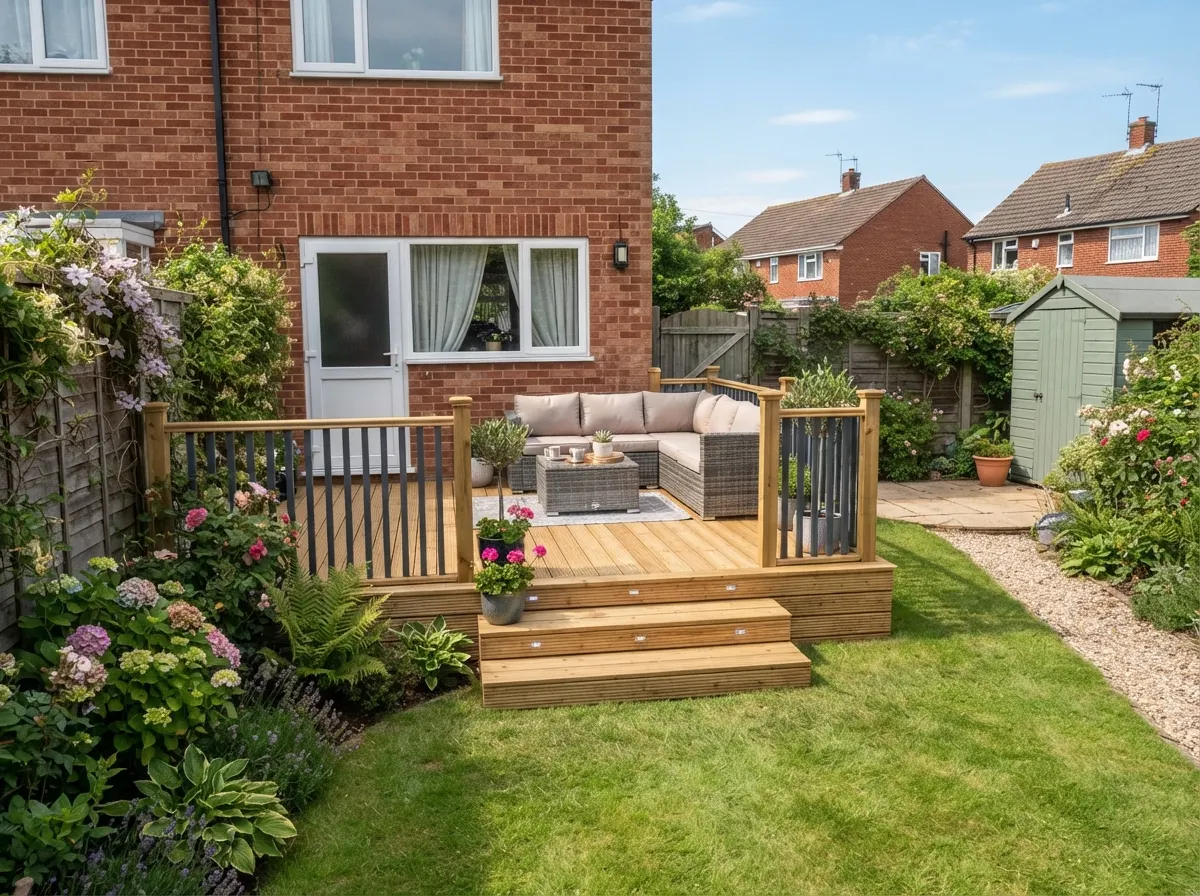
Whether you are extending your living space outdoors, levelling a steeply sloped garden, or creating a dedicated area for summer barbecues, decking is one of the most transformative and cost-effective landscaping projects. Unlike stone patios that require immense excavation and concrete pouring, decking can be raised on timber frames or ground screws with minimal disruption.
In 2026, the cost to supply and install garden decking in the UK ranges widely from £60 to £250+ per square metre. The final price depends primarily on the board material and the complexity of the sub-frame. A standard 15m² treated softwood (pine) deck fitted directly over a flat lawn averages £1,200 to £1,600 all-in. Upgrading to premium, maintenance-free composite boards (like Millboard or Trex) on a raised frame with glass balustrades will push a similar-sized project to £3,500 – £5,000+.
~£90 / m²
Budget specification. Pressure-treated pine (softwood) grooved boards laid on a standard timber sub-frame over level ground. Requires annual cleaning and oiling/staining to prevent rot and algae.
~£160 / m²
Mid-range finish. WPC (Wood Plastic Composite) hollow or solid boards featuring hidden T-clip fasteners. Highly durable, rot-proof, and requires almost zero maintenance beyond an occasional wash.
£220+ / m²
High-end specification. Premium natural hardwoods like Yellow Balau/Teak, or elite fully-capped resin composites (e.g., Millboard) that perfectly mimic natural timber grain without fading or staining.
Get an instant estimate for your decking
Timber vs Composite Decking
The boards you choose will determine how much time you spend enjoying your garden versus how many weekends you spend jet-washing and staining it.
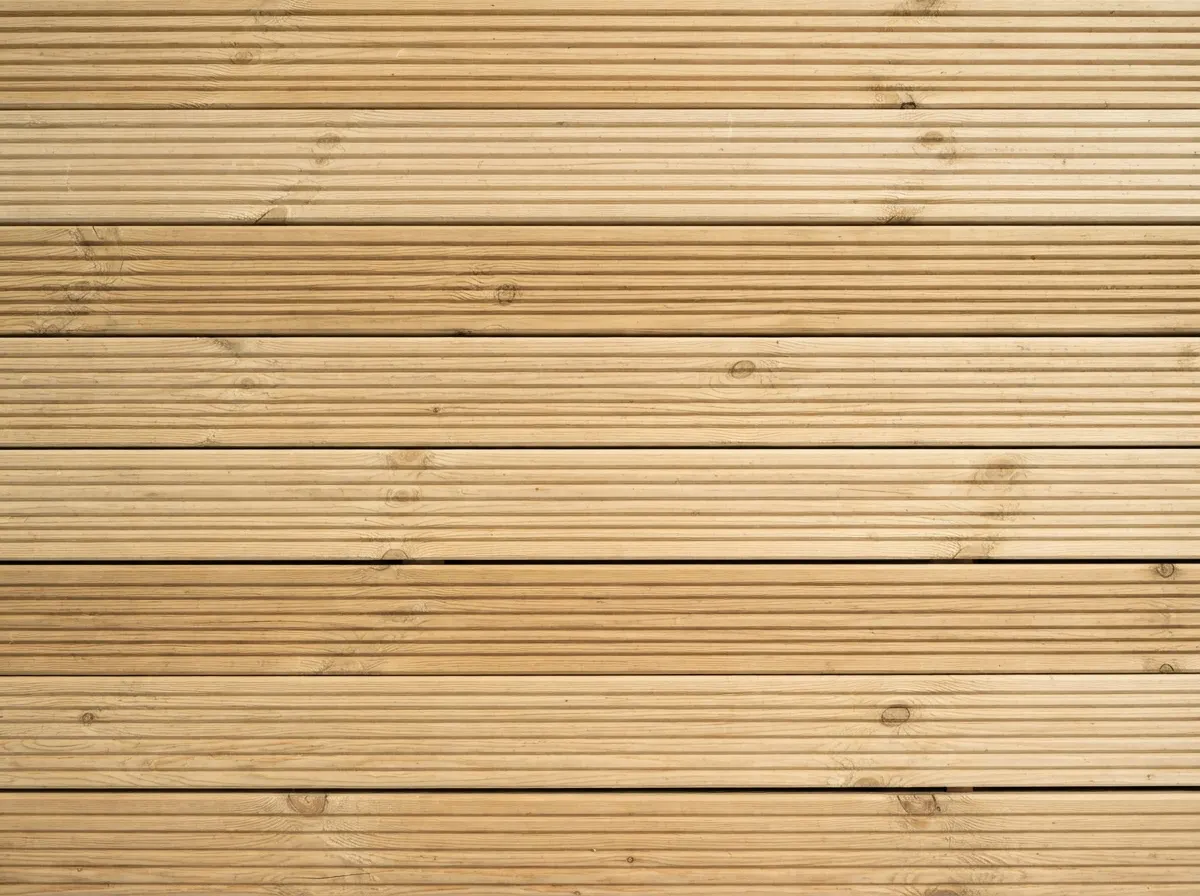
Softwood (Pine/Spruce)
BudgetThe traditional and cheapest option. Green/brown pressure-treated timber with a grooved surface. While highly affordable initially, it requires significant maintenance. If not scrubbed and oiled/sealed annually, it becomes a deadly, slippery, algae-covered hazard and will rot within 10-15 years.
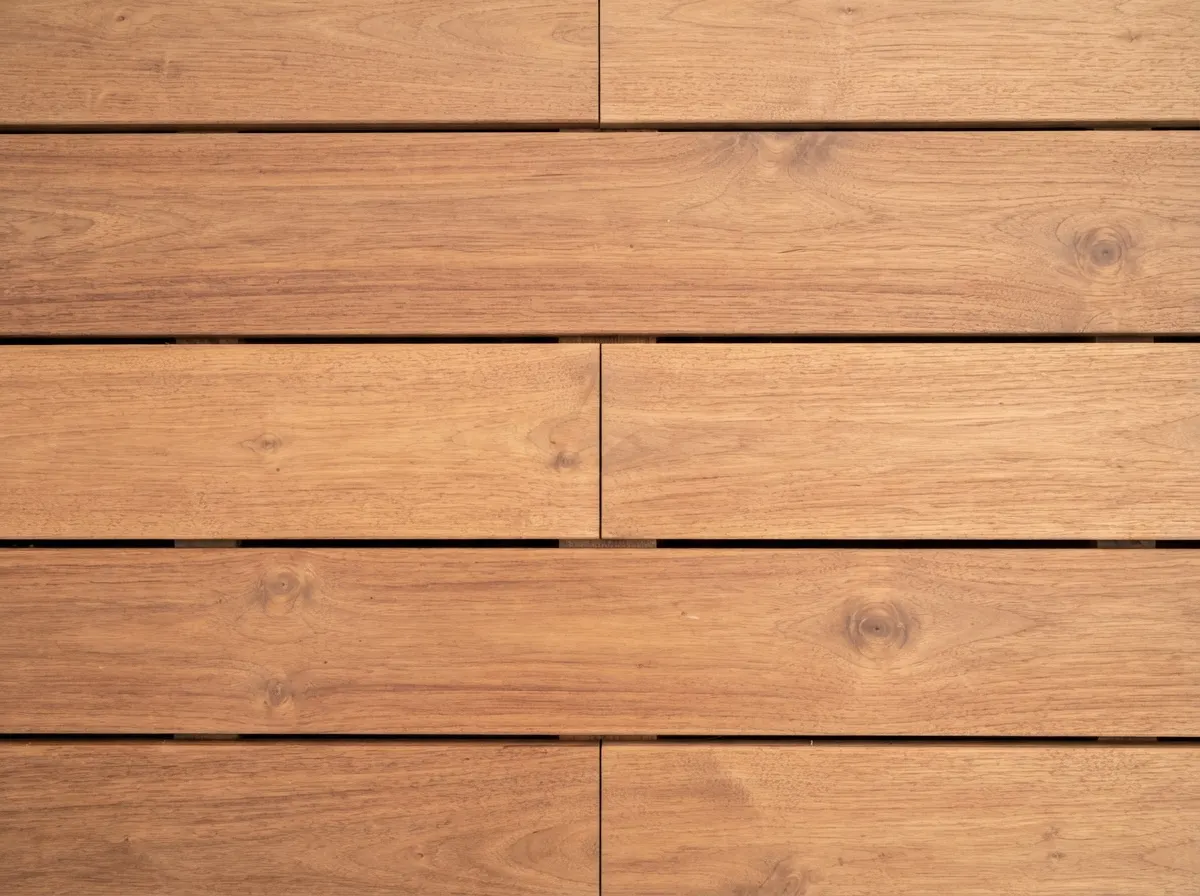
Hardwood (Balau/Oak)
Luxury TimberA massive step up in quality. Tropical hardwoods like Yellow Balau, Iroko, or Oak are incredibly dense, naturally resisting rot and insect attacks. They offer stunning, rich natural colour (usually laid smooth, not grooved). They will naturally weather to a silvery-grey unless oiled.
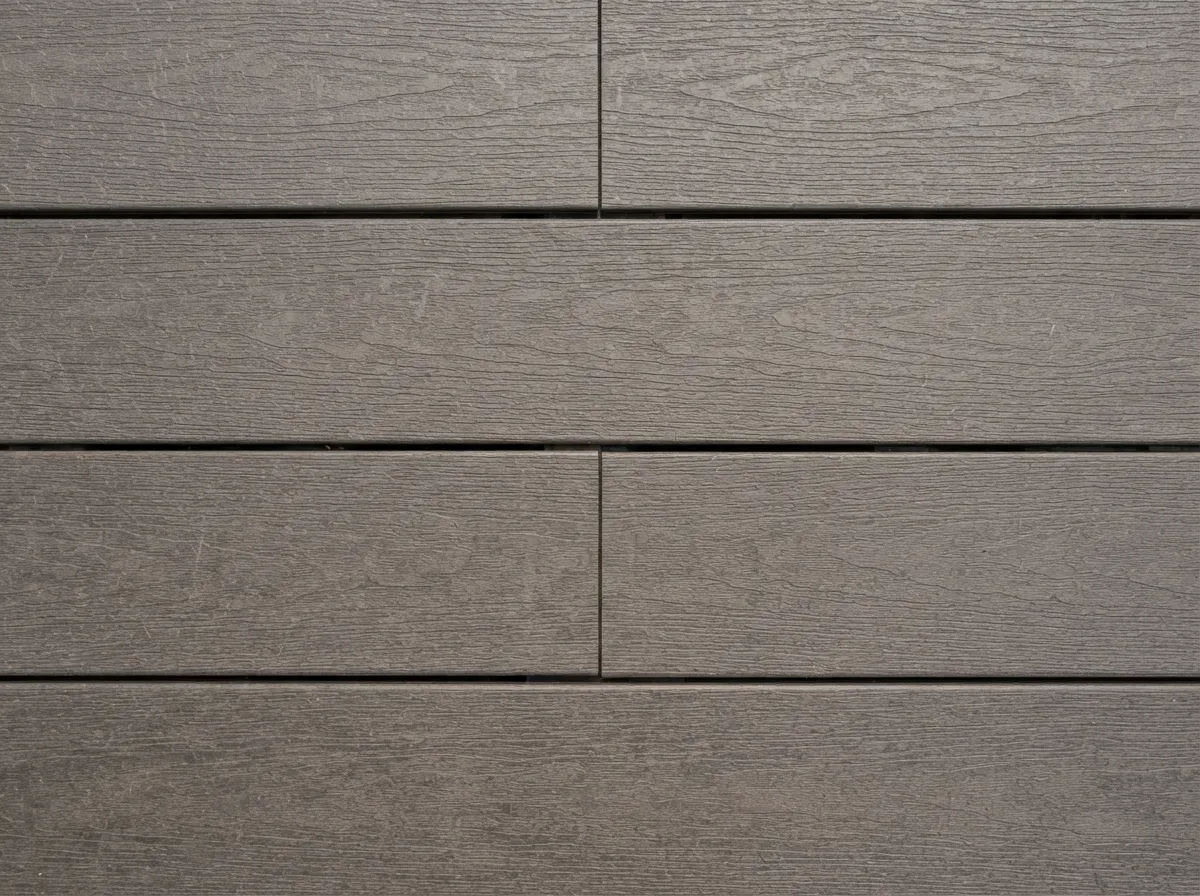
Composite (WPC)
Top ChoiceMade from a blend of recycled wood fibres and durable plastics. It never rots, never splinters, and never needs staining or painting. It is highly slip-resistant and utilises hidden T-clips, meaning no ugly screw holes in the surface. Premium "capped" composites even feature a protective resin shell against stains.
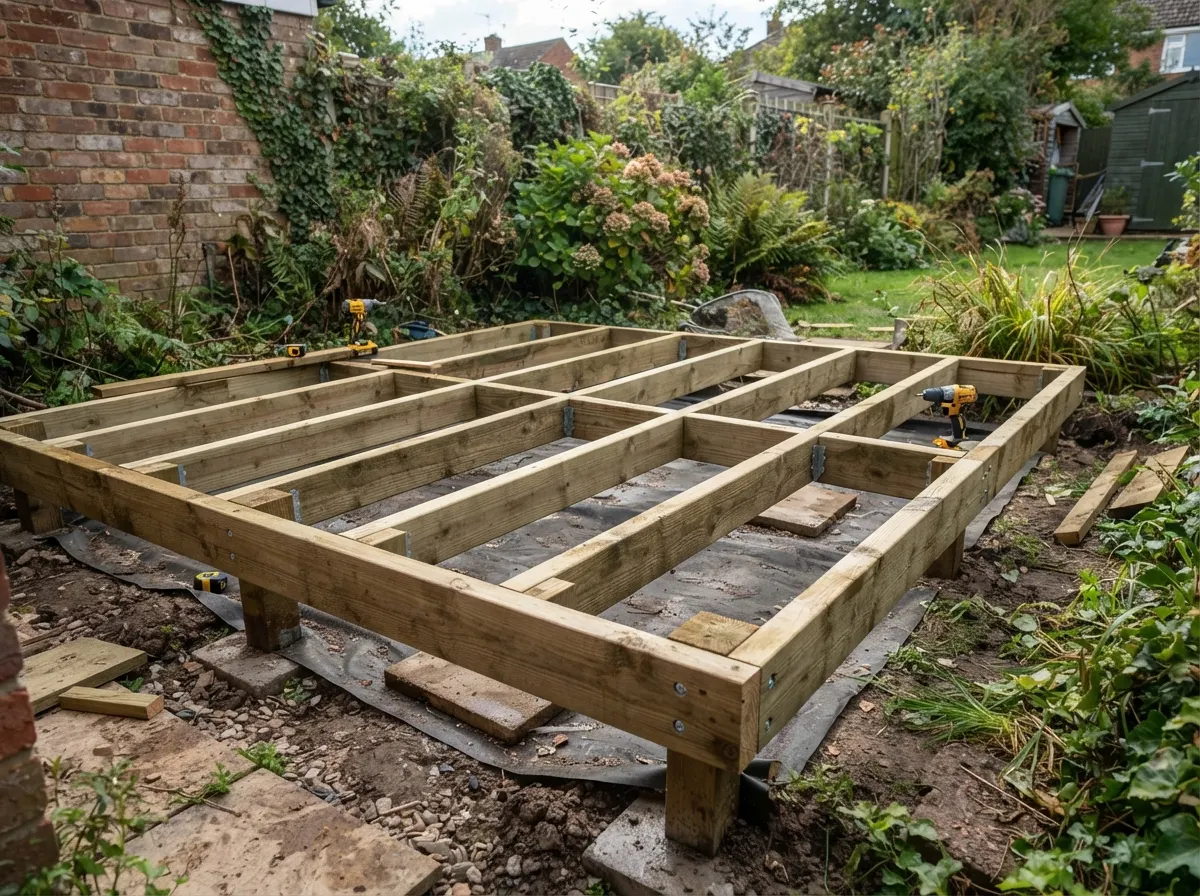
The Sub-Frame (What holds it up)
You can buy the most expensive composite decking in the world, but if the sub-frame underneath rots away after 5 years, the entire deck will collapse. Sub-frames are the hidden engine of your decking project.
Crucial Sub-Frame Rules:
-
1
Never use cheap timber on the ground. The structural joists MUST be pressure-treated to UC4 standards (meaning they are rated for constant ground/moisture contact). Standard UC3 treated timber will rot quickly if placed on wet soil.
-
2
Weed Membrane is vital. A heavy-duty landscaping fabric covered with gravel must be laid underneath the frame to stop weeds from growing up through the gaps in the boards.
-
3
Support Posts. For flat ground, joists can rest on concrete paving slabs or plastic pedestal risers to keep them out of puddles. For raised decks or sloping gardens, deep holes must be dug and 100x100mm timber posts set into postcrete, or heavy-duty steel Ground Screws driven into the earth.
Pro Tip: For a true "maintenance-free" setup, use Composite Joists or Aluminium Sub-frames. They cost double the price of timber, but will literally never rot.
Balustrades, Lighting & Steps
The decking boards define the floor, but the finishing touches—stairs, barriers, and lighting—transform it from a flat platform into a luxury architectural feature.
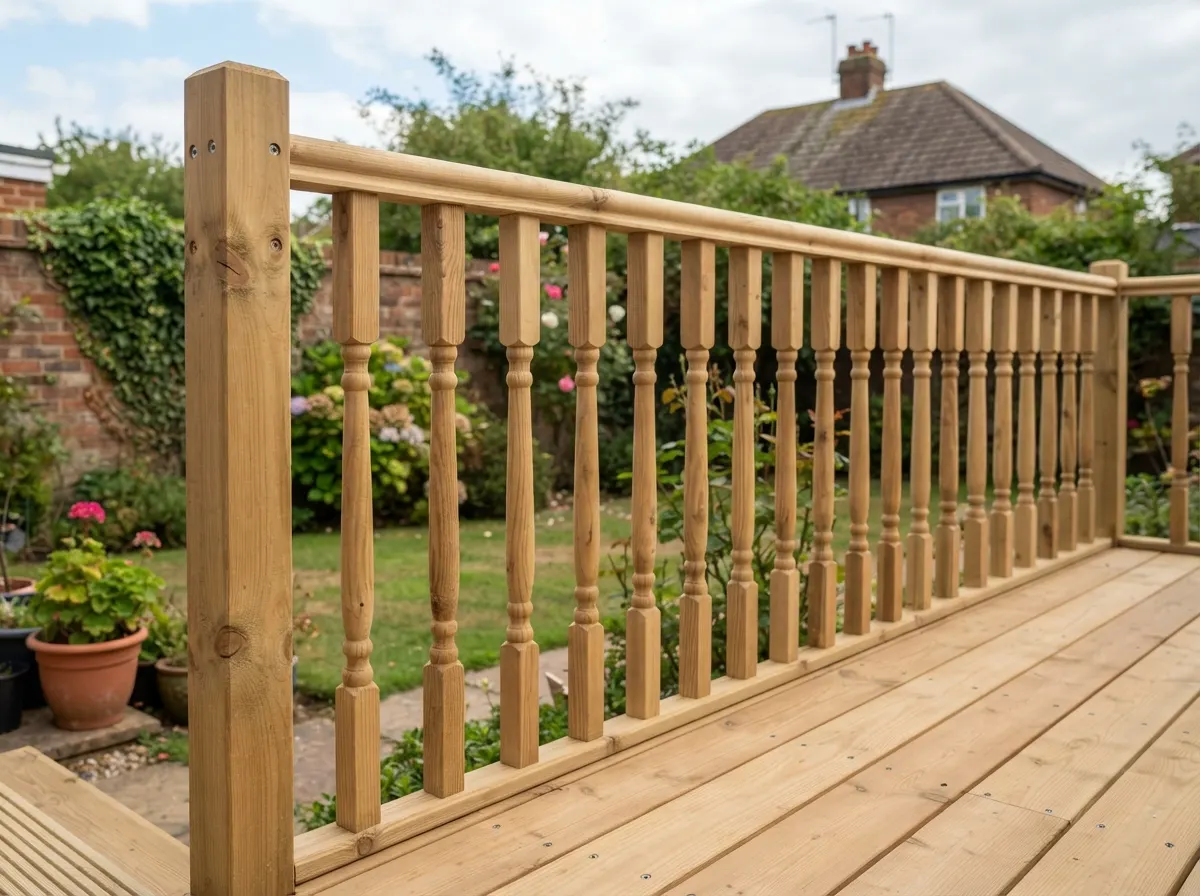
Timber Spindles (Handrails)
Standard wooden handrails and vertical spindles. Essential for safety if your deck is raised above the ground. Cheap and functional, but can obstruct garden views when seated.
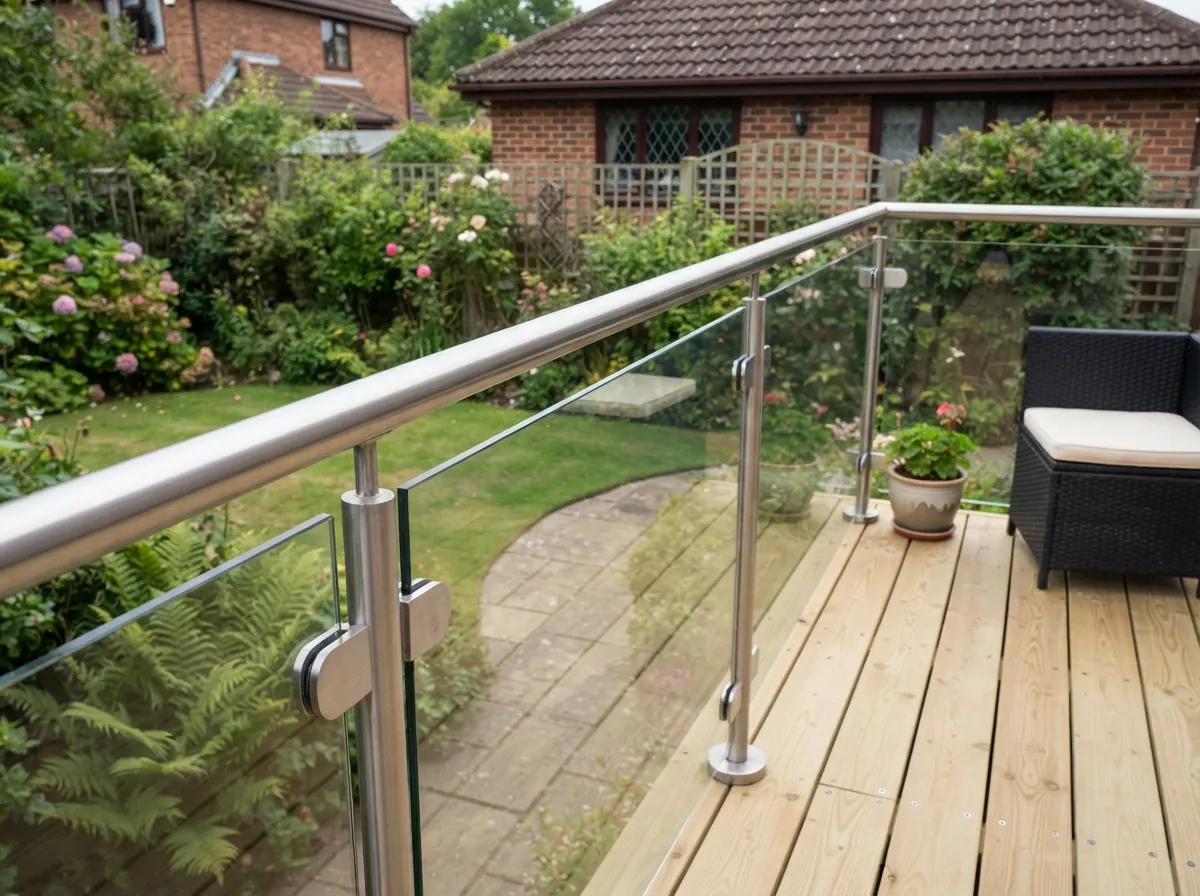
Glass Balustrades
Toughened safety glass panels secured with stainless steel clamps or set into base channels. Offers completely uninterrupted views of your garden and a highly contemporary, premium aesthetic. Very expensive.
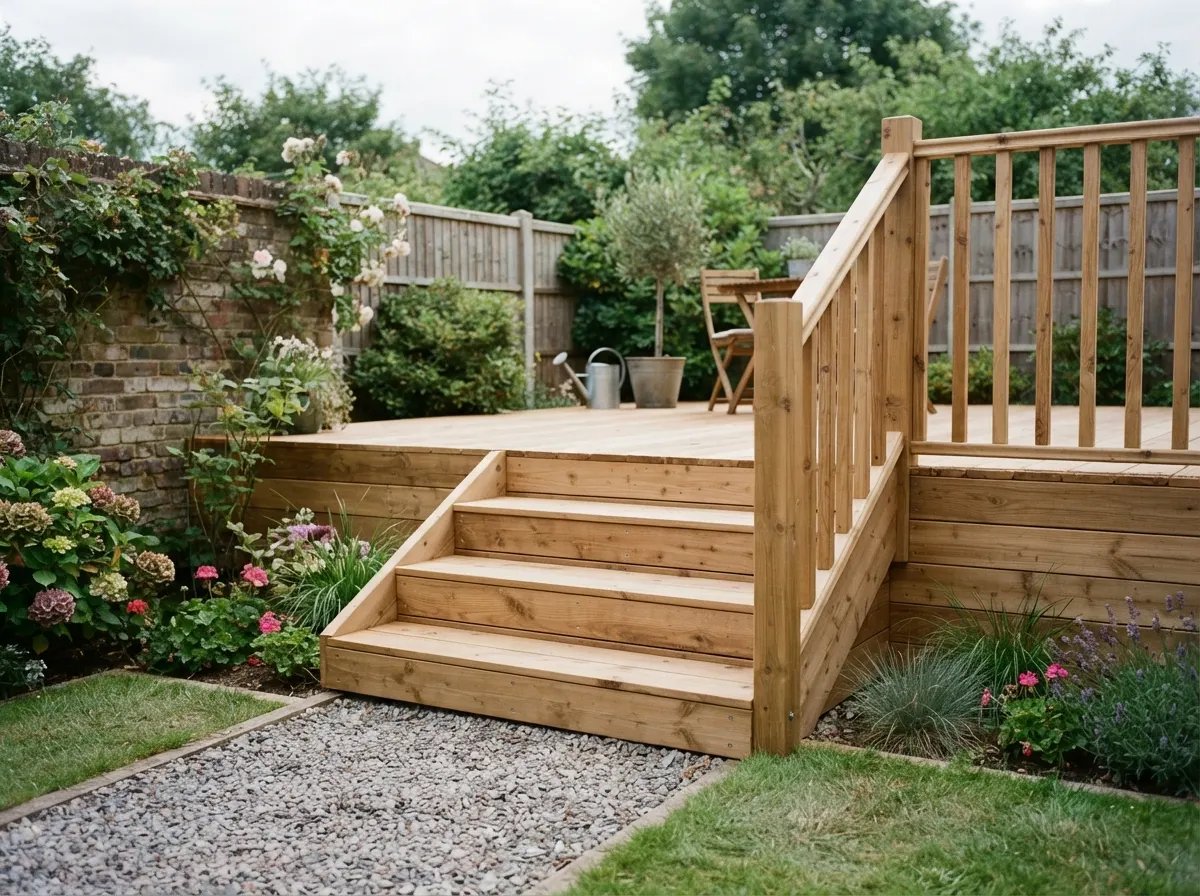
Box Steps & Stairs
If your deck is elevated, you need safe access to the lawn. Box steps require complex carpentry to cut "stringers" (the zigzag side supports) and clad the risers neatly. Wrap-around steps are beautiful but highly labour intensive.
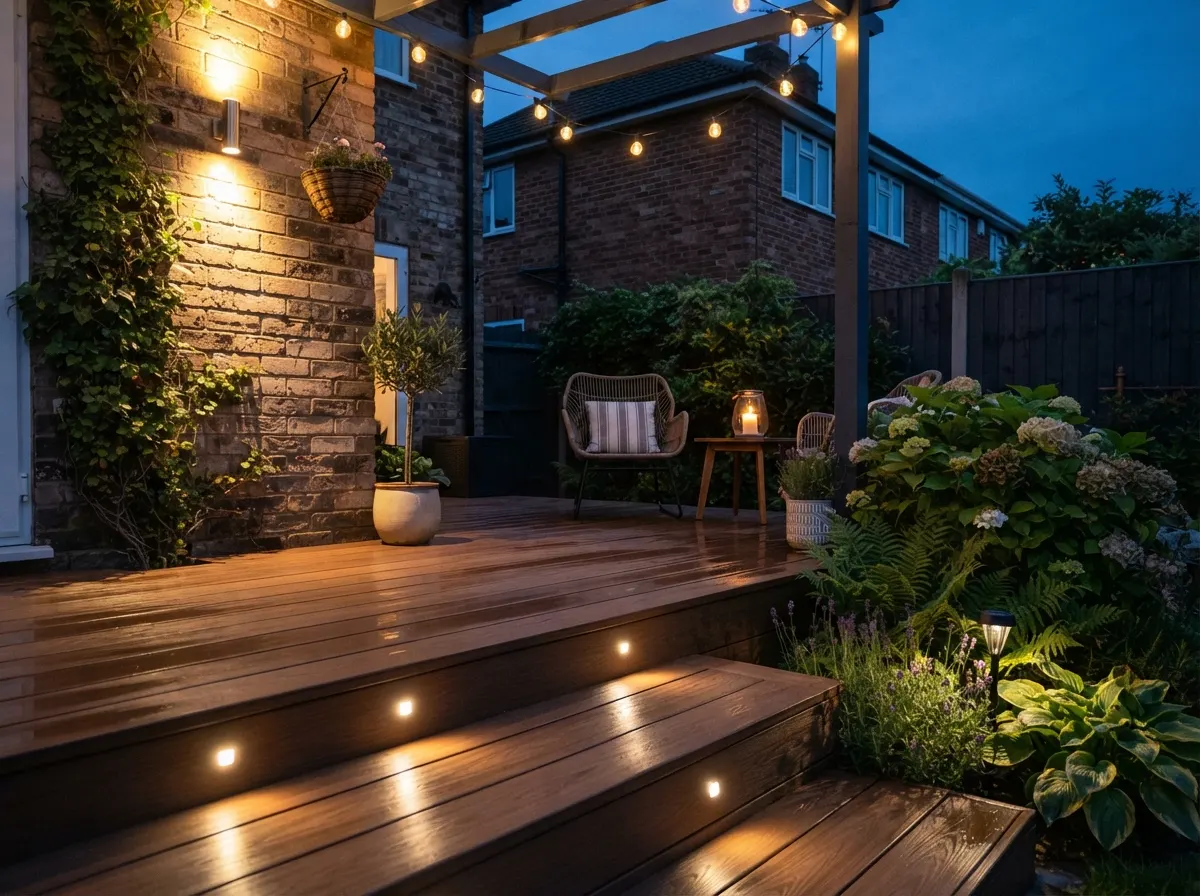
LED Deck Lighting
Small, waterproof LED recessed spot lights drilled directly into the deck boards or steps. Essential for nighttime safety and evening entertaining. Requires an electrician to lay armoured cable to the garden.
Full Decking Costs by Size (2026)
The table below outlines total estimated costs for supplying and fitting decking onto a relatively flat, prepared site. Prices include the timber sub-frame, boards, fixings, and professional carpentry labour.
| Deck Size | Softwood Timber (Treated) | Standard Composite | Hardwood / Premium Composite |
|---|---|---|---|
| Small (10m²) e.g. 3m x 3.3m | £800 – £1,100 | £1,400 – £1,800 | £2,000 – £2,600 |
| Medium (20m²) e.g. 5m x 4m | £1,500 – £2,000 | £2,600 – £3,400 | £3,800 – £4,800 |
| Large (35m²) e.g. 7m x 5m | £2,500 – £3,400 | £4,400 – £5,800 | £6,500 – £8,500 |
| Labour Only Rate | If you buy all the materials yourself, a carpenter or landscaper typically charges £200 to £300 per day. A standard 20m² flat deck takes two carpenters approximately 2 to 3 days to build. | ||
Planning Permission: The 300mm Rule
In the vast majority of cases, putting decking in your garden falls under Permitted Development and requires no formal planning permission. However, there are strict limits regarding height and privacy.
The 300mm Height Limit
You MUST apply for planning permission if any part of your decking platform sits more than 300mm (30cm) above the original ground level. This rule exists to prevent you from building a raised platform that allows you to look over your fence directly into your neighbour's garden, violating their privacy.
Other Restrictions
- • The decking (along with other extensions/outbuildings) must not cover more than 50% of your total garden area.
- • You cannot build decking forward of the principal elevation (usually the front garden) without permission.
- • Stricter rules apply if you live in a Conservation Area, National Park, or Listed Building.
Balustrade Building Regs
If your deck is raised to a point where a fall could cause injury (usually classed as drops of 600mm or more, though many adopt a 300mm rule for safety), Building Regulations stipulate you must install a safety balustrade that is a minimum of 900mm high, with no gaps larger than 100mm.
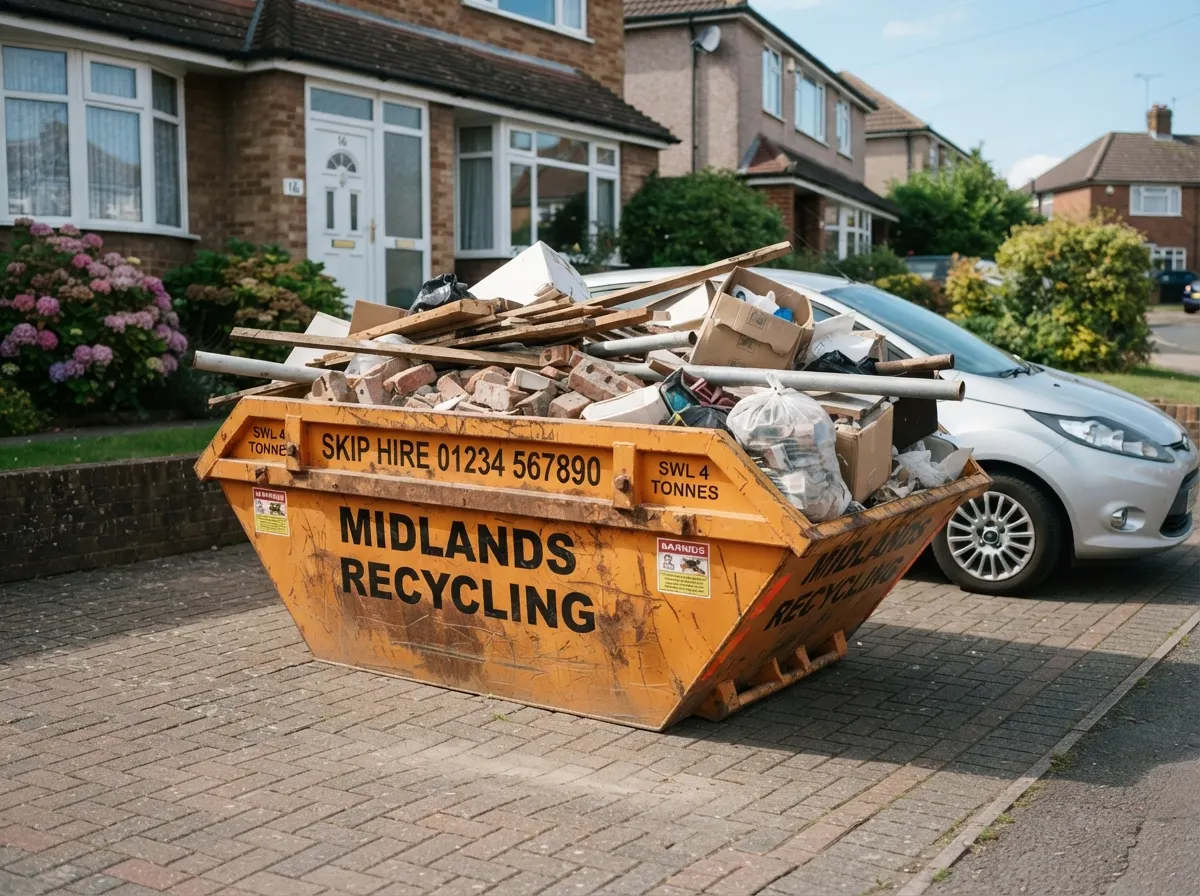
Managing your decking waste.
Building a new deck over an empty lawn or bare earth generates very minimal waste—usually just a small amount of turf and timber offcuts. However, if you are replacing an old, rotten deck or digging up an existing patio, be prepared to dispose of a substantial volume of bulky, awkward material.
-
What you'll be clearing Long timber planks, rotten wooden joists, old composite boards, concrete post mix, and potentially hardcore or patio slabs if you are repurposing an existing hardscaped area.
-
Why Skips are the best choice Because decking waste consists of bulky, lightweight, and long materials rather than heavy soil, a 6 to 8-yard Skip is the perfect solution. Grab lorries are designed for only loose, heavy rubble and don't usually offer timber removal.
Can you build decking yourself?
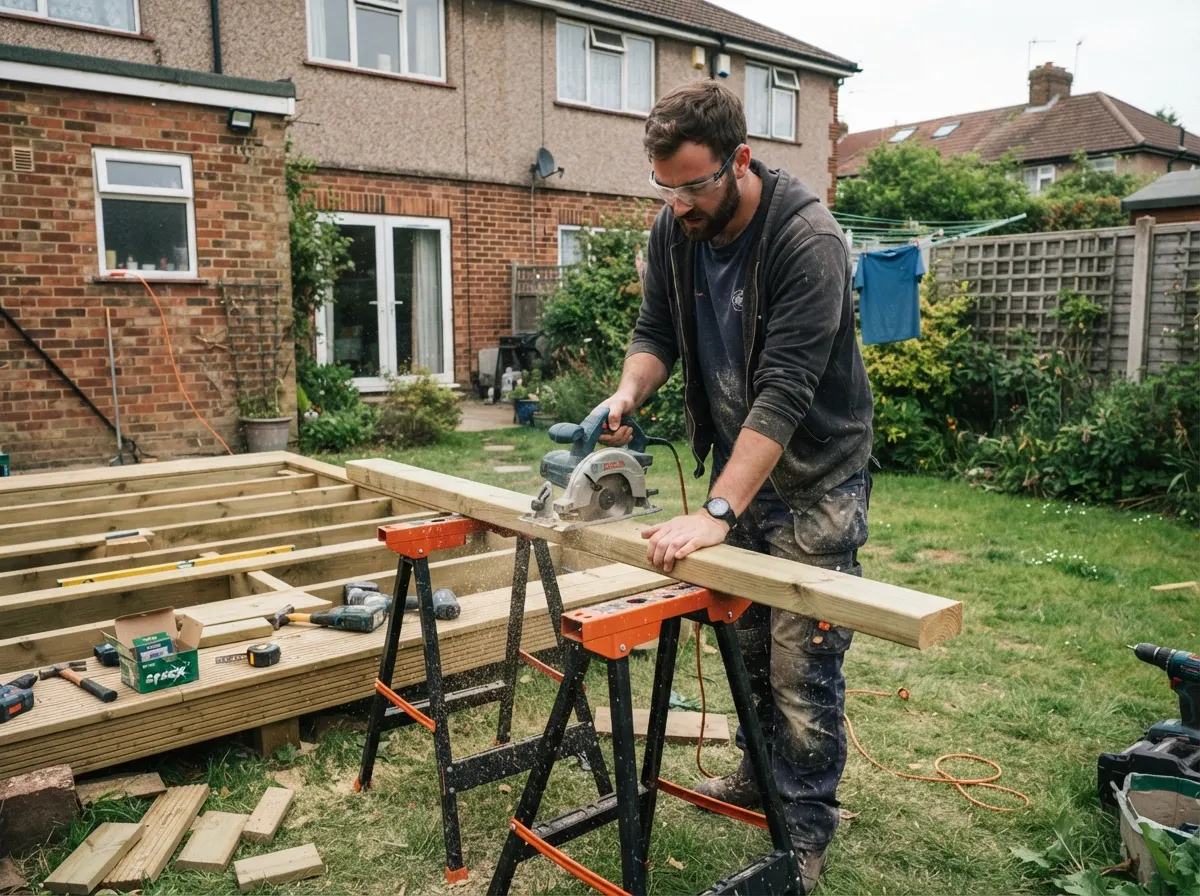
Yes. Decking over flat ground is an extremely popular and highly achievable DIY project. Because it uses relatively soft timber and straightforward repetitive cuts, a competent DIYer with a mitre saw and drill can save £500+ in labour costs over a weekend.
The DIY Challenge: Level & Square
The hardest part of DIY decking isn't screwing the top boards down—it is building the sub-frame. The timber joists must be perfectly level and perfectly square. If the sub-frame is wonky, the entire deck will wobble, and your cuts will slowly become misaligned as you progress across the surface.
Strictly Pro Only
Raised / Balcony Decks: Building a deck 2 metres off the ground stretching from first-floor patio doors is not a DIY job. It requires heavy structural timber, load-bearing calculations, and strict adherence to safety regulations to prevent catastrophic collapse.
Frequently Asked Questions
How much does decking cost per square metre in the UK?
In 2026, a professionally installed deck typically costs between £120 and £220 per m² including materials and labour. Softwood decking is the most affordable at £40 to £120 per m² installed, while composite (wood-plastic) ranges from £100 to £220 per m² depending on whether you choose entry-level hollow or premium capped boards.
How much does a typical 20m² garden deck cost?
A typical 20m² (approx 5m x 4m) garden deck fully installed costs around £1,500 to £3,000 for standard treated timber. If you upgrade to long-lasting composite boards, expect to pay between £2,800 and £4,500. This includes the essential structural subframe, weed membrane, and professional labour.
Is composite decking really worth the extra money?
Yes, over a 10 to 15-year period. While the initial material cost of composite is higher, it requires zero annual sanding, sealing, or staining. The money saved on expensive deck oils and maintenance labour quickly offsets the initial upgrade, and premium 'capped' composite boards offer excellent stain and fade resistance.
How long does timber decking last compared to composite?
A well-maintained softwood timber deck typically lasts 10 to 15 years in the UK climate, provided it is treated and sealed annually. In contrast, modern composite decking usually comes with a 15 to 25-year manufacturer guarantee and can easily outlast timber without degrading, fading, or warping.
Can I lay decking directly onto grass or soil?
No. If timber or composite boards touch wet soil, they will rot or warp rapidly. A deck must have a rigid subframe (usually treated timber, recycled plastic, or composite joists) that raises it off the ground, supported by concrete slabs, plastic pedestals, or timber posts. A weed-proof membrane is also essential underneath.
Do you lay timber decking with the grooves facing up or down?
Contrary to popular UK belief, the grooves on traditional timber decking boards are actually designed to face DOWNWARDS to allow airflow and water drainage across the joists, preventing rot. Laying them smooth-side up actually drains surface water much faster and is significantly less slippery in winter.
How do I stop my decking from becoming slippery in winter?
Decking becomes slippery primarily due to a build-up of algae and organic matter, not ice. The best prevention is regular sweeping and a stiff brush wash with a specialised deck cleaner in late Autumn. Avoid using high-pressure jet washers on timber, as they destroy the wood fibres and encourage more algae growth.
Do I need planning permission or building regulations for decking?
Usually no, provided the decking platform is no more than 30cm (300mm) above the ground and doesn't cover more than 50% of your total garden area (Permitted Development). However, if you are building a raised balcony or the drop requires safety balustrades, Building Regulations for structural safety may apply.
Related Projects & Guides
Transform your outdoor space.
Use our AI to get a precise estimate based on your garden size, material preference, and terrain, then connect with Pricing Penguin Accredited landscapers and carpenters near you.
Did you find this page helpful?
Let us know if this guide helped you plan your project.