How much does a full central heating system cost in the UK?
 By Tom Ellis
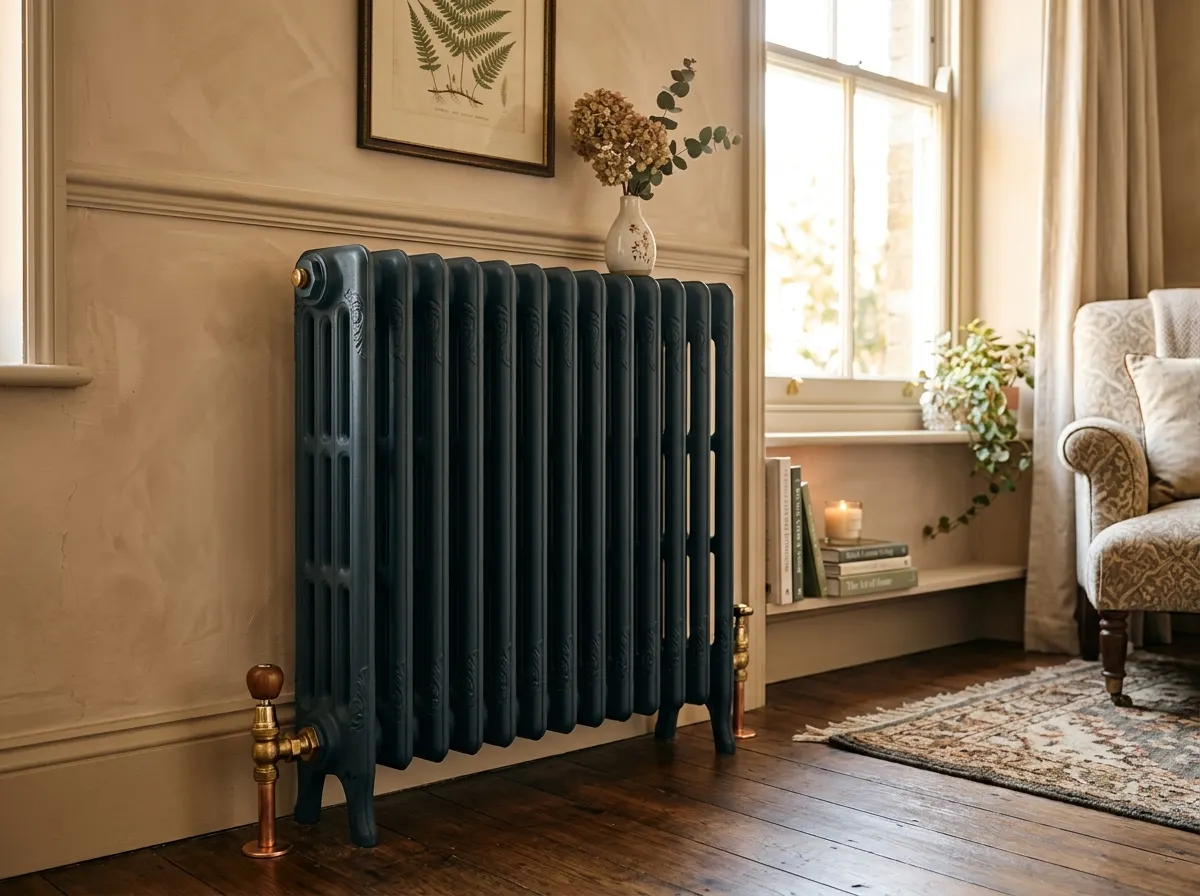
A "boiler replacement" takes a day. A "full central heating system installation" is a major construction project. It involves ripping up floorboards, running dozens of metres of new copper or plastic pipework, hanging new radiators in every room, and installing a modern, highly efficient boiler to drive it all.
In 2026, the cost of installing a complete central heating system from scratch (or entirely replacing an obsolete one) in the UK ranges from £3,000 to £9,000. For a standard 3-bedroom semi-detached home requiring 8-10 radiators, expect to pay around £5,500 fully fitted. The final quote will hinge on the complexity of running pipes through your home—solid concrete floors and premium designer radiators will push the budget higher.
~£3,000
Basic specification. Up to 5 standard Type 22 panel radiators, a budget 24kW combi boiler, and surface-mounted or easily accessible pipework in a small apartment or bungalow.
~£5,500
Mid-range finish. 8 to 10 standard radiators, premium 30kW combi boiler (e.g., Worcester Bosch), lifting timber floorboards to hide new pipework, and smart heating controls.
£9,000+
High-end specification. 15+ radiators (including designer columns or cast iron), a high-output system boiler with an unvented hot water cylinder, and multi-zone smart thermostatic control.
Get an instant estimate for your central heating
Where does the money go?
A full system requires hundreds of individual components. Here is how a typical £5,500 quote for an 8-radiator system breaks down into materials and labour.
| Component / Stage | Description | Typical Cost Allocation |
|---|---|---|
| 1. The Boiler Unit (Combi) | Supply of a 30kW A-rated condensing boiler (e.g., Worcester Bosch) plus horizontal flue kit. | £1,200 – £1,500 |
| 2. Radiators (x8) | Supply of 8x double-panel double-convector (Type 22) white steel radiators. | £400 – £700 |
| 3. Valves & Controls | 8x Thermostatic Radiator Valves (TRVs), lockshields, and a wireless Smart Thermostat (Hive/Nest). | £300 – £450 |
| 4. Pipework & Hardware | 50+ metres of 15mm & 22mm copper/plastic pipe, elbows, joints, flux, solder, and a magnetic system filter. | £500 – £850 |
| 5. Gas Safe Labour | 4 to 5 days of labour for a 2-person team (Lifting floors, first fix pipes, hanging rads, commissioning). | £1,800 – £2,500 |
| Estimated Total | £4,200 – £6,000 | |
Types of Radiators Compared
Upgrading from standard white panels to designer radiators is the fastest way to inflate your quote. Here is what to expect per radiator (supply only).
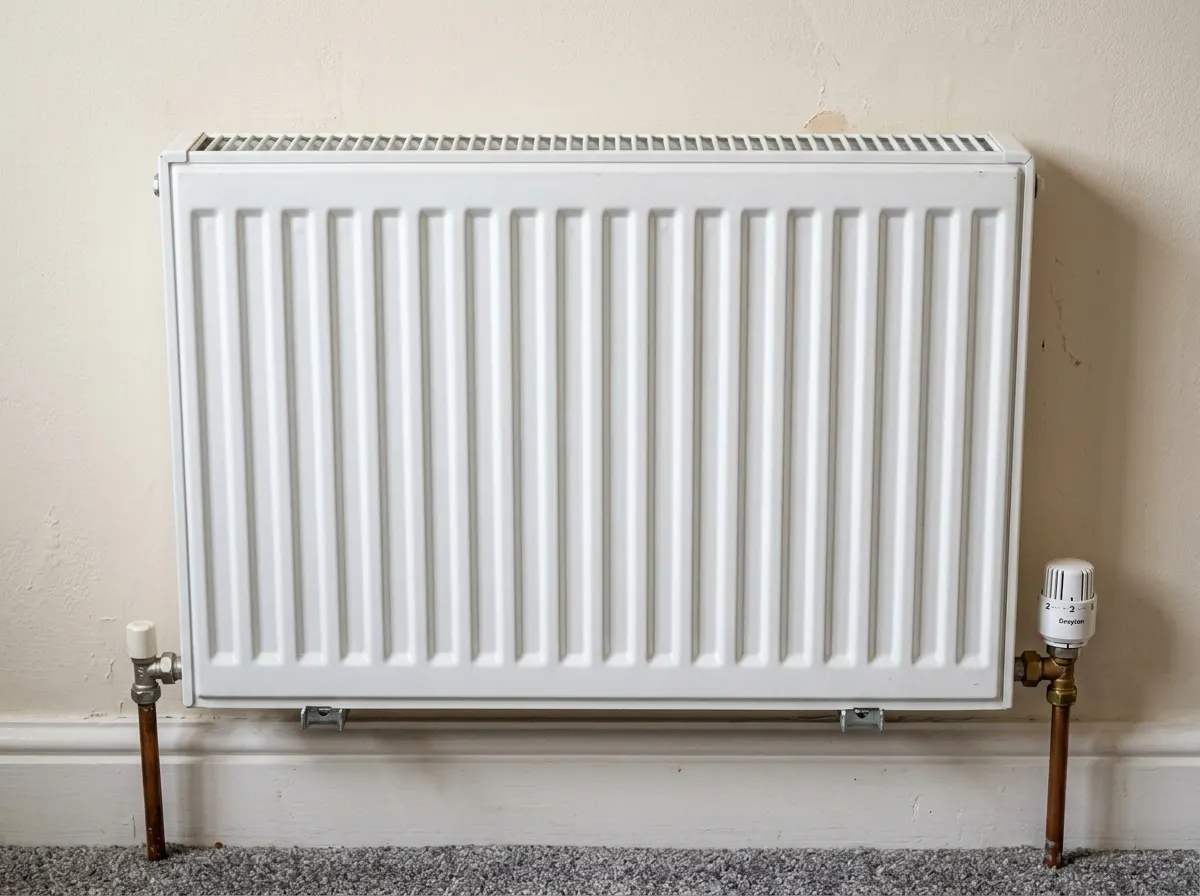
Standard Steel Panel (Type 22)
The UK default. White corrugated steel. Highly efficient, incredibly cheap, and heats up very quickly. Perfect for hiding behind sofas or in secondary bedrooms.
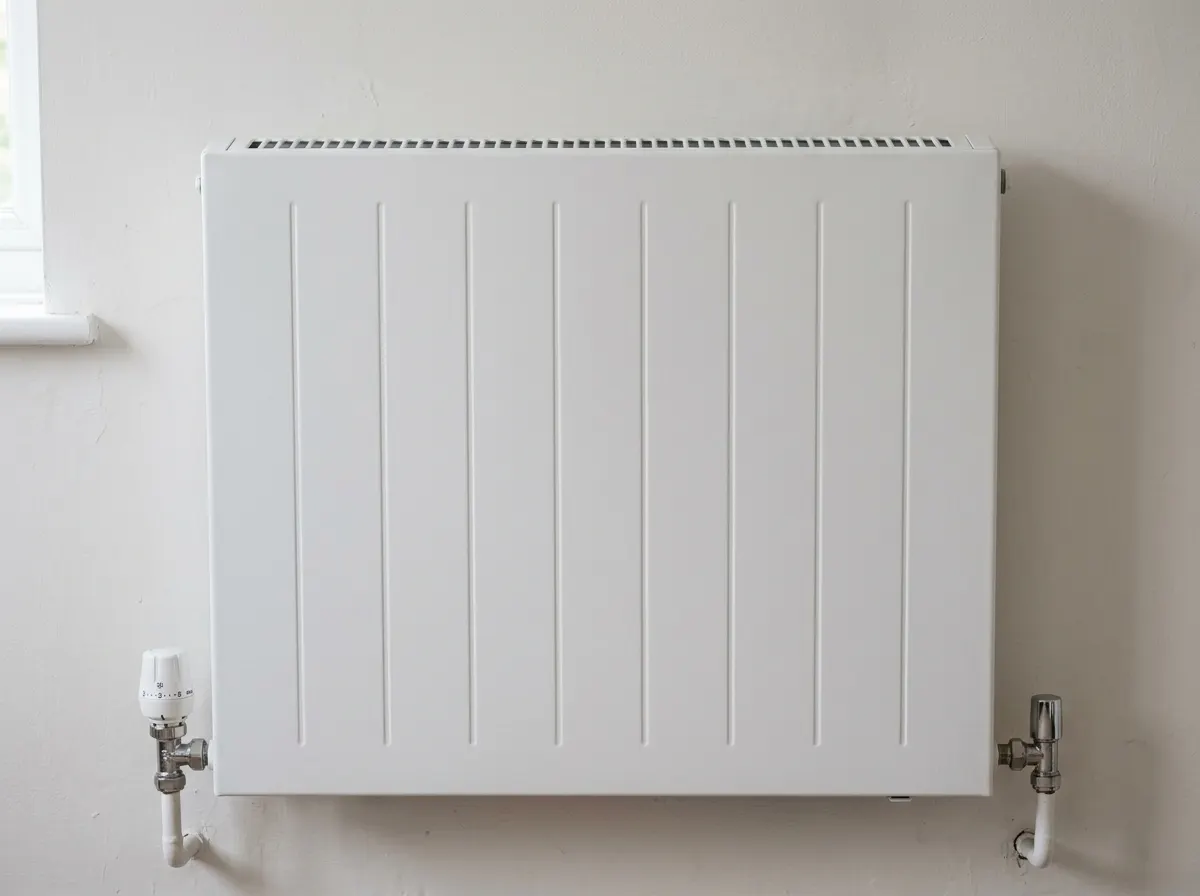
Flat Panel / Minimalist
Functions exactly like a standard radiator but features a completely smooth, flat front fascia. It offers a sleek, modern aesthetic and is much easier to wipe clean.
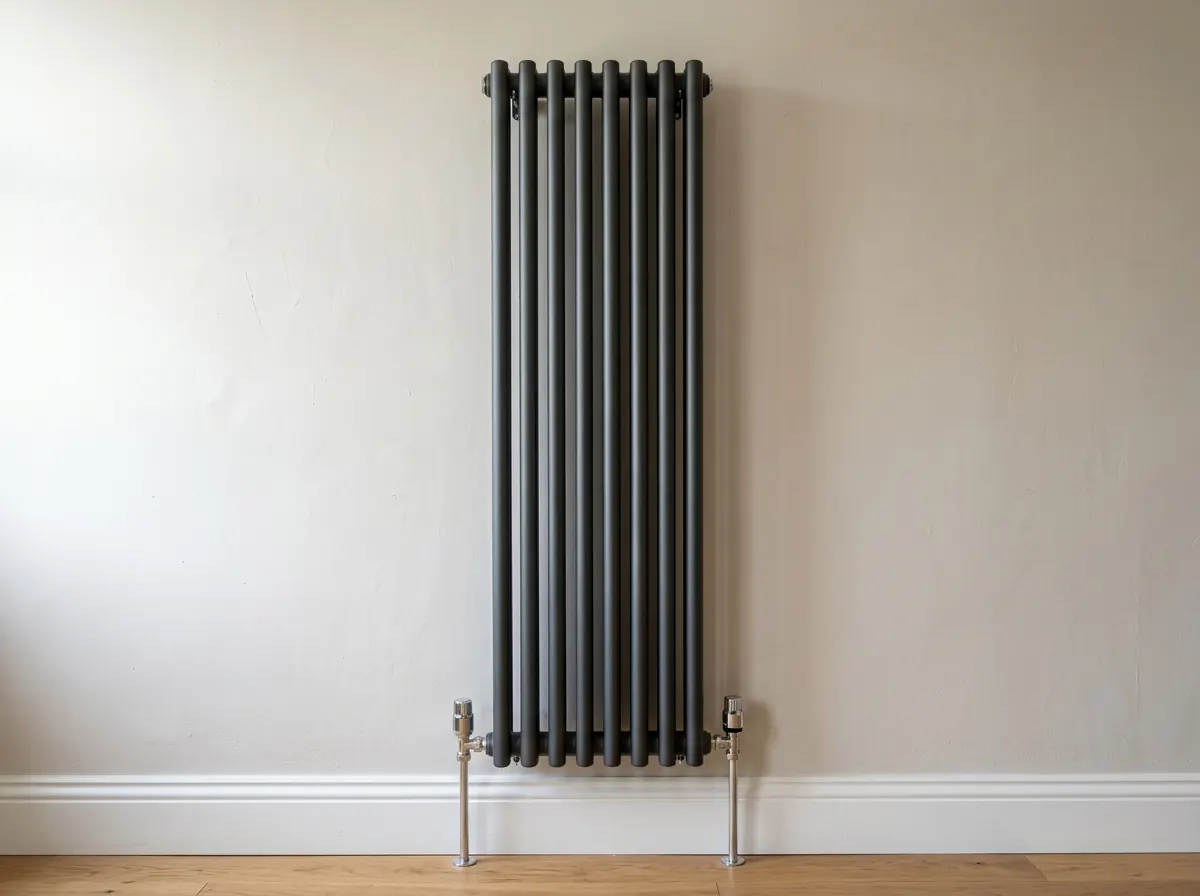
Designer Column (Vertical)
Tall, vertical tubular radiators often finished in anthracite grey or matte black. Excellent for saving horizontal wall space in kitchens and living rooms. Slightly less efficient heat output than standard panels.
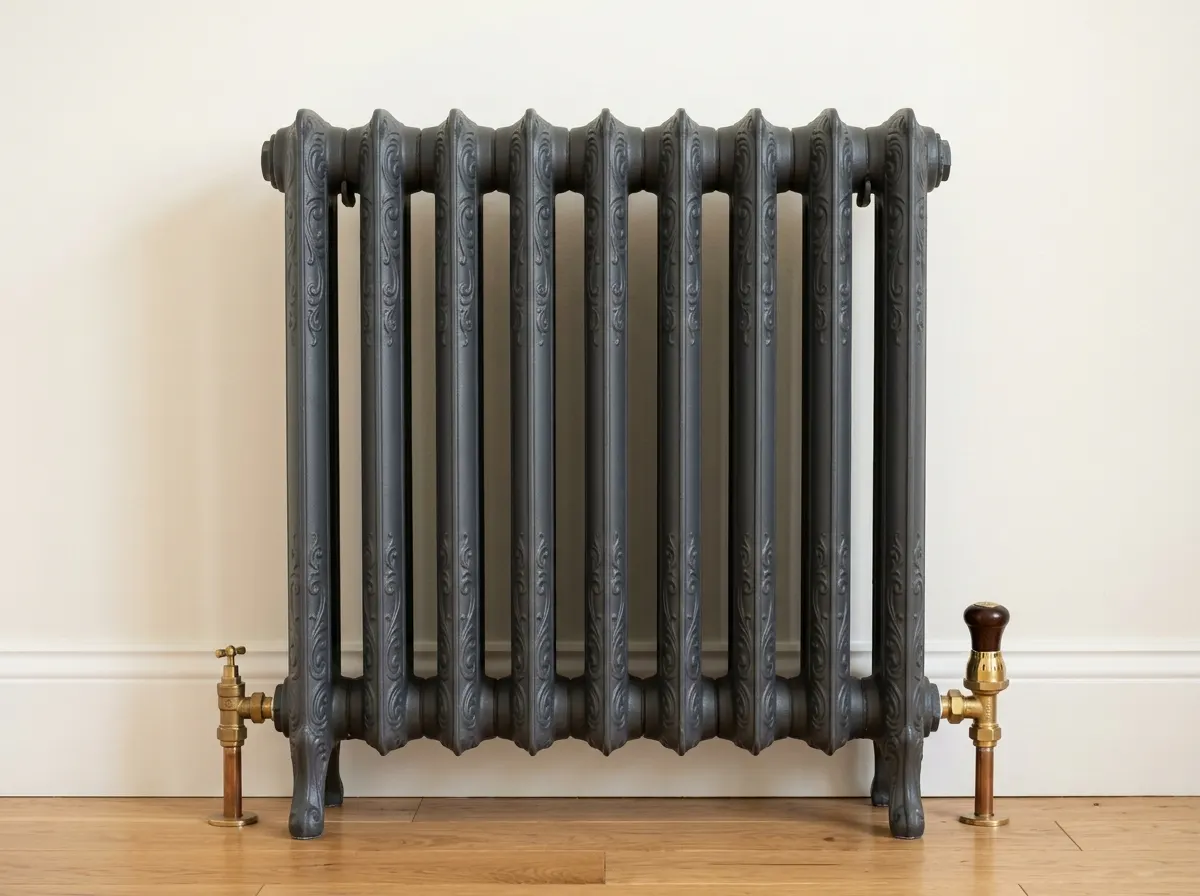
Traditional Cast Iron
Obscenely heavy, highly ornate, and perfect for Victorian properties. They take much longer to heat up, but stay warm for hours after the boiler turns off. Require heavily reinforced floors to support the weight.
The "First Fix" Nightmares
The boiler and radiators are the easy part (the "Second Fix"). The true cost of a new heating system lies in how difficult it is to run the hidden pipes (the "First Fix").
Microbore Pipework (8mm / 10mm)
In the 1970s and 80s, builders used ultra-thin "microbore" pipes because they were cheap and easy to bend. Modern combi boilers require high-pressure 15mm or 22mm flow. If you have microbore, you cannot just attach a new boiler; the entire house must be re-piped, adding £1,500+ to the job.
Solid Concrete Floors
If your ground floor is suspended timber, engineers simply lift the floorboards and run pipes underneath. If your house has solid concrete floors, pipes cannot easily go under. They must be chased (ground out) into the solid brick walls and dropped down from the ceiling, causing massive dust and requiring a plasterer to make good afterward.
Lifting Premium Flooring
Engineers will pull up carpets to access floorboards at no extra cost. However, if you have £50/m² glued-down Amtico, click-laminate, or engineered oak flooring, heating engineers will not accept liability for breaking it to access the pipes. You will need to hire a flooring specialist to remove and reinstate it.
Copper vs Plastic Pipe (Hep2O)
Traditional copper pipe is expensive (£8+ per metre) and requires slow, skilled blowtorch soldering at every joint. Modern polybutylene plastic pipe (like Speedfit or Hep2O) is cheaper, flexible, and pushes together instantly without heat. Specifying "all copper" pipework will significantly inflate the labour and materials bill.
How long does a full installation take?
A full system in a standard 3-bedroom house takes a 2-person team 4 to 5 days. Be prepared to live without hot water and heating, and expect significant disruption and dust.
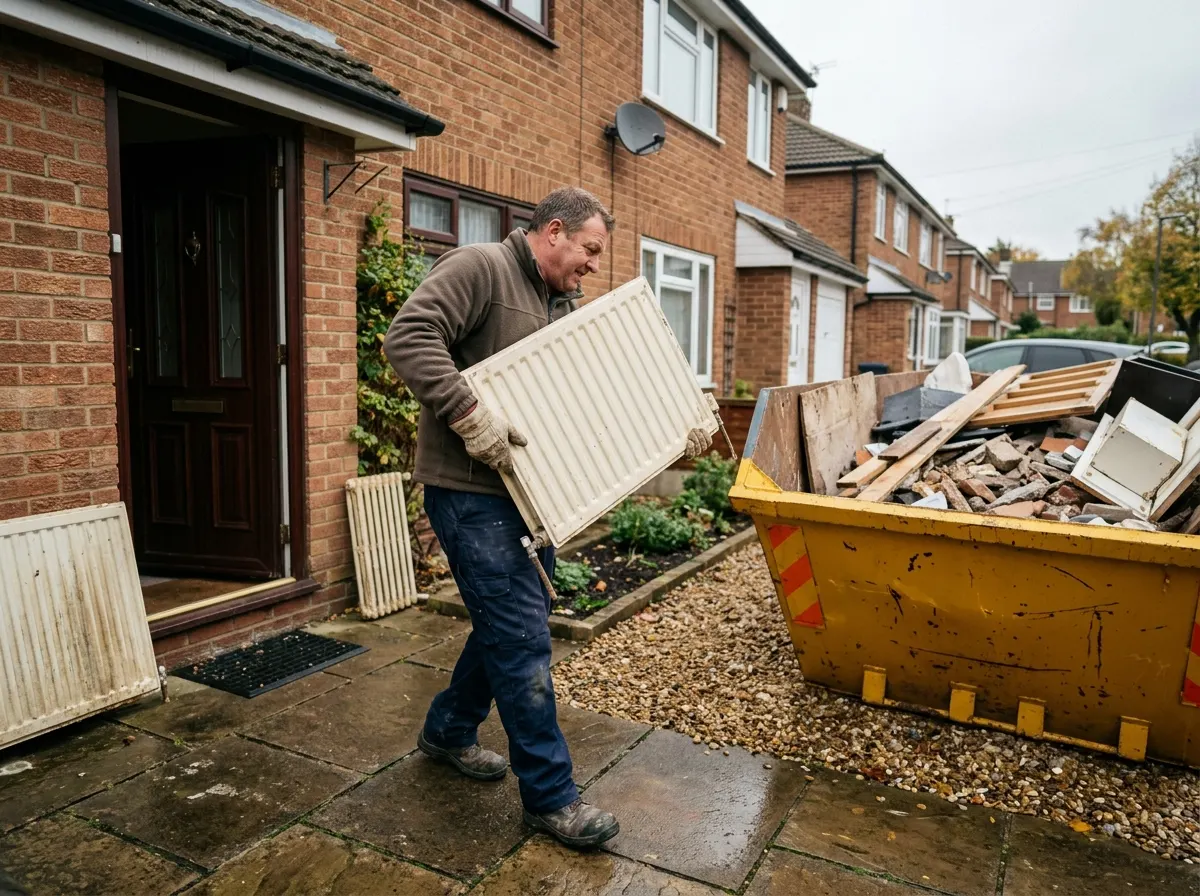
The old system is drained. The old boiler, heavy cast iron radiators, and redundant hot water cylinders/loft tanks are disconnected and removed to a skip.
The destructive phase. Carpets are rolled back, floorboards are lifted, and walls are chased. Dozens of metres of new copper or plastic pipe are routed to every room.
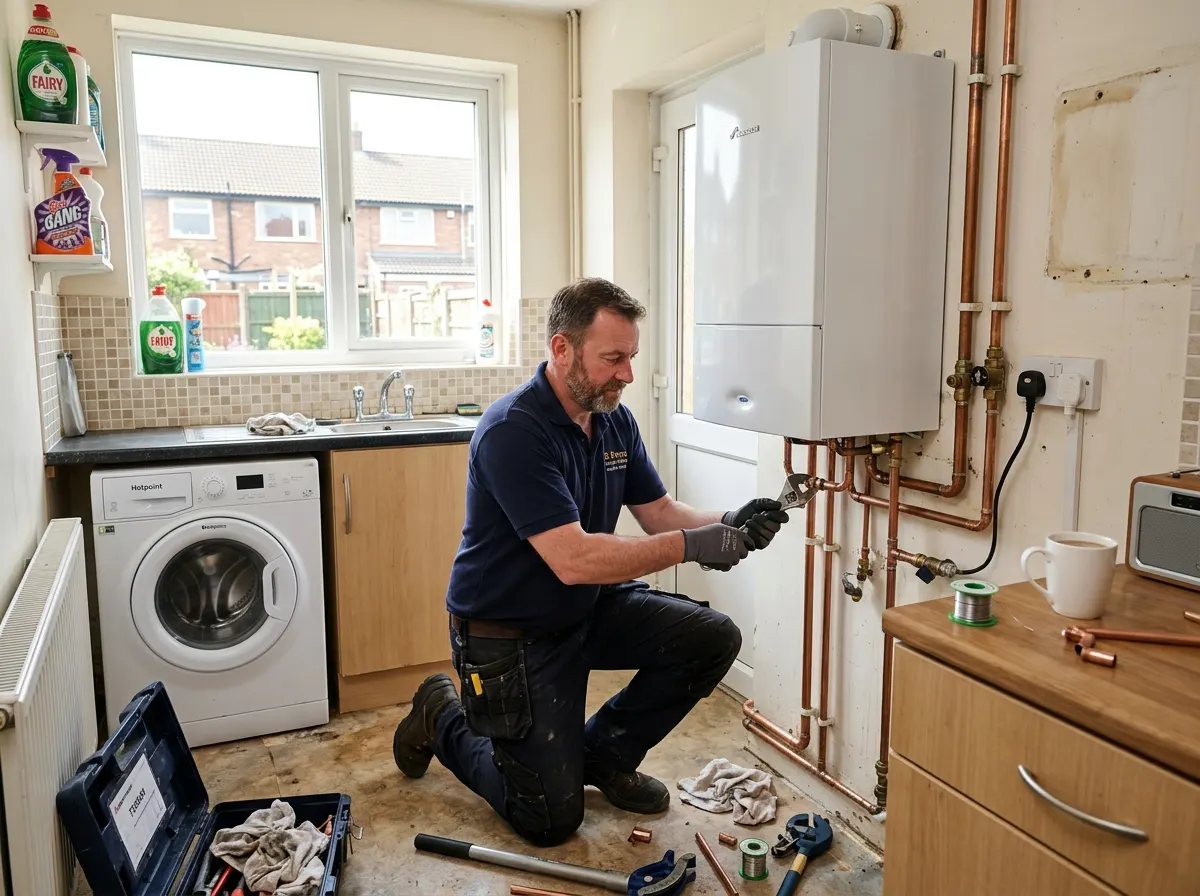
The new boiler is hung on the wall. The new radiators are bolted to the walls, and the TRV valves are connected to the newly laid pipework tails.
The gas supply is connected and upgraded to 22mm if necessary. The system is filled with water and pressure-tested for leaks at every single joint.
The boiler is fired up. Flue gases are tested, radiators are balanced to ensure even heat, and smart thermostats are synced. Floorboards are screwed back down.
Heating Engineer Labour Rates
A full central heating system requires certified Gas Safe engineers for the boiler, but the heavy pipework and floor lifting is often done by a plumber's mate to keep costs down.
Regional Pricing Variations
Because labour accounts for nearly 50% of a full system install, quotes in the South East run significantly higher than the North and Midlands.
Can you DIY central heating?
The gas connections and boiler commissioning MUST be done by a registered Gas Safe engineer. However, hanging radiators and running water pipes is technically unregulated, offering huge savings for advanced DIYers.
What you CAN DIY:
- ✓ Preparation & Rip Out: Draining the old system, lifting carpets, pulling up floorboards, and carrying old radiators to the skip saves the plumber hours of expensive labour time.
- ✓ First Fix Pipework: A competent DIYer can lay plastic push-fit pipework (like Speedfit) under the floorboards and leave the 'tails' sticking out for the plumber to connect later.
Strictly Pro Only
Many heating engineers refuse to "sign off" or connect a boiler to pipework they haven't laid themselves, as they assume liability if a hidden DIY joint under the floorboards bursts and destroys the ceiling below. Agree on the scope of DIY work with your engineer *before* starting.
Frequently Asked Questions
How much does a full central heating installation cost in 2026?
A full central heating installation in a typical UK 3-bedroom home usually costs between £4,500 and £8,500. If retrofitting a property without existing gas infrastructure, or lifting solid concrete floors, prices can rise beyond £10,000. A straightforward like-for-like combi boiler replacement is cheaper, averaging around £3,800.
How long does it take to install central heating?
A full system from scratch in a 3-bed house (lifting floors, new pipes, new radiators, new boiler) takes 4 to 5 days. Merely upgrading an existing system (swapping radiators on existing pipes and a new boiler) takes 2 to 3 days.
What size boiler and radiators do I need for my home?
A qualified heating engineer calculates your home's heat loss room-by-room in BTUs (British Thermal Units) or kilowatts (kW) based on room dimensions, window types, and insulation levels. A typical 3-to-4 bedroom home generally requires a 28kW to 32kW combi boiler.
Are TRV valves legally required?
Yes. Under UK Building Regulations (Boiler Plus), when a new boiler is installed, Thermostatic Radiator Valves (TRVs) must be fitted to every radiator (except the room where the main thermostat is located) to ensure energy efficiency and room-by-room temperature control.
What is radiator balancing and why is it essential?
Balancing adjusts the water flow across your lockshield valves so all radiators heat up evenly and at the same rate. Without proper balancing, radiators closest to the boiler get boiling hot while those upstairs or at the end of the pipe run stay lukewarm.
Can I keep my old radiators with a new boiler?
Yes, provided they are thoroughly powerflushed to remove magnetic sludge. However, radiators over 15 years old are prone to pinhole leaks when subjected to the higher mains pressure of a modern combi boiler. Replacing them all at once is often safer.
Is a Heat Pump cheaper to run than a Gas Boiler?
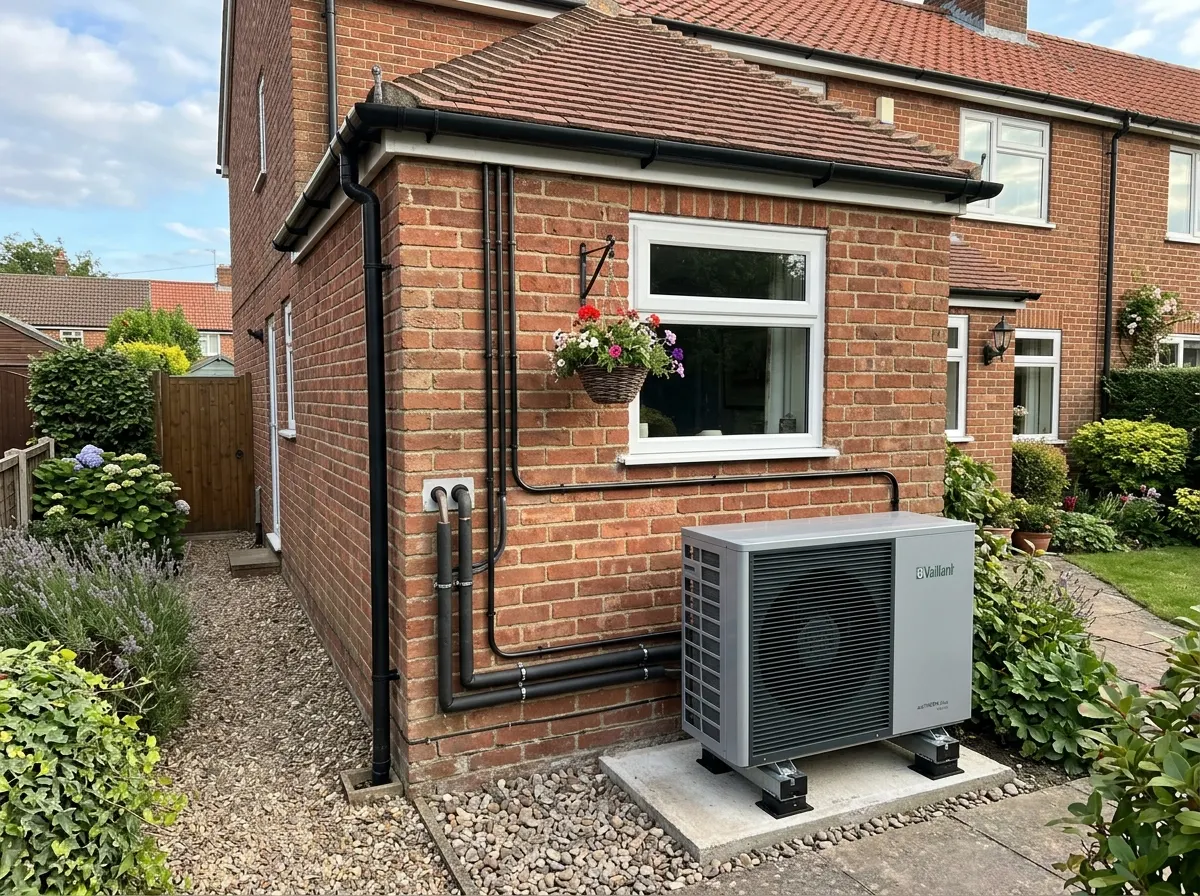
Heat pumps are highly efficient, but electricity costs significantly more per unit than gas in the UK. Therefore, running costs are currently very similar. However, installing a heat pump costs £8,000–£15,000 upfront, though generous government grants are available to help offset this.
Are there government grants available for new heating systems?
Yes. Under the UK Boiler Upgrade Scheme (BUS), eligible homeowners can get a standard £7,500 grant towards installing an air source or ground source heat pump. In 2026, this grant was increased to £9,000 for off-grid properties currently heated by oil or LPG.
Should I choose copper or plastic barrier pipes?
Plastic push-fit pipe (such as Hep2O or Speedfit) is cheaper and vastly faster to install under floorboards as it bends around joists without needing cut joints. Copper is more expensive but rodent-proof and looks much neater where pipes are exposed on walls.
How much disruption is there during installation?
Significant. The water must be shut off, floors lifted, and carpets rolled back. If pipes must be chased into solid walls, expect high levels of brick dust. It is highly recommended to install central heating *before* decorating or laying new flooring.
Related Projects & Guides
Ready to modernise your heating?
Use our AI to get a precise estimate based on your exact house size, radiator count, and pipework needs, then connect with Pricing Penguin Accredited, Gas Safe registered heating engineers near you.
Did you find this page helpful?
Let us know if this guide helped you plan your project.