How much do electrical certificates and EICRs cost?
 By Tom Ellis
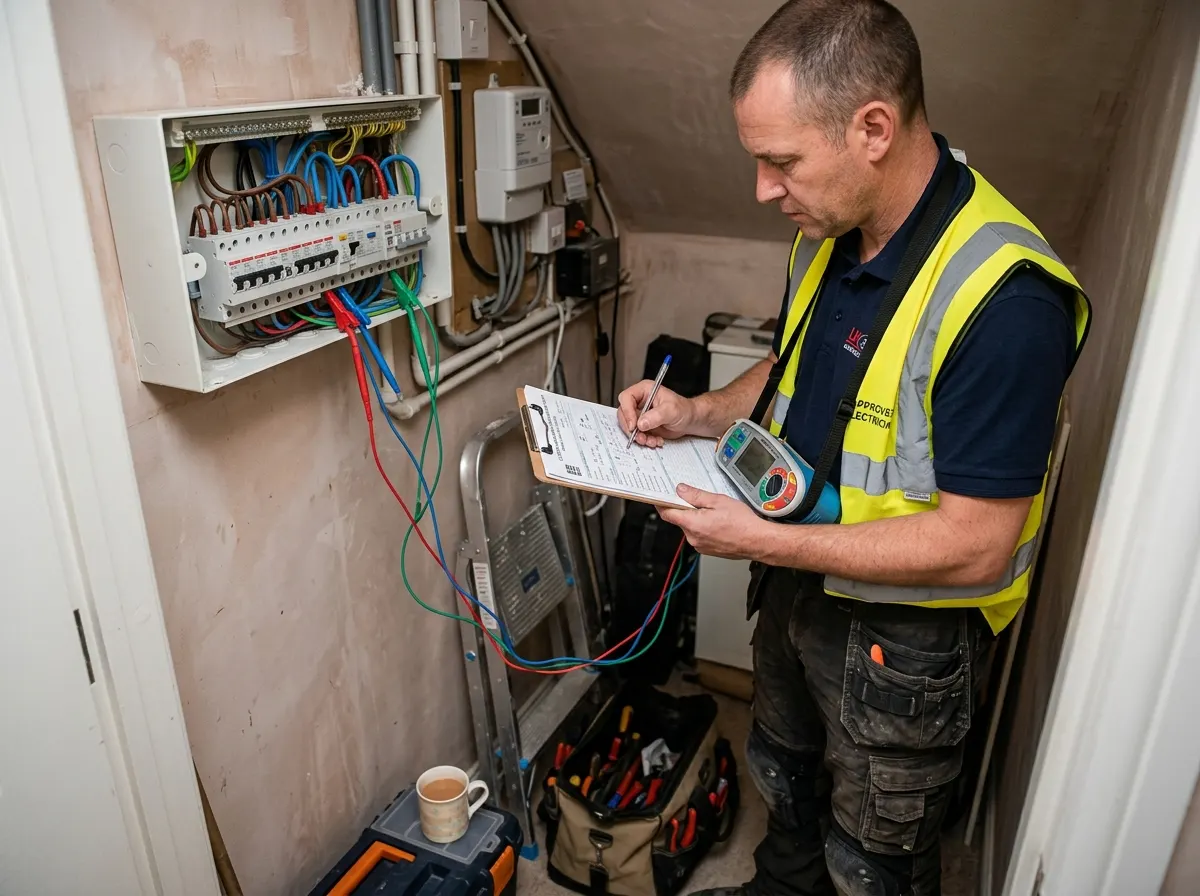
In the UK, you cannot simply wire up a new bathroom or change a fuse box and walk away. Electricity is inherently dangerous, and strict Building Regulations (Part P) ensure that all major domestic electrical work is thoroughly tested, certified, and registered with the local council.
Whether you are a landlord legally required to provide a 5-year EICR, a homeowner looking to sell, or someone trying to get a builder's electrical work officially 'signed off', navigating the different certificates is confusing. This comprehensive 2026 guide breaks down the true cost of every electrical document you might need.
Prices move month to month. See how they are changing in the Penguin Index, or compare common jobs across the UK in our UK Home Improvement Cost Report.
£40 - £80
The certificate provided (usually alongside labour) for minor changes like adding a spur socket to an existing circuit.
£150 - £250
A full Electrical Installation Condition Report. Mandatory for landlords every 5 years; recommended for home buyers.
£200 - £400
Cost for a specially registered inspector to legally sign off new circuits installed by a DIYer or unregistered builder.
Jump to a Section
Get an instant estimate for your certificate
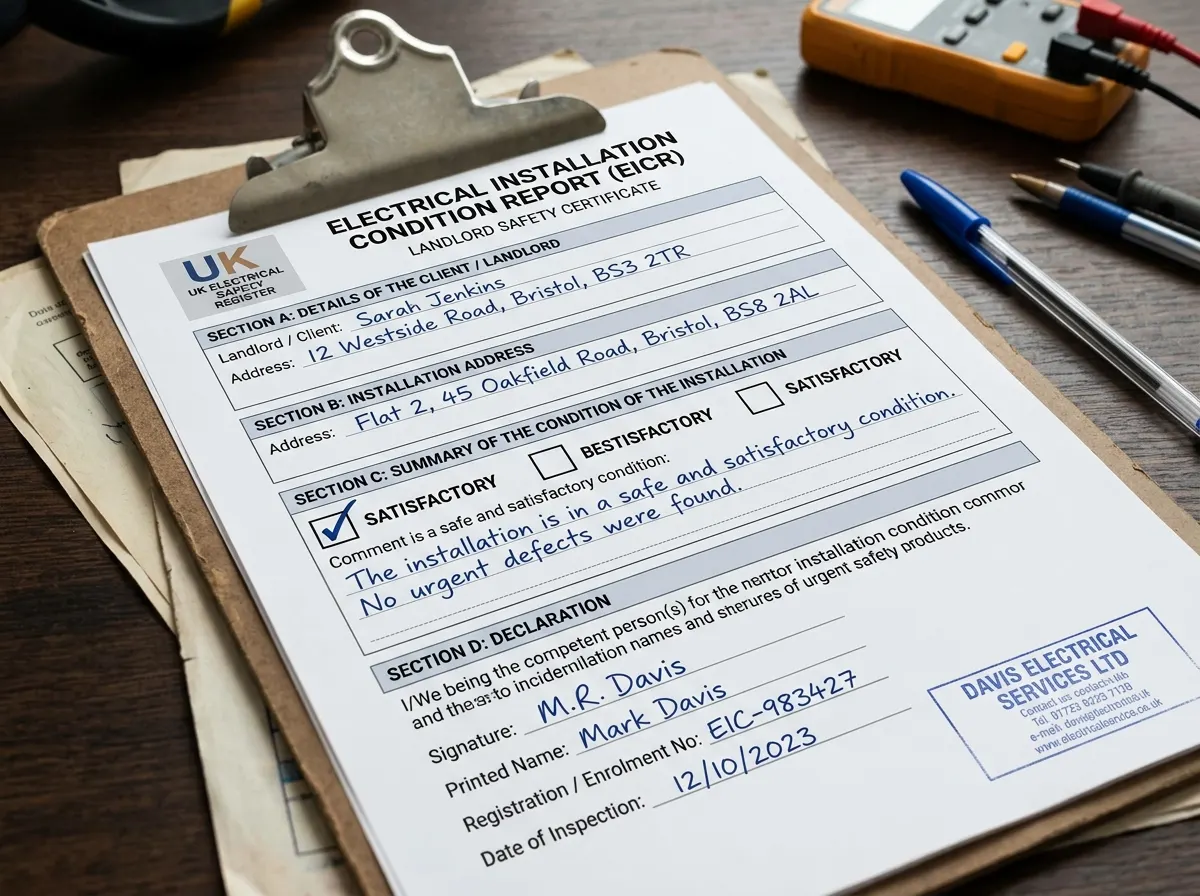
EICR (Electrical Installation Condition Report)
An EICR is essentially an MOT for your property's electrics. The electrician will inspect your consumer unit, test the wiring for degradation, check the earthing, and take sample inspections behind sockets and switches. It is mandatory for landlords every 5 years, and highly recommended for anyone buying a new house so you don't inherit dangerous wiring.
| Property Size | Estimated Duration | 2026 Price |
|---|---|---|
| 1-Bedroom Flat / Studio | 1.5 - 2 Hours | £100 – £150 |
| 2-Bedroom House / Flat | 2 - 3 Hours | £140 – £180 |
| 3-Bedroom House | 3 - 4 Hours | £150 – £250 |
| 4-Bedroom House | Half Day (4+ Hours) | £200 – £280 |
| 5+ Bedroom House | Full Day | £280 – £350+ |
Understanding EICR Observation Codes
If your electrician finds faults during an EICR, they will assign a code to the defect. If you receive a C1, C2, or FI, the report is deemed "Unsatisfactory" and the faults must be fixed immediately.
Code C1
Danger PresentRisk of immediate injury (e.g. exposed live wires). The electrician will likely refuse to leave the property until this is made safe or disconnected.
Code C2
Potentially DangerousNot an immediate threat to life, but could become dangerous under fault conditions (e.g. lack of earthing). Must be rectified for the certificate to pass.
Code C3
Improvement RecommendedThe installation does not meet the latest 18th Edition wiring regulations, but it is not inherently unsafe. You are not legally required to fix C3 faults.
Code FI
Further InvestigationThe inspector has found something suspicious (e.g. an unknown circuit drawing power) but needs more time/access to determine if it is dangerous. Results in a fail.
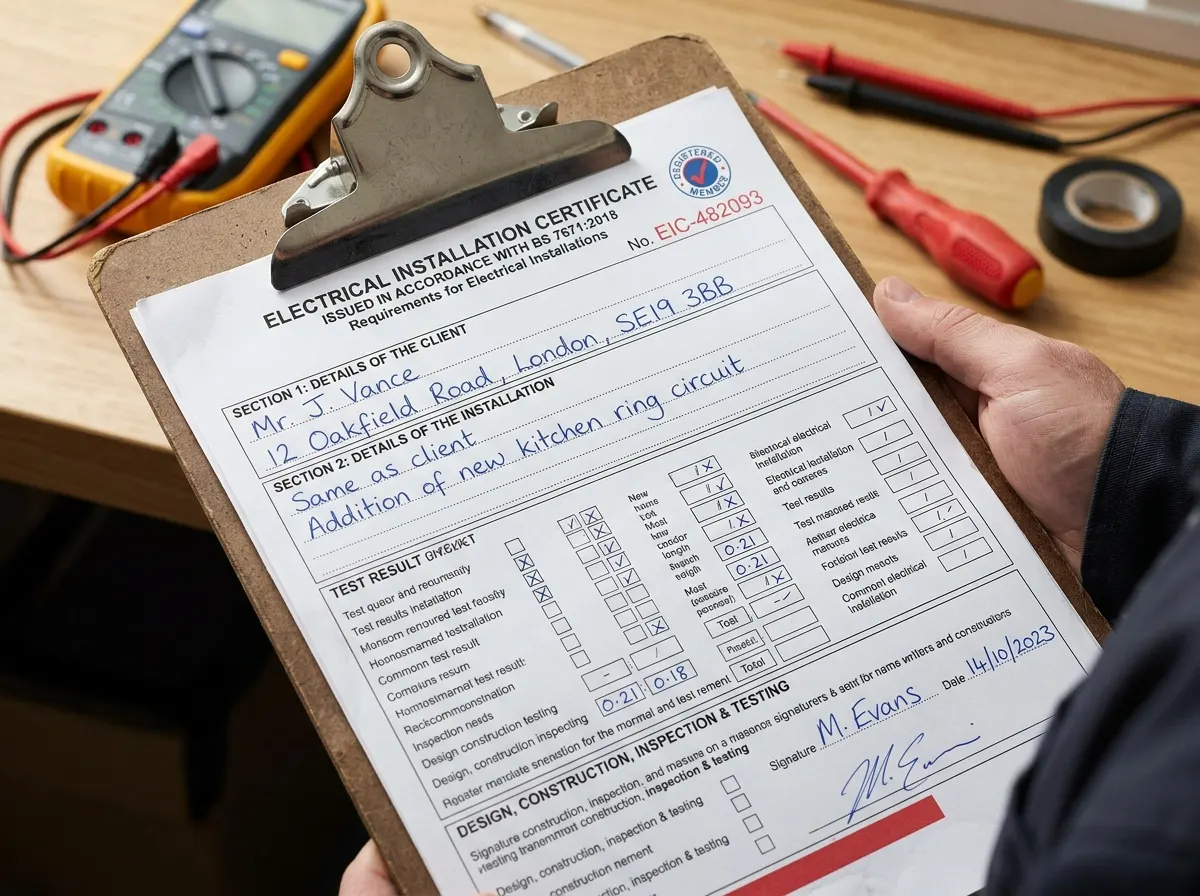
EIC (Electrical Installation Certificate)
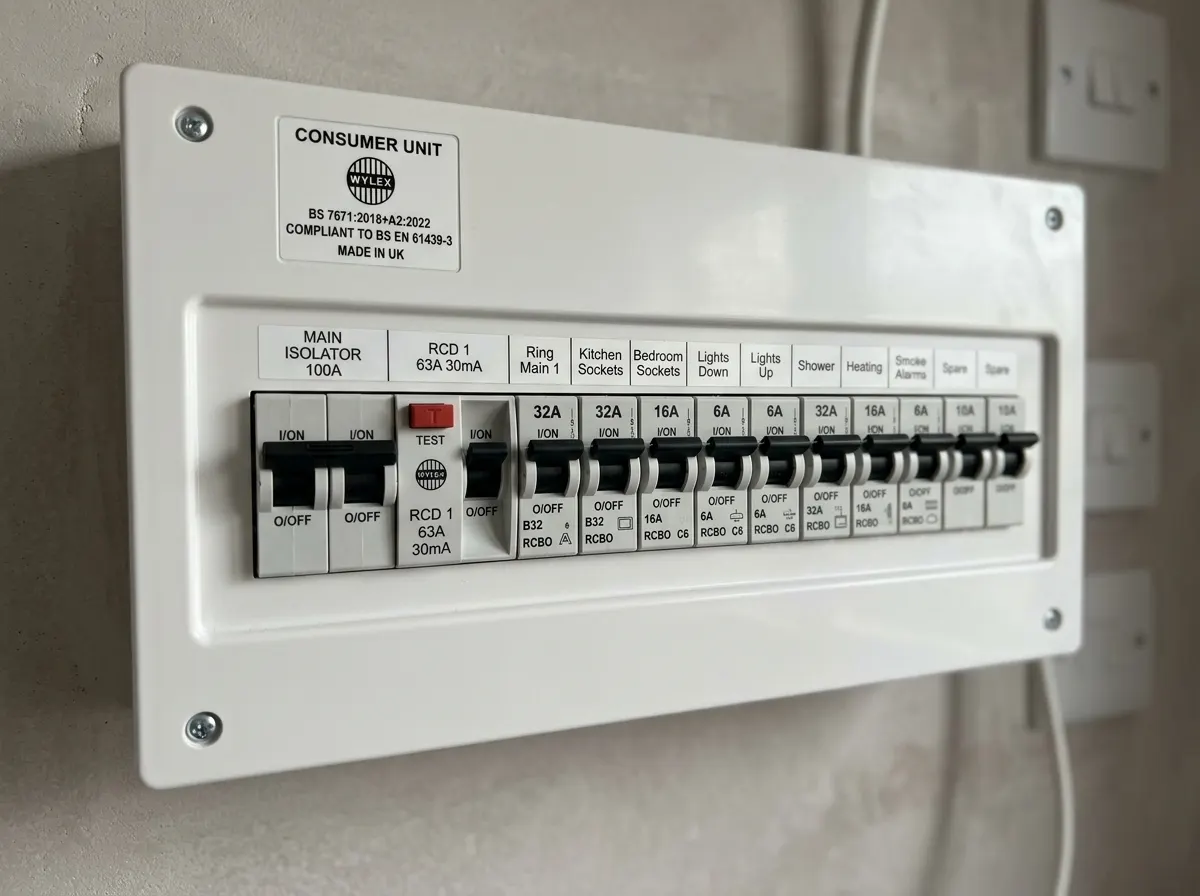
An EIC is required when completely new electrical work is undertaken. This includes installing a brand new consumer unit (fuse box), completely rewiring a house, or adding a brand new circuit (like running a new wire from the consumer unit to power a new oven or an outdoor garage).
| Scenario | Description | Price |
|---|---|---|
| Provided by the original installer | The electrician who did the work issues the EIC. The cost is inherently absorbed into the quote for the main job (e.g. the rewire quote). | Included |
| Buying a replacement copy | If you lost your original EIC and need a duplicate from the installer or the regulatory body (NICEIC/NAPIT). | £15 – £30 |
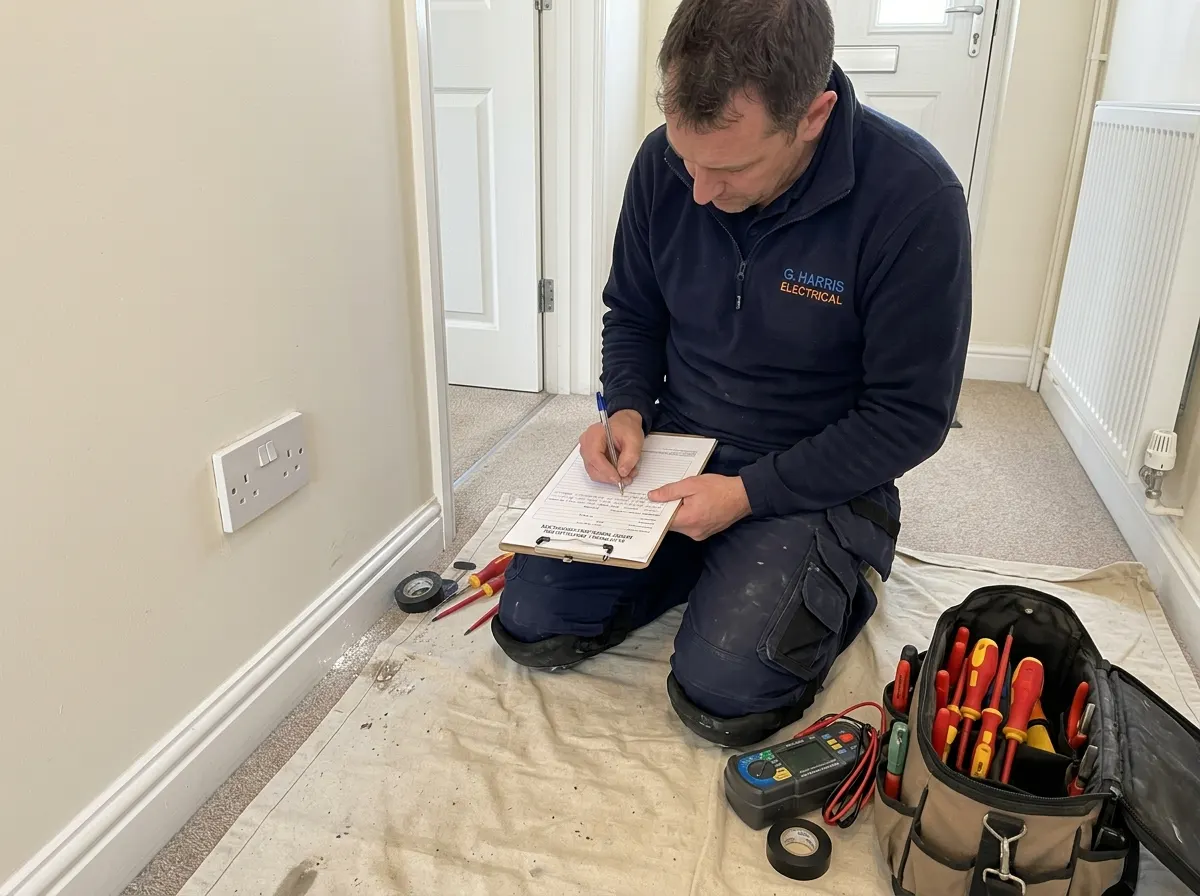 For Small Additions
Minor Works Certificate
If an electrician modifies an existing circuit rather than creating a new one (for example, adding a new spur socket, changing a light fitting, or extending a ring main), they issue a Minor Electrical Installation Works Certificate (MEIWC).
 The DIY Trap
Third-Party Part P Sign Off
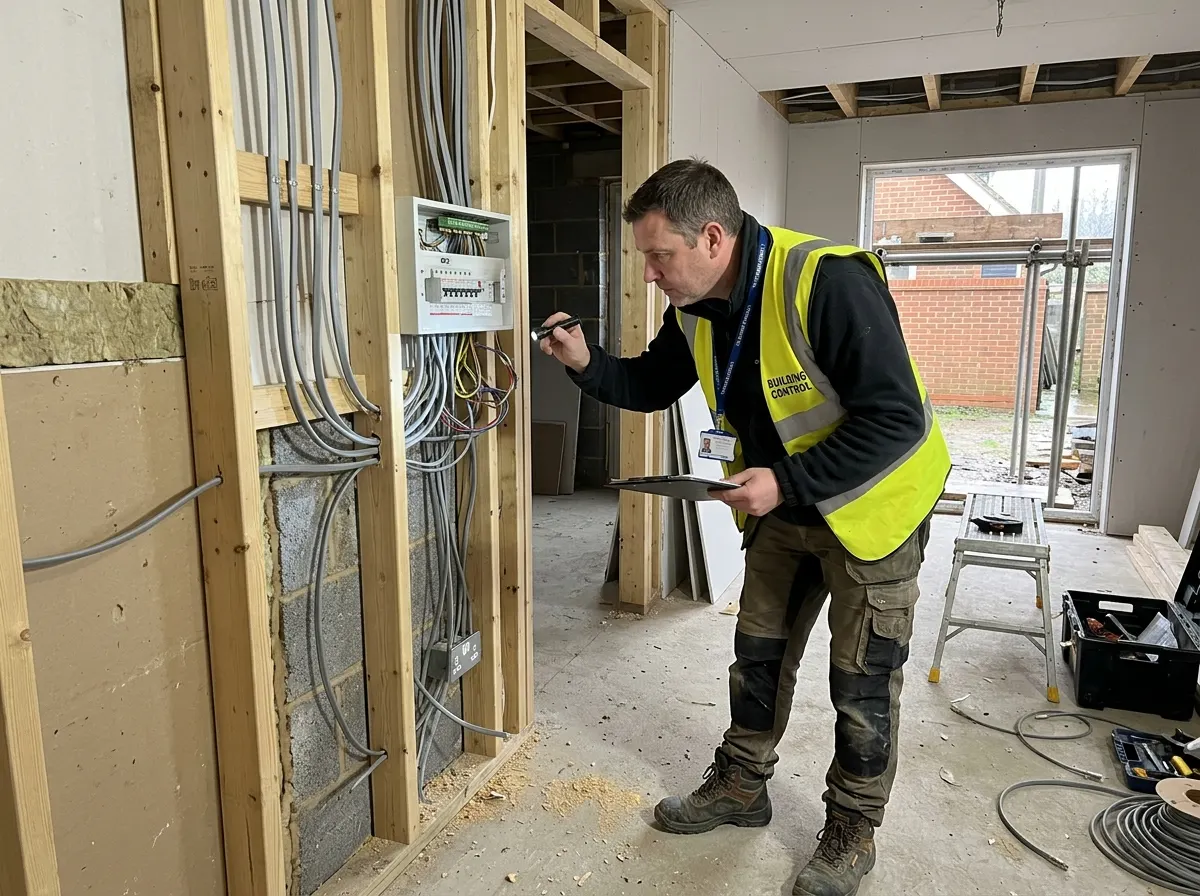
If you (or an unregistered builder) install a new circuit, a standard electrician cannot legally sign it off. You must hire a specially registered "Third-Party Certifier" who must inspect the work at first fix (before plastering) and second fix (testing).
EICR Scams & Cowboy Red Flags
The EICR industry is notorious for "drive-by" inspections. Watch out for these scams:
The £50 'Drive-By' EICR
If a company quotes £50 to £80 for an EICR on a 3-bed house, they are losing money on the inspection. Their business model relies on deliberately failing your certificate with bogus C2 codes, and then charging you £1,000 to "fix" perfectly safe wiring before they release the pass certificate.
Visual Only Testing
A genuine EICR involves "dead testing" and "live testing" the circuits with expensive diagnostic meters. It takes at least 2 to 3 hours. If the electrician just looks at the fuse box, clicks a few switches, and leaves after 30 minutes, the certificate they issue is functionally worthless.
Regional Labour Differences
Electrical testing is purely a labour and expertise service. There are virtually no material costs in an EICR. Therefore, the price is entirely dictated by the electrician's hourly rate in your area.
Electricians in London and the South East typically charge 20% to 30% more than the national average. An EICR that costs £180 in Wales or the North will easily quote at £240 to £280+ in the capital due to increased living and travel costs.
- London & South East + 20% to 30%
- Midlands & South West National Average
- North, Wales & Scotland - 10% to 15%
Check the Register
Never hire an electrician for an EICR without checking their credentials. They should be registered with a government-approved scheme, such as:
- 1 NICEIC (National Inspection Council for Electrical Installation Contracting)
- 2 NAPIT (National Association of Professional Inspectors and Testers)
- 3 ECA (Electrical Contractors' Association)
How Long Does an Electrical Inspection Take?
A standard domestic Electrical Installation Condition Report (EICR) usually takes a half-day on-site, followed by the digital certificate issue. Below is a detailed breakdown of the testing process, property sizes, and factors that can impact the timeframe.
Schedule of Works (Standard 3-Bed House)
Visual Inspection & Setup
The electrician walks the property checking for obvious signs of wear, thermal damage, or non-compliant fittings (like standard switches in bathrooms). They will map out the circuits at the consumer unit before safely isolating the power.
Dead Testing
With the main power completely shut off, the electrician uses a calibrated multifunction tester. They check the wiring for continuity and perform insulation resistance tests to ensure there are no hidden shorts, degraded cables, or faults inside the walls.
Live Testing
Power is carefully restored to the property. The electrician tests earth loop impedance and verifies that the RCDs (trip switches) activate within the legally required milliseconds to prevent fatal shocks during an electrical fault.
Reporting & Certification
The electrician returns to the office to compile the data. They will categorise any faults found (C1 - Danger Present, C2 - Potentially Dangerous, C3 - Improvement Recommended) and email the official, registered PDF certificate.
On-Site Time by Property Size
What could cause delays?
Blocked sockets, heavy wardrobes covering outlets, or a consumer unit hidden behind fixed cabinetry will heavily slow the electrician down.
Older fuse boards that lack circuit labels, or properties with decades of overlapping DIY wiring additions, take significantly longer to safely trace and test.
If dangerous C1 or C2 faults are found, the report will be marked 'Unsatisfactory'. You will not receive a passing certificate until a quote is approved and fixes are made.
What Electrical Work Can You Do Yourself?
While it is illegal to install a new circuit or sign off your own work without being Part P registered, the law does allow competent DIYers to carry out certain "minor works" to save money on an electrician's hourly rate.
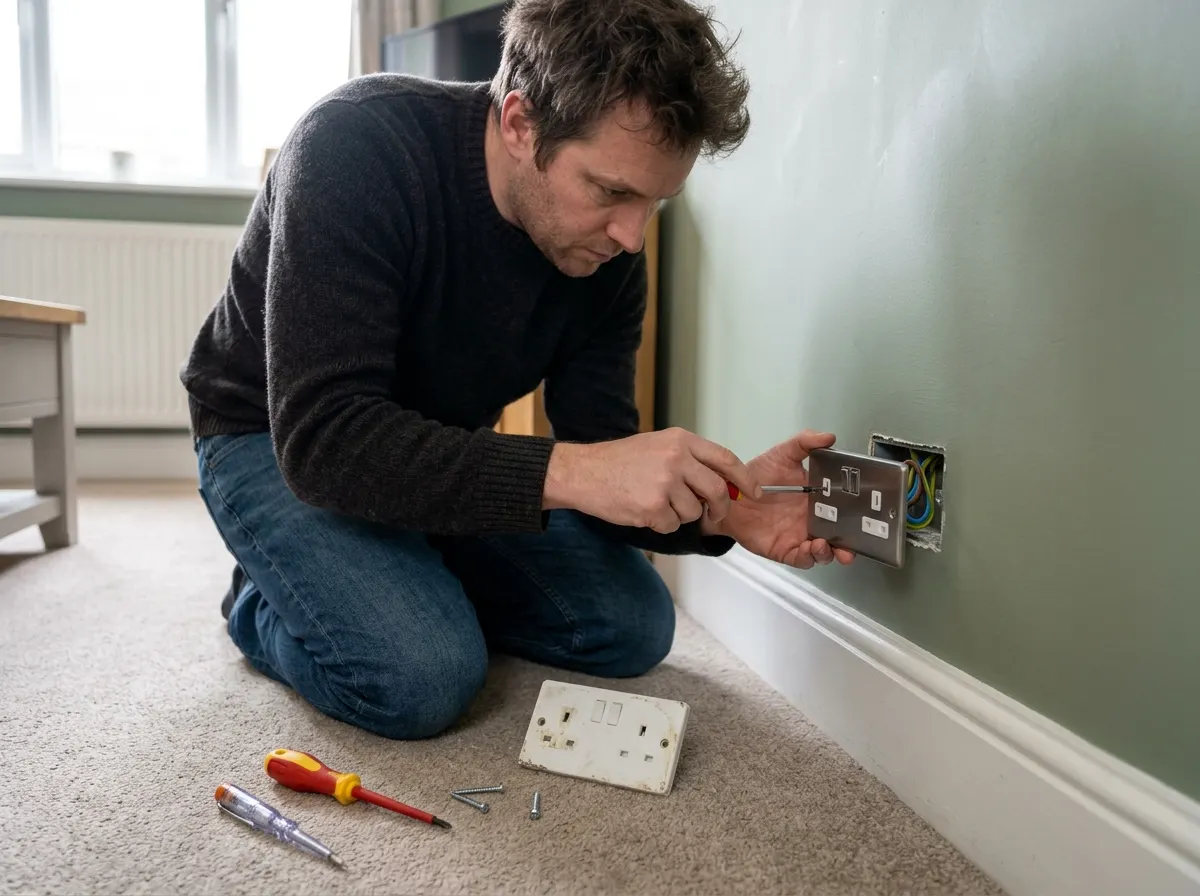
You can legally replace existing accessories on a like-for-like basis (provided they are not in a "special location" like near a bath or shower). Furthermore, if you are doing a major rewire, you can agree with your electrician to do the heavy manual "first-fix" labour yourself under their guidance, saving hundreds of pounds in labour.
| Task | Description | Requires Certificate? |
|---|---|---|
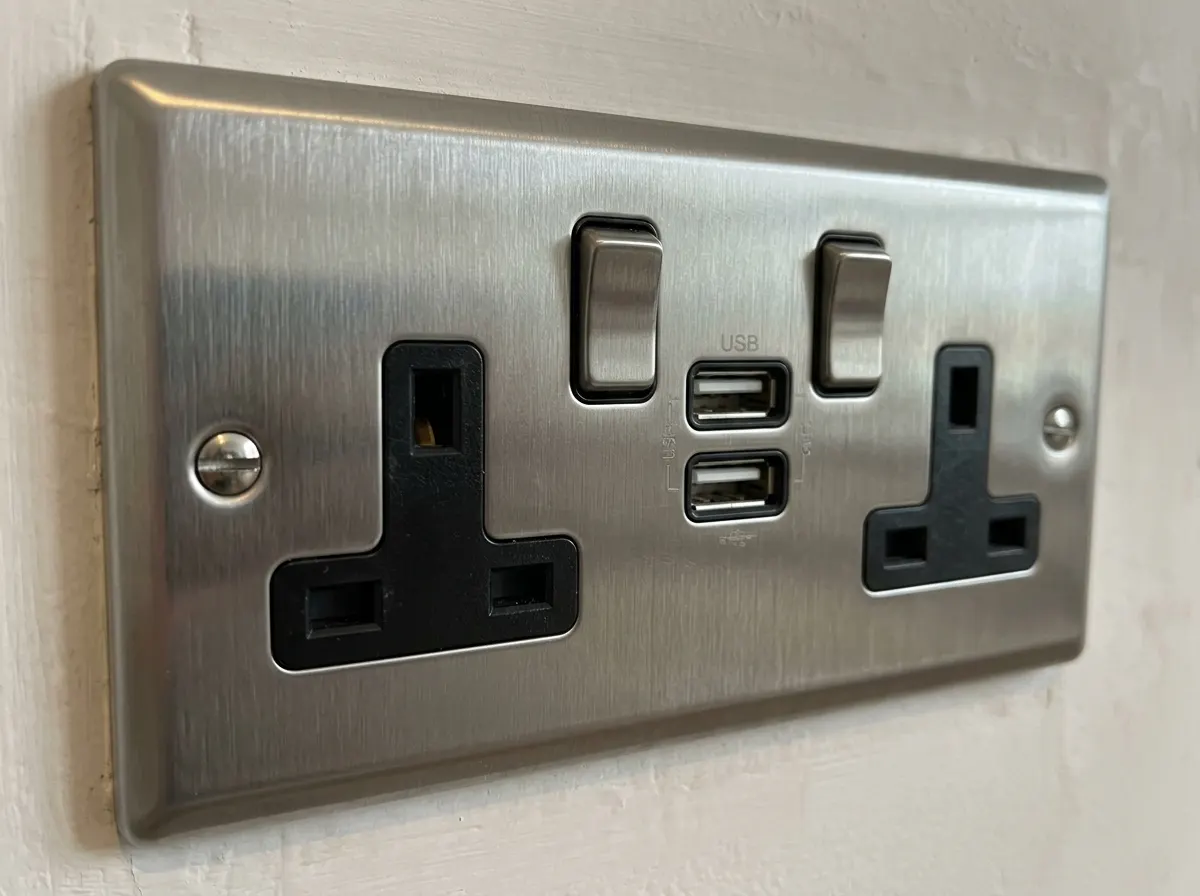
| Changing Faceplates | Description Swapping old white plastic socket or switch covers for modern chrome/USB ones on existing wiring. | Requires Certificate? No |
| Changing Light Fittings | Description Replacing a standard pendant light with a new chandelier or flush ceiling light on existing wiring. | Requires Certificate? No |
| First-Fix Labour (Prep) | Description Lifting floorboards, chasing channels into brick walls, and drilling joists ready for the electrician's cables. | Requires Certificate? No |
| Adding a New Circuit | Description Running a new cable back to the consumer unit (e.g. for a new electric oven or garage supply). | Requires Certificate? Yes (Part P Required) |
Frequently Asked Questions
The most important things you need to know before booking an electrical inspection.
How much does an EICR (Electrical Installation Condition Report) cost in 2026?
For a standard 3-bedroom UK house, an EICR typically costs between £150 and £250. A 1-bedroom flat will cost around £100 to £150, while larger 5-bedroom homes can exceed £300 due to the higher number of electrical circuits and sockets that the electrician must test.
Is an EICR electrical certificate a legal requirement?
For private landlords in the UK, yes. Under the Electrical Safety Standards in the Private Rented Sector, you must have a satisfactory EICR renewed every 5 years or before a new tenancy starts. For regular homeowners, it is not legally mandated, but it is highly recommended every 10 years for home safety and insurance validity.
Can any electrician sign off someone else's electrical work?
Generally, no. Under Part P of the UK Building Regulations, an electrician (e.g., NICEIC or NAPIT registered) can only issue an EIC for work they have designed and installed themselves. The only exception is a registered 'Third-Party Certifier' who must physically inspect the work at multiple stages during the actual build.
What is the difference between an EIC and an EICR?
An EIC (Electrical Installation Certificate) is the official sign-off document issued for brand new electrical work, such as a full house rewire or a new consumer unit (fuse box) upgrade. An EICR is a diagnostic safety inspection of an older, existing electrical installation to ensure it has not deteriorated.
Do I need an EICR to sell my house in the UK?
There is no explicit law stating you must have an electrical certificate to sell a property. However, during the conveyancing process, the buyer's surveyor will flag the electrics if there is no recent paperwork. The buyer's solicitor will then usually demand you pay for an EICR before exchanging contracts, or request an indemnity policy.
What happens if my property fails an EICR inspection?
If your system receives C1 or C2 fault codes, the report is classed as "Unsatisfactory". Landlords have 28 days to have these specific electrical faults rectified. Once repaired, you do not need to pay for a whole new EICR; the electrician will provide a Minor Electrical Installation Works Certificate to prove the issues are resolved.
How long does an EICR test take to complete?
For an average 3-bedroom domestic property, a thorough EICR inspection takes between 3 to 4 hours. The electrician will need to briefly turn off your main power supply (consumer unit) at various stages to safely test the circuits, sockets, light fittings, and earthing arrangements.
What do the EICR fault codes (C1, C2, C3, FI) mean?
C1 means 'Danger Present' (immediate risk of shock/fire). C2 means 'Potentially Dangerous' (urgent remedial work required). Both C1 and C2 result in an immediate fail. C3 means 'Improvement Recommended' (does not fail the report). FI stands for 'Further Investigation required' and will also result in an unsatisfactory report until checked.
Disclaimer: The figures in this guide are carefully calculated averages derived from UK electrical industry cost data for 2026. Labour rates will fluctuate based on local availability, property age, and exact testing specifications.
Related Electrical Cost Guides


Need your electrics certified?
Use our AI to get a precise estimate based on your property size, then connect with Pricing Penguin Accredited, NICEIC registered electricians near you.
Did you find this page helpful?
Let us know if this guide helped you plan your electrical project.