How much does garden lighting cost?
 By Tom Ellis
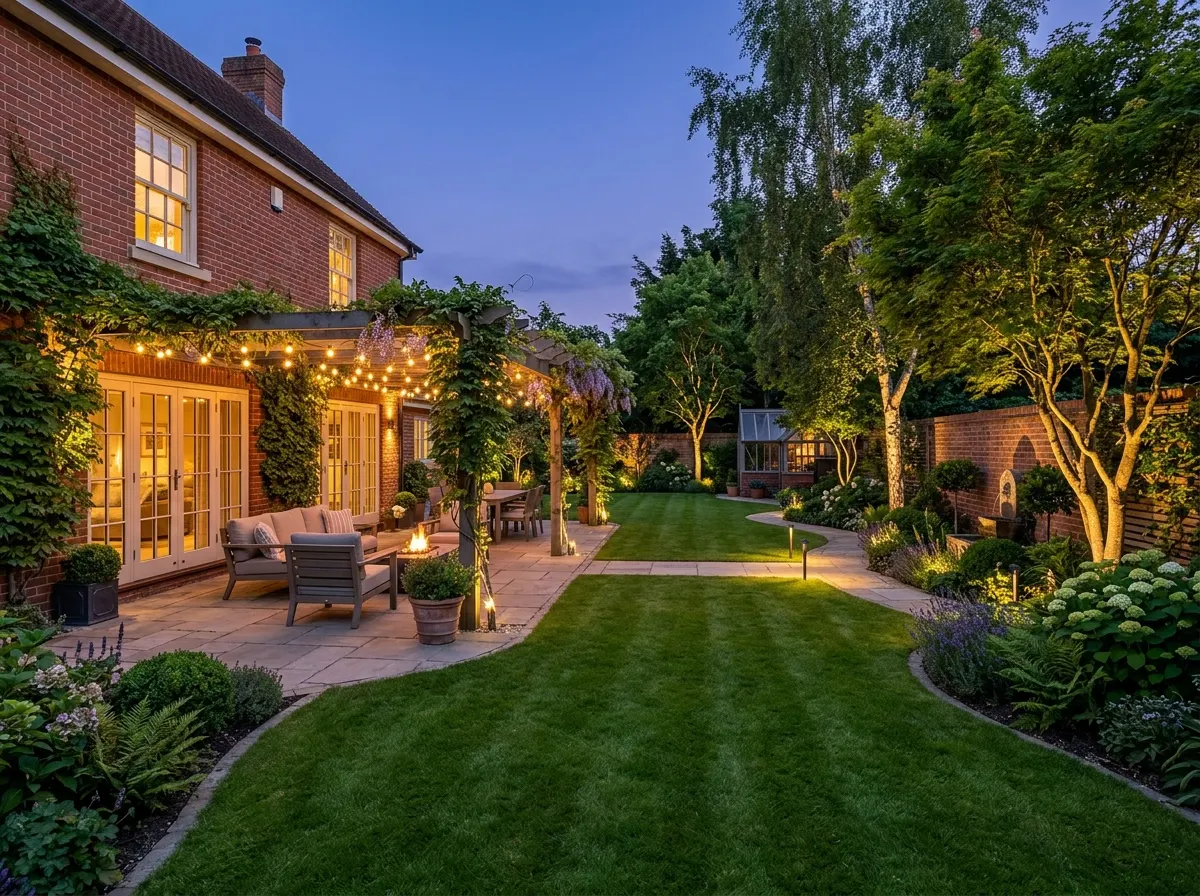
A professionally installed lighting scheme transforms your garden from a dark void into a stunning nighttime living space. It extends your summer evenings, highlights architectural planting, and vastly improves your property's security.
However, outdoor electrical work requires specialist armour-plated cables, deep trenching, and strict adherence to UK safety regulations. This 2026 guide breaks down the true cost of fittings, smart controls, and qualified electrician labour.
Prices move month to month. See how they are changing in the Penguin Index, or compare common jobs across the UK in our UK Home Improvement Cost Report.
£400 - £800
A simple pathway or patio scheme featuring 4 to 6 LED fittings on a single switch.
£1,200 - £2,500
Around 8 to 15 mixed fittings (uplights, decking, paths) across two zones with timer controls.
£4,000+
Full landscape lighting design with 25+ fittings, extensive SWA trenching, and smart app integration.
Jump to a Section
Get an instant estimate for your garden lights
Garden Lighting Styles
A professional scheme rarely relies on just one type of light. The secret is "layering"—using different styles to highlight distinct features of the garden.
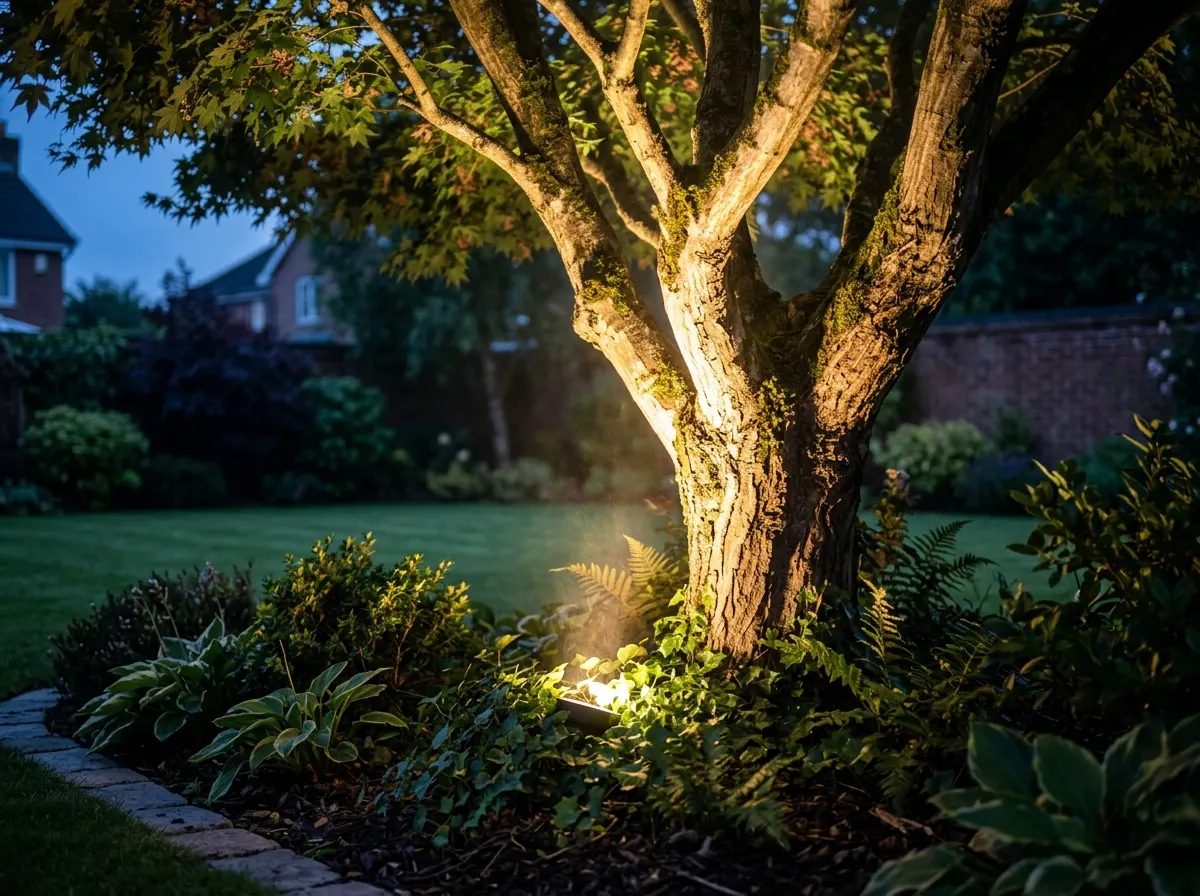
Under-Tree Uplights
Spike-mounted or recessed ground lights aimed upwards into the canopy of trees or structural plants. This creates dramatic shadows and highlights bark textures perfectly.
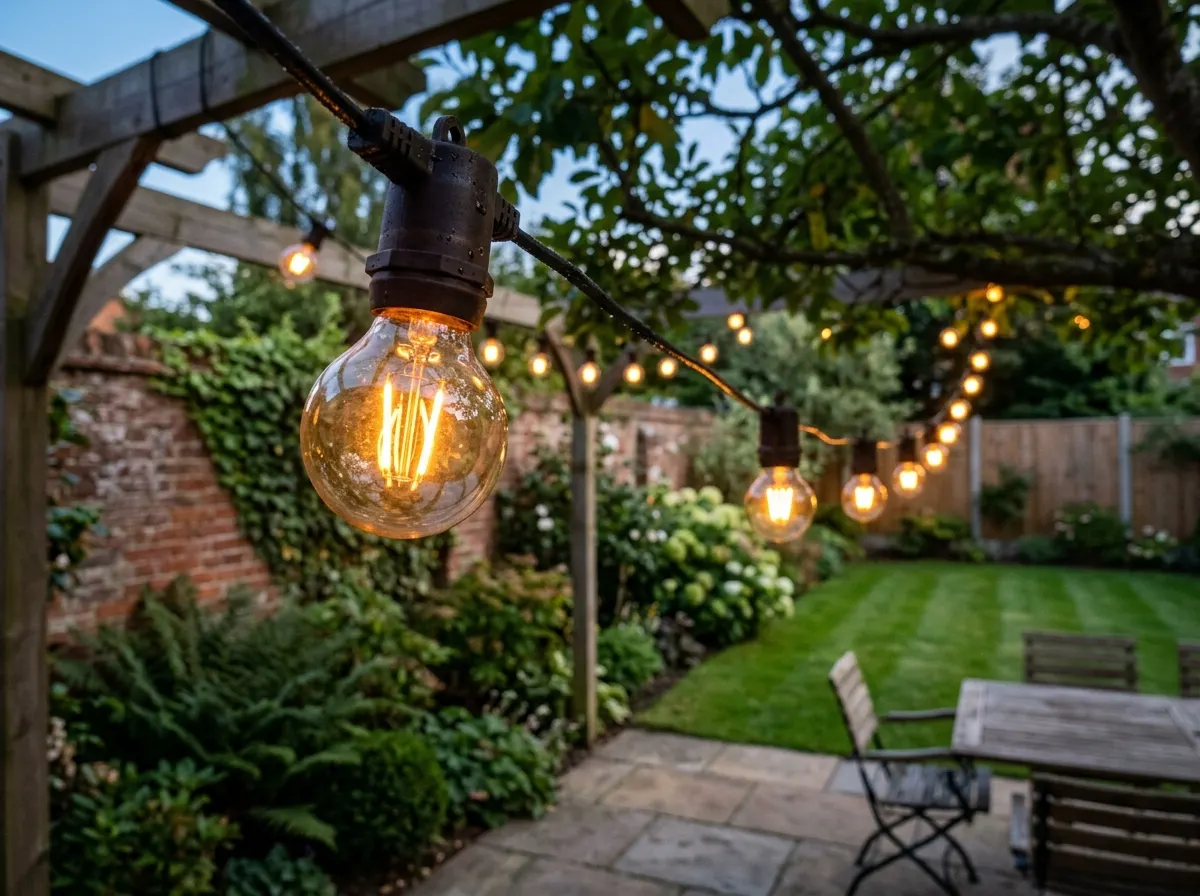
Festoon String Lights
Draped across pergolas, fences, or dining areas. They provide a warm, ambient 'café' glow that is perfect for entertaining. Professional mains-wired versions are far superior to solar.
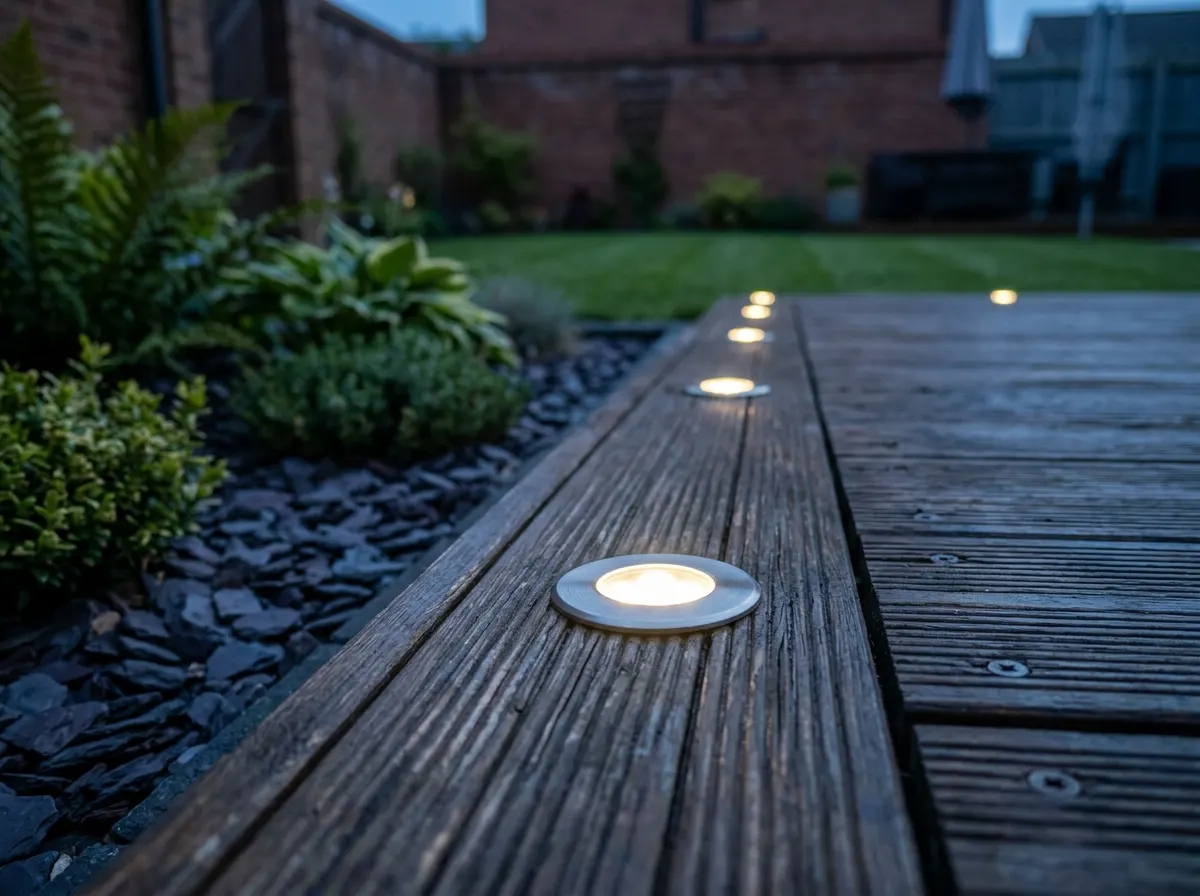
Decking & Edging Dots
Tiny, waterproof LED dots recessed flush into timber decking, patio edges, or sleeper beds. They define the boundaries of your seating area and prevent trip hazards.
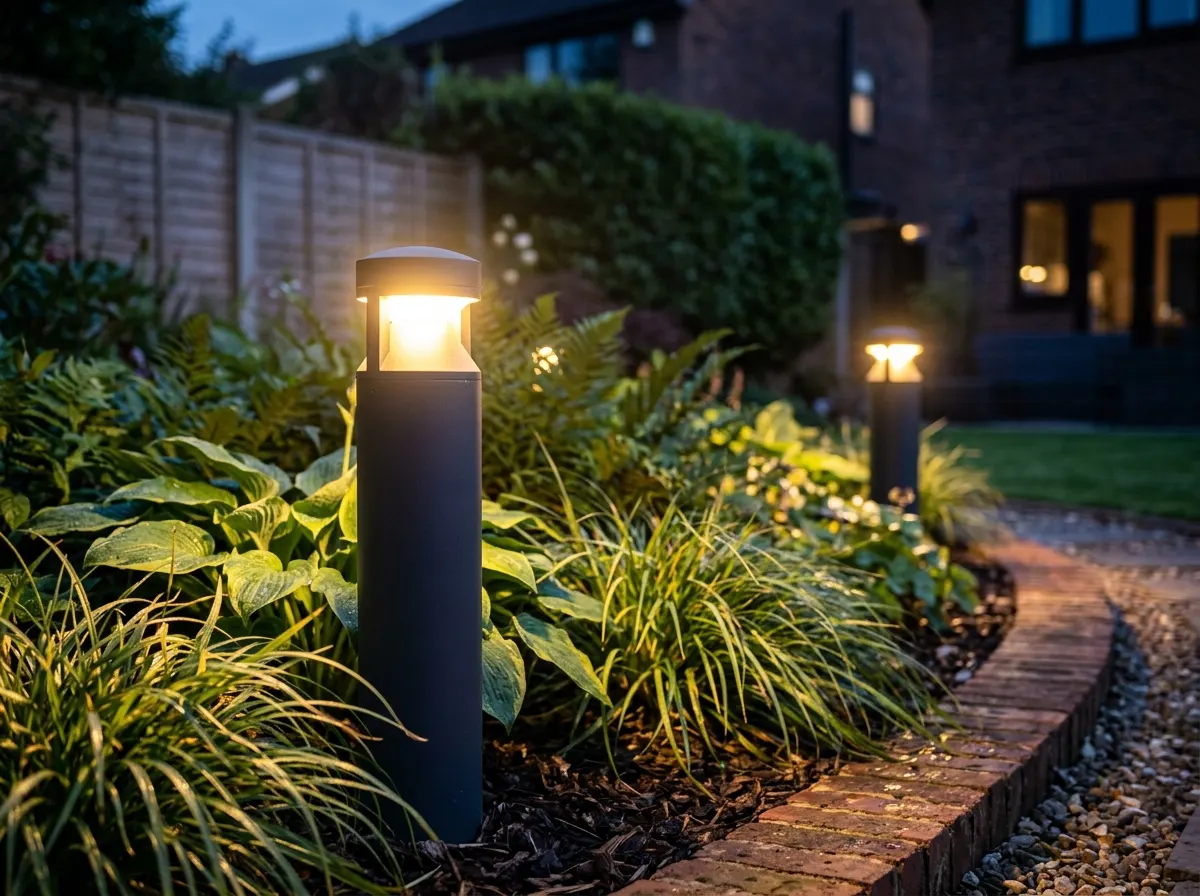
Pillar & Bollard Lights
Short, sturdy pillars placed at regular intervals along driveways and long pathways. The workhorse of outdoor lighting, casting light downwards to safely guide footsteps.
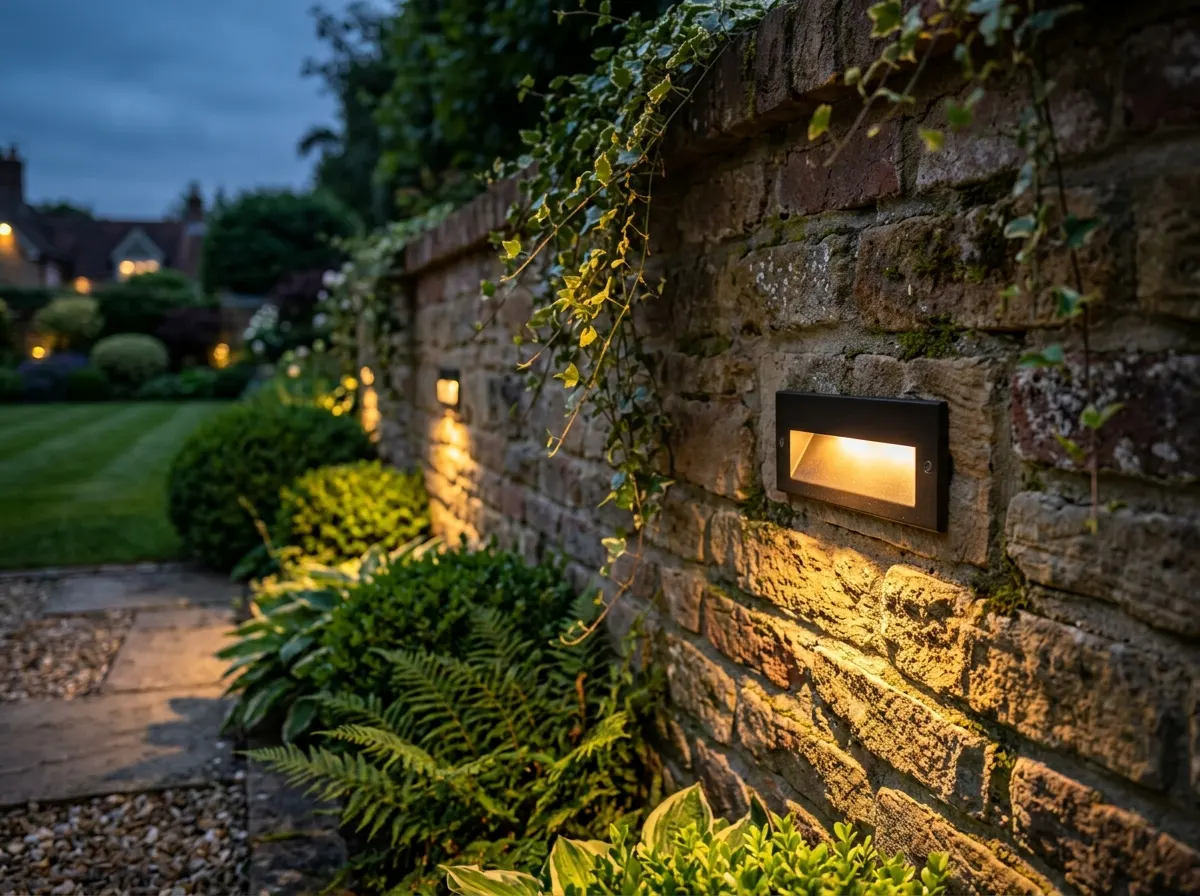
In-Wall & Step Lights
Sleek, horizontal lights built directly into brick retaining walls or the risers of garden steps. They wash the floor with light without blinding you as you walk up.
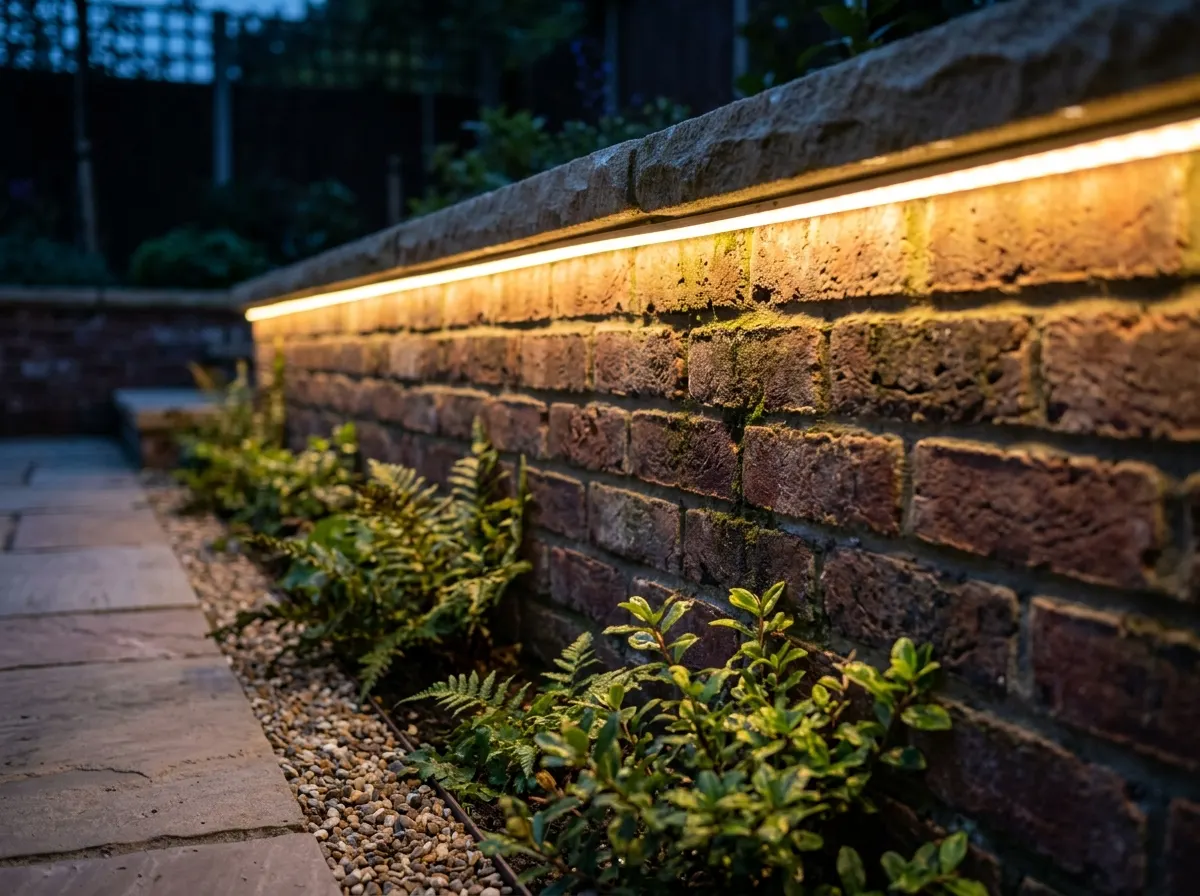
LED Strips & Downlights
Continuous IP67-rated waterproof LED strips hidden under seating coping stones create a stunning floating effect. Downlights mounted high in trees mimic natural moonlight.
Material & Fitting Costs
The actual light fittings only represent a portion of your materials bill. You must also budget for heavily armoured cables, waterproof junction boxes, and switching controls.
The Light Fittings (Supply Only)
- Path / Bollard Lights £30 – £120 each
- In-Ground Uplights (Trees/Walls) £40 – £150 each
- Decking / Plinth Dot Lights (Pack of 10) £40 – £100 pack
- Waterproof LED Patio Strips (5m) £60 – £150 per strip
- Mains Festoon Strings (10m) £50 – £120 per string
- Security Floodlight (PIR Sensor) £30 – £100 each
Cabling & Controls (Supply Only)
- Armoured SWA Cable (Per Metre) £2.00 – £4.50 /m
- IP-Rated Junction Boxes / Resins £15 – £30 each
- Consumer Unit Breaker (RCBO) £25 – £60
- Dusk-to-Dawn Photocell Sensor £15 – £35
- Smart App Controller (WiFi / Zigbee) £50 – £200
Materials average £150 for a tiny setup, right up to £1,500+ for large landscapes.
Electrician Labour Costs
The biggest cost driver in garden lighting isn't the lightbulbs—it's the physical labour of digging 50cm deep trenches across your garden to safely bury the armoured cables.
2026 Electrician Rates
- Electrician Hourly Rate £45 – £75
- Electrician Day Rate £250 – £350
- Trench Digging Labourer (Day) £130 – £160
- Testing & Certification (EIC) £50 – £100
Complete Project Estimates
- Basic Setup (4 to 6 lights) ~£600
- Mid-Range (8 to 15 lights) ~£1,800
- Large Garden (20 to 30 lights) £4,000 – £6,500
- Luxury Landscape (30+ lights) £7,000+
Electrical Safety Warnings
Outdoor electrics are extremely dangerous if installed incorrectly. Ensure your installer follows these non-negotiable rules:
SWA Cable is Mandatory
Standard grey twin-and-earth household cable must never be buried in a garden. Any 230V mains cable outside must be Steel Wire Armoured (SWA) to prevent a fatal shock if someone accidentally hits it with a spade.
IP65 or Higher
Outdoor fittings are exposed to heavy rain and soil moisture. Any light, junction box, or outdoor socket must have an "Ingress Protection" rating of at least IP65. Ground-level uplights should ideally be IP67 (submersible) to survive puddles.
Part P Certification
Running a new circuit from your consumer unit out to the garden is "notifiable work" under UK Building Regulations. Your electrician must provide an Electrical Installation Certificate (EIC) proving it meets Part P safety standards.
Regional Labour Differences
The physical light fittings cost the same nationwide, but electrician day rates vary significantly based on your postcode.
Electricians in London and the South East typically charge 15% to 25% more than the national average day rate. A £250-a-day sparky in the North will easily command £350+ a day in the capital.
- London & South East + 15% to 25%
- Midlands & South West National Average
- North, Wales & Scotland - 10% to 15%
Top Cost-Saving Tips
Garden electrics can get expensive quickly. Keep costs down by doing the following:
- ✓ Dig the trenches yourself: Paying a qualified electrician £40+ an hour to dig a 50cm deep trench in the mud is a waste of money. Agree the route, dig it yourself, and let them lay the cable.
- ✓ Surface mounting: If you can run the armoured cable safely along the back of a flower bed, pinned to a fence base, or under decking, you completely avoid the cost of deep trenching.
- ✓ Consider 12V (Low Voltage): Plug-and-play 12V systems use a standard outdoor socket and a transformer. Because the cables aren't dangerous mains voltage, they don't need to be armoured or buried deeply.
How Long Does Garden Lighting Take?
A standard mains-wired outdoor lighting system typically takes between 1 to 2 days to trench, wire, and test. Below is a detailed breakdown of the installation process, project sizes, and factors that can impact the timeframe.
Schedule of Works (Standard Mains System)
Marking Out & Trenching
The electrician or landscaper marks the locations for the lights and the route back to the house. To comply with regulations, trenches (usually 450-600mm deep) are dug across lawns or borders to safely bury the Steel Wire Armoured (SWA) cable.
Cable Laying & Junctions
The heavy-duty SWA cable is laid into the trenches. IP68-rated (waterproof) junction boxes are installed at the required intervals above ground or in secure underground resin traps. The trenches are then backfilled, sometimes with warning tape placed above the cable.
Fixture Installation
The physical light fittings—such as border spike lights, wall-mounted up/down lighters, or recessed decking dots—are mounted in place. The electrician carefully strips the SWA cable and wires each fixture into the watertight junction boxes.
Connecting & Testing
The outdoor circuit is connected to a fused spur or directly to your main consumer unit. The electrician performs live dead and live testing to ensure earth fault loops and RCDs function perfectly, finishing by issuing your Part P electrical safety certificate.
Timeline by Project Size
What could cause delays?
Trenching through soft soil is fast. If cables need to run under an existing block-paved driveway or a thick concrete patio, the lifting and relaying of paving will add significant time.
Outdoor electrics legally require RCD protection. If your current indoor fuse box is outdated and lacks an RCD, the electrician will have to install a new RCBO or upgrade the board first.
Working with exposed mains wiring and open junction boxes in the pouring rain is incredibly dangerous. Heavy downpours will force the electrician to halt all exterior work immediately.
DIY Garden Lighting
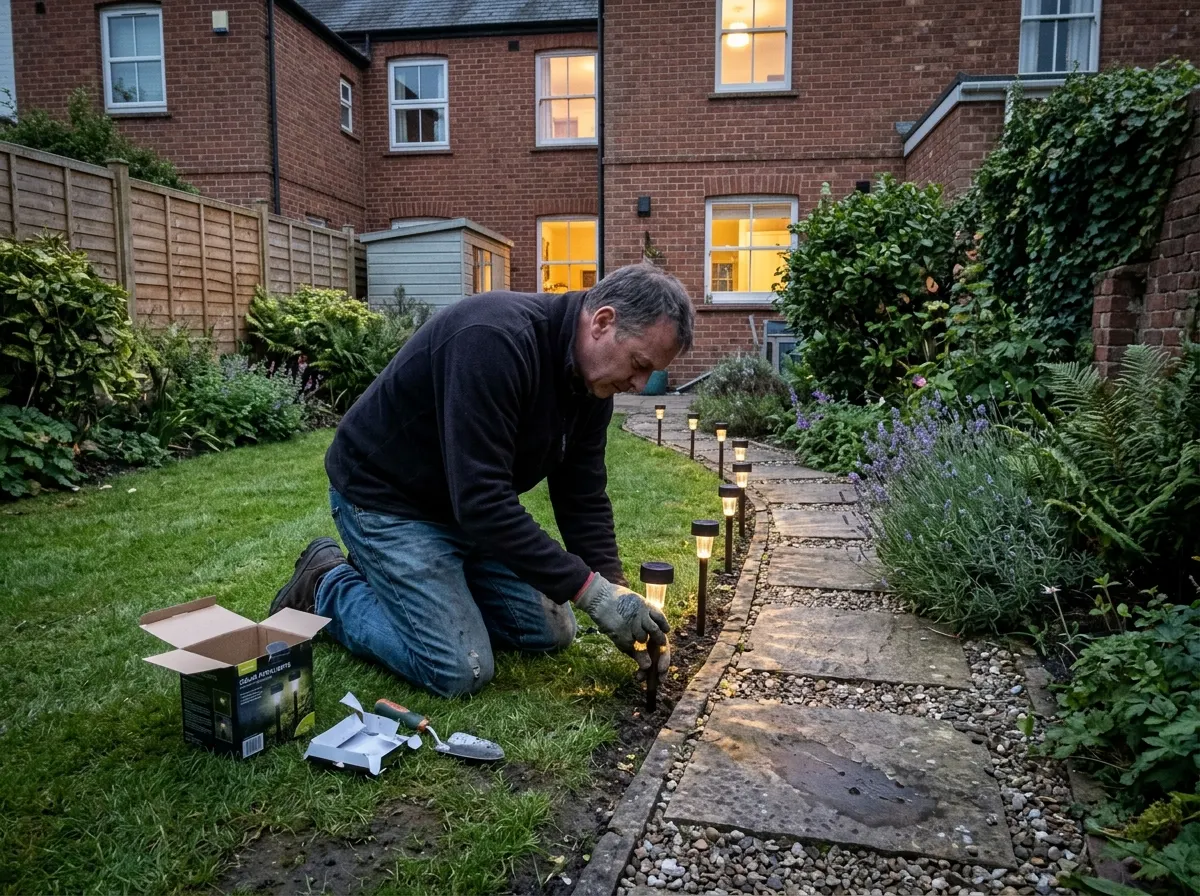
Installing a permanent 230V mains electrical circuit in your garden requires heavy, deep trenching for armoured cables and must be signed off by a Part P registered electrician. If you want to bypass the electrician's £300+ day rate entirely, you can easily install your own garden lighting using Solar or Low-Voltage (Plug-and-Play) systems.
Low-voltage 12V/24V systems simply plug into an existing standard outdoor socket (which a professional has already installed). The thin 12V cables are completely safe to handle and only need to be buried slightly under bark mulch or gravel, rather than trenched deep underground. It offers the brightness of mains power with the ease of DIY.
| Lighting Type (e.g. 6-8 Lights) | Professional Cost (Mains) | DIY Cost (Kit Only) | Potential Saving |
|---|---|---|---|
| Solar Spike Lights (Pathway) | Professional Cost N/A - Too dim for pros | DIY Cost £30 – £80 | Potential Saving No running costs |
| Low-Voltage 12V Plug-and-Play Kit | Professional Cost £600 – £1,000 | DIY Cost £150 – £350 | Potential Saving Up to £650 |
| LED Festoon String Lights | Professional Cost £250 – £400 | DIY Cost £50 – £120 | Potential Saving Up to £280 |
Frequently Asked Questions
Common queries about outdoor electrical work and garden lighting.
How much does a garden lighting scheme cost in the UK?
A simple outdoor setup with 4 to 6 basic LED spotlights or wall lights typically costs between £400 and £800 fully installed. A mid-range garden scheme with 10 to 15 lights across multiple switched circuits averages £1,200 to £2,500. Comprehensive, smart-controlled lighting (like Philips Hue) for large landscaped gardens can easily exceed £4,000.
What is the day rate for an outdoor electrician in 2026?
In 2026, an established, Part P registered UK electrician will charge between £250 and £350 per day for domestic garden work. This rate rises to £350–£450 in London and the South East. For smaller electrical jobs like replacing a faulty PIR sensor, expect an hourly call-out rate of £45 to £75.
Do I need armoured cable for garden lights?
Yes. Any 230V mains electrical cable buried in a garden must be Steel Wire Armoured (SWA) to comply strictly with UK BS 7671 wiring regulations. This heavy-duty cable protects against lethal electrical shocks if accidentally struck by a garden spade or fork during future planting.
Do I need planning permission for garden lights?
Generally, no. Standard outdoor domestic lighting falls under UK Permitted Development. However, you must ensure that ultra-bright security LED floodlights are angled downwards. If your lighting causes severe "light pollution" or nuisance glare into your neighbours' windows, the local council can issue an abatement notice.
How deep do outdoor electrical cables need to be buried?
UK building regulations do not specify an exact number, stating only that SWA cables must be buried at a "depth to avoid damage". However, standard industry best practice is a minimum trench depth of 450mm to 600mm, with high-visibility yellow electrical warning tape placed directly above the buried cable.
Are solar garden lights worth the money?
For temporary summer parties or tight budgets, yes. However, solar stake lights struggle significantly during the dark, cloudy UK winter months when you actually need illumination most. Hard-wired 240V mains lighting is vastly brighter, completely reliable year-round, and adds genuine tangible value to your property.
Can I install outdoor sockets myself?
Under UK Part P Building Regulations, you are not legally permitted to run a brand new electrical circuit from your consumer unit to the garden yourself. A qualified electrician must install, test, and certify the new outdoor sockets to ensure the RCD protection operates correctly and safely in wet conditions.
What IP rating do garden lights need in the UK?
Because of the wet UK climate, any lighting installed outdoors must be fully weatherproof. For standard wall lights or spike lights, look for a minimum rating of IP44 (splash-proof). For ground-level deck lights or anything exposed to heavy rain or hosepipes, you must use IP65 or IP67 rated fittings.
Disclaimer: The figures in this guide are carefully calculated averages derived from UK electrical industry cost data for 2026. Material prices and labour rates will fluctuate based on local availability and exact project specifications.
Related Gardening & Clearance Guides
Ready to light up your garden?
Use our AI to get a precise estimate for your exact lighting scheme, then connect with Pricing Penguin Accredited electricians near you.
Did you find this page helpful?
Let us know if this guide helped you plan your garden lighting project.