How to start a highly profitable flooring company.
 By Tom Ellis
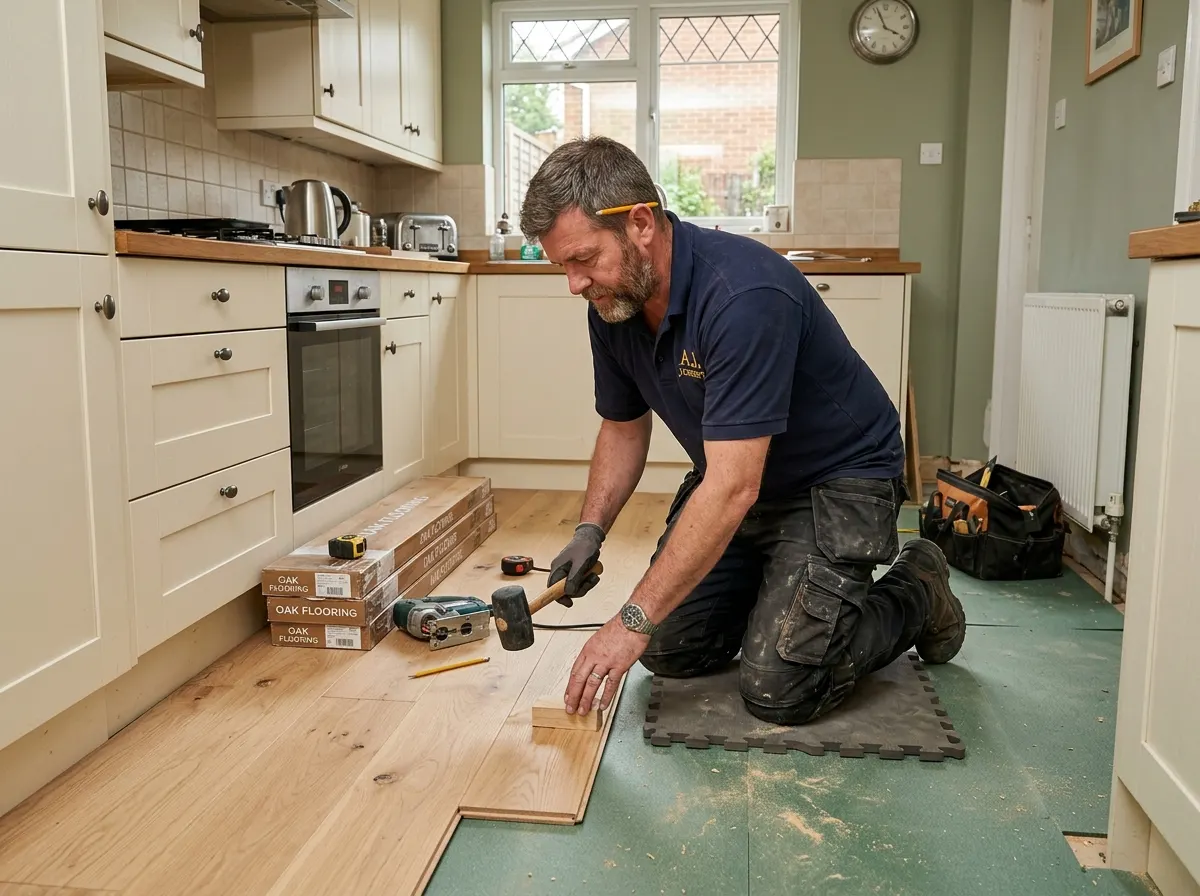
The UK flooring industry has evolved drastically. While carpet fitting remains a staple, the massive surge in demand for Luxury Vinyl Tiles (LVT), engineered wood, and resin floors has transformed flooring into a highly technical, premium trade.
A successful flooring business is no longer just about cutting and kicking carpets. 90% of your success—and your protection against costly failures—comes down to subfloor preparation, moisture testing, accurate pricing, and legal compliance regarding hazardous materials. This step-by-step guide will show you how to establish a premium flooring firm, avoid the catastrophic pitfalls of damp screeds, and secure high-paying domestic and commercial contracts.
Is Flooring a Good Business to Start?
Flooring is a fast-paced, high-turnover trade. Once established with the right retailers, you can secure guaranteed daily work.
Types of Work & Seasonality
Domestic vs Commercial: Domestic work (living rooms, stairs, bathrooms) offers high margins, instant payment, and varied environments. Commercial work (office carpet tiles, hospital safety flooring) requires massive upfront material capital and usually operates on strict 30-60 day payment terms, but provides huge volume.
Seasonality: Flooring is famously busy in the run-up to Christmas as homeowners panic to finish renovations. January and February can be historically slower for domestic retail, making builder relationships vital for winter cash flow.
Core Flooring Services
A professional fitter rarely relies on just one material type:
- ✓ Textiles: Broadloom carpets, stair runners, and commercial carpet tiles.
- ✓ Hard Flooring: LVT (Amtico/Karndean), laminate, and engineered/solid wood.
- ✓ Specialist Resilient: Sheet vinyl, Altro/safety flooring (cap and cove), and resin.
- ✓ Preparation: The most crucial service—latex screeding, ply-boarding, and DPM application.
Qualifications & Industry Trust
While you don't legally need a licence to lay a floor, proving your competence is the only way to win commercial tenders and secure high-end residential work.
NVQ Level 2 & 3
An NVQ Level 2 in Floorcovering Occupations is the industry standard. It proves you understand subfloor preparation, moisture reading, and the correct installation of impervious coverings. Crucially, holding an NVQ is the only route to obtaining your Blue Skilled Worker CSCS card, which you must have to access any commercial building site.
NICF & CFA Membership
Joining recognised trade associations separates you from unqualified handymen who claim they can "throw down some laminate."
-
✓
NICF (National Institute of Carpet & Floorlayers) The gold standard for domestic fitters. Master Fitter status provides immense consumer confidence and gets you listed on their highly trafficked member directory.
-
✓
CFA (Contract Flooring Association) Essential if you want to scale into commercial sectors like schools, hospitals, or retail unit fit-outs.
Startup Costs & Choosing a Van
Flooring requires significant investment in specialized hand tools and preparation equipment. You must also select a van capable of transporting 4-metre carpet rolls.
How much does it cost to start?
Low-Cost Startup (£2,000 - £5,000)
Used LWB van. Focus strictly on carpet and laminate fitting (lower tool barrier). Basic knee kickers, shears, and a chop saw. Hiring heavy floor sanders and grinders when needed. Subcontracting to local carpet shops for guaranteed, zero-material-cost labour.
Typical Professional Startup (£10,000 - £20,000)
Leased LWB van (£3k deposit). Full LVT and wood setup: professional guillotine, digital hygrometer, mixing stations, heat guns (£3k+). Professional branding, website, and PLI insurance (£1k). Working capital to float latex and adhesive costs before client payments clear.
What van do you need?
A small van is useless if you fit carpet or sheet vinyl. Standard rolls are 4 metres or 5 metres wide.
- • The Long Wheelbase (LWB): A VW Crafter, Sprinter, or LWB Transit is essential. You must be able to load 4m rolls internally. Tying them to a roof rack in the rain will ruin the customer's carpet.
- • Internal Storage: You need secure racking for heavy 20kg bags of screed, tubs of adhesive, and expensive tools like LVT guillotines. Fit internal deadlocks; flooring tools are highly targeted.
Stop paying for dead leads.
Join the Pricing Penguin network. We provide UK tradespeople with high-intent, pre-qualified customers who already understand the true cost of quality craftsmanship.
Asbestos & Occupational Health
Flooring contractors face severe hidden dangers. Ripping up old floors without proper knowledge can release lethal fibres or cripple your joints.
The Asbestos Trap
-
!
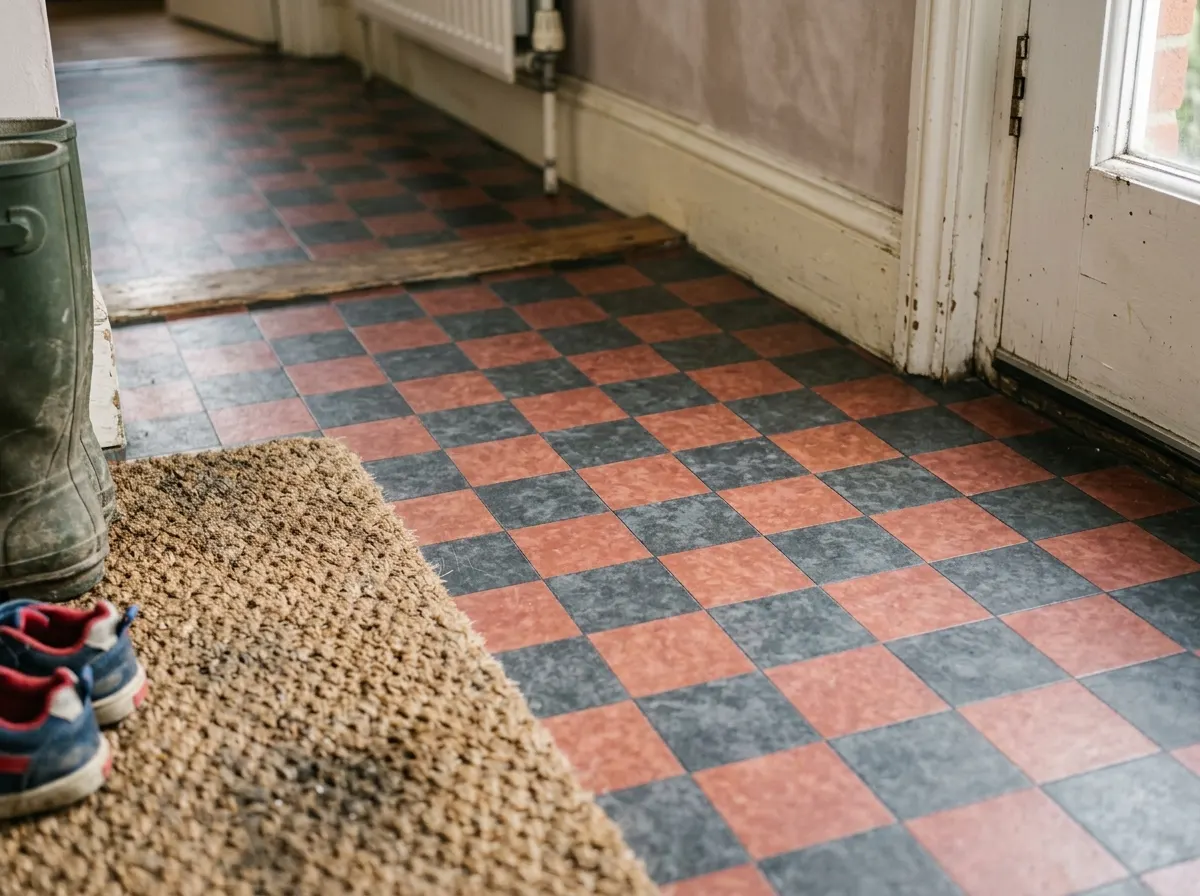
Thermoplastic Tiles & Bitumen Pre-2000 properties frequently feature 9x9 inch thermoplastic floor tiles stuck down with black bitumen adhesive. Both the tiles and the adhesive often contain asbestos. Never sand or grind old bitumen without an asbestos test. You and your staff must hold valid Asbestos Awareness certificates.
Silica Dust & Knees
-
✓
Respirable Crystalline Silica (RCS) Mixing latex levelling compounds or grinding concrete screeds releases silica dust. You must use M-Class extraction vacuums and wear FFP3 masks. Standard paper masks will not protect your lungs.
-
✓
Carpet Fitter's Knee (Bursitis) The constant use of a knee kicker and crawling on hard subfloors will destroy your joints. Invest heavily in premium, gel-injected knee pads (like Redbacks or Fento) from day one. Your knees are your livelihood.
Equipping for a Flawless Finish
You cannot lay premium LVT on a bumpy subfloor. A professional floor layer invests more money in preparation tools than cutting tools.
Subfloor & Prep
The secret to LVT and engineered wood is a perfectly flat, dry base.
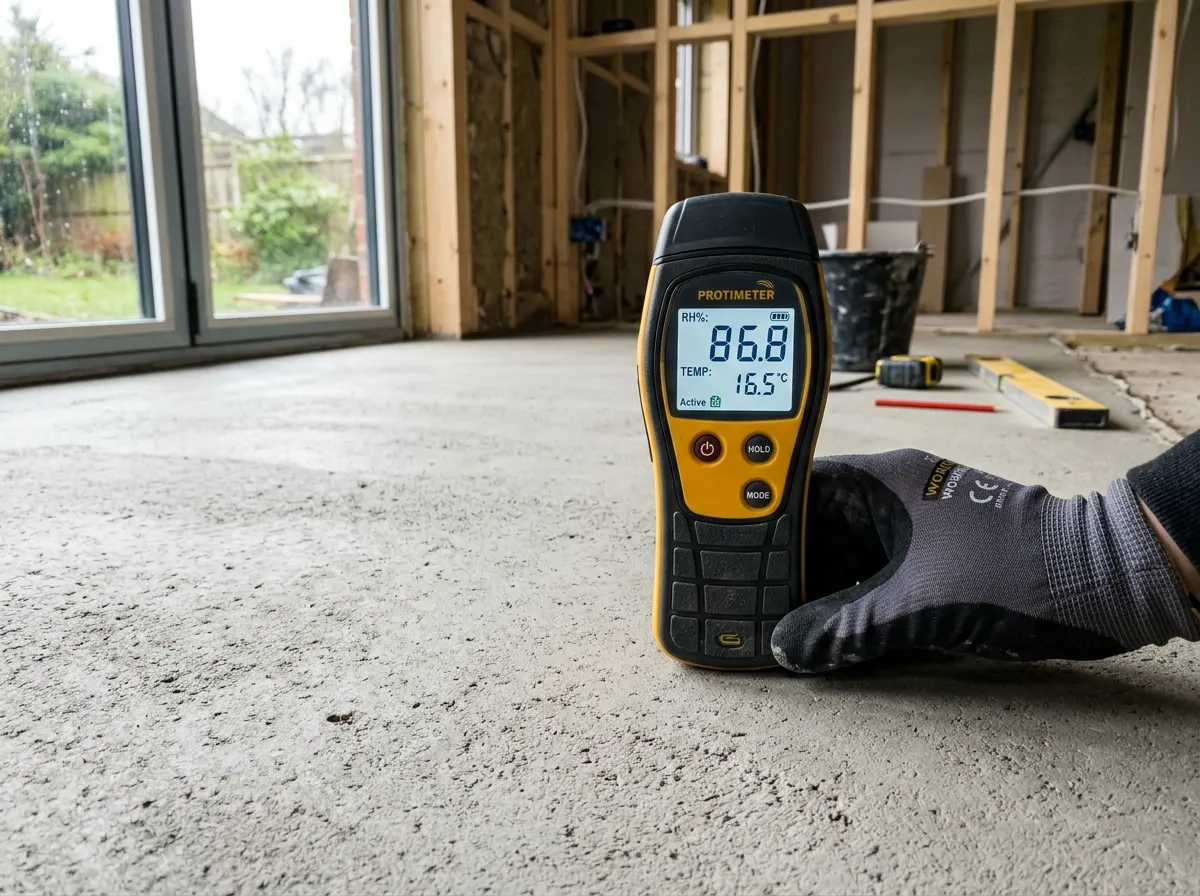
- ! Digital Hygrometer: The most important tool you own. Never lay impervious flooring without testing the screed's relative humidity (must be under 75% RH).
- • Heavy-duty mixing paddle & bucket
- • Professional spiked roller & screeding trowels
- • Stand-up floor scraper (Wolff)
Carpet Fitting
Precision cutting and tensioning tools for textile floorcoverings.
- • Adjustable knee kicker
- • Power stretcher (for large rooms)
- • Carpet bolster & stair tool
- • Dolphin knife & hooked/straight blades
- • Heat seam iron & seaming tape
Hard Flooring (LVT & Wood)
Clean cuts and proper expansion gap management are vital.
- • Professional LVT guillotine (Magnum)
- • High-quality heat gun (for welding/bending vinyl)
- • Undercut saw (for sliding floors under architraves)
- • Pull bar & tapping block
- • Compound mitre saw (for skirting & scotia)
How to Price a Flooring Job
The most common mistake new installers make is not charging for floor preparation and underestimating material wastage.
How much should a flooring installer charge?
Pricing Methods: You can charge a day rate (typically £180 - £250+ depending on skill level), but most domestic jobs are priced per square metre (m²). For example, fitting laminate might be £15-£25 per m², while bespoke LVT herringbones can command £30-£50+ per m² in labour alone.
Subcontracting to Shops: If you fit for a carpet shop, they will dictate the rate (e.g., £3.50 - £5.00 per m² for basic carpet fitting). This is lower margin, but guarantees zero marketing costs and steady volume.
Never rip up old carpets or apply latex screed for free. Moving furniture, trimming doors, and uplifting old floors are massive time sinks. Itemise these charges clearly on your quotes.
The Quoting Framework
- Measure: Calculate exact m². Add 10% wastage for standard straight lay, or 15-20% for herringbone/pattern matches.
- Subfloor Prep: Quote separately for ply-boarding (wood subfloors) or latex screed and DPMs (concrete subfloors).
- Materials: Flooring, underlay, adhesives, door bars, and scotia. Add a 15-20% margin.
- Labour: Time to prep + Time to install.
- Extras: Add charges for furniture moving, door trimming, or waste disposal (Waste Carrier Licence required).
Stop paying for dead leads.
Join the Pricing Penguin network. We provide UK tradespeople with high-intent, pre-qualified customers who already understand the true cost of quality craftsmanship.
Structure & Specialist Insurance
If a £10,000 engineered wood floor buckles because you failed to check the subfloor moisture, the client will sue you. You must be legally protected.
Sole Trader vs Limited Company
Starting as a Sole Trader is common, but registering as a Limited Company (Ltd) provides a vital legal shield. If a major floor failure exceeds your insurance payout, a Ltd structure protects your personal assets (like your home) from being targeted in court.
The Insurance Requirements
-
✓
Public Liability Insurance (PLI) Essential. If you slice through a hidden water pipe while nailing down ply, or a customer trips over your tools, PLI covers the damage. Ensure you have £2m cover minimum.
-
✓
Tools in Transit Cover Flooring tools are highly specialized and expensive. If your van is broken into overnight, this covers the replacement of your laser levels, nail guns, and LVT cutters.
The Ultimate Defence: The Paper Trail
Insurance will not save you from poor workmanship. Before starting any hard flooring job, you must take moisture readings of the subfloor.
Photograph the hygrometer readings. Log them in the customer's quote. If they refuse to pay for a liquid damp proof membrane (DPM) and demand you lay the floor anyway, get them to sign a waiver. If the floor blows six months later, that paper trail protects your business.
Winning Highly Profitable Work
The flooring market is fiercely competitive. You must bypass the cheap domestic market and build relationships that provide recurring, high-margin work.
Independent Carpet Shops
Most high-street carpet shops do not employ fitters full-time. They rely on a roster of self-employed contractors.
Approach local, independent retail shops (avoid the massive national chains initially, as they often squeeze fitter margins relentlessly). Show them your portfolio, your NICF badge, and your PLI. They will feed you steady, daily work. You will usually be paid a set rate per square metre directly by the customer on the day of fitting.
Main Contractors & The CIS
General builders hate doing floors. If you can provide a flawless finish on their extensions, they will use you for every project.
If you subcontract for a main builder, you MUST register for the Construction Industry Scheme (CIS). The builder will automatically deduct 20% from your labour invoice and pay it to HMRC. You must factor this cash flow delay into your business planning.
How to grow a flooring business
Once established with basic carpets and laminate, growth comes from upskilling. Invest in manufacturer training for premium LVT (Amtico/Karndean) and resin flooring. These specialist services command double the day rate of standard fitting. Transition from relying on shop work to generating your own private leads via Google, where you can mark up both the materials and the labour.
Frequently Asked Questions
How much does it cost to start a flooring business?
A low-cost start (used van, basic tools for carpet/laminate, subcontracting for shops) costs £2k-£5k. A professional setup for LVT/hardwood (leased LWB van, guillotines, hygrometers, mixing stations, insurances) requires £10k-£20k+.
Do you need qualifications to become a flooring installer?
Legally, no. However, an NVQ Level 2 is the industry standard and required for a CSCS card (commercial site access). Manufacturer training (e.g., Karndean, Amtico) is crucial for securing high-end domestic work and offering valid warranties.
How much do flooring installers charge per m²?
Rates vary wildly by material. Basic carpet fitting via a shop might be £3.50-£5.00/m². Private laminate fitting might be £15-£25/m². Premium LVT in complex patterns (herringbone) can command £30-£50+/m² in labour alone.
How much should a flooring installer charge per day?
A skilled, self-employed flooring installer typically aims for £180 to £250+ per day. Specialist installers (e.g., bespoke wood or resin) can charge significantly more. Always try to price domestic jobs as a fixed project cost rather than an open day rate.
Why is subfloor preparation so important?
If you lay LVT or sheet vinyl on an uneven floor, every single lump and divot will show through the surface within weeks. If you lay wood over a damp screed, the wood will absorb the moisture, expand, and buckle upwards. 90% of flooring failures are due to skipping liquid damp proof membranes (DPMs) and latex smoothing compounds.
Is flooring a profitable business?
Yes, very. Once you build relationships with retailers or builders, work is consistent. The highest profits come when you supply the materials as well as the labour (private domestic jobs), allowing you to make a margin on the flooring, adhesive, and underlay.
What van do I need for flooring?
A Long Wheelbase (LWB) van (e.g., VW Crafter, Ford Transit LWB) is essential if you intend to fit carpet or sheet vinyl, as standard rolls are 4m or 5m wide. Small vans are only suitable if you exclusively fit boxed materials like LVT or laminate.
Do flooring installers need insurance?
Absolutely. Public Liability Insurance (minimum £1m-£2m) is essential to cover damage (e.g., slicing a hidden pipe when nailing ply). If you employ an apprentice or mate, Employers' Liability is legally required.
What is the "expansion gap" rule?
Wood, laminate, and even LVT expand and contract with temperature and humidity changes. You must leave a manufacturer-specified expansion gap (usually 10mm to 15mm) around the entire perimeter of the room, including around radiator pipes. If you fit it tight to the wall, the floor will buckle and lift in the summer.
Do I need to acclimatise the flooring?
Absolutely. Wood, laminate, and LVT must be brought into the customer's house and left in the room they are to be fitted in for at least 48 to 72 hours before installation. If you take cold LVT straight from a freezing van and fit it in a warm house, it will expand, pop the adhesive, and ruin the job.
Ready to fill your diary with quality jobs?
Connect with serious homeowners who value reliability over the absolute cheapest quote. Join our network of accredited UK tradespeople today and let our AI estimators filter out the time-wasters for you.
Did you find this guide helpful?
Let us know if these business tips will help your trade business.