How to start a highly profitable plumbing business.
 By Tom Ellis
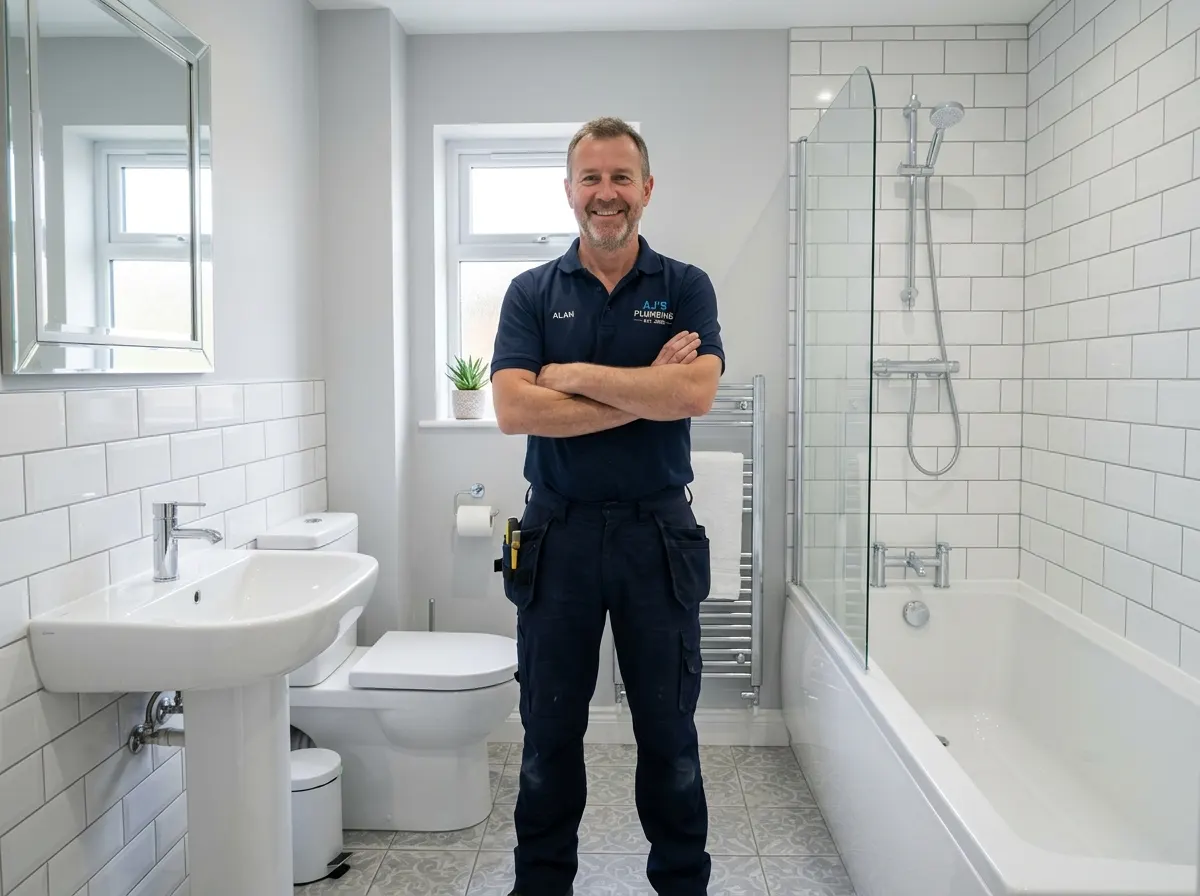
Plumbing and heating is one of the most lucrative, resilient, and highly regulated trades in the UK. Whether it is a burst pipe at 2 AM or a £10,000 smart heating system installation, demand consistently outstrips supply. However, the legal threshold for entry is incredibly strict.
You cannot simply buy a wrench, print some flyers, and start fitting boilers. Operating legally requires specific NVQ qualifications, mandatory Gas Safe registration, and rigorous compliance with Water Regulations. This step-by-step guide walks you through exactly how to set up a professional plumbing business, from calculating startup costs and pricing jobs, to securing premium clients from day one.
Is Plumbing a Good Business to Start?
Plumbing is incredibly resilient to economic downturns. People will always pay to fix a leaking roof or a broken toilet.
Types of Work & Seasonality
Emergency vs Planned: Emergency work (leaks, blocked drains, broken boilers in winter) commands premium call-out rates and instant cash flow. Planned work (bathroom refits, full heating systems) provides high-revenue, scheduled income.
Seasonality: Demand for heating engineers spikes massively from October to February (boiler breakdowns). Summer is the traditional time for bathroom refits and scheduled boiler servicing.
Core Plumbing Services
It is crucial to distinguish between 'wet' plumbing and gas work:
- ✓ General/Wet Plumbing: Leaks, taps, radiators, toilets, bathroom fitting.
- ✓ Heating Systems: Cylinder installation, radiator balancing, underfloor heating.
- ✓ Gas & Boiler Work: (Requires Gas Safe) Boiler installs, servicing, CP12 certificates.
- ✓ Drainage: Unblocking sinks, exterior soil pipes, jetting.
Qualifications & Mandatory Licences
The plumbing industry is split into two halves: 'wet' plumbing (water) and gas work. Gas work is governed by strict criminal law.
Core Plumbing (NVQ Level 2 & 3)
While basic domestic 'wet' plumbing (like changing a tap) technically doesn't require a formal licence, you will struggle to get insured or win commercial contracts without an NVQ. An apprenticeship is the traditional and best route.
-
✓
NVQ Level 2/3 Diploma The industry baseline. Proves you are competent in cold water systems, sanitation, and central heating pipework.
-
✓
G3 Unvented Hot Water Essential specialist qualification. You legally cannot install or service unvented hot water cylinders (pressurised tanks) without holding a valid G3 certificate.
Gas Safe Registration
If you intend to work on gas boilers, cookers, or fires, you must be on the Gas Safe Register. Operating without it is a criminal offence under the Gas Safety Regulations 1998.
-
1.
The ACS (CCN1) You must first pass your Accredited Certification Scheme (ACS) Core Domestic Gas Safety assessment.
-
2.
Probation & Requirements All new engineers are put on a strict 3-month probation period where your work must be logged and is subject to random inspection by the Gas Safe Register. You also need to know your limits: electrical work (Part P) required to wire a boiler often needs a qualified electrician.
Stop paying for dead leads.
Join the Pricing Penguin network. We provide UK tradespeople with high-intent, pre-qualified customers who already understand the true cost of quality craftsmanship.
Startup Costs & Van Configuration
Plumbing requires significant upfront investment in tools and initial van stock. You can't fix a leak if you don't have the right fitting.
How much does it cost to start?
Low-Cost Startup (£3,000 - £6,000)
Using a second-hand small van (e.g., Transit Connect). Buying essential hand tools and a basic drill set. Focusing on 'wet' plumbing, tap changes, and radiator swaps. No expensive press-fit tools or gas analysers initially. Basic PLI insurance.
Typical Professional Setup (£12,000 - £20,000)
Leased medium panel van (e.g., VW Transporter) with professional racking. Full suite of power tools, battery press-fit tool (£1.5k), and calibrated Flue Gas Analyser (£600). Initial van stock of brassware/plastics (£1k). Gas Safe registration, website, and comprehensive insurance.
What van do you need?
A medium-wheelbase (MWB) panel van is ideal. It allows you to carry 3-metre lengths of copper tube internally and has space for a boiler box.
- • Racking & Van Stock: Essential. You need hundreds of small fittings (olives, elbows, tees in 15mm/22mm). Professional racking with pull-out bins stops you losing money driving to the merchant for a 50p fitting.
- • Security: Plumbers vans are heavily targeted for copper tube and expensive tools. Fit aftermarket deadlocks, shielding plates, and internal vaults.
Equipping for Efficiency
Modern professionals rely on high-tech diagnostic equipment and cordless press-fit technology to speed up jobs and eliminate the risk of fire.
Essential Hand Tools
The traditional tools required for daily work.
- • High-quality pipe slices (15mm & 22mm)
- • Adjustable wide-jaw grips (Knipex Cobras)
- • Basin wrenches and radiator spanners
- • Heavy-duty blowtorch (Superfire 2)
- • Spirit levels and pipe benders
Power & Pipework Tools
- • SDS drill & core drill (for flues/waste)
- • Wet & dry M-Class vacuum (for drain downs)
- • Multi-tool (for cutting floorboards)
Soldering is being phased out. An £800-£1,500 investment (e.g., REMS) crimps copper/plastic in seconds, eliminating fire risks.
Testing & Gas Equipment
If you are Gas Safe registered, you cannot legally sign off a boiler without these.
- • Flue Gas Analyser (FGA): Must be sent off annually for mandatory calibration (£500-£800).
- • Digital Manometer (tightness testing)
- • Gas Leak Detection Fluid (LDF)
- • Multimeter / Safe Isolation kit
How to Price a Plumbing Job
Common mistakes include undercharging for travel, forgetting overheads, and not charging for diagnostic time.
How much should a plumber charge?
Hourly/Day Rates: A self-employed plumber generally aims for £40 to £80 per hour, or £250 to £400+ per day, depending on the region and whether it's gas work.
Emergency Call-Outs: Never do free estimates for emergencies. Charge a "First Hour" fee (typically £80 - £150+). This covers your travel, fuel, and the expertise to diagnose the fault. If you fix it within that hour, no extra labour is charged. If it needs parts, quote a fixed price for the repair.
If you use three 15mm elbows from your van stock, you must add them to the invoice. Small copper and brass fittings eat into your profit if not recorded.
Quoting for Planned Work (e.g., Boiler Swap)
- Diagnose & Assess: Flue position, gas pipe sizing (does it need upgrading to 22mm?), condense pipe route.
- Materials & Boiler: Cost of the boiler, filter, thermostat, and copper/plastics. Add a 15-20% markup.
- Labour Time: Days required x Day Rate.
- Waste & Extras: Powerflush chemicals, scrap disposal (boilers are heavy).
- Variations: Always state in writing that unforeseen issues (like discovering rotten floorboards under a bath) will incur additional costs.
Stop paying for dead leads.
Join the Pricing Penguin network. We provide UK tradespeople with high-intent, pre-qualified customers who already understand the true cost of quality craftsmanship.
Structure & Specialist Insurance
A burst pipe in a luxury property can cause £50,000 of damage in minutes. Your business structure and insurance must be bulletproof.
Sole Trader vs Limited Company
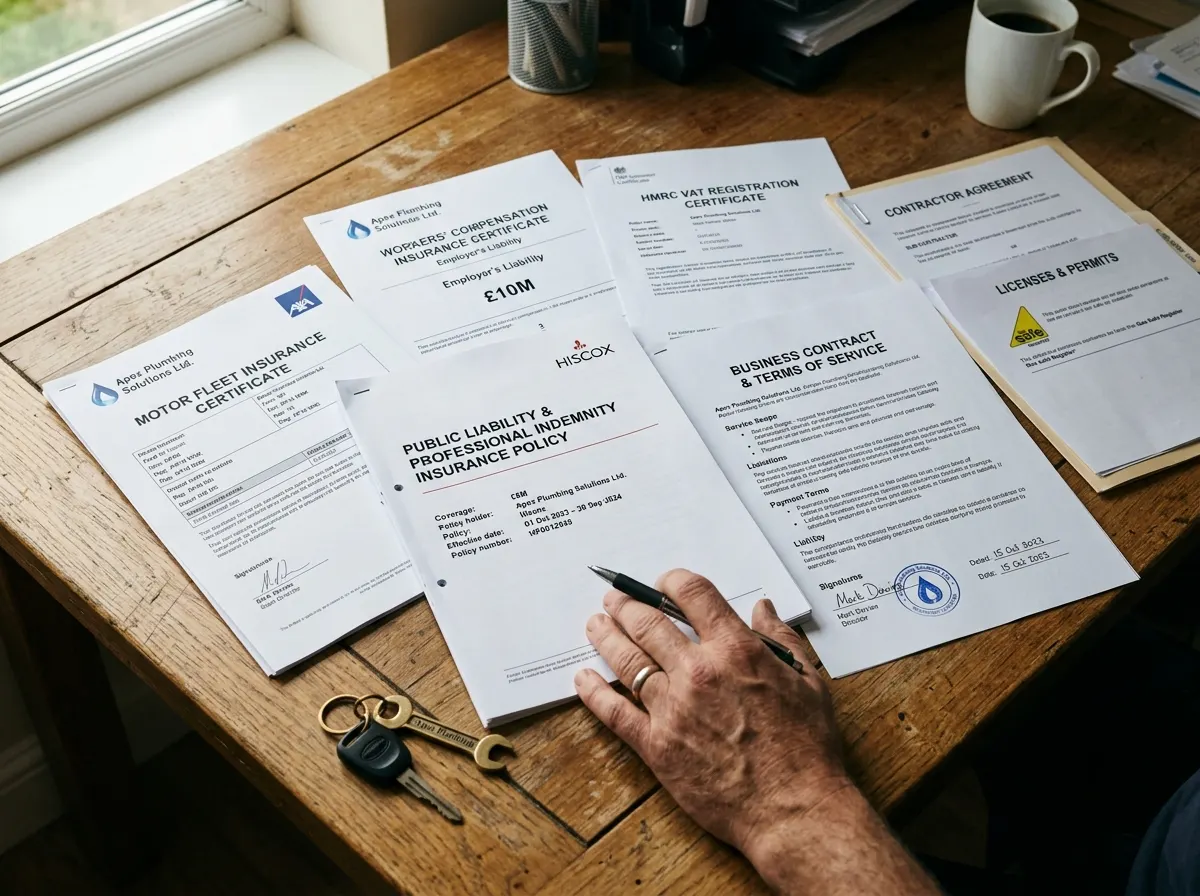
Many plumbers start as Sole Traders. However, incorporating as a Limited Company (Ltd) provides "limited liability," protecting your personal assets if a catastrophic leak exceeds your insurance cover.
The "Hot Works" Insurance Trap
-
✓
Public Liability with Endorsements If you solder copper pipes using a blowtorch, your £2m PLI policy MUST include a "Hot Works" or "Application of Heat" endorsement. If you burn a house down without this, the insurer will not pay out.
-
✓
Professional Indemnity If you design heating systems (e.g., calculating heat loss for Underfloor Heating), you need Professional Indemnity cover in case your design fails to heat the house.
Getting Customers & Building a Reputation
You can be the best pipe-fitter in the country, but if your van is dirty and your business is unsearchable on Google, you will spend your life doing cheap patch-up jobs.
SEO-Optimised Naming
Do not name your business "Aquatic Flow Solutions." People with a burst pipe panic-search Google. Call your business "[Your Town] Plumbing & Heating". It immediately boosts local SEO.
How to get your first jobs:
-
1.
Letting Agents & Landlords Every rental property with gas requires an annual CP12 Gas Safety Record. Offer local letting agents a competitive rate to do all their CP12s. It guarantees recurring revenue and puts you first in line for boiler breakdowns.
-
2.
Google Profile & Reviews Register your Google Business Profile. Clear communication, turning up on time, and sending professional invoices builds a reputation fast. Ask every happy customer for a Google review.
-
3.
Other Trades (Builders) Builders need reliable plumbers for extensions. Build relationships with them, but ensure you agree on clear payment terms to avoid cash flow issues.
The Uniform & Van Standard
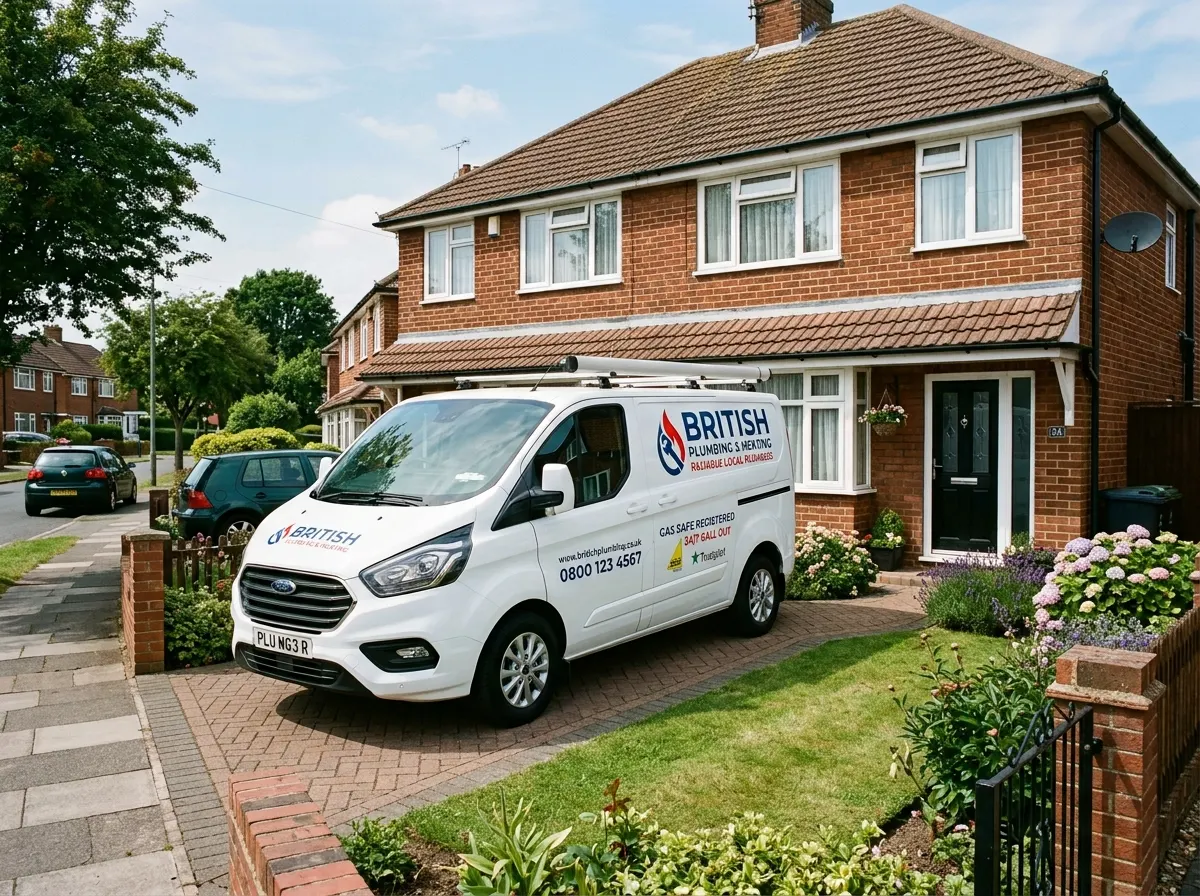
Homeowners hate tradespeople who leave dirty boot prints. To command higher prices:
- ✓ Wear clean, branded polo shirts.
- ✓ Carry blue disposable overshoes and put them on at the door.
- ✓ Lay down thick dust sheets before taking a tool out.
How to Grow
Increase prices, focus on high-value boiler swaps or bathroom refits, employ an apprentice, and eventually move off the tools to manage multiple vans.
Scrap Metal & Waste Licences
Plumbers generate a huge amount of valuable waste (copper pipes, old brass fittings, broken boilers). However, transporting and selling it is tightly controlled.
Waste Carrier Licence
If you remove an old bathroom suite, a broken boiler, or rusty radiators from a customer's house and put them in your van, you are transporting construction/demolition waste.
You MUST hold an Upper Tier Waste Carrier Licence from the Environment Agency (approx. £191). If the police or EA stop you and you have an old boiler in the back without a licence, they can seize your van and issue a £300 spot fine.
Scrap Metal Dealers Act
Historically, plumbers made a great "beer money" bonus by taking their scrap copper to the yard for a wad of untraceable cash. This is now completely illegal.
Under the Scrap Metal Dealers Act 2013, it is a criminal offence for a scrapyard to pay you in cash. You must provide photo ID, and the payment must be made via BACS or cheque. Consequently, your scrap copper earnings must be declared on your tax return as business income.
Frequently Asked Questions
How much does it cost to start a plumbing business?
A low-cost start (used van, hand tools, focusing on 'wet' plumbing) costs £3,000 - £6,000. A fully equipped professional setup for heating engineers (leased van, press tools, gas analysers, Gas Safe registration, insurance, and van stock) typically requires £12,000 - £20,000.
Do you need qualifications to become a plumber?
Basic domestic 'wet' plumbing requires no legal qualifications, though an NVQ Level 2/3 is expected for insurance and commercial work. To install or service unvented hot water cylinders, you must hold a G3 certificate. For ANY gas work, you must pass ACS assessments and register with Gas Safe.
How much do plumbers charge per hour?
Self-employed plumbers typically charge between £40 and £80 per hour depending on their region and whether they are performing specialist gas/heating work. Day rates usually range from £250 to £400+.
How much should I charge for a plumbing call-out?
Charge a diagnostic "First Hour" fee (typically £80 - £150+). This covers travel, fuel, and diagnostic expertise. If fixed within that hour, no extra labour is charged. Do not offer free estimates for emergency leaks.
Is plumbing profitable?
Yes, highly profitable. Revenue is generated from labour, markup on materials/boilers, and premium emergency call-out rates. A self-employed plumber can earn £40k-£60k+, while a business owner managing multiple vans can push turnover well into six figures.
Can you start a plumbing business with no experience?
It is incredibly dangerous and illegal if gas is involved. A poor 'wet' plumbing installation can cause tens of thousands of pounds in water damage. You should complete an apprenticeship or gain significant experience working alongside a qualified plumber before starting alone.
What tools do I need to start plumbing?
Essentials include pipe slices, wide-jaw grips (Knipex), blowtorch, basin wrenches, SDS drill, and an M-Class vacuum. Heating engineers also need a Flue Gas Analyser, manometer, and increasingly, a battery press-fit tool.
What van do I need as a plumber?
A Medium Wheelbase (MWB) panel van (e.g., VW Transporter, Ford Transit Custom) is ideal. It must be large enough to carry 3-metre copper pipe lengths internally, a boxed boiler, and accommodate professional racking with bins for hundreds of small fittings.
Do I need Building Regulations approval to fit a bathroom?
If you are swapping a bath for a bath in the same location, no. If you are adding a new bathroom, altering drainage, or doing electrical work (Part P) in 'special zones', it must be signed off by Building Control or self-certified via a scheme.
How do I build relationships with Plumbers' Merchants?
Open a trade cash account with local merchants immediately. Pay bills on time and be polite to counter staff. They control your discount tiers and frequently recommend reliable local plumbers to homeowners who walk into the branch.
Ready to fill your diary with quality jobs?
Connect with serious homeowners who value reliability over the absolute cheapest quote. Join our network of accredited UK tradespeople today and let our AI estimators filter out the time-wasters for you.
Did you find this guide helpful?
Let us know if these business tips will help your trade business.