How to start a highly profitable window fitting company.
 By Tom Ellis
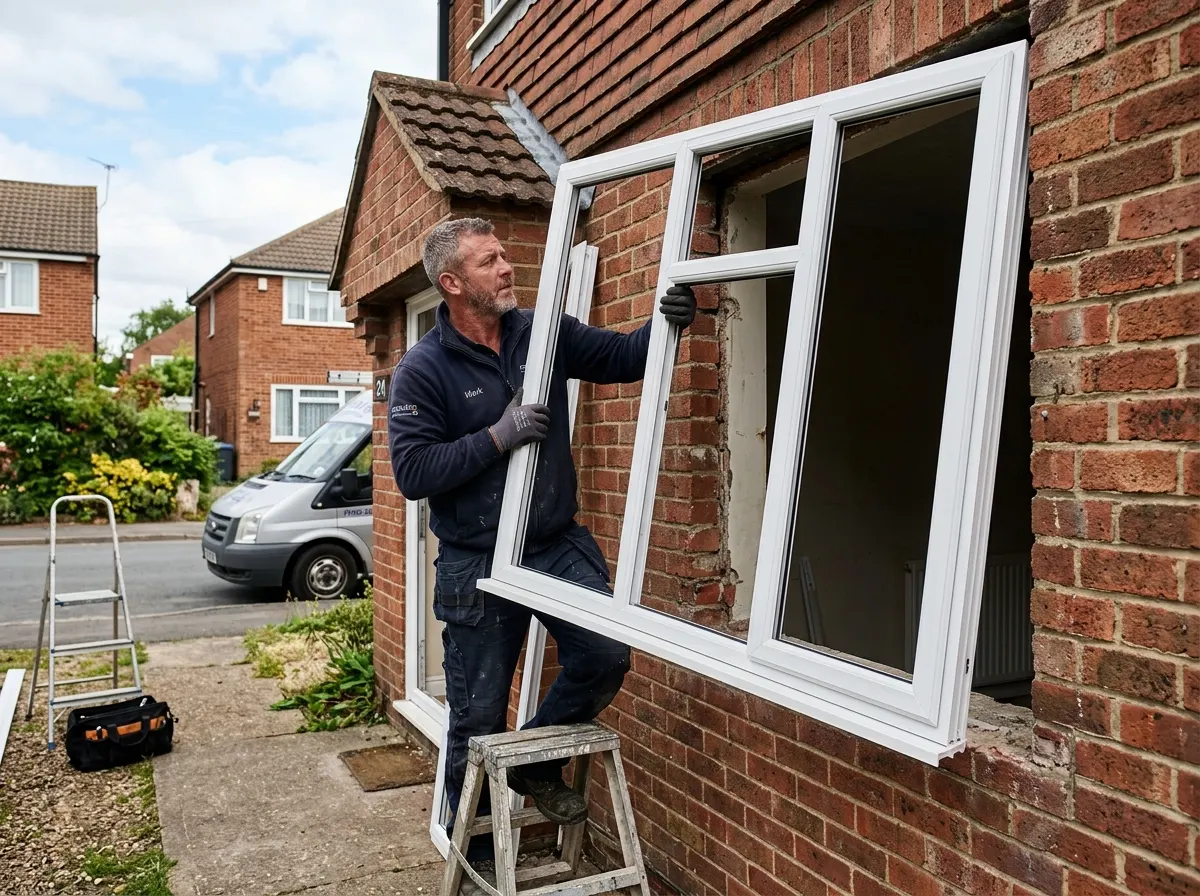
The UK glazing and fenestration industry is incredibly lucrative, driven by soaring energy costs and homeowners desperate to upgrade to modern, thermally efficient windows and bi-fold doors. However, you cannot simply buy a van, order some glass, and start trading.
Window installation is heavily regulated by Building Control. Every window and door you fit must meet strict thermal, ventilation, and safety glass standards. To operate legally and competitively, you must navigate Competent Person Schemes (like FENSA), secure Insurance Backed Guarantees, accurately price bespoke manufacturing, and master the technical art of "toe and heeling." This guide provides the complete blueprint for launching a premium window fitting business.
Is Window Fitting a Good Business to Start?
The glazing industry offers massive project values and high margins, provided you can overcome the sector's historical "hard sell" reputation.
Types of Work & Clients
Replacement vs New Build: Domestic replacement (retrofitting) provides high margins but requires intense care to avoid damaging the customer's property. New-build work for developers offers huge volume and cleaner site conditions, but profit margins are squeezed tight.
Materials: The market is split. Standard uPVC is the high-volume bread and butter. Aluminium (particularly bi-fold doors) is booming in the premium extension market. Timber is highly specialised, usually reserved for Conservation Areas and high-end heritage work.
Demand & Seasonality
Demand is remarkably constant. However, Autumn sees a massive spike as homeowners rush to seal their houses before winter. January can be slow.
FENSA, CERTASS & Building Regs
Replacing a window or door in a home is "notifiable work." You must either pay the local council to inspect every job, or join a scheme to self-certify your work.
Self-Certification Schemes
To run a viable business, you must join a Competent Person Scheme such as FENSA or CERTASS. These bodies allow you to issue a certificate to the homeowner proving the installation complies with Building Regulations. When the customer eventually sells their house, the buyer's solicitor will demand this certificate.
Crucial Building Regulations
You are legally responsible for ensuring the products you install meet the following key regulations:
-
!
Part F (Ventilation) You must install trickle vents in almost all replacement windows to prevent condensation and mould, even if the old windows didn't have them.
-
!
Part K (Safety Glass) Any glass in a door, or within 300mm of a door, or any window below 800mm from floor level MUST be toughened or laminated safety glass.
-
!
Part B (Fire Safety) Habitable upper-floor rooms must have an accessible fire escape window meeting specific minimum openable area dimensions.
Startup Costs & Choosing a Van
Glass is heavy and unforgiving. Your vehicle setup and transport equipment are as critical as your hand tools.
How much does it cost to start?
Low-Cost Startup (£3,000 - £6,000)
Used LWB panel van with a basic internal A-frame. Subcontracting fitting labour to local double glazing sales firms (lower pay, but zero marketing costs). Essential hand tools, suction lifters, and basic access ladders.
Typical Professional Startup (£12,000 - £20,000)
Leased MWB/LWB van (£3k deposit) fitted with a professional exterior glass frail (£1k). Full suite of power tools (reciprocating saws, lasers). FENSA/CERTASS registration, IBG setup, and comprehensive PLI insurance. Crucially: working capital to fund the 50% upfront deposits required by fabricators to manufacture the custom windows before you get paid.
What van do you need?
You cannot safely transport multiple large frames and glass units lying flat in the back of a standard small van.
-
✓
Exterior Glass Frail A Medium or Long Wheelbase van is essential. You must install a professional exterior glass rack (frail) on the side of the van to strap large frames upright safely.
-
✓
Internal A-Frames & Racking Use padded internal A-frames or racking poles to separate double-glazed units and stop them smashing together over speed bumps.
Stop paying for dead leads.
Join the Pricing Penguin network. We provide UK tradespeople with high-intent, pre-qualified customers who already understand the true cost of quality craftsmanship.
Insurances & The IBG
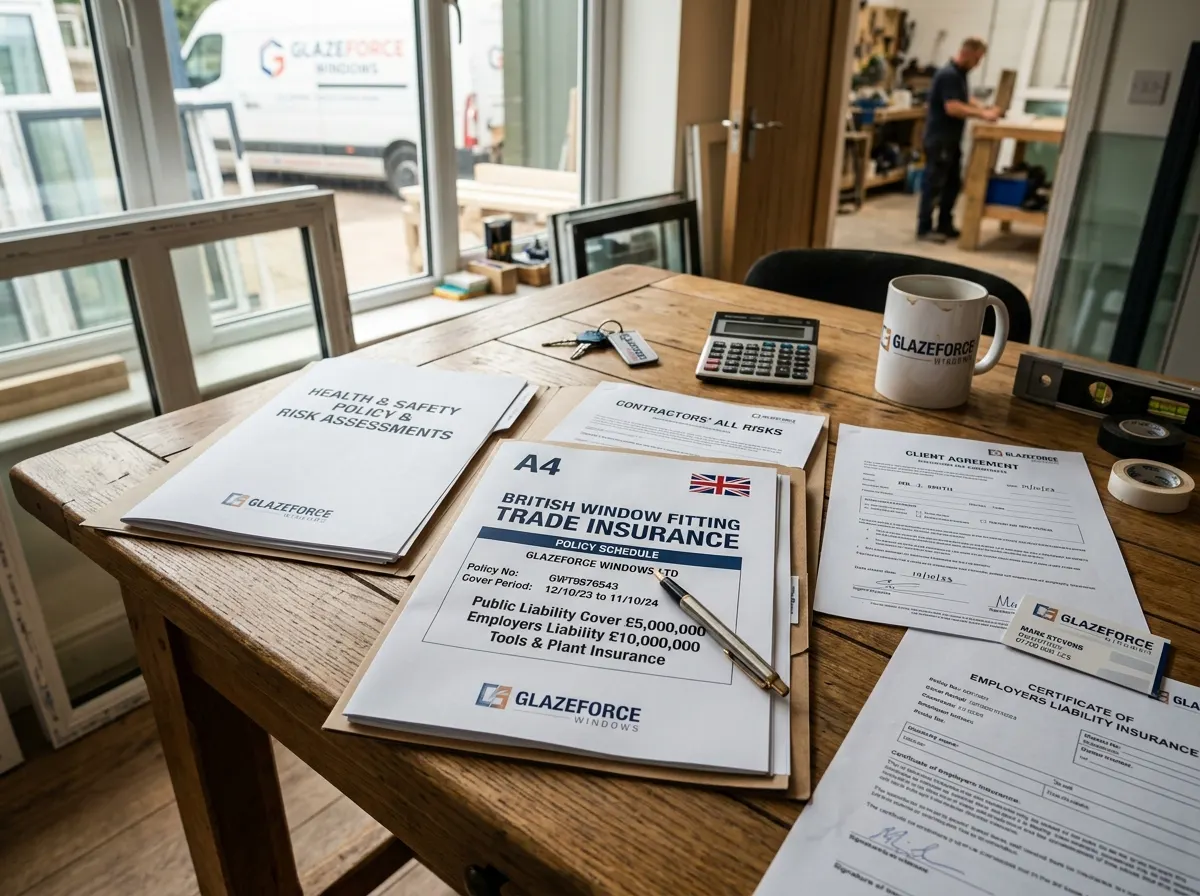
Windows are heavy, fragile, and structural. Dropping a double-glazed unit on a customer's driveway or incorrectly supporting a bay window can lead to massive compensation claims.
The Insurance Non-Negotiables
-
✓
Public Liability Insurance (PLI) Minimum £2m cover. This protects you if you drop a window frame down the stairs or a passer-by trips over your tools.
-
✓
Employers' Liability (£5m minimum) Window fitting is a two-man job. If you hire a mate or an apprentice to help you lift frames, you are legally required to hold Employers' Liability to cover their safety.
The Insurance Backed Guarantee (IBG)
To be a member of FENSA or CERTASS, you must provide your domestic customers with an IBG. This means if your company offers a 10-year guarantee on a window installation, but your business goes bankrupt in year 3, the independent insurance policy will cover any repairs the customer needs for the remaining 7 years.
Equipping for Efficiency
Removing old frames requires brute force, while fitting new ones requires absolute precision.
Glazing Hand Tools
The highly specific tools required to de-glaze and square up frames perfectly.
- • Xpert glazing knife & moon knife (for removing beads)
- • Glazing shovel (essential for toe & heeling)
- • Non-marking nylon glazing mallet
- • Heavy-duty double or triple suction lifters
- • A massive assortment of plastic glazing packers
Power Tools & Fixings
- • Heavy-duty reciprocating saw (for cutting out old frames)
- • High-quality SDS drill & masonry bits
- • Professional laser level
- • Concrete frame screws (direct fixings)
- • Expanding foam guns & premium silicone guns
Access Equipment
You cannot fit first-floor windows safely off a leaning ladder.
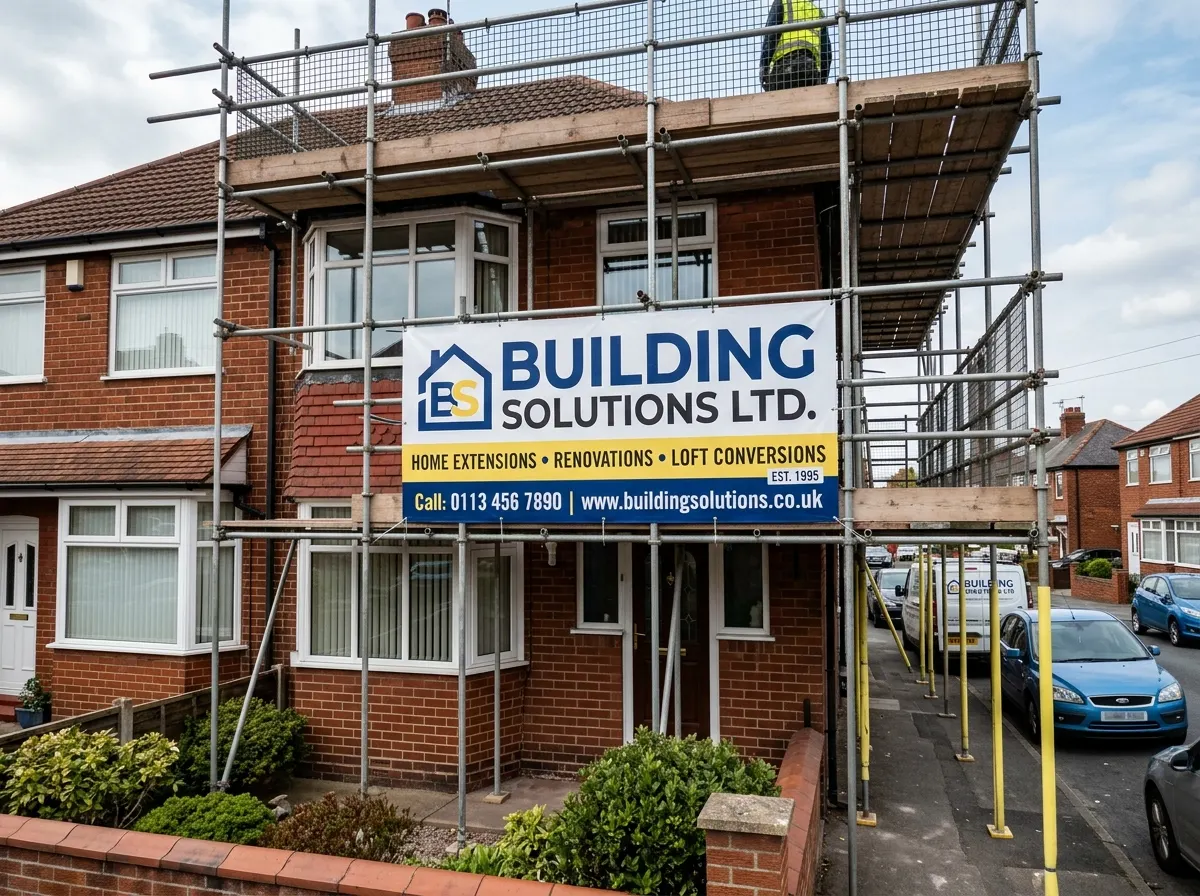
- • Scaffolding: For large jobs, structural bay windows, or dormers, always sub-contract proper edge protection and scaffold platforms.
- • Working Internally: Whenever possible, remove the old frame and install the new one entirely from the inside of the room using safe podium steps.
How to Price a Window Fitting Job
The most common mistake new fitters make is mismeasuring frames, resulting in thousands of pounds of useless, bespoke uPVC.
How much should a window fitter charge?
Pricing Methods: Fitters rarely charge a day rate. Jobs are priced either "Per Window" (e.g., £150 - £250 labour per standard uPVC casement window) or as a Fixed Project Cost combining materials and labour.
The Markup: If you are operating the "Supply & Fit" model, you order the window from the fabricator for £150 (trade price), mark the product up by 20-30%, and add your £200 installation labour, presenting the client with a £400 fixed quote per window.
Once a bespoke uPVC frame is manufactured to your measurements, it cannot be returned or resized. Always measure three times: width (top, middle, bottom) and height (left, middle, right), taking the smallest dimension and deducting your fitting tolerance (usually 10mm).
The Quoting Framework
- Fabricator Cost: Send measurements to your supplier for exact trade costs (Frame + Glass + Trickle Vents).
- Labour: Calculate hours required. (A two-man team can typically fit 4 to 6 standard windows a day).
- Waste Disposal: Factor in skip hire or trade waste tipping fees for the old frames and heavy glass.
- Access: Do you need to hire an access tower or sub-contract scaffolding?
- Making Good: Explicitly state if interior plaster patching or exterior rendering is included or excluded from the quote.
Stop paying for dead leads.
Join the Pricing Penguin network. We provide UK tradespeople with high-intent, pre-qualified customers who already understand the true cost of quality craftsmanship.
Escaping the "Double Glazing Salesman" Stigma
The window industry has a historical reputation for high-pressure sales tactics. If you position your business as honest, transparent, and pressure-free, you will win immense local loyalty.
SEO-Optimised Naming
Keep it clear and searchable. "[Your Town] Windows & Doors" or "[Your Town] Glazing" will perform exceptionally well on Google Maps. Avoid confusing abstract names.
Winning Highly Profitable Work:
-
1.
The "No-Pressure" Guarantee Make this the core of your marketing. Promise customers that you will measure up in 20 minutes, leave, and email a fixed PDF quote the next day. Homeowners are exhausted by salesmen sitting in their living room for 3 hours. Offer transparency and you will win the job.
-
2.
Partnering with General Builders Builders hate fitting windows because they often don't have the FENSA registration to sign them off easily. Introduce yourself to local builders who specialize in extensions. Offer to supply, fit, and sign off the windows and bi-folds for all their projects.
The Power of the Van
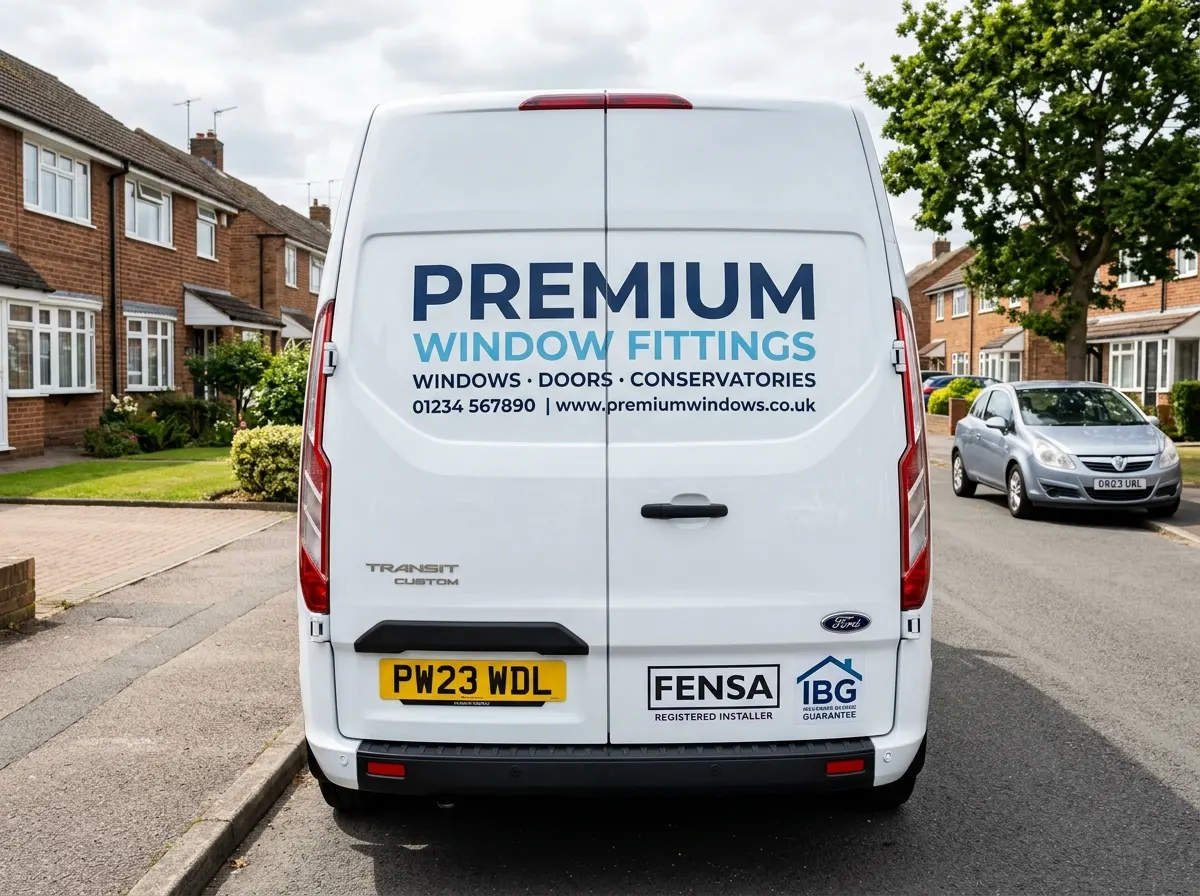
A clean, heavily branded van is your best salesperson. Ensure your FENSA, CERTASS, and IBG provider logos are highly visible on the back doors. It instantly tells neighbours (who are watching you work) that you are a heavily vetted professional, not a rogue trader.
How to Grow
Move into high-value architectural glazing (aluminium bi-folds, roof lanterns). Build a trusted sales team to handle domestic quoting, employ installation gangs, and focus entirely on business management and commercial developer relationships.
Recycling & Asbestos Risks
Window fitting generates immense amounts of heavy, sharp, and potentially hazardous waste. Managing it correctly is a legal requirement.
Waste Carrier Licence & Recycling
If you take old uPVC frames and shattered glass away from a customer's property, you MUST hold an Upper Tier Waste Carrier Licence from the Environment Agency.
The uPVC recycling industry is huge. Instead of paying heavy landfill tax to dump old frames in a skip, find a local uPVC recycling center. They will take your old frames (often for free) to chop down and recycle into new profiles, saving you thousands of pounds a year in skip hire.
Asbestos Panels & Putty
When removing 1970s and 1980s windows, you will frequently encounter composite infill panels below the glass, or old window putties, which can contain asbestos.
You and your team must hold Asbestos Awareness certificates. If you suspect an old panel contains asbestos, you must not smash it out. It must be carefully removed whole, double-bagged, and disposed of at a licensed hazardous waste facility.
Frequently Asked Questions
How much does it cost to start a window fitting business?
A low-cost start (used LWB van, hand tools, sub-contracting labour to sales firms) costs £3k-£6k. A professional "Supply & Fit" setup (leased van with exterior frail, premium tools, FENSA registration, and working capital for fabricator deposits) requires £12,000 - £20,000+.
Do you need qualifications to become a window fitter?
Legally, no, but to join FENSA/CERTASS you must prove Minimum Technical Competence (MTC), usually achieved via an NVQ Level 2 or onsite assessment. Without scheme membership, you must pay Building Control to sign off every job, which is unviable.
How much do window fitters charge per window?
Labour charges typically range from £150 to £250 per standard uPVC casement window. However, most firms operate a "Supply & Fit" model, quoting a fixed price (e.g., £400-£600 per window) that includes the marked-up frame, glass, and installation labour.
What is "Toe and Heeling"?
It is the most critical skill in window and door fitting. It involves strategically placing plastic packers between the glass unit and the frame to transfer the massive weight of the glass through the hinges. If you fail to toe and heel a heavy door correctly, it will quickly drop and drag on the floor.
Are trickle vents legally required on all windows?
Since the 2022 updates to Part F of the Building Regulations, yes, in almost all scenarios. Even if the old windows you are replacing did not have trickle vents, the new ones must have them installed to ensure adequate background ventilation.
Is window fitting profitable?
Highly profitable. Because you can mark up the wholesale cost of the frames and glass, as well as charge for your labour, the gross margin on a full house replacement (e.g., £6,000 project) is excellent. A well-run firm can generate significant cash flow rapidly.
Should I manufacture my own windows?
No, not when starting out. The machinery required to fabricate uPVC or aluminium profiles costs hundreds of thousands of pounds. Open a trade account with a large local fabricator, order the custom frames from them at trade price, add your margin, and install them.
Can I fit windows in a Conservation Area?
You must tread very carefully. If a property is in a Conservation Area or is a Listed Building, standard white uPVC windows are usually strictly forbidden by the local planning authority. The customer must gain Planning Permission, and you will likely have to install bespoke timber sliding sash windows.
What van do I need for window fitting?
A Medium or Long Wheelbase van is essential. It MUST be fitted with a professional exterior glass rack (frail) to transport large frames upright, as well as internal padded A-frames to separate glass units.
How much can a self-employed window fitter earn?
A sole trader (with a mate) fitting via the "Supply & Fit" model can realistically earn £50,000 to £80,000+ per year. Business owners who step off the tools and manage multiple installation gangs can push turnover into the high six figures.
Ready to fill your diary with quality jobs?
Connect with serious homeowners who value reliability over the absolute cheapest quote. Join our network of accredited UK tradespeople today and let our AI estimators filter out the time-wasters for you.

Did you find this guide helpful?
Let us know if these business tips will help your trade business.