How to start a highly profitable carpentry company.
 By Tom Ellis
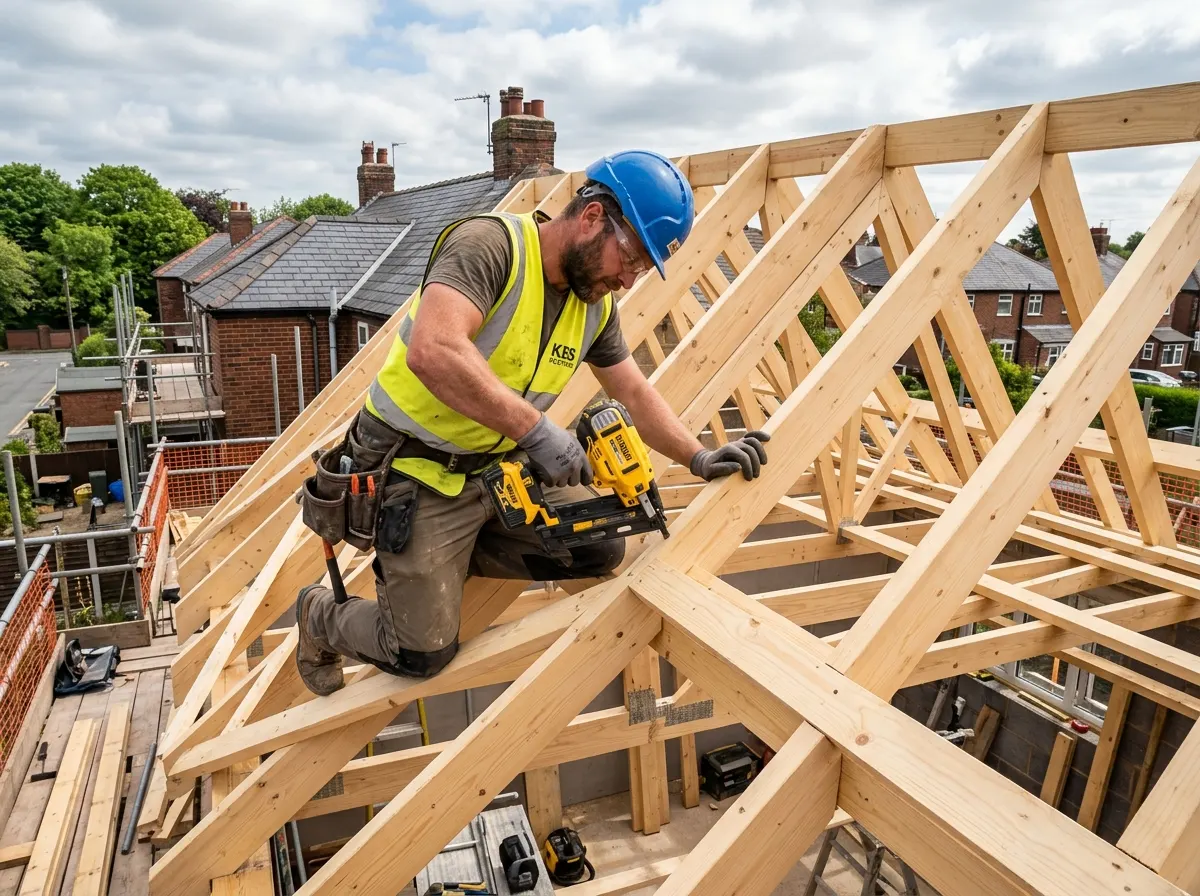
Carpentry is arguably the most versatile trade in the UK construction industry. From framing a cut roof in the pouring rain (1st fix) to delicately scribing bespoke oak wardrobes into an alcove (2nd fix), a highly skilled "chippy" is the backbone of any building project.
Because the skill ceiling is so high, the earning potential for a well-run carpentry business is massive. However, the transition from being a fast tradesman to a profitable business owner requires mastering precise quoting, navigating strict HSE wood dust regulations, and investing in thousands of pounds of specialist battery tools. This is your ultimate guide to establishing a premium carpentry and joinery firm.
Is Carpentry a Good Business to Start?
Carpentry offers unparalleled versatility, allowing you to pivot between heavy site work and high-margin domestic bespoke projects.
Types of Work & Clients
1st Fix vs 2nd Fix: First fix is structural (joists, stud walls, roof pitching) and often requires heavy lifting and working outdoors. Second fix is finishing work (hanging doors, skirting, kitchens) requiring meticulous precision.
Domestic vs Commercial: Domestic clients pay a premium for bespoke storage (media walls, wardrobes) and fast payment. Commercial work (shopfitting, housing developments) offers steady, long-term contracts but often involves 60-day payment terms and retention fees.
Core Carpentry Services
A standard business usually focuses on one or two niches:
- ✓ General 2nd Fix: Skirting, architraves, internal doors, and timber flooring.
- ✓ Bespoke Cabinetry: High-margin MDF media walls, alcove units, and wardrobes.
- ✓ Kitchen Fitting: Dry-fitting cabinets and worktops (requires high precision).
- ✓ Outdoor: Decking, pergolas, fencing, and timber outbuildings.
- ! Specialist: Structural roof framing and staircase installation (requires deep knowledge of Building Regulations).
Qualifications & CSCS Access
While domestic customers rarely ask to see your certificates, commercial main contractors and strict building site managers will not let you through the gate without them.
NVQs & City & Guilds
The industry standard is the NVQ Level 2 or 3 in Wood Occupations. You generally specialize in either "Site Carpentry" (working on building sites fitting joists, roofs, and doors) or "Architectural Joinery" (working in a workshop manufacturing stairs and windows).
The CSCS Card & Asbestos
To work on any commercial project (like a new housing development or school fit-out), you must hold a Blue (Skilled Worker) or Gold (Advanced Craft) CSCS Card. This requires passing the CITB Health & Safety test.
-
!
Asbestos Awareness Carpenters are constantly drilling into walls and tearing out old skirting boards and door frames. You must hold an Asbestos Awareness certificate, as old partition walls and insulating panels often contain lethal asbestos fibres.
Startup Costs & Choosing a Van
Carpentry is heavily reliant on expensive cordless tools and the ability to transport large sheet materials safely.
How much does it cost to start?
Low-Cost Startup (£3,000 - £6,000)
Used SWB van. Basic 18V combi drill, circular saw, and hand tools. Focusing on 2nd fix site work (doors, skirting) as a subcontractor where the main builder supplies the materials. Basic PLI insurance.
Typical Professional Startup (£12,000 - £20,000+)
Leased LWB van or Transit Custom with professional roof racks (£3k deposit). Comprehensive cordless tool kit (track saw, chop saw, nail guns, M-Class vac) on a single battery platform (£4k+). Professional branding, website, and comprehensive PLI insurance. Working capital to fund custom MDF/timber before client deposits clear.
What van do you need?
A small van is extremely limiting. Standard sheet materials (MDF, Plywood) are 2440mm x 1220mm (8x4 ft). You must be able to transport these.
-
✓
Medium/Long Wheelbase Van A Transit Custom or VW Transporter is the minimum size to slide 8x4 sheets flat between the wheel arches. A roof rack with ladder clamps is essential for carrying long lengths of timber and pipe.
-
!
Security Carpenters carry the most expensive, easily re-sellable power tools. You MUST fit aftermarket deadlocks, shielding plates, and internal lockable vaults to your van.
Stop paying for dead leads.
Join the Pricing Penguin network. We provide UK tradespeople with high-intent, pre-qualified customers who already understand the true cost of quality craftsmanship.
Structure & Structural Liability
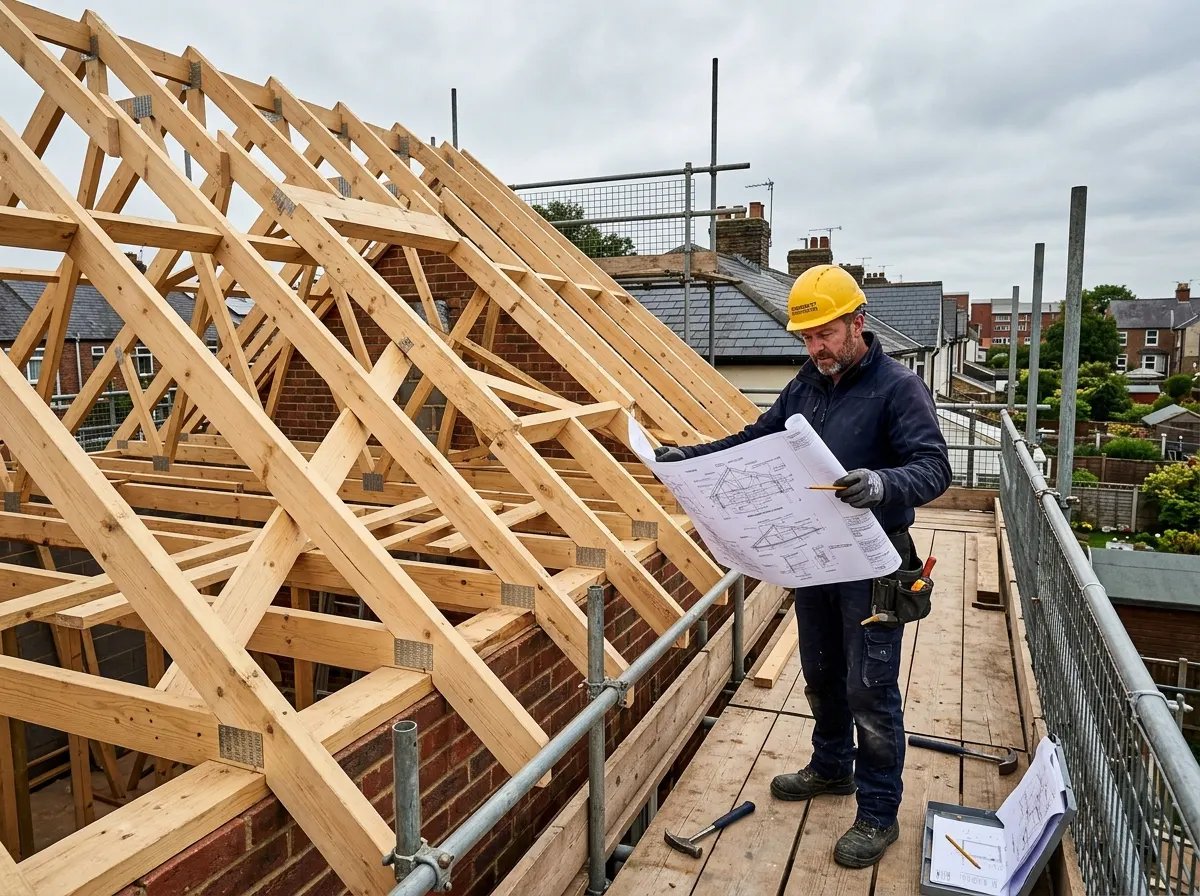
If you cut a load-bearing joist incorrectly or fail to strap a roof truss down properly, the structural integrity of a house is compromised. The financial liability is immense.
Sole Trader vs Limited Company
If you only fit internal doors and skirting boards, being a Sole Trader is perfectly fine. However, if you are undertaking structural 1st fix work (roofing, timber framing, floor joists), registering as a Limited Company (Ltd) is highly recommended. It creates a legal firewall between your business's liabilities and your personal assets (your home).
The Insurance Essentials
-
✓
Public Liability Insurance (PLI) Essential. You need £2m to £5m cover. This protects you if you drop a heavy timber beam on a client's car, or if a poorly fitted kitchen cabinet falls off the wall and damages property.
-
✓
Employers' Liability (£5m minimum) Carpentry involves heavy lifting. If you hire an apprentice or a mate to help you lift heavy fire doors or roof trusses, you are legally required to hold Employers' Liability insurance to cover them against injury.
Equipping the Van
Carpentry is the most tool-heavy trade. A fully kitted van can easily contain £10,000 worth of cordless gear. You must secure a single battery platform (e.g., Makita, DeWalt, Milwaukee) to save money on batteries.
1st Fix (Structural)
Tools for framing, roofing, and flooring. These require raw power and durability.
- • Gas framing nailer (e.g., Paslode IM360)
- • 184mm or 235mm circular saw
- • Heavy-duty reciprocating saw (for demo)
- • High-torque impact driver
- • Heavy forged framing hammer (Estwing)
2nd Fix (Finishing)
Tools for doors, skirting, kitchens, and bespoke cabinetry requiring absolute precision.
- • Track saw with guide rails (essential for sheet material)
- • Sliding compound mitre saw & heavy-duty stand
- • 18-gauge brad nailer (for architraves/skirting)
- • 1/4 inch and 1/2 inch routers & jigs
- • Laser level & precise combination squares
Dust Extraction (Crucial)
The HSE is cracking down heavily on wood dust. It is highly carcinogenic.
- ! M-Class Vacuum: You MUST use an M-Class dust extractor hooked directly to your track saws and routers. A standard Henry Hoover is illegal for commercial MDF and hardwood dust extraction.
- • PPE: Face-fit tested FFP3 respirator masks are mandatory when cutting MDF.
How to Price a Carpentry Job
Common mistakes include underestimating material wastage, forgetting fixings/consumables, and not allowing enough time for precision setting out.
How much should a carpenter charge?
Hourly/Day Rates: A skilled, self-employed carpenter typically targets £200 to £300+ per day. Subcontractors on large sites often work on "price-work" (e.g., £40 per door hung, £5 per metre of skirting).
Domestic Quoting: Domestic clients want a fixed price. Calculate your days, add your materials, and add a 15-20% margin. Never quote hourly for domestic bespoke work.
Timber prices change rapidly. Your written quotes must include a validity clause (e.g., "This quote is valid for 14 days. Due to raw material fluctuations, timber prices may be subject to review after this period").
The Quoting Framework
- Measure & Assess: Calculate linear metres or sheet material required. Check if walls are actually plumb/square (they rarely are, which adds scribe time).
- Materials & Waste: Add 10-15% to timber lengths for cuts/waste. Include the cost of screws, glue, caulk, and sanding discs.
- Labour Time: Time to cut + Time to install + Time to "Make Good".
- Specialist Plant: Do you need to hire a scaffolding tower or hoist?
- Variations: State clearly if painting/decorating the woodwork is excluded from the price.
Niches, Naming & Branding
"General carpentry" often forces you to compete with cheap handymen fixing squeaky floorboards. True profitability comes from specializing and looking expensive.
SEO-Optimised Naming
Homeowners search for specific tasks. Name your business to capture high-value searches: "[Your Town] Carpentry & Bespoke Joinery" or "[Your Town] Kitchen & Carpentry Specialists".
High-Margin Niches:
-
1.
Bespoke Media Walls & Alcove Units This is the most booming sector in domestic carpentry. Building MDF shaker-style alcove units and integrated TV media walls commands massive margins. Take high-quality photos for your Instagram; it is highly visual work.
-
2.
Kitchen Fitting Dry-fitting a kitchen (cabinets, worktops, pelmets) requires elite 2nd fix carpentry skills. Partner with local independent kitchen showrooms; they constantly need reliable, high-end installers to recommend to their clients.

The Uniform Standard
If you are charging £3,000 to build a bespoke wardrobe in a client's master bedroom, you cannot turn up in a dirty t-shirt.
Invest in premium trade workwear (Snickers, Mascot, or Scruffs) and have your polo shirts and fleeces professionally embroidered. Bring a specialized heavy-duty dust sheet to protect their floors, and always use your M-Class vacuum to leave the room spotless. Cleanliness wins referrals.
How to Grow
Increase prices, focus on high-value bespoke joinery, build relationships with architects for high-end domestic refits, and eventually invest in a dedicated workshop.
Timber Waste & Subcontracting
Carpentry generates a colossal amount of offcuts, sawdust, and packaging. You must manage this legally.
Waste Carrier Licence
If you rip out an old kitchen or take a mountain of MDF offcuts away in your van, you are transporting construction waste.
You MUST hold an Upper Tier Waste Carrier Licence from the Environment Agency. You cannot dump commercial timber at a local household tip without paying commercial rates. MDF and treated timber must often be separated from clean wood, as the glues and preservatives mean they cannot be easily recycled or burned.
Construction Industry Scheme (CIS)
If you act as a subcontractor for a main builder (e.g., they hire you to do the 1st fix roofing and joists on an extension), you fall under the CIS.
You must register for the CIS with HMRC. The main contractor will automatically deduct 20% from your labour invoices and pay it directly to HMRC as an advance on your tax bill. You must budget for this delay in cash flow. If you hire other carpenters to help you, you must operate the scheme and deduct their tax too.
Frequently Asked Questions
How much does it cost to start a carpentry business?
A low-cost start (used van, basic tools, working as a subcontractor) costs £3k-£6k. A professional setup for bespoke joinery/kitchens (leased LWB van, full cordless toolkit, track saws, M-class dust extraction, PLI insurance) typically costs £12k-£20k+.
Do you need qualifications to become a carpenter?
Legally no, but practically yes. To get onto commercial building sites you need a CSCS card, which requires an NVQ Level 2/3. For structural work (roofs, joists), deep knowledge of Building Regulations is critical.
What is the difference between 1st fix and 2nd fix?
1st Fix is structural work done before the walls are plastered (e.g., floor joists, roof trusses, stud partition walls, and staircases). 2nd Fix is the finishing work done after plastering (e.g., hanging internal doors, fitting skirting boards, architraves, and kitchens).
How much do carpenters charge per day?
A skilled self-employed carpenter typically charges between £200 and £300+ per day. Hourly rates usually range from £30 to £45. However, domestic jobs should ideally be quoted as a fixed price.
Is carpentry a profitable business?
Yes. While the tool investment is high, the margins on bespoke work (media walls, wardrobes) are excellent. Supplying the materials as well as the labour allows you to add a markup, significantly increasing your gross profit per job.
What van do I need as a carpenter?
A Medium or Long Wheelbase van (e.g., Transit Custom, VW Transporter) is essential. You must be able to slide 8x4ft (2440mm x 1220mm) sheet materials flat between the wheel arches. A roof rack for long timber is also critical.
Do carpenters need insurance?
Absolutely. Public Liability Insurance (£2m-£5m) is essential in case you damage property or injure someone. Tools in Transit cover is highly recommended as carpenters carry the most frequently stolen tools.
Can I take a deposit for materials?
Yes, absolutely. If you are building bespoke wardrobes, you might need to order £800 worth of custom-cut MR MDF and ironmongery. You should always invoice for a 25% to 30% deposit to cover these upfront material costs before you start work.
Do I need a workshop to be a carpenter?
No. Most "Site Carpenters" operate entirely out of their vans. You can buy MDF and sheet materials pre-cut to size from local timber merchants or online cutting services. You simply assemble, scribe, and fit the units on-site using your track saw.
Can I fit fire doors without extra certification?
Technically, yes, but you hold massive legal liability. If you fit a fire door incorrectly (wrong gaps, wrong intumescent strips, or non-fire-rated hinges) and it fails during a fire, you can be prosecuted. It is highly recommended to take a specific Fire Door Installation course (e.g., BM TRADA or Firas) to ensure you install them to strict legal standards.
Ready to fill your diary with quality jobs?
Connect with serious homeowners who value reliability over the absolute cheapest quote. Join our network of accredited UK tradespeople today and let our AI estimators filter out the time-wasters for you.
Did you find this guide helpful?
Let us know if these business tips will help your trade business.