How to start a highly profitable plastering company.
 By Tom Ellis
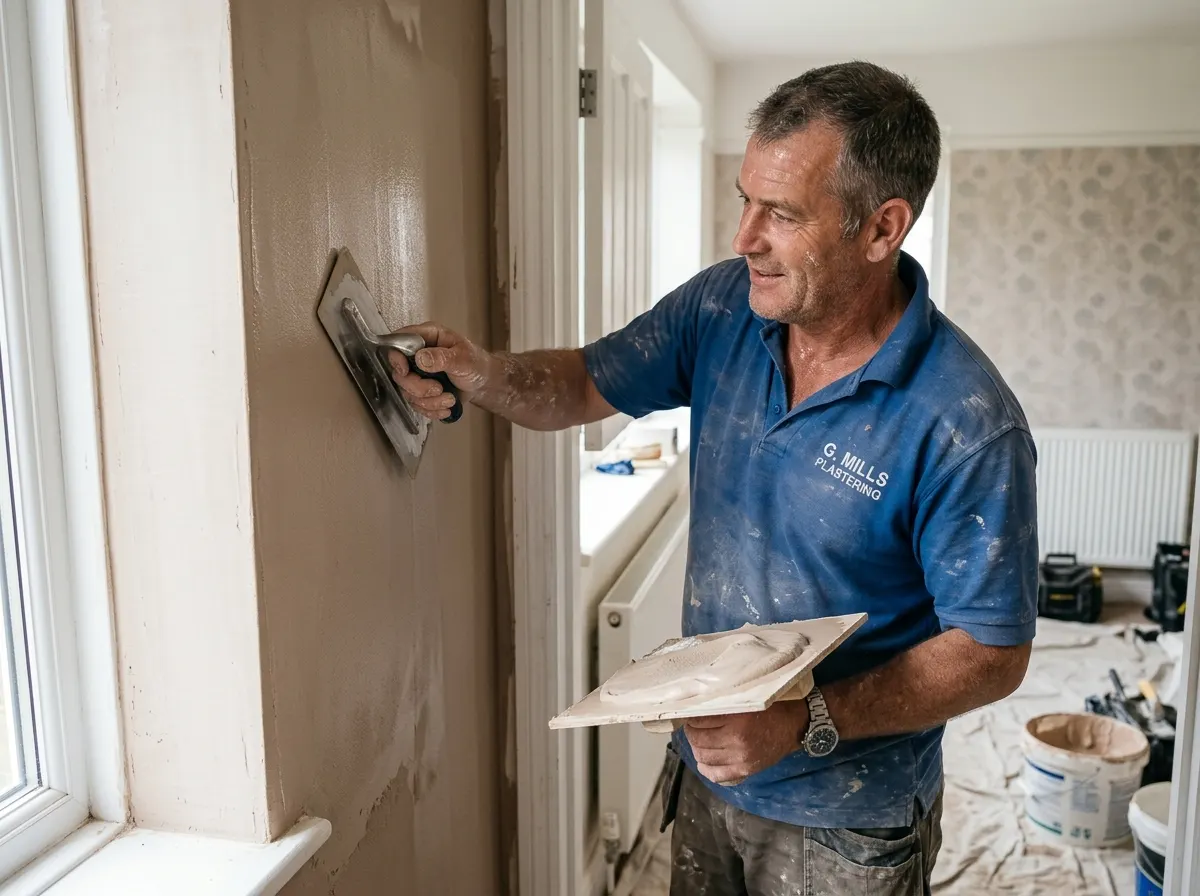
Plastering is widely considered the darkest art of the building trades. It takes years to master the trowel, and because it is physically gruelling, there is a massive national shortage of highly skilled spreaders. This scarcity means a fast, clean, and reliable plasterer can command exceptional day rates.
However, the industry stereotype is notoriously poor: messy tradesmen leaving PVA splashed on carpets and buckets washed out in the customer's kitchen sink. If you build a business positioned entirely around cleanliness, accuracy in quoting, and modern techniques (like machine spraying and dustless drylining), you will monopolise the premium domestic market. Here is how to set up, protect, and scale your plastering business.
Is Plastering a Good Business to Start?
Plastering provides phenomenal gross margins on labour, but it demands immense physical stamina and careful drying-time management.
Types of Work & Seasonality
Domestic vs Commercial: Domestic work (skimming over Artex, overboarding ceilings, patching) offers excellent, fast-paying margins. Commercial work (drylining entire new-build housing estates) offers massive volume and allows you to employ gangs on price-work, but payment terms are often stretched to 60 days.
Seasonality: Internal skimming and drylining are largely weather-proof, providing stable year-round income. External rendering, however, booms in summer but stalls in winter, as rendering in freezing temperatures or heavy rain causes catastrophic failures.
Core Plastering Services
A standard business mixes wet plastering with modern drylining:
- ✓ Standard Plastering: Skimming, boarding, dot and dab, and patching.
- ✓ Drylining: Tape and jointing (increasingly popular in commercial builds).
- ✓ External Work: Sand and cement rendering, monocouche, and pebble dash.
- ! Specialist: Heritage lime plastering and decorative cornices command elite day rates.
Qualifications & CSCS Access
While you don't legally need a licence to skim a domestic ceiling, proving your competence is the only way to gain access to lucrative commercial construction sites.
Do you need qualifications?
Legally, no. You can operate domestically based entirely on your portfolio and reputation. However, if you are targeting new-build housing estates or large commercial developments, the industry standard is the NVQ Level 2 or 3 in Plastering (Solid or Fibrous) or Drylining.
Site Cards & The Artex Threat
To step foot on a commercial site, you must hold a Blue (Skilled) or Gold (Advanced Craft) CSCS Card, obtained by passing the CITB Health & Safety test.
-
!
Asbestos Awareness (Mandatory) Plasterers are at the highest risk of asbestos exposure. Pre-2000 Artex and textured ceilings frequently contain white asbestos. You MUST hold a valid Asbestos Awareness certificate. Never scrape or sand a textured ceiling without a formal asbestos test.
Startup Costs & Choosing a Van
Plastering requires less capital than heavy groundworks, but a reliable van to transport water, mixing tubs, and heavy bags is essential.
How much does it cost to start?
Low-Cost Startup (£2,000 - £4,000)
Used small/medium van. Essential hand trowels, buckets, and a basic paddle mixer. Relying on the customer's water supply. Basic PLI insurance. Marketing entirely via free local Facebook groups and Google Business Profile. Focus on domestic skimming and patching.
Typical Professional Startup (£8,000 - £15,000)
Leased MWB van (£3k deposit). High-end mixing drills (Eibenstock), aluminium hop-ups, and a dustless sander/M-class vacuum setup for prep work (£1.5k). Branded workwear, website, and comprehensive PLI insurance. Working capital to fund plasterboard and multi-finish on initial jobs.
What van do you need?
A Medium Wheelbase (MWB) van (e.g., VW Transporter, Ford Transit Custom) is the sweet spot.
- • Payload is Crucial: Plaster is incredibly heavy. A pallet of multi-finish weighs over a tonne. Ensure your van's payload can legally handle 20+ bags of plaster, your tools, and 100-litre mixing tubs simultaneously.
- • Water Storage: Professional vans often feature an internal water butt or baffled tank so you aren't relying on an external tap, especially on new-build sites.
Stop paying for dead leads.
Join the Pricing Penguin network. We provide UK tradespeople with high-intent, pre-qualified customers who already understand the true cost of quality craftsmanship.
Structure & Property Protection
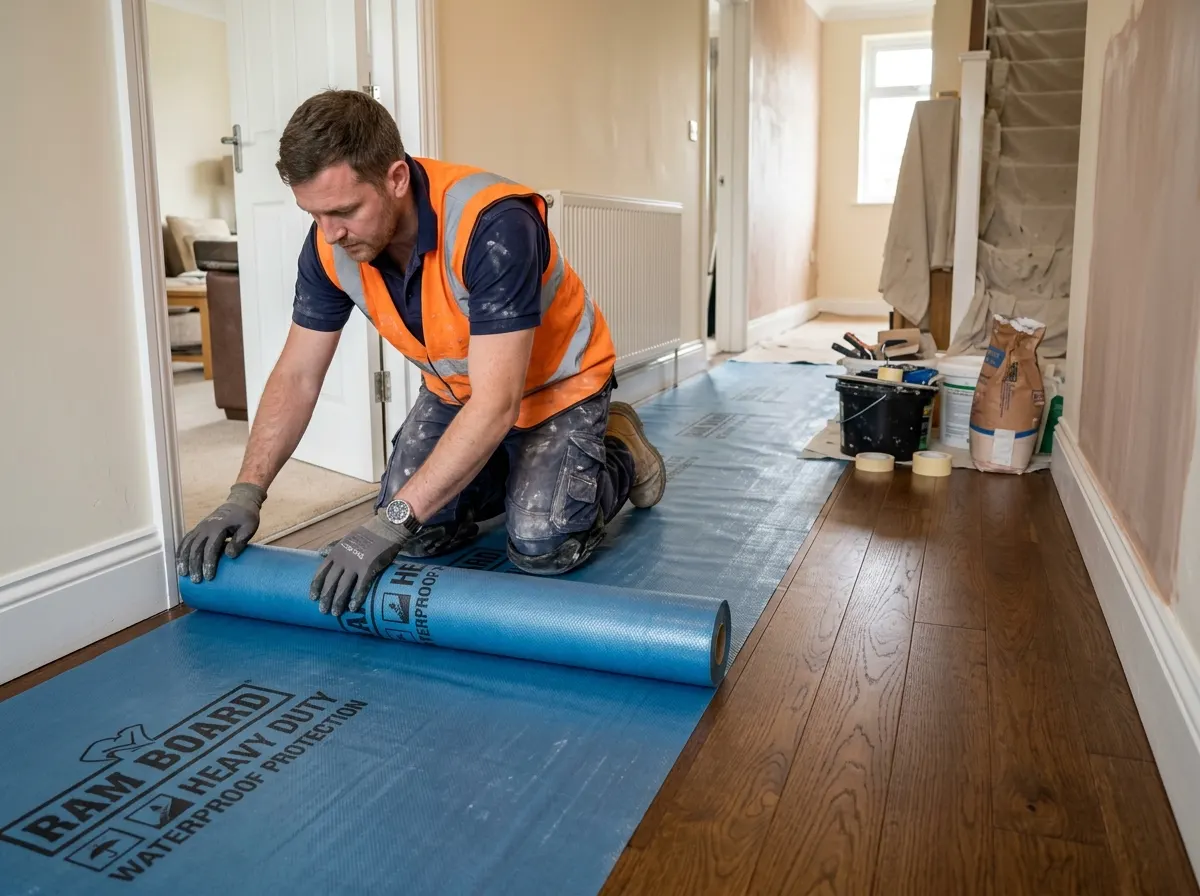
Plastering is an incredibly wet and messy trade. A knocked-over bucket of dirty water or a dropped trowel of multi-finish can ruin a client's £5,000 carpet in seconds. You must be legally protected.
Sole Trader vs Limited Company
Most domestic plasterers operate as Sole Traders because it is administratively simple. However, if you plan to take on massive drylining contracts for main builders, registering as a Limited Company (Ltd) protects your personal home and assets if the business goes under or faces a catastrophic lawsuit.
The Insurance Essentials
-
✓
Public Liability Insurance (PLI) You need a minimum of £1m to £2m cover. Crucially, check your policy covers "Damage to property being worked upon." If you accidentally pull down an existing ceiling while boarding over it, standard cheap PLI might refuse to pay out.
-
✓
Employers' Liability (£5m minimum) Plastering is exhausting; you will inevitably hire a labourer or 'hod carrier' to mix for you. The second you pay someone to help you on site, you are legally required to hold Employers' Liability insurance to cover their workplace injuries.
Equipping for Speed and Finish
Your tools define your speed, and in plastering, speed equals profit. Cheap trowels will leave tiger stripes, and cheap mixers will burn out within a month.
Trowels & Hand Tools
The modern plasterer uses specialized trowels for different stages of the skim.
- • Carbon steel laying-on trowel (e.g., Marshalltown)
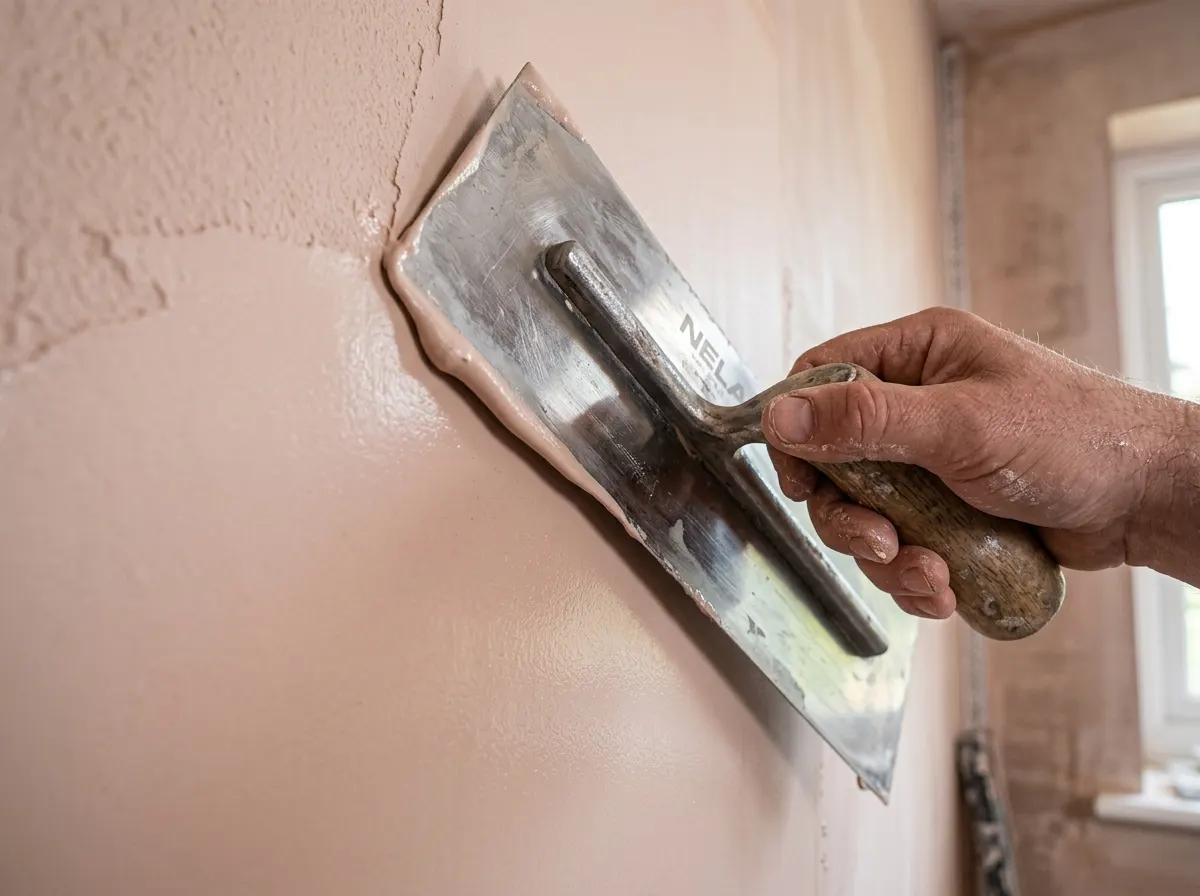
- • Ultra-flexible finishing trowel (e.g., NELA or Refina)
- • Plastic spatulas/speed skims (for flattening large areas instantly)
- • Internal and external corner trowels
- • Hawk (polyurethane or aluminium)
Mixing & Access
Mixing multi-finish requires immense torque. Do not use a standard cordless drill.
- • 110V heavy-duty paddle mixer (Refina/Eibenstock)
- • 100-litre heavy-duty gorilla mixing tubs
- • Heavy-duty 110V transformer & leads
- • Access: Aluminium hop-ups (trestles). If using plasterer's stilts, ensure you comply strictly with HSE guidelines (flat, clear floors only).
Modern Drylining Tech
If you offer tape and jointing, dust management is your main selling point.
- • Automatic taper (Bazooka) or Banjo
- • Dustless Sanding: A long-reach giraffe sander (e.g., Mirka or Festool) hooked directly into an M-Class extractor vacuum. This is essential for health and cleanliness.
How to Price a Plastering Job
The most common mistake new plasterers make is underpricing preparation time. Stripping wallpaper and PVA-ing old walls takes longer than the skim itself.
How much should a plasterer charge?
Day Rates vs Per m²: A self-employed plasterer typically charges £180 to £250 per day. For large commercial drylining or skimming, price-work per m² is standard. However, for domestic jobs, ALWAYS quote a fixed price for the room or ceiling.
Ceilings vs Walls: Ceilings are physically harder and slower. Skimming a standard 4x4m ceiling typically costs £250-£400. A full room (walls and ceiling) might be £600-£900+ depending on prep.
Do not scrape flaky paint or hack off blown plaster for free. Charge for preparation, boarding, and beading before you even calculate the skimming time.
The Quoting Framework
- Measure & Assess: Calculate m². Is it a straightforward re-skim, or does it need boarding (dot and dab) or bonding first?
- Prep Time: Add time to protect floors, remove radiators (or ask the client to), apply PVA/Blue Grit, and fix angle beads.
- Materials: Multi-finish, boards, beads, scrim tape. Add 10-15% margin.
- Labour: Time to prep + Time to plaster.
- Drying & Waste: Factor in drying time between coats and the cost of disposing of old plaster/plasterboard.
- Variations: State in writing: "Quote assumes existing plaster is sound. Hacking off blown plaster will incur extra charges."
Stop paying for dead leads.
Join the Pricing Penguin network. We provide UK tradespeople with high-intent, pre-qualified customers who already understand the true cost of quality craftsmanship.
The "Clean Plasterer" Niche
Homeowners dread hiring plasterers because of the mess. If you build your entire brand around being impeccably clean and respectful of their property, you can charge 20% more than your competitors and still win every quote.
SEO-Optimised Naming
Keep it literal. "[Your Town] Plastering & Drylining" tells Google exactly what you do and where you are. Abstract names like "Smooth Surfaces" perform terribly in local search rankings.
How to secure premium domestic work:
-
1.
Floor Protection is Marketing When quoting, explicitly state: "We fully protect all carpets with self-adhesive film and hard floors with Correx board. We never wash buckets out in your sinks; we use an external washout station." This single sentence will win you the job over a cheaper, messier rival.
-
2.
Partner with Electricians & Plumbers Sparks and plumbers constantly have to rip holes in ceilings and chase walls to run cables/pipes. They hate patching it up. Hand your card to every electrician and plumber in town. They will sub-contract the patching work to you constantly.
Ditch the "Painter's Whites"
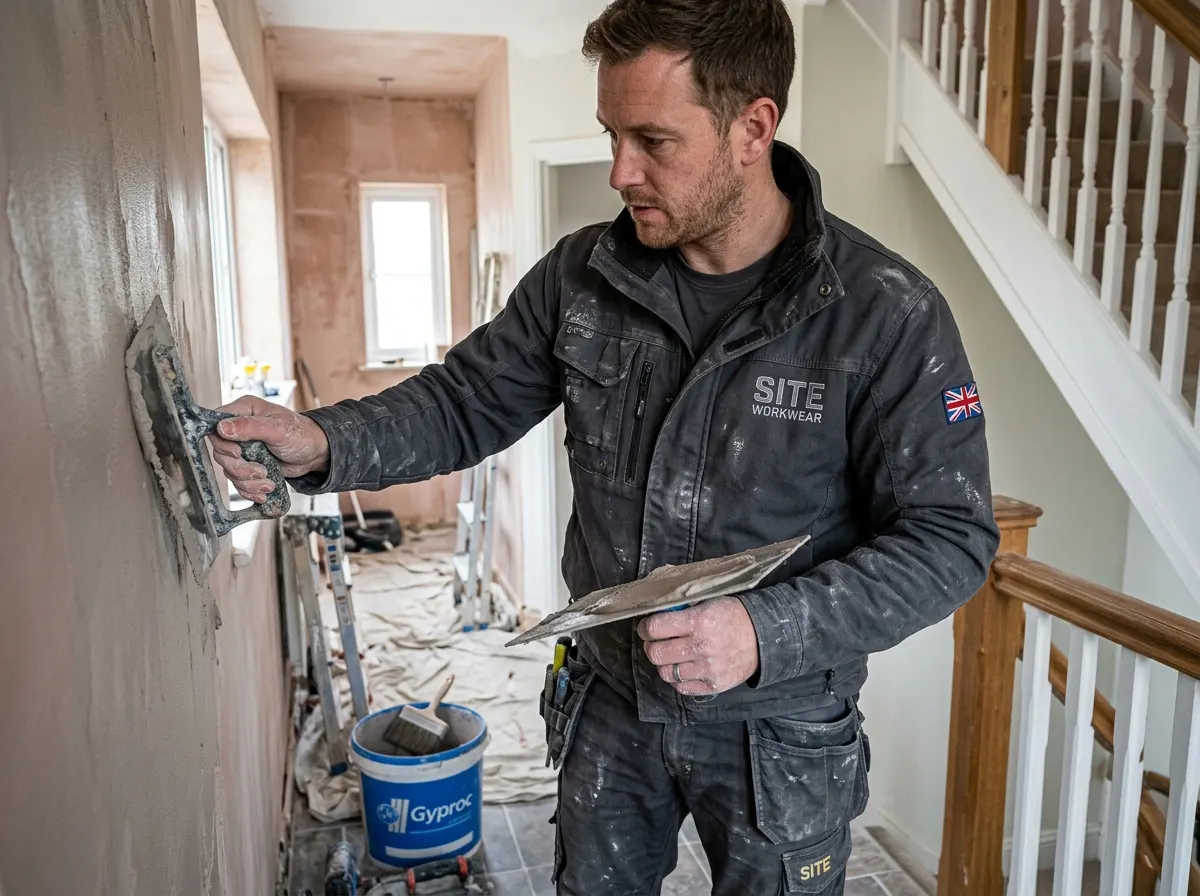
Traditional white bib-and-brace overalls show every speck of pink multi-finish. Modern, premium plastering firms have switched to dark grey or black heavy-duty work trousers with branded polo shirts. You look like a professional contractor, not a messy labourer.
How to Grow
Add high-value specialist services (external rendering, monocouche). Build relationships with local builders for steady extension work. Employ a labourer, then an apprentice, and eventually transition to pricing and managing multiple drylining gangs on commercial sites.
The Strict Laws of Gypsum Waste
Plaster and plasterboard are made of gypsum. Disposing of them incorrectly is a major environmental offence.
Gypsum Waste Legislation
You cannot throw plasterboard or dried plaster into a standard mixed-waste builder's skip.
If gypsum is mixed with biodegradable waste in a wet landfill, it produces toxic, foul-smelling hydrogen sulphide gas. By law, all plasterboard and gypsum-based waste must be segregated and sent to a dedicated recycling facility. You must order specific "Plasterboard Only" skips or bulk bags.
Waste Carrier Licence & Silica
If you take old lath and plaster ceilings or offcuts of plasterboard away in your van, you must hold an Upper Tier Waste Carrier Licence from the Environment Agency.
Additionally, mixing powdered plaster releases crystalline silica dust into the air. If you mix indoors without an FFP3 mask, you are severely damaging your lungs over time. Always mix outside or in a highly ventilated area.
Frequently Asked Questions
How much does it cost to start a plastering business?
A low-cost start (used van, basic trowels and mixing drill) costs £2k-£4k. A professional setup with a leased MWB van, high-end finishing tools, dustless sanders, access hop-ups, and PLI insurance typically costs £8k-£15k.
Do you need qualifications to become a plasterer?
Legally no, but practically yes. To get onto commercial building sites you need a CSCS card, which requires an NVQ Level 2/3 in Plastering or Drylining. You also strictly need Asbestos Awareness certification before tearing down old ceilings.
How much do plasterers charge per day?
A skilled self-employed plasterer typically aims for £180 to £250+ per day. However, for domestic jobs, always quote a fixed price for the room or ceiling rather than an open-ended day rate.
How much does it cost to skim a ceiling?
Skimming a standard 4x4m ceiling over existing plaster or board typically costs between £250 and £400 (labour and materials). If it requires scraping Artex, boarding over (overboarding), or major repair first, the cost will significantly increase.
Is plastering a profitable business?
Highly profitable. The material costs (bags of multi-finish) are very low compared to the value of the labour. A fast, skilled plasterer working efficiently can generate excellent gross margins, often earning £40k-£60k+ per year.
Can you start a plastering business with no experience?
No. Plastering is highly physical and requires years of muscle memory to master the trowel. A poor skim leaves tiger stripes and uneven walls that decorators cannot hide. You must gain experience working alongside a time-served professional first.
What van do I need as a plasterer?
A Medium Wheelbase (MWB) van is ideal. Payload is critical—a pallet of plaster is extremely heavy. You need enough payload capacity to safely carry 20+ bags of multi-finish, 100-litre mixing tubs, and your tools.
Do plasterers need insurance?
Yes. Public Liability Insurance (£1m-£2m) is essential to cover damage (like spilling water on a carpet or pulling down an existing ceiling). If you hire a labourer to mix for you, Employers' Liability Insurance is legally required.
Do plasterers need qualifications to do rendering?
While standard sand-and-cement rendering requires no specific legal ticket, applying modern silicone or monocouche render systems often requires manufacturer training (e.g., K Rend, Weber) to ensure correct application and to provide valid warranties.
What is the Construction Industry Scheme (CIS)?
If you work as a subcontractor for a main building firm (e.g., drylining a new housing estate), you must register for the CIS with HMRC. The main contractor will automatically deduct 20% from your labour invoices and pay it directly to the government towards your tax bill. You must account for this cash flow delay.
Ready to fill your diary with quality jobs?
Connect with serious homeowners who value reliability over the absolute cheapest quote. Join our network of accredited UK tradespeople today and let our AI estimators filter out the time-wasters for you.
Did you find this guide helpful?
Let us know if these business tips will help your trade business.