How to start a highly profitable electrical company.
 By Tom Ellis
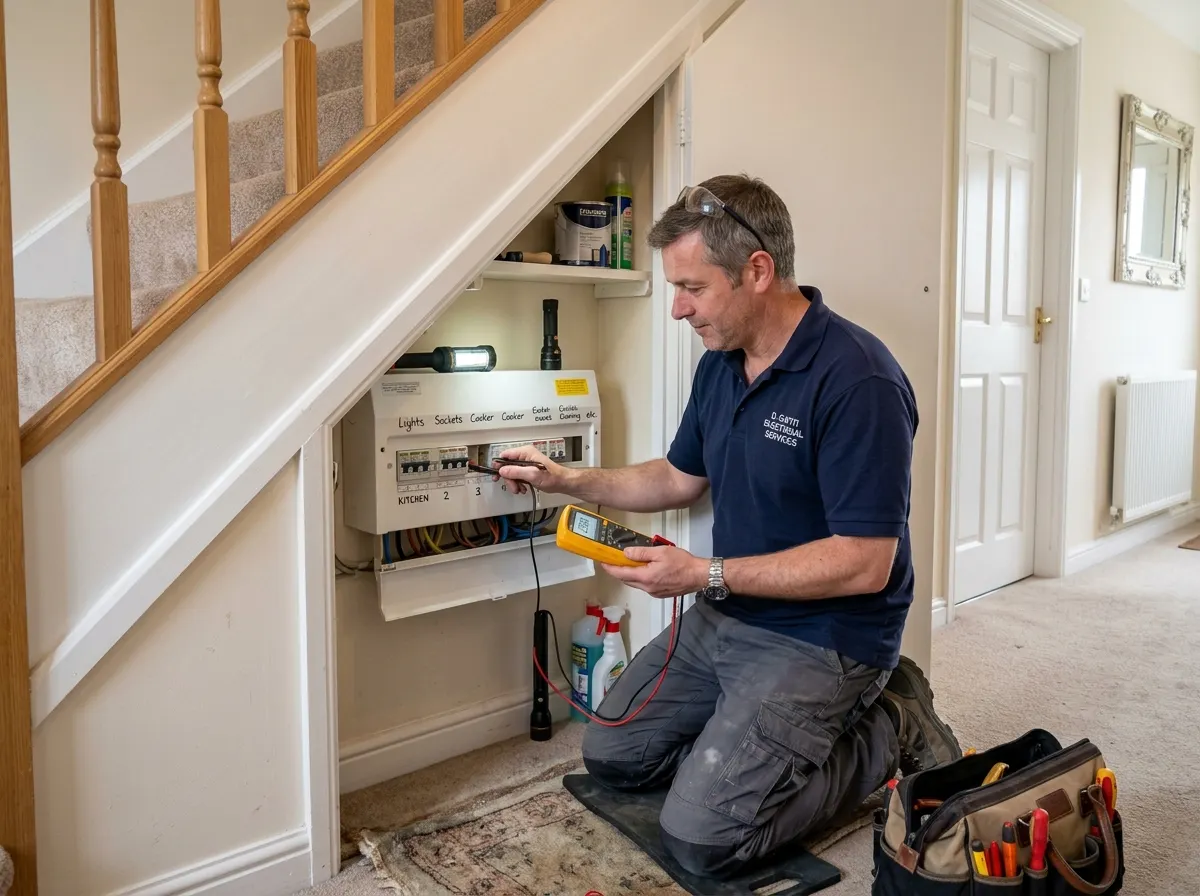
The electrical trade offers some of the highest profit margins in the construction sector, fueled by the booming demand for EV chargers, solar PV, smart home integrations, and mandatory landlord safety checks. However, electricity is invisible, silent, and instantly lethal. Because of this, it is one of the most strictly regulated industries in the UK.
To transition from a qualified spark to a successful business owner, you must navigate Part P building regulations, Competent Person Schemes, specialised insurance, pricing frameworks, and the upfront cost of calibrated testing equipment. This comprehensive, step-by-step guide breaks down exactly how to establish, protect, and scale a professional electrical contracting business.
Is an Electrical Business a Good Business to Start?
The demand for qualified electricians is at an all-time high, driven by the green energy transition and strict property safety laws.
Types of Work & Clients
Domestic vs Commercial: Domestic work (rewires, consumer units, EV chargers) offers fast payments and high margins but requires significant client management. Commercial work (office fit-outs, heavy industrial) offers massive contracts but often involves 60-day payment terms and requires higher levels of insurance.
Demand & Seasonality: Electrical work is remarkably stable year-round. Emergency fault finding provides instant cash flow, while EICRs and planned rewires offer scheduled, predictable income.
Core Electrical Services
A standard business mixes fast repairs with high-value planned installations:
- ✓ Standard Work: Rewires, consumer unit replacements, fault finding, outdoor electrics.
- ✓ Inspection & Testing: EICRs for landlords and house buyers.
- ✓ Specialist (Requires extra training): EV chargers, Solar PV, battery storage systems.
- ✓ Commercial: 3-phase installations, fire alarm systems, emergency lighting.
Qualifications & Part P
You cannot legally sign off domestic electrical work without proving your competence. Here is the framework you must have in place.
The "Fully Qualified" Standard
To be recognised as a fully qualified electrician and obtain your JIB Gold Card, you must complete an industry-recognised pathway. Short "5-week domestic installer" courses will severely limit your ability to undertake commercial work or join major schemes.
-
✓
NVQ Level 3 Diploma In Electrotechnical Services (or equivalent apprenticeship). Includes the vital AM2/AM2S practical assessment.
-
✓
18th Edition (BS 7671) You must hold the current IET Wiring Regulations qualification.
-
✓
Testing & Inspection (2391) Crucial for business owners. Allows you to sign off complex installations and perform highly profitable EICRs.
Part P & Competent Person Schemes
Under Part P of the Building Regulations, certain electrical work in a home (e.g., consumer unit replacements, new circuits, or work in a bathroom 'special location') is "notifiable" to the local council building control.
Stop paying for dead leads.
Join the Pricing Penguin network. We provide UK tradespeople with high-intent, pre-qualified customers who already understand the true cost of quality craftsmanship.
Startup Costs & Van Configuration
Electrical work requires precision instruments. The initial outlay is high, but buying cheap equipment will compromise your safety and fail scheme audits.
How much does it cost to start?
Low-Cost Startup (£4,000 - £7,000)
Using a second-hand small van (e.g., Transit Connect). Buying essential VDE hand tools and basic power tools. Purchasing a high-quality MFT (£800). Joining a Competent Person Scheme (£600) and securing basic PLI insurance. Focus on domestic repairs and EICRs.
Typical Professional Setup (£12,000 - £20,000)
Leased medium panel van (e.g., VW Transporter) with professional racking (£3k). Full suite of premium cordless power tools, wall chaser, and M-Class vacuum (£2.5k). High-end MFT. Initial van stock of cables and RCBOs (£1k). Professional branding, website, and comprehensive insurance.
What van do you need?
A small van works initially, but a medium-wheelbase (MWB) panel van is ideal for carrying large reels of twin & earth, conduit, and consumer units.
- • Racking & Van Stock: Essential. You need hundreds of small components (Wagos, grommets, screws, glands). Professional racking with pull-out bins stops you losing money driving to the wholesaler for a 10p fitting.
- • Security: Electricians' vans are heavily targeted for expensive MFTs and copper cable. Fit aftermarket deadlocks, shielding plates, and internal vaults.
Equipping for Efficiency & Safety
Standard screwdrivers can be lethal. All electrical hand tools must be VDE certified and insulated to 1000V.
VDE Hand Tools
- • VDE Screwdriver set (e.g., Wera or Wiha)
- • VDE Combi pliers & side cutters (Knipex)
- • Wire strippers & automatic crimpers
- • High-quality spirit level (Stabila)
- • Cable rods and drawing tape
Testing & Dead Testing
Safe isolation is the most critical procedure in the trade.
- • Voltage Indicator & Proving Unit: You must prove a circuit is dead before touching it. Never rely on a non-contact "sniff" tester for safe isolation.
- • Lock-off kit with warning tags
- • The MFT: A £600 - £1,200 investment (e.g., Megger, Fluke). Used for continuity, insulation resistance, loop impedance, and RCD testing. Must be calibrated annually.
Power Tools
- • Cordless combi drill & impact driver
- • SDS drill (for chasing/drilling masonry)
- • Multi-tool (for cutting floorboards)
Essential for rewires. Chasing brickwork creates lethal silica dust. An M-Class vacuum hooked to a chaser is an absolute necessity.
How to Price Electrical Work
Common mistakes include undercharging for testing, forgetting overheads, and not stating clear terms for variations.
How much should an electrician charge?
Hourly/Day Rates: A self-employed electrician generally aims for £45 to £80 per hour, or £250 to £400+ per day, depending on the region and the complexity of the work.
Emergency Call-Outs: Charge a "First Hour" fee (typically £90 - £150+). This covers travel, fuel, and the expertise to diagnose the fault. If you fix it within that hour, no extra labour is charged.
EICRs: Do not compete in the "£50 drive-by EICR" race to the bottom. Charge realistically for the hours required to test properly (e.g., £150-£250+ depending on circuits).
Quoting for Planned Work (e.g., Rewire)
- Scope & Points: Count exactly how many sockets, switches, and light fittings are required.
- Access: Is the property occupied? Pulling floorboards in a furnished house takes twice as long.
- Materials: Cable lengths, consumer unit, RCBOs, faceplates. Add a 15-20% markup.
- Labour & Testing: Estimate days required. Add specific time for the final inspection, testing, and certification process.
- Variations: State in writing that changes requested mid-job will incur additional charges, and explicitly state if "making good" (plastering over chases) is excluded.
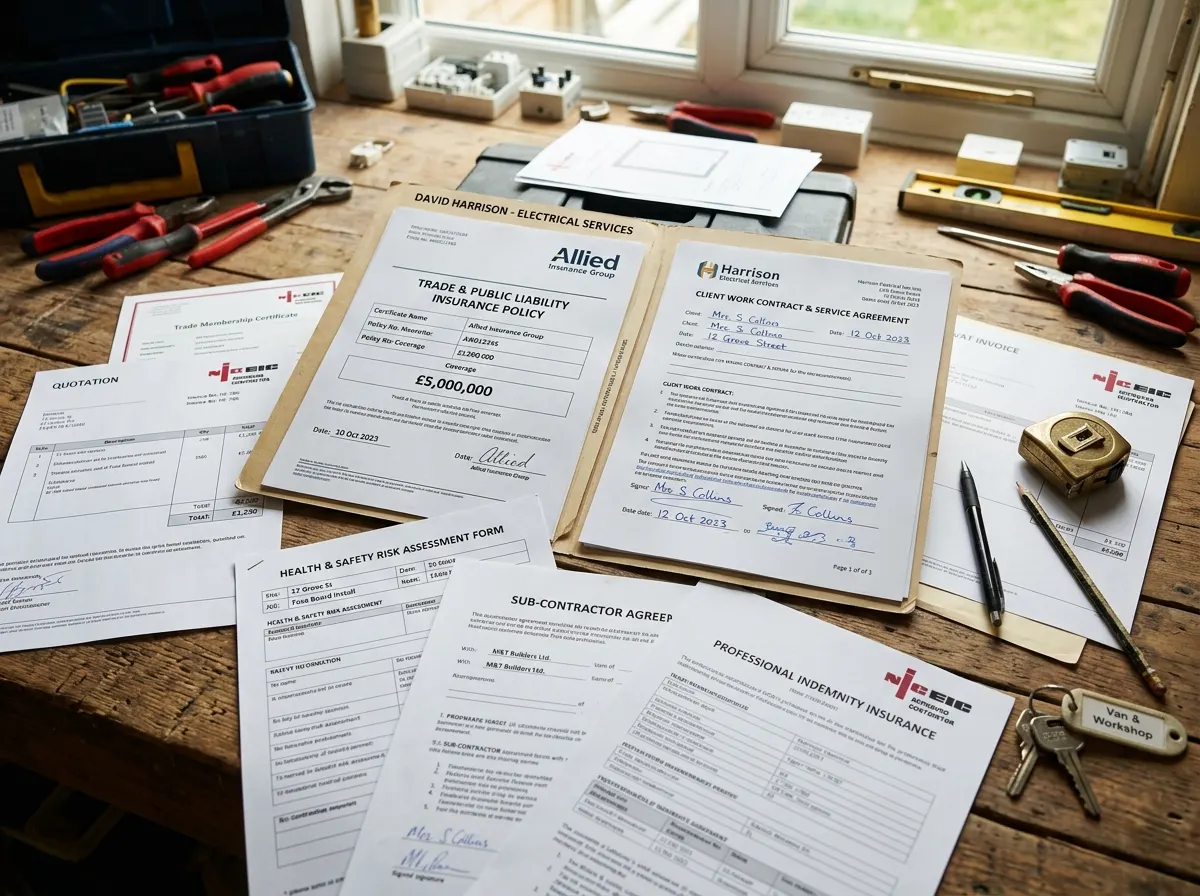
Structure & Specialist Insurance
Electrical faults are a leading cause of domestic fires in the UK. Your liability exposure is immense, meaning your business structure and insurance must be flawless.
Sole Trader vs Limited Company
While starting as a Sole Trader is administratively easier, most professional electrical contractors quickly register as a Limited Company (Ltd). A Ltd company provides "limited liability", meaning if an installation fails catastrophically and the resulting lawsuit exceeds your insurance cover, your personal assets (your house and savings) are generally protected.
The Insurance Non-Negotiables
-
✓
Public Liability Insurance (PLI) Covers property damage or injury (e.g., putting your foot through a ceiling or a fire caused by a loose connection). You need a minimum of £2m to satisfy NICEIC/NAPIT, but £5m is the standard requirement for commercial site access.
-
✓
Professional Indemnity (PI) Crucial for electricians. If you design a complex lighting circuit or an industrial panel board, and the design is flawed (causing the client financial loss), PI insurance covers the legal costs and compensation.
-
✓
Employers' Liability A strict legal requirement (£5m minimum) if you employ an apprentice, a mate, or use labour-only subcontractors on your jobs.
Branding & Winning the Work
Electrical work involves trusting a stranger to rip open walls and handle lethal voltages. Homeowners buy trust and professionalism over cheap quotes.
SEO-Optimised Naming
Avoid clever or abstract names like "Sparky Solutions." Homeowners search Google for local trades. Naming your business "[Your Town] Electrical Services" immediately boosts your local SEO and clearly states what you do.
How to get your first highly profitable jobs:
-
1.
Landlord EICRs It is a legal requirement for private landlords to have an Electrical Installation Condition Report (EICR) conducted every 5 years. Approach local letting agents. If you provide thorough, honest EICRs, you will automatically win the remedial work required to fix the faults.
-
2.
Other Trades (Builders & Kitchen Fitters) Builders and kitchen fitters constantly need registered electricians to sign off new circuits and move sockets. Build strong referral relationships with them.

The Uniform & Van Standard
To command premium rates, you must look premium:
- ✓ Wear heavy-duty trade trousers and branded polo shirts.
- ✓ Ensure your van clearly displays your NICEIC/NAPIT logos.
- ✓ Always carry a dustpan and brush. Leaving a customer's house spotless after chasing walls is the fastest way to earn a 5-star Google review.
How to Grow
Increase prices as your diary fills, focus on high-value specialist work (EV/Solar), employ an apprentice, and eventually move off the tools to manage multiple vans and commercial contracts.
Frequently Asked Questions
How much does it cost to start an electrical business?
A low-cost start (used van, hand tools, MFT, scheme registration) costs £4,000 - £7,000. A fully equipped professional setup (leased MWB van, premium cordless tools, wall chasers, M-class vacuum, insurance, and van stock) typically requires £12,000 - £20,000.
What qualifications do you need to become an electrician?
The industry standard is an NVQ Level 3 Diploma in Electrotechnical Services, plus the 18th Edition (BS 7671). To sign off work and perform EICRs, you need a Testing & Inspection qualification (2391). Specialist work like EV charging requires further specific certification.
Can you start an electrical business without being qualified?
Technically, there is no single "licence" to practice, but practically, no. You cannot legally self-certify notifiable domestic work (Part P) without joining a Competent Person Scheme, which requires proof of qualifications and competence. You will also struggle to get insurance.
What is Part P?
Part P is a section of the Building Regulations that ensures electrical installations in dwellings are safe. Certain work (new circuits, consumer units, work in bathrooms) is 'notifiable'. You must either pay Building Control to inspect it, or self-certify it by being registered with a Competent Person Scheme.
Do electricians need to be Part P registered?
Yes, if you undertake domestic installation work. Registering with a scheme like NICEIC or NAPIT allows you to self-certify your work complies with Part P. Without it, you must notify the local council before every job and pay their inspection fees, which is financially unviable.
How much do electricians charge per hour?
Self-employed electricians typically charge between £45 and £80 per hour depending on their region and the complexity of the work. Day rates usually range from £250 to £400+.
How much should an electrician charge for a call-out?
Charge a diagnostic "First Hour" fee (typically £90 - £150+). This covers travel, fuel, and the expertise to diagnose the fault safely. If fixed within that hour, no extra labour is charged. Never offer free fault-finding.
Is being an electrician profitable?
Yes, highly profitable. Revenue is generated from labour, markup on materials (consumer units, cables), and premium call-out rates. A self-employed electrician can earn £40k-£60k+, while a business owner managing a team can push turnover well into six figures.
What tools do I need to start an electrical business?
Essentials include VDE hand tools, safe isolation kit, a calibrated Multi-Function Tester (MFT), cordless drill/impact driver, SDS drill, and an M-Class vacuum for dust extraction. A wall chaser is essential if doing rewires.
What van do I need as an electrician?
A Medium Wheelbase (MWB) panel van (e.g., VW Transporter, Ford Transit Custom) is ideal. It must be large enough to carry ladders, conduit, and accommodate professional racking with bins for hundreds of small electrical components.
How do I get my first electrical customers?
Set up a Google Business Profile immediately and collect 5-star reviews. Contact local letting agents to offer EICR services, and build relationships with local builders and kitchen fitters who regularly need registered electricians to sign off their projects.
How much can a self-employed electrician earn?
An established self-employed electrician can realistically earn between £40,000 and £60,000+ per year. Those who specialise in high-value installations (like Solar PV or EV chargers) or employ apprentices to take on larger contracts can earn significantly more.
Ready to fill your diary with quality jobs?
Connect with serious homeowners who value reliability over the absolute cheapest quote. Join our network of accredited UK tradespeople today and let our AI estimators filter out the time-wasters for you.
Related Guides

Did you find this guide helpful?
Let us know if these business tips will help your trade business.