How to start a highly profitable landscaping business.
 By Tom Ellis
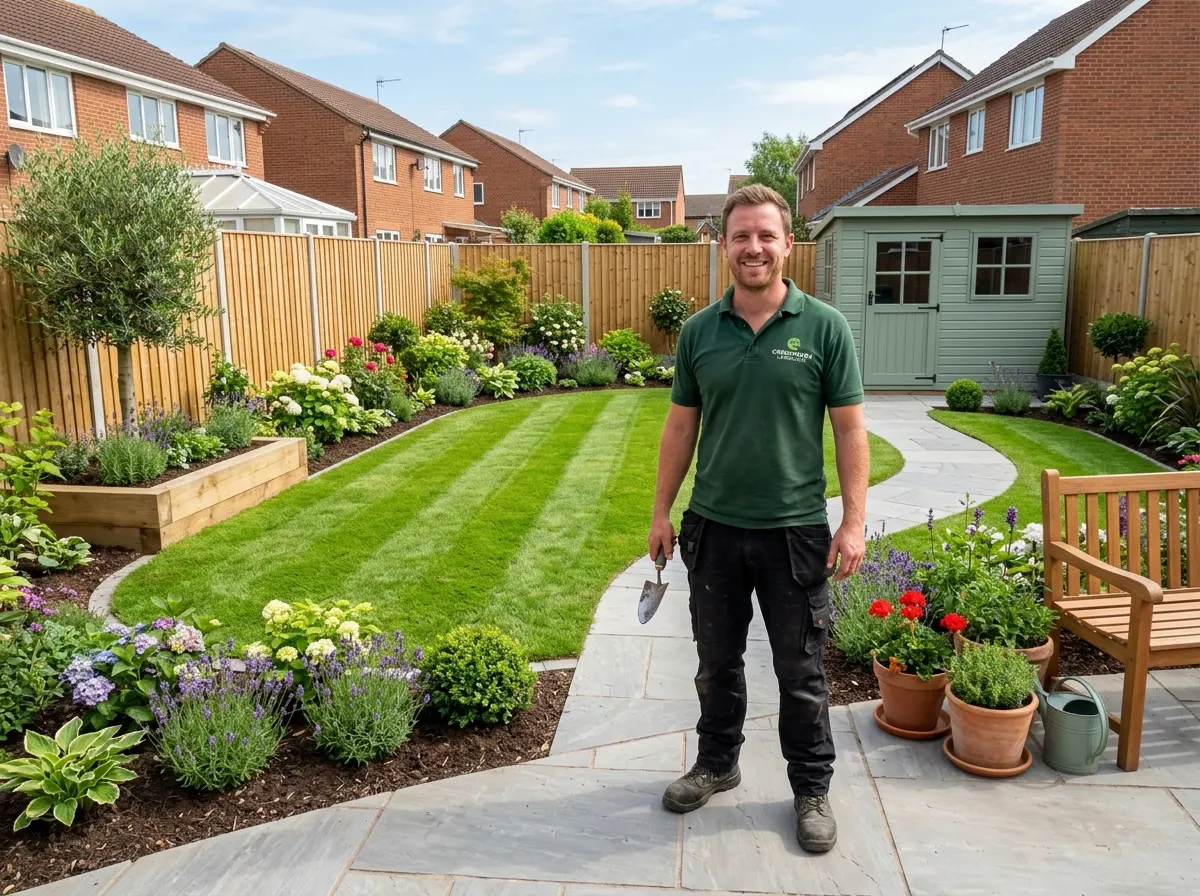
The UK landscaping industry is booming, but the gap between the "man in a van with a mower" and a professional, highly profitable landscaping firm is massive. Operating legally and safely requires much more than just a good eye for design; you are dealing with heavy plant machinery, strict environmental waste laws, and highly regulated chemicals.
If you set the foundations of your business up correctly from day one, you can bypass the low-paying grass-cutting rat race and immediately start winning £10,000+ hard landscaping and garden redesign projects. This is the complete, step-by-step guide to setting up a professional landscaping business in the UK.
Is Landscaping a Good Business to Start?
Landscaping is highly rewarding, offering immense profit margins and creative satisfaction, but it is physically demanding and weather-dependent.
Domestic vs Commercial & Seasonality
Domestic clients offer high-margin bespoke projects (patios, driveways) and pay quickly, but require heavy customer management. Commercial clients (housebuilders, local councils) offer steady, high-volume work (turfing new estates, planting) but often squeeze margins and delay payments (30-60 day terms).
Demand skyrockets from March to September. However, smart landscapers pivot in winter to heavy groundworks, fencing, tree surgery, and commercial gritting to maintain cash flow.
Types of Landscaping Work
To be highly profitable, focus your marketing on high-ticket services rather than basic maintenance:
- ✓ Hard Landscaping: Patios, block paving, driveways.
- ✓ Groundworks & Drainage: Excavation, soakaways, French drains.
- ✓ Timber Structures: Fencing, composite decking, sleepers.
- ✓ Soft Landscaping: Turfing, artificial grass, planting.
- ✓ Garden Design: Charging a fee for 3D CAD designs.
Sole Trader vs Limited Company
Before you buy a single tool, you must register your business with HMRC. The structure you choose dictates how you are taxed and your level of personal financial risk.
Starting as a Sole Trader
For 90% of new landscapers, this is the best way to start. It is incredibly easy to set up online, the accounting is simple, and you personally keep all the profits after paying Income Tax and National Insurance.
-
✓
Low Admin Just one Self Assessment tax return per year. No complex corporate filings.
-
✗
Personal Liability You and the business are legally the same entity. If the business goes bankrupt or gets sued beyond your insurance cover, your personal assets (including your house) are at risk.
Registering a Limited Company (Ltd)
If you are starting out immediately with business partners, injecting huge amounts of capital for heavy plant, or targeting massive commercial contracts, a Ltd company is superior.
-
✓
Limited Liability The business is a separate legal entity. If it fails, you generally only lose the money you put into it, protecting your personal wealth.
-
✓
Tax Efficiency Once your profits climb over roughly £40,000 to £50,000, paying yourself via a mix of a low salary and corporate dividends is usually much more tax-efficient than being a sole trader.
Stop paying for dead leads.
Join the Pricing Penguin network. We provide UK tradespeople with high-intent, pre-qualified customers who already understand the true cost of quality craftsmanship.
Naming, Branding & Uniforms
Landscaping is a luxury purchase. If a homeowner is spending £15,000 on a new porcelain patio, they will not hire a contractor who turns up in a rusty, unwashed van wearing a muddy tracksuit.
-
SEO-Driven Naming
Do not use abstract names like "Green Leaf Visions." Homeowners search Google for exactly what they want in their area. Naming your business "[Your Town] Landscaping & Paving" will make you rank dramatically higher in local Google searches from day one.
-
The Uniform Standard
Invest in heavy-duty trade workwear (e.g., Snickers, Scruffs, or Mascot). Get high-quality polo shirts and softshell jackets embroidered with your logo. A uniform instantly signals trust, security, and professionalism to a domestic client.
-
Van Signwriting & Reputation
Your van is a rolling billboard. Keep it clean and have it professionally sign-written. Once complete, build your reputation relentlessly by capturing high-quality "Before and After" photos and asking every client to leave a 5-star Google review.
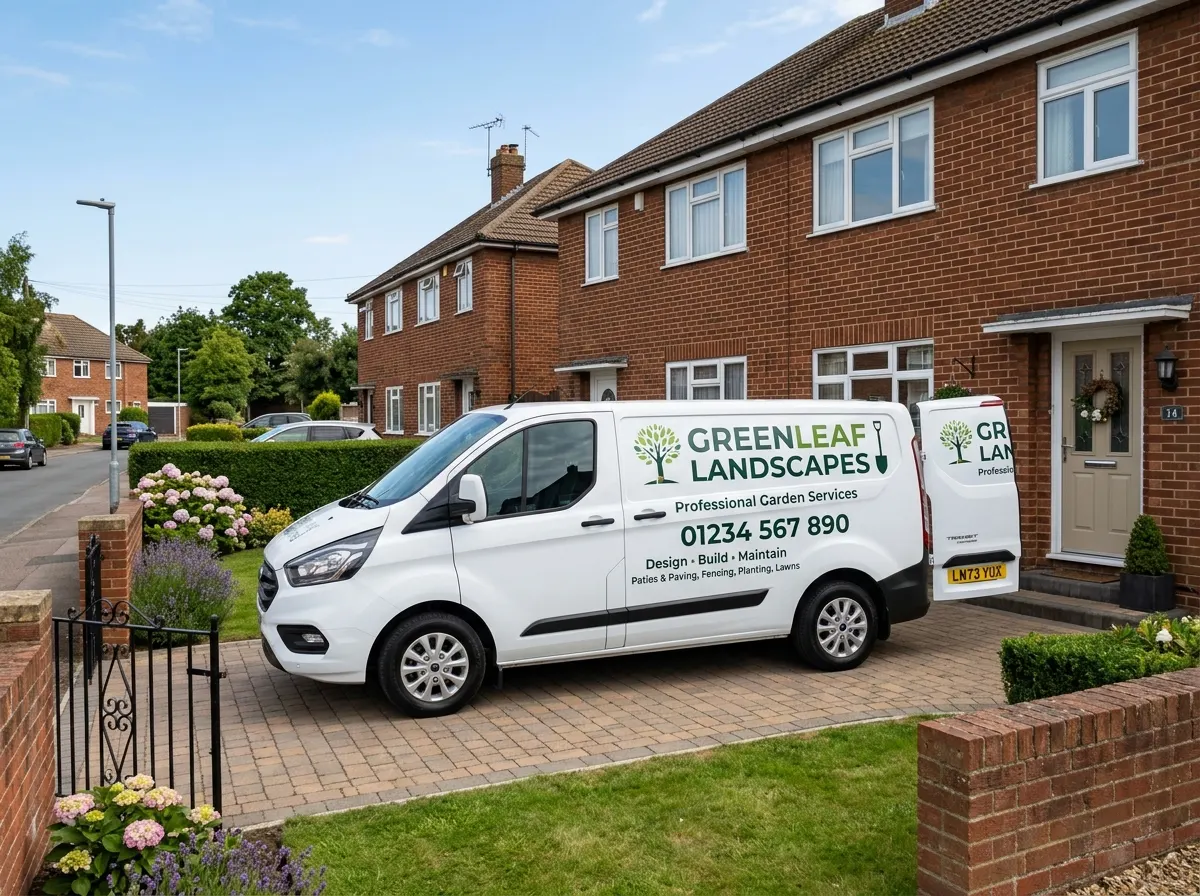
First impressions dictate your pricing power. Look expensive, and clients will expect to pay a premium.
Qualifications & Licences You Must Hold
Landscaping is heavily regulated. Operating without the correct environmental and chemical licences will result in severe fines, and your insurance will be voided instantly.
Upper Tier Waste Carrier Licence
If you take green waste, soil, or rubble away from a customer's property in the back of your van or trailer, you legally must hold an Upper Tier Waste Carrier Licence from the Environment Agency.
The Trap: Construction and demolition waste (like old patios and soil) strictly requires the Upper Tier licence (£191), even if you generated the waste yourself on the job. Without it, you face an immediate £300 spot fine or an unlimited court fine.
Pesticides: PA1 & PA6 Certificates
You cannot legally spray professional herbicides (like commercial Roundup) on a customer's driveway for profit without formal certification.
Every professional operator must pass the PA1 (Safe Use of Pesticides Foundation) and PA6 (Handheld Applicator/Knapsack) exams. You cannot buy professional-grade chemicals from a merchant without showing these City & Guilds / NPTC cards.
Do you need qualifications?
Legally, no. You can start with no formal tickets. However, an NVQ Level 2/3 in Landscaping is required to obtain a CSCS card for commercial site access. Never attempt electrical works (lighting/hot tubs) without a Part P electrician.
Chainsaw Certificates
If you intend to fell trees or perform heavy branch lopping, you must hold the relevant NPTC cross-cutting and felling certificates (e.g., CS30/CS31) and wear the legally mandated ballistic chainsaw trousers.
Underground Utilities
Before excavating a patio or digging footings for a retaining wall, you must legally check for underground services. Use the free LSBUD (LinesearchbeforeUdig) portal to ensure you don't strike a main gas pipe or fibre optic cable.
The Essential Insurances
Landscaping involves heavy machinery, deep excavations, and members of the public walking past your site. Comprehensive insurance is non-negotiable.
-
Public Liability Insurance (PLI)
Covers property damage or injury to a third party (e.g., if a stone flicks off your strimmer and smashes a customer's patio door, or a passer-by trips over your wheelbarrow). Hold a minimum of £1m to £2m for domestic work, and £5m if you want to subcontract for main builders.
-
Employer's Liability (Mandatory)
If you employ any staff, including casual weekend labourers or labour-only subcontractors, you are legally required to hold this. It covers claims if they get injured working for you. The legal minimum is £5m.
-
Hired-In Plant & Tools Cover
If you hire a £20,000 mini-digger and it gets stolen from the site overnight, you are liable to buy the hire shop a new one. Hired-in plant insurance covers this specific risk. Additionally, ensure you have "Tools in Transit" cover to protect your own gear if your van is broken into.
Stop paying for dead leads.
Join the Pricing Penguin network. We provide UK tradespeople with high-intent, pre-qualified customers who already understand the true cost of quality craftsmanship.
Startup Costs & Choosing a Van
Landscaping requires moving heavy aggregates and large machinery. The van you choose is as important as the tools you buy.
How much does it cost to start?
Low-Cost Startup: £2,000 - £5,000
Using a second-hand estate car or small panel van. Buying essential hand tools and a basic laser level. Hiring all heavy machinery (mixers, wacker plates) per job. Relying on organic social media for marketing.
Typical Professional Startup: £15,000 - £25,000
Leasing a 3.5t Tipper van (£3k deposit). Buying core heavy tools: cement mixer, Stihl saw, heavy breakers, rotary laser level (£3k). Professional branding, website, and PLI insurance (£1k). Retaining £5k working capital for initial material deposits.
What van do you need?
A standard transit panel van is quickly outgrown. You cannot easily load 2 tonnes of MOT Type 1 sub-base into the back of a standard van.
-
✓
The 3.5-Tonne Tipper (Highly Recommended) A tipper allows you to get loose aggregates delivered cheaper from the quarry, and push a button to dump soil at the tip, saving hours of manual shovelling. Watch your payloads: a 3.5t tipper usually legally carries around 1,000kg - 1,200kg.
-
✓
Trailers & Towing If you plan to hire or buy your own micro-digger, you need a heavy-duty twin-axle plant trailer. Ensure your driving licence covers towing (B+E category) and your van has a suitable Gross Train Weight (GTW) rating.
Don't buy everything on day one.
Cash flow is king. Do not saddle a new business with massive finance payments for heavy machinery you only use twice a month. Build your arsenal in phases.
Phase 1: Hand Tools & Basics
The essential daily tools required for every job. Invest in high quality forged steel.
- • Forged trenching spades & forks
- • Contractor wheelbarrows (e.g., Haemmerlin)
- • 6ft, 4ft, and torpedo spirit levels
- • Pointing trowels & white rubber mallets
- • String lines & pins
Phase 2: Core Power Tools
When you start winning patios and groundworks, these pay for themselves immediately.
- • Rotary laser level (Crucial for grading)
- • Petrol disc cutter (Stihl saw) & diamond blades
- • Heavy-duty 110V SDS breaker
- • Plate compactor (Wacker plate)
- • Electric cement mixer (Belle)
Phase 3: Heavy Plant (Hire First)
Do not buy these until you have back-to-back projects that require them daily. Always hire them initially.
- • 1.5-tonne mini digger
- • Tracked powered barrow (Muck truck)
- • Heavy duty rotavator
- • Stump grinder & Turf cutters
- • PPE: Safety boots, ear defenders, FFP3 masks
How to Price a Landscaping Job
The most common mistake new landscapers make is underpricing. Do not guess. You must build your quotes systematically.
How much should a landscaper charge?
Day Rates vs Fixed Price: A skilled independent landscape builder should aim for £200 to £350 per day in labour, plus £100-£150 for a labourer. However, you should rarely quote customers a day rate. Present a fixed price to protect your speed and efficiency.
Pricing per m²: Hard landscapers often use per square metre pricing as a baseline. For example, £150 - £250 per m² for a porcelain patio. This single figure MUST cover the excavation, MOT Type 1 sub-base, mortar bed, slabs, slurry primer, grout, and labour.
Your quote must cover van insurance, tool wear and tear, fuel, waste disposal, and the unpaid hours you spent visiting the client to write the quote. Add a clear profit margin (15-20%) on top of your day wages.
The Quoting Framework
Provide a written, itemised quote. Never quote verbally on the driveway.
- Measure: Calculate exact m² and linear metres.
- Access: Can a digger fit through the gate, or is it all wheelbarrowed by hand through the house? (Add days of labour).
- Ground Prep: How deep must you dig? (Usually 150mm for patios).
- Waste: How many 8-yard skips or grab lorries are needed for the spoil? (£250-£350 each).
- Materials: Sub-base, cement, paving, timber. Add 10% for cuts/waste.
- Machinery: Digger and dumper hire costs.
- Labour: Days required x Daily Rate.
- Contingency: Add a 10-15% buffer for hidden pipes or bad weather.
Stop paying for dead leads.
Join the Pricing Penguin network. We provide UK tradespeople with high-intent, pre-qualified customers who already understand the true cost of quality craftsmanship.
Winning the Work & Building Trust
You don't need a massive marketing budget to start; you need hyper-local visibility, undeniable proof of quality, and a strategy to avoid common pitfalls.
Initial Lead Generation
-
1.
Google Business Profile (Free) This is your absolute priority. Register your business address so you appear on Google Maps when locals search "Landscapers near me." Get your first 5 customers to leave 5-star reviews with photos of the finished garden.
-
2.
Other Trades & Estate Agents Builders build extensions but hate laying patios. Give your card to local builders. Also contact estate agents and property managers who need reliable grounds maintenance for block properties.
-
3.
Lead-Generation Services & Socials Use sites like Pricing Penguin initially to build a portfolio, but aim to transition to organic Instagram/Facebook leads. Post highly satisfying "Before and After" videos. Once on site, tie a professional "Work in Progress" board to the Heras fencing.
Targeting Accreditations
Once established, joining recognised trade associations allows you to charge premium rates, as it proves your work is vetted to a high standard.
-
✓
BALI & APL The British Association of Landscape Industries (BALI) and the Association of Professional Landscapers (APL) are the gold standards. Being a member instantly elevates you above "cowboy" operators.
-
✓
Manufacturer Schemes Become a "Marshalls Registered Installer" or "Bradstone Assured." The manufacturers will actually send high-quality leads directly to you.
How to grow a landscaping business
Growth requires moving away from the physical digging. Increase your prices by 10% every time your diary gets booked up 3 months in advance. Start taking on larger projects (£30k+), employ staff or reliable subcontractors to do the heavy lifting, and buy your own machinery to reduce hire costs. Eventually, you move off the tools entirely to manage the business, perform site visits, and design.
Frequently Asked Questions
How much does it cost to start a landscaping business?
A low-cost startup using a used van, basic hand tools, and hiring heavy machinery per job can cost between £2,000 and £5,000. A typical professional startup with a leased 3.5t tipper van, branding, PLI insurance, and core power tools (mixers, breakers, lasers) requires £15,000 - £25,000.
Do you need qualifications to be a landscaper?
No formal qualifications are legally required to start. However, you must hold specific licences for hazardous tasks (Waste Carrier Licence, PA1/PA6 for pesticides). If you want to work on commercial construction sites, you must obtain a CSCS card, which requires an NVQ in Landscaping/Horticulture.
How much do landscapers charge?
A skilled landscape builder generally targets £200 to £350 per day for their own labour, plus £100-£150 for a labourer. For hard landscaping, jobs are often priced per square metre (e.g., £150-£250 per m² for paving), which includes materials, waste disposal, and labour combined into a fixed quote.
Is landscaping profitable?
Yes, highly profitable. Hard landscaping projects (patios, driveways) command budgets of £5,000 to £50,000+. By accurately pricing materials, waste, and managing subcontractors, a well-run landscaping firm can generate substantial gross profit margins, often scaling much faster than maintenance gardening.
Can you start a landscaping business with no experience?
It is highly risky. Landscaping involves heavy structural work (footings, retaining walls, drainage). If a poorly built retaining wall collapses, or a patio sinks due to inadequate sub-base prep, you are legally and financially liable. Gain experience working for an established firm or complete an NVQ first.
What tools do I need to start landscaping?
Essential starting tools include forged spades, shovels, wheelbarrows, string lines, a rotary laser level, a petrol disc cutter (Stihl saw), an SDS breaker, and a cement mixer. Heavy plant like mini-diggers and tracked dumpers should be hired locally until consistent work justifies buying them.
How do I get landscaping customers?
Your primary focus should be a fully optimised Google Business Profile with 5-star reviews to capture local searches. Supplement this by placing site boards outside your current jobs, posting before-and-after portfolios on Instagram/Facebook, and building referral networks with local builders and estate agents.
Do landscapers need insurance?
Absolutely. You must hold Public Liability Insurance (minimum £1m-£2m) to cover property damage or injury to the public. If you employ anyone, even a casual weekend labourer, you are legally required to hold Employers' Liability Insurance (£5m). You should also consider Tools in Transit cover.
Do landscapers need a waste carrier licence?
Yes. If you transport soil, rubble, green waste, or old fencing away from a customer's property in your vehicle, you legally must hold an Upper Tier Waste Carrier Licence from the Environment Agency. Failure to produce one can result in heavy fines and your vehicle being seized.
How much can a self-employed landscaper earn?
A sole trader working alone or with one labourer can typically draw a personal income of £40,000 to £60,000+ per year once established. Business owners who step off the tools to manage multiple teams running simultaneous £20k+ projects can push business turnover well past £250,000, drawing significant dividends.
Ready to fill your diary with quality jobs?
Connect with serious homeowners who value reliability over the absolute cheapest quote. Join our network of accredited UK tradespeople today and let our AI estimators filter out the time-wasters for you.
Related Guides

Employing Staff
Everything involved with employing staff for your trade business.
Social Media Marketing
Ways of marketing your trade business on social media.

Insurance
All about the insurance for your business.
Pricing for Landscaping
Pricing for different landscaping jobs and what to be careful of.
Did you find this guide helpful?
Let us know if these business tips will help your trade business.