How much do new gutters and fascias cost in the UK?
 By Tom Ellis
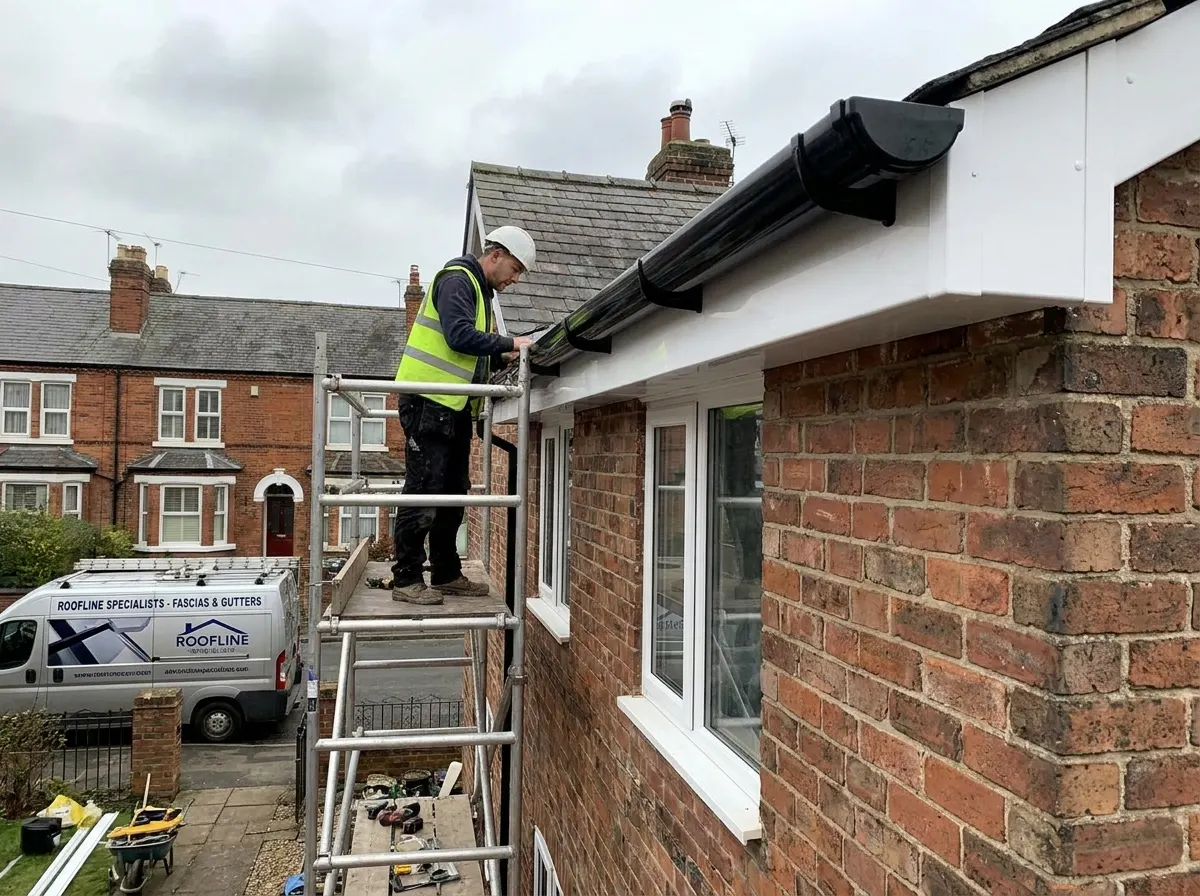
Your "roofline" (the fascias, soffits, and gutters) is your home's primary defence against the UK's relentless rain. When old timber fascias rot and gutters begin to leak, water cascades down your brickwork, causing severe penetrating damp and ruining interior plaster.
In 2026, replacing a complete roofline system in the UK typically costs between £500 and £3,500. Quotes are calculated by the linear metre, meaning the perimeter size of your home dictates the baseline price. A standard 3-bedroom semi-detached property usually lands between £1,500 and £3,500 for a full uPVC replacement. However, the crucial difference in quotes often hinges on whether the contractor is quoting for a full "rip-out and replace," or simply "over-capping" your rotting timber with cheap plastic.
~£500 - £850
Basic specification. Front and rear elevations only on a mid-terraced property (approx 12-15 metres). Standard uPVC half-round gutters and fascia capping.
~£1,500 - £3,500
Mid-range finish. A typical 3-sided semi-detached perimeter (18-22m). Full removal of rotten timber. Installing solid 18mm uPVC replacement fascias, vented soffits, and high-capacity deep-flow gutters.
£3,500 - £7,500+
High-end specification. Large 4-bed detached house (35m+ perimeter) requiring full wrap-around scaffolding. Using premium aluminium or cast-iron effect guttering and solid timber fascias.
Get an instant estimate for your roofline
What actually is the roofline?
Contractors throw these terms around constantly. Knowing the difference stops you from paying for things you don't need.
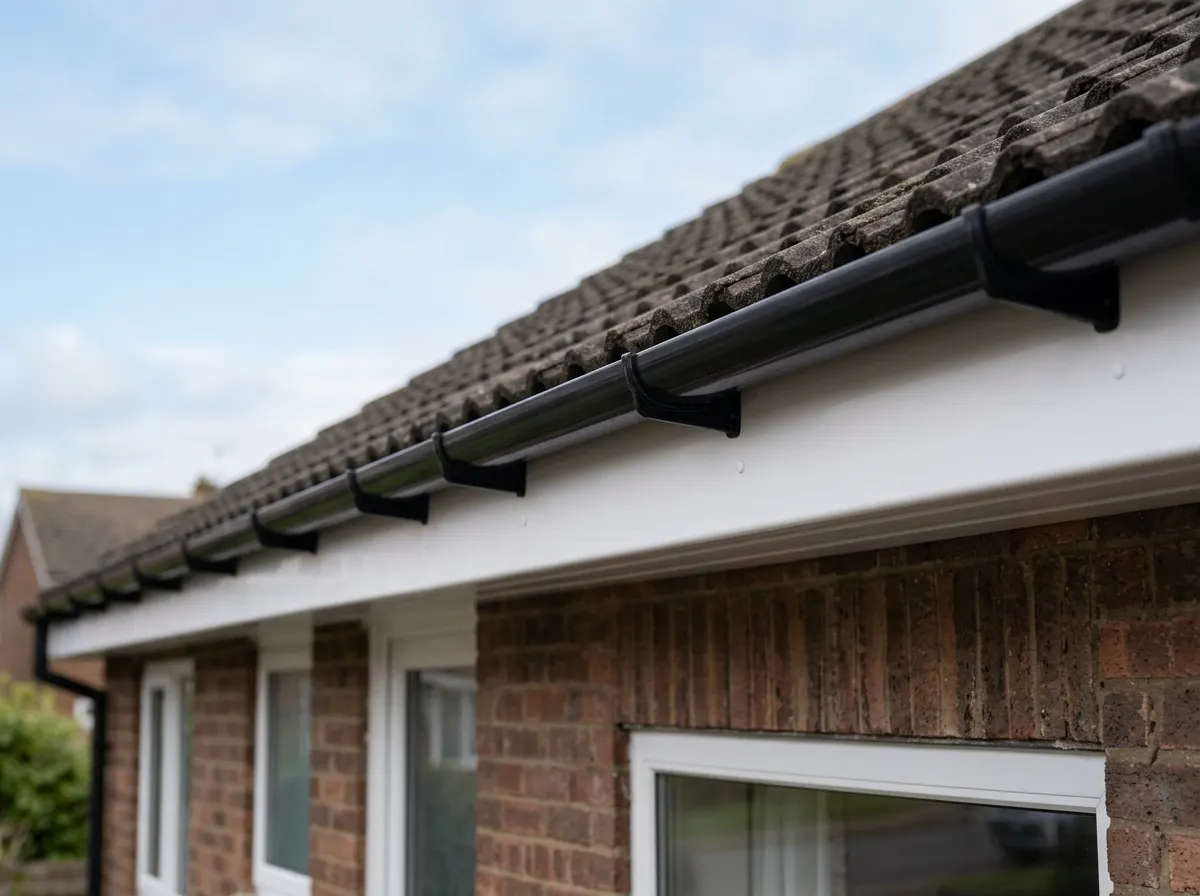
The Fascia Board
The long, straight board that runs along the lower edge of the roof. It is fixed directly to the lower ends of the roof trusses. It supports the bottom row of roof tiles and provides the solid fixing point for the guttering brackets.
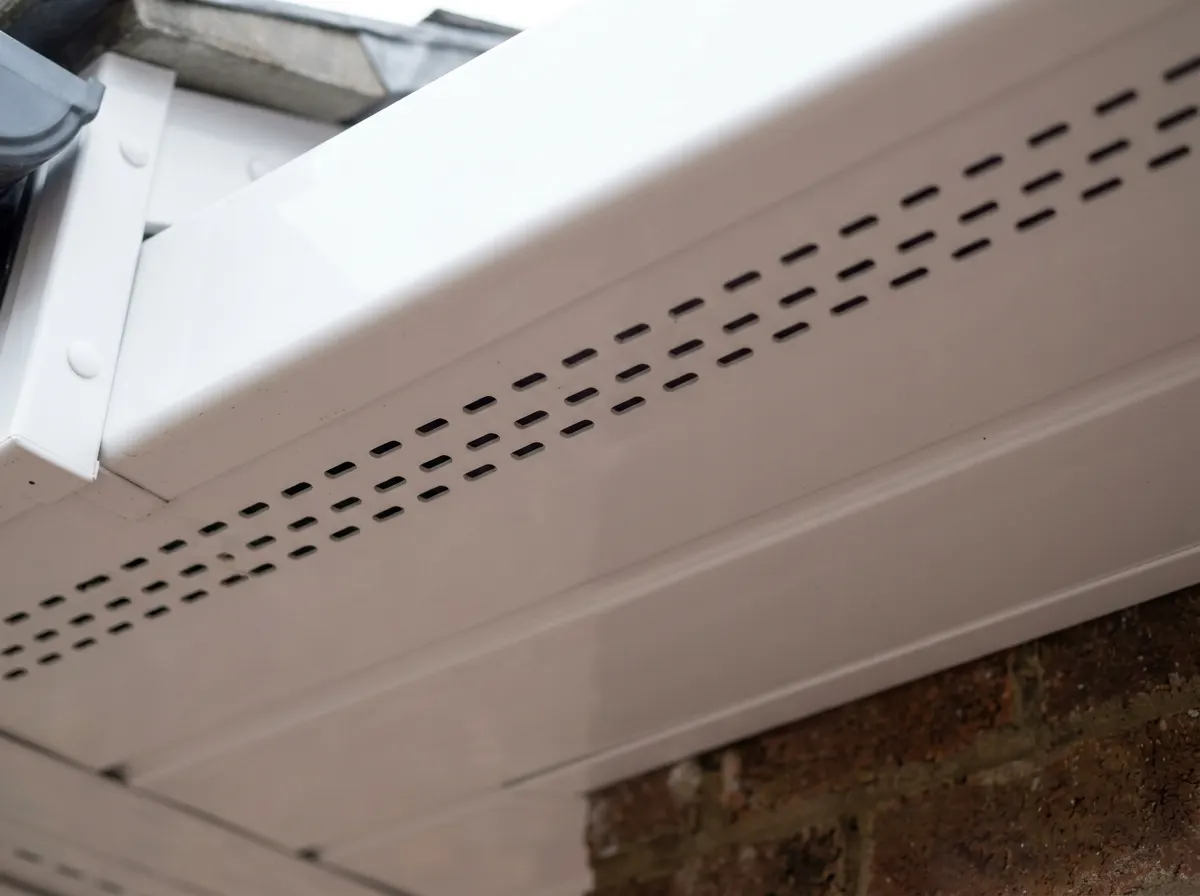
The Soffit Board
The board tucked away underneath the fascia board. It is the part you see when you look straight up from street level. It bridges the gap between the fascia and the house wall, preventing birds and pests from nesting in your loft. Soffits are often vented to allow airflow into the roof space.
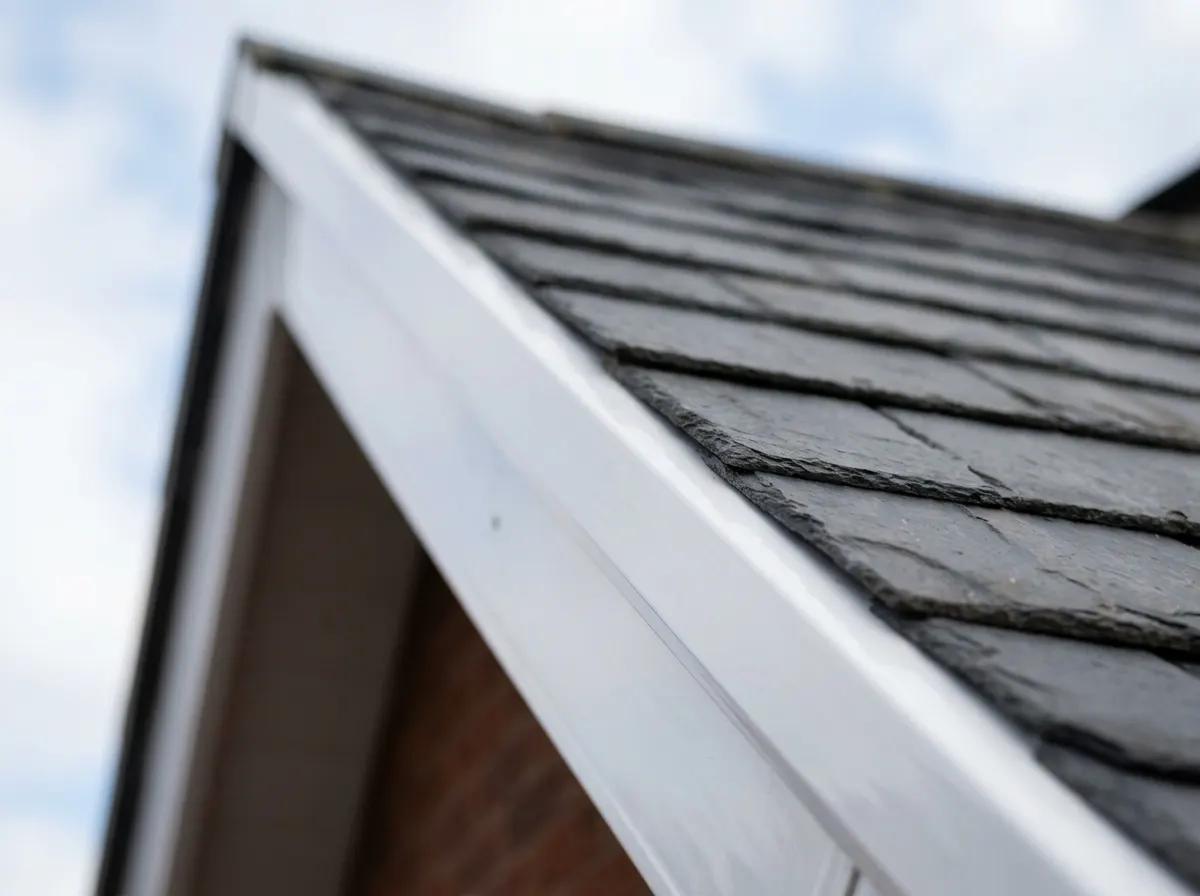
The Bargeboard
This is effectively the fascia board, but located on the sloping gable end of a house (the "A" shaped peak). Because there are no gutters attached to bargeboards, they are often decorative or carved on period properties.
Full Replacement vs Over-Capping
If you receive a quote that seems thousands of pounds cheaper than the others, the contractor is almost certainly planning to "over-cap" rather than "replace."
Over-Capping (Cladding)
High RiskInstead of removing your old timber fascias, the contractor simply nails thin (9mm) uPVC capping boards directly over the top of the old wood.
- ✕ Traps Rot: If the underlying timber is damp or rotten, covering it in airtight plastic accelerates the rot, which eventually spreads into the structural roof rafters.
- ✕ Weak Fixings: The heavy gutters must be screwed through the thin plastic into the old rotten wood, meaning they will eventually sag or tear off under the weight of snow or heavy rain.
Full Replacement (Rip-Out)
RecommendedThe contractor completely removes the gutters, strips away all the old timber fascias and soffits, inspects the rafter ends for rot, and nails solid, thick (18mm) uPVC replacement boards directly into the rafter feet.
- ✓ Permanent Fix: Instantly stops rot and guarantees a 20+ year lifespan.
- ✓ Strong Anchor: Solid 18mm boards can easily support the immense weight of snow-filled gutters without sagging.
- ✓ Allows Inspection: Gives the roofer a chance to replace rotting felt at the eaves level.
Choosing Your Rainwater System
The gutters themselves are relatively cheap compared to the labour. Upgrading from standard plastic to high-capacity or metal gutters is often a smart long-term investment.
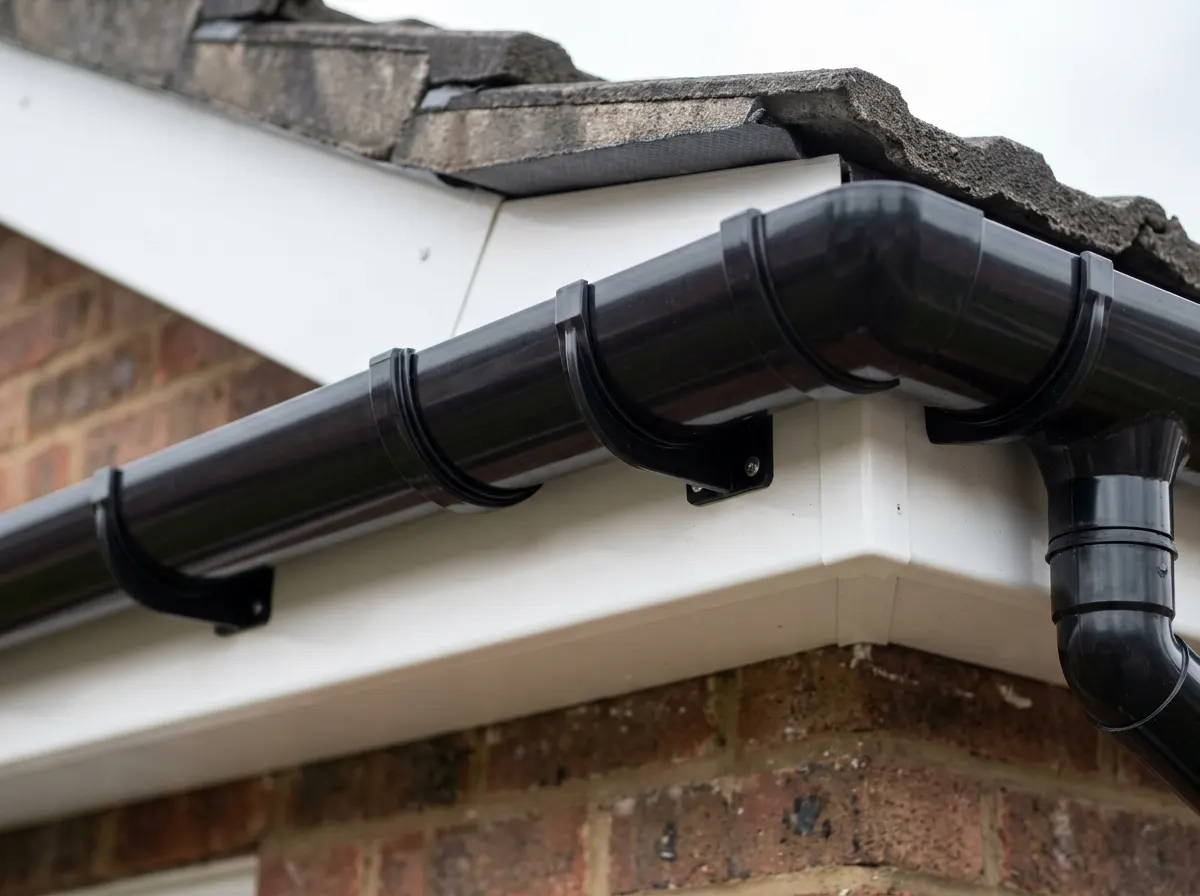
uPVC (Half-Round / Square)
The absolute standard for 90% of UK homes. It is cheap, lightweight, never rusts, and clips together easily. The only downside is that cheap plastic can become brittle and snap under heavy UV exposure, and the rubber seals in the joints naturally degrade and leak after 15-20 years.
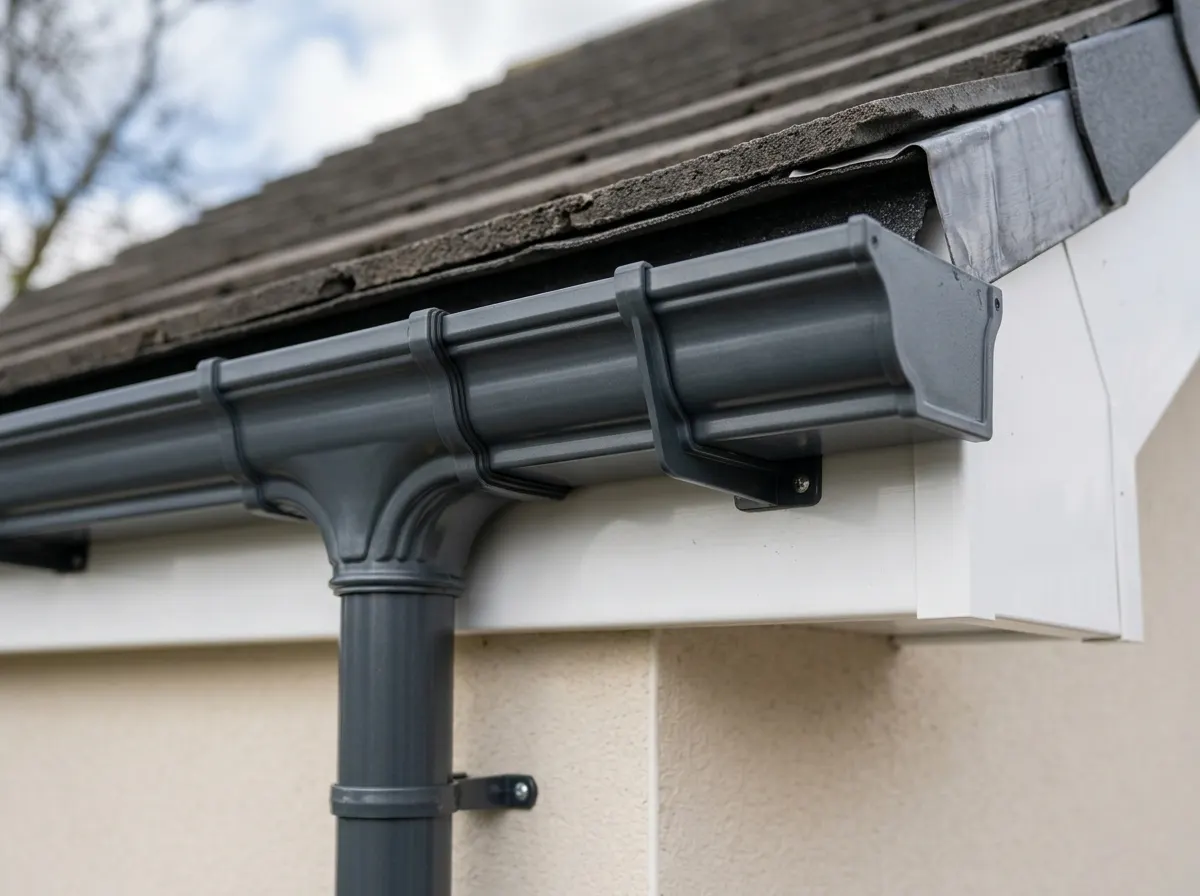
Deep-Flow & Ogee uPVC
Deep-flow gutters look similar to standard half-round gutters but are significantly deeper, designed to handle the increasingly heavy torrential downpours typical of modern UK winters. "Ogee" gutters feature a decorative, sculpted profile popular on period-style homes.
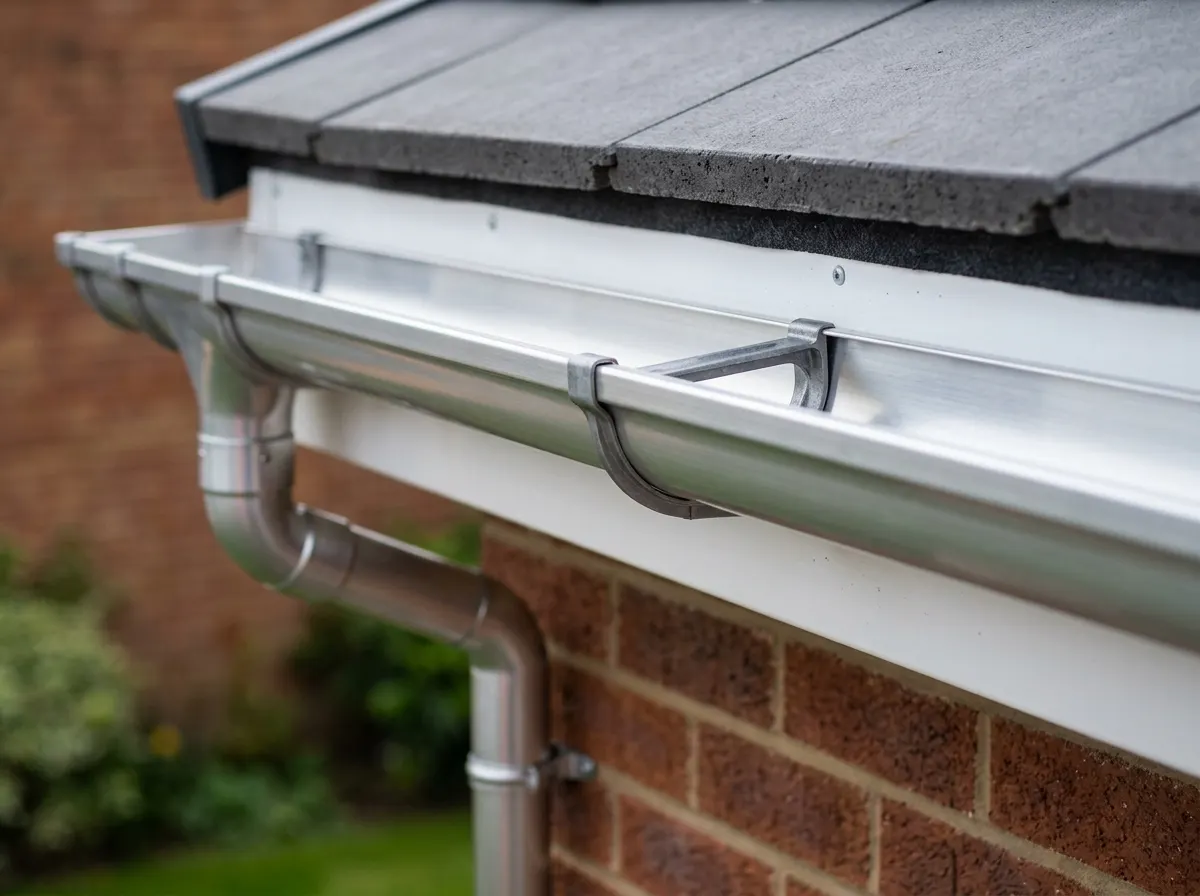
Aluminium (Seamless / Extruded)
A massive step up in durability. Aluminium is incredibly strong, meaning it won't warp or sag under heavy snow. "Seamless" aluminium is rolled out on-site to the exact length of your house, meaning there are absolutely zero joints to leak. Boasts a lifespan of 25-40 years.
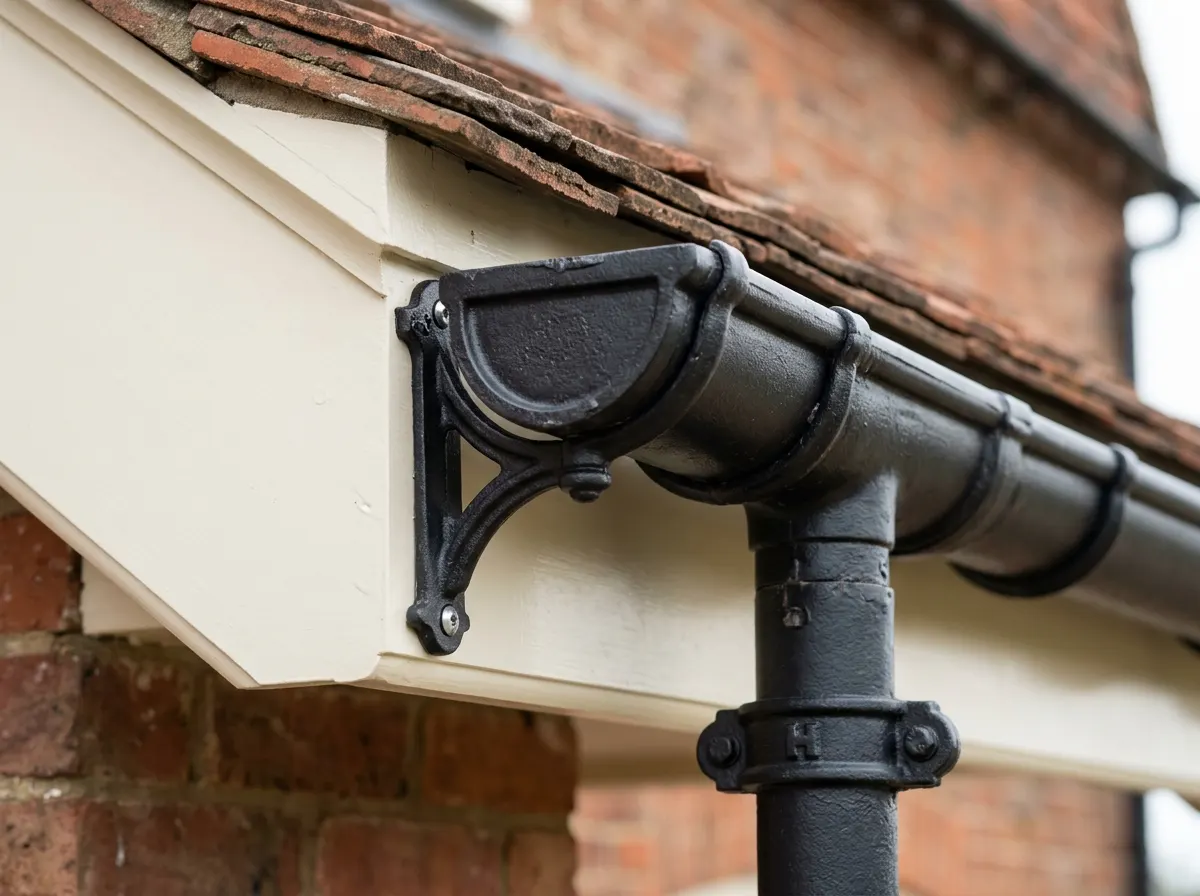
Cast Iron
The ultimate heritage material. Often legally mandated for Grade-listed buildings and properties in Conservation Areas. Cast iron is obscenely heavy, requires specialist fitting skills, and must be painted periodically, but it can easily last 100+ years. (Note: cheaper "cast-iron effect" uPVC is available for £100-£200/m).
Full Replacement Costs by Property Size
The table below outlines total estimated costs for a complete rip-out and replacement of fascias, soffits, and uPVC gutters in 2026. These figures include materials, labour, and waste removal, but exclude complex scaffolding.
| Property Type | Typical Length | uPVC (Standard) | Timber (Heritage) |
|---|---|---|---|
| Mid-Terrace (Front & Rear Only) | 12 - 15m | £1,200 – £2,000 | £2,000 – £3,500 |
| End-Terrace (3 Sides) | 16 - 20m | £1,400 – £2,500 | £2,500 – £4,000 |
| Semi-Detached (3 Sides) | 18 - 22m | £1,500 – £3,500 | £3,000 – £5,000 |
| Bungalow (Wrap Around) | 20 - 30m | £1,800 – £4,000 | £3,500 – £5,500 |
| Detached (Wrap Around) | 35 - 50m | £2,500 – £5,000 | £4,500 – £7,500+ |
Access & Hidden Costs
Replacing roofline materials is relatively fast; getting safe access to the roof is often the most expensive hurdle.
Scaffolding Requirements
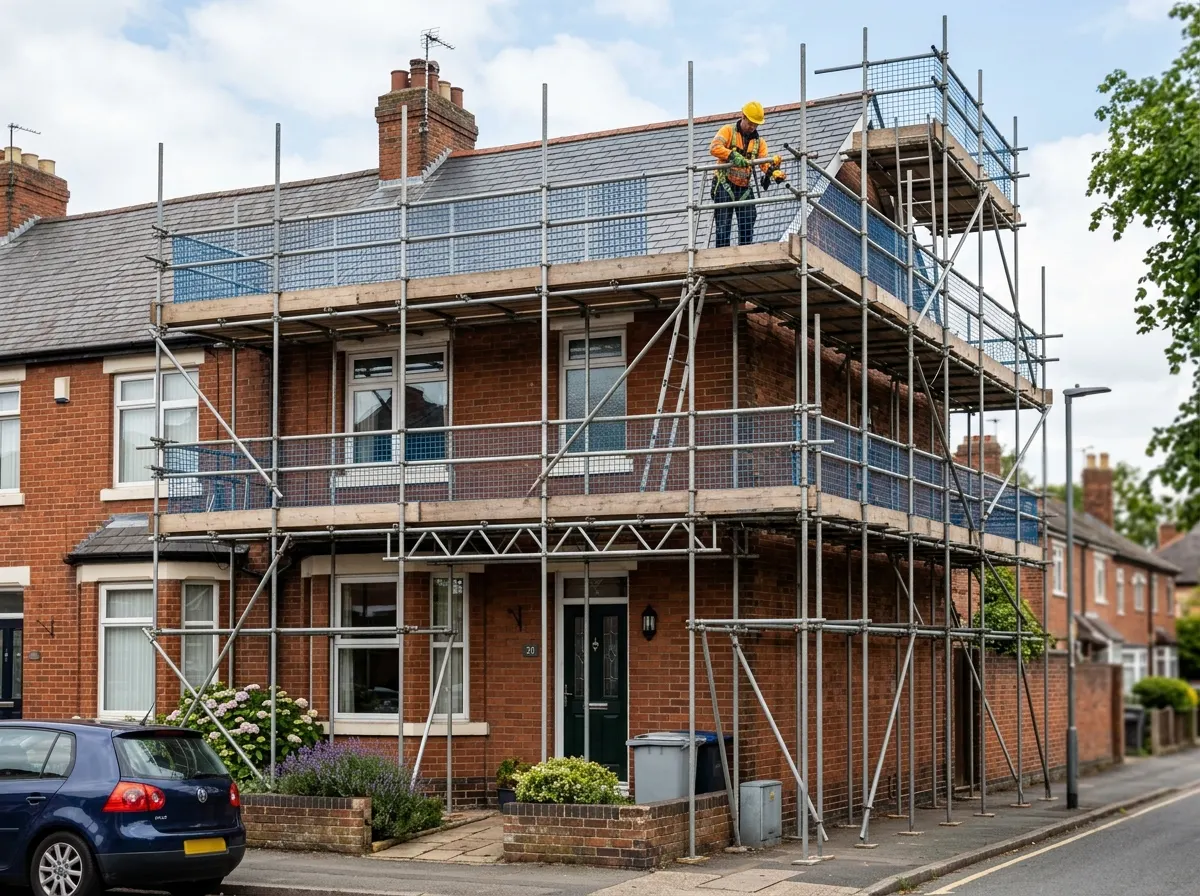
Contractors cannot safely rip off fascias from a ladder. While mobile access towers work for basic front elevations, a full semi-detached replacement usually requires wrap-around scaffolding. This adds £600 to £1,500+ to the bill. (Bungalows are significantly cheaper as they rarely require scaffolding).
Eaves Felt Trays (Eaves Protectors)
The roofing felt that hangs down into your gutters degrades from UV exposure over the decades, causing water to pool behind the fascia. A quality contractor will install rigid plastic "eaves support trays" under the bottom row of roof tiles to guide water safely into the new gutters, adding time and minor material costs.
Conservatories & Extensions
If you have a glass conservatory built directly beneath the main roofline, contractors cannot safely erect standard scaffolding. They must build complex bridging structures over the fragile glass, which drastically inflates the access costs.
Asbestos Soffits
Many houses built before 1999 used Asbestos Insulating Board (AIB) for soffits. If asbestos is detected, it must be removed by specialised, licensed contractors wearing PPE, not a standard roofer. This will incur significant testing, removal, and hazardous waste disposal fees.
How long does a roofline replacement take?
A full fascia, soffit, and guttering replacement on a typical semi-detached home takes a two-person team 2 to 3 days.
Strip Out & Inspection
The bottom rows of roof tiles are pushed back. Old gutters are unclipped, downpipes removed, and rotten timber fascias/soffits are aggressively crow-barred off the rafter feet. Exposed structural timbers are inspected for dry rot.
Fixing Fascias & Soffits
New vented uPVC soffit boards are slid into position against the brickwork. Thick 18mm solid uPVC fascia boards are nailed perfectly level onto the rafter ends using stainless steel (rust-proof) poly-top pins.
Gutters & Sealing
Eaves protectors are slipped under the roof felt. Gutter brackets are screwed to the new fascias ensuring a slight fall (gradient) towards the downpipes. Gutters are clipped in, and all joints are water-tested. Old waste is removed via skip.
Labour Rates
Roofline replacement is almost exclusively carried out by two-person teams for safety while working at height with long, awkward plastic profiles.
Regional Pricing Variations
London and the South East regularly see daily labour rates hit £250 to £350 per roofer, pushing overall project costs 15-25% above the national average.
Can you DIY fascias & gutters?
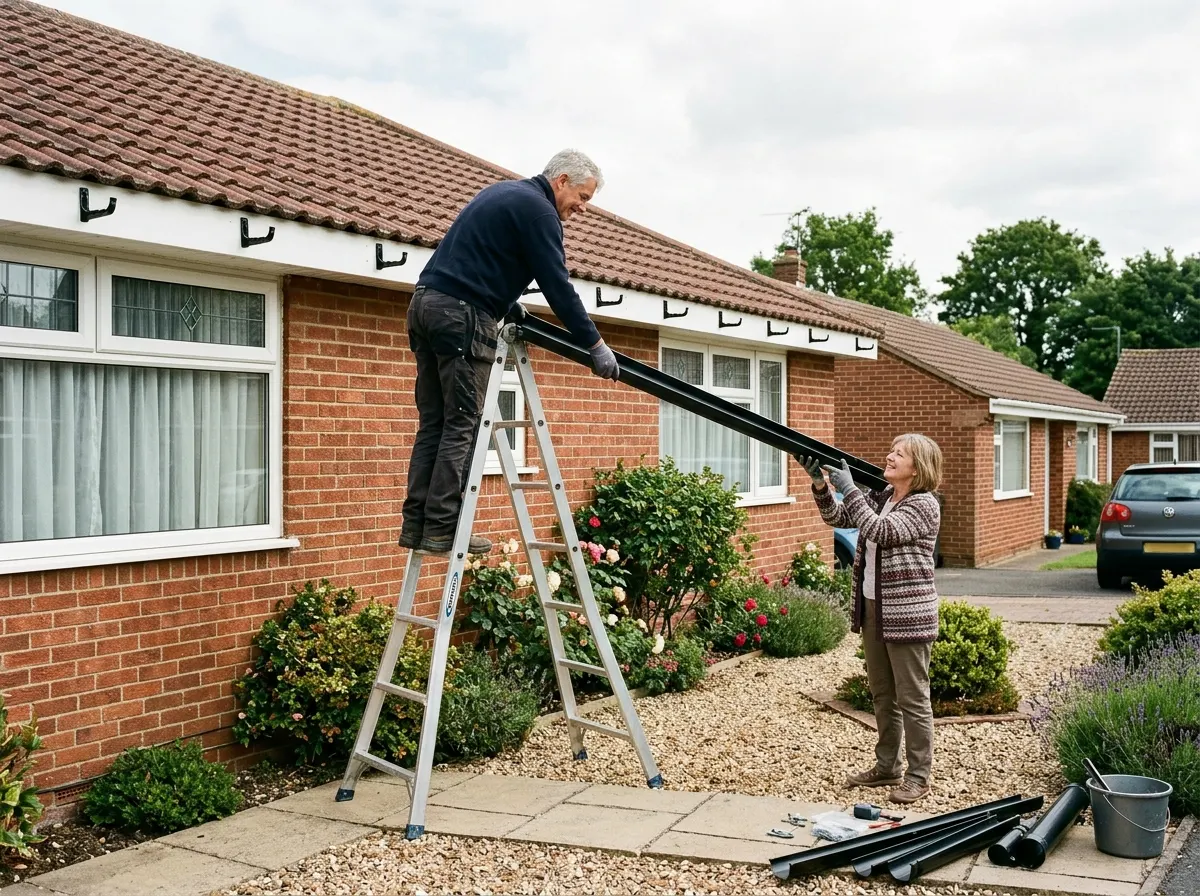
Replacing guttering is a highly satisfying and accessible DIY project for a competent homeowner. However, tackling full fascia board replacement introduces significant height safety risks.
What you CAN DIY:
- ✓ Replacing Guttering Only: Assuming safe access (e.g. over a single-storey bungalow or garage), unclipping old gutters and screwing in new uPVC brackets with the correct drainage fall is highly achievable. Materials cost roughly £20/m, saving huge labour fees.
- ✓ Clearing Leaks & Blockages: The most common cause of leaking gutters is simply a build-up of wet autumn leaves blocking the downpipe outlet, which can be cleared by hand in minutes.
Strictly Pro Only
Full Fascia Rip-Outs: Stripping fascias requires exposing the roof tiles. You must lever out stubborn rusted nails while balancing heavy 5-metre lengths of plastic on a scaffold platform. A slip can result in severe falls or dropping debris through a conservatory roof.
Frequently Asked Questions
How much does gutter replacement and fascia installation cost in 2026?
If timber fascias are completely sound, replacing just the gutters costs £30–£50 per linear metre installed (£600–£1,000 total for a typical semi-detached home). However, a full replacement of fascias, soffits, and gutters together typically ranges from £2,000 to £3,500 fully fitted, depending on scaffolding requirements and house size.
How much does it cost to replace guttering alone on a semi-detached house?
For a standard UK 3-bedroom semi-detached house, replacing just the horizontal gutter runs and downpipes costs roughly £600 to £1,000 in supply and labour. This assumes the existing plastic brackets and timber backing boards are securely fixed and free from rot.
How often should uPVC guttering and fascias be replaced?
Quality uPVC guttering lasts 15 to 25 years before constant UV exposure makes the plastic brittle. However, the rubber union seals connecting the joints often perish after 10 to 15 years, leading to leaks. Premium aluminium guttering lasts 25–40 years, and traditional cast iron can endure 50–100+ years if periodically repainted.
Should I choose over-capping or full replacement for old fascias?
Over-capping involves nailing thin plastic boards directly over existing timber fascias. While cheaper (£50–£85/m), it is highly risky. If the underlying timber is damp or rotting, trapping it behind airtight plastic accelerates decay into your roof rafters. Always opt for a full strip-out and replacement if budget allows.
What are eaves protectors and why are they critical?
Eaves protectors (also known as felt support trays) are rigid plastic trays installed underneath the bottom row of roof tiles. They prevent old, degrading roofing felt from sagging into the gutter, ensuring that rainwater runs cleanly into the gutter rather than pooling behind the fascia board and causing rot.
Do I legally need scaffolding to replace guttering and fascias?
While quick spot repairs on low two-storey houses can sometimes be done via ladders or mobile towers, a full fascia and gutter replacement requires the safety, stability, and working platform of independent scaffolding. This typically adds £600 to £1,500 to the total quote, though single-storey bungalows are usually exempt.
How long does a complete fascia, soffit, and gutter replacement take?
For a standard 3-bedroom semi-detached property, an experienced two-person installation team will typically complete a full strip-out, rafter inspection, and replacement of all fascias, soffits, and gutters within 2 to 3 days, weather permitting.
Can blocked or leaking gutters cause damp problems inside my house?
Yes. Overflowing or cracked gutters continuously saturate the external brickwork directly beneath the roofline. Over time, this moisture penetrates the cavity wall, causing damp patches, peeling wallpaper, and black mould growth on internal first-floor walls—often mistaken for rising damp.
Stop leaks before they start.
Use our AI to get a precise estimate based on your property size and material choice, then connect with Pricing Penguin Accredited roofline specialists near you.
Did you find this page helpful?
Let us know if this guide helped you plan your project.