How much does scaffolding hire cost in the UK?
 By Tom Ellis
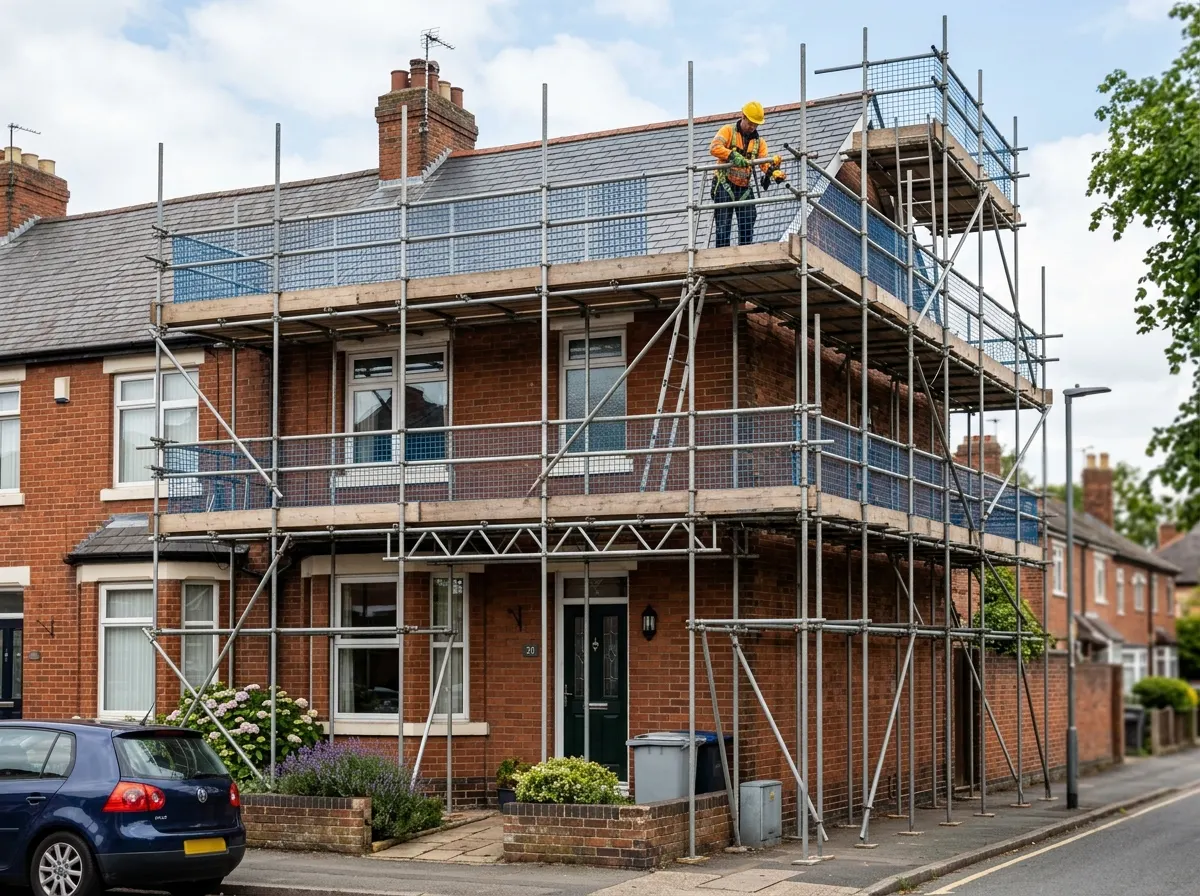
Scaffolding is often the most frustrating part of a renovation budget because it is a "sunk cost"—it enables the work to happen, but leaves nothing tangible behind once it is taken down. However, for any major external work at height (roofing, rendering, painting, or solar panels), it is a strict legal requirement under UK Health and Safety laws.
In 2026, scaffolding hire in the UK typically costs between £400 and £2,500. Unlike other trades, you are paying for the erection, the dismantling, and a set "hire period" (usually 6 to 8 weeks). The final quote is heavily influenced by how many "lifts" (levels) you need, how many sides of the house require access, and whether the scaffolding footprint encroaches onto a public pavement.
~£400
Basic specification. Scaffolding erected on just one side of a property (e.g. for guttering or window replacement) up to the eaves, or a small "saddle" scaffold for chimney repointing.
~£1,000
Mid-range finish. Wrapping scaffolding around the front, side, and rear of a standard 2-storey semi-detached property. Essential for full roof replacements or house rendering.
£2,500+
High-end specification. Full 4-sided wrap around a large detached home, complex bridging over fragile glass conservatories, or installing a temporary weatherproof "Tin Hat" roof.
Get an instant estimate for your scaffolding
Types of Scaffolding
Depending on the trade and the access required, the scaffolders will construct a specific type of rig. Here are the most common setups.
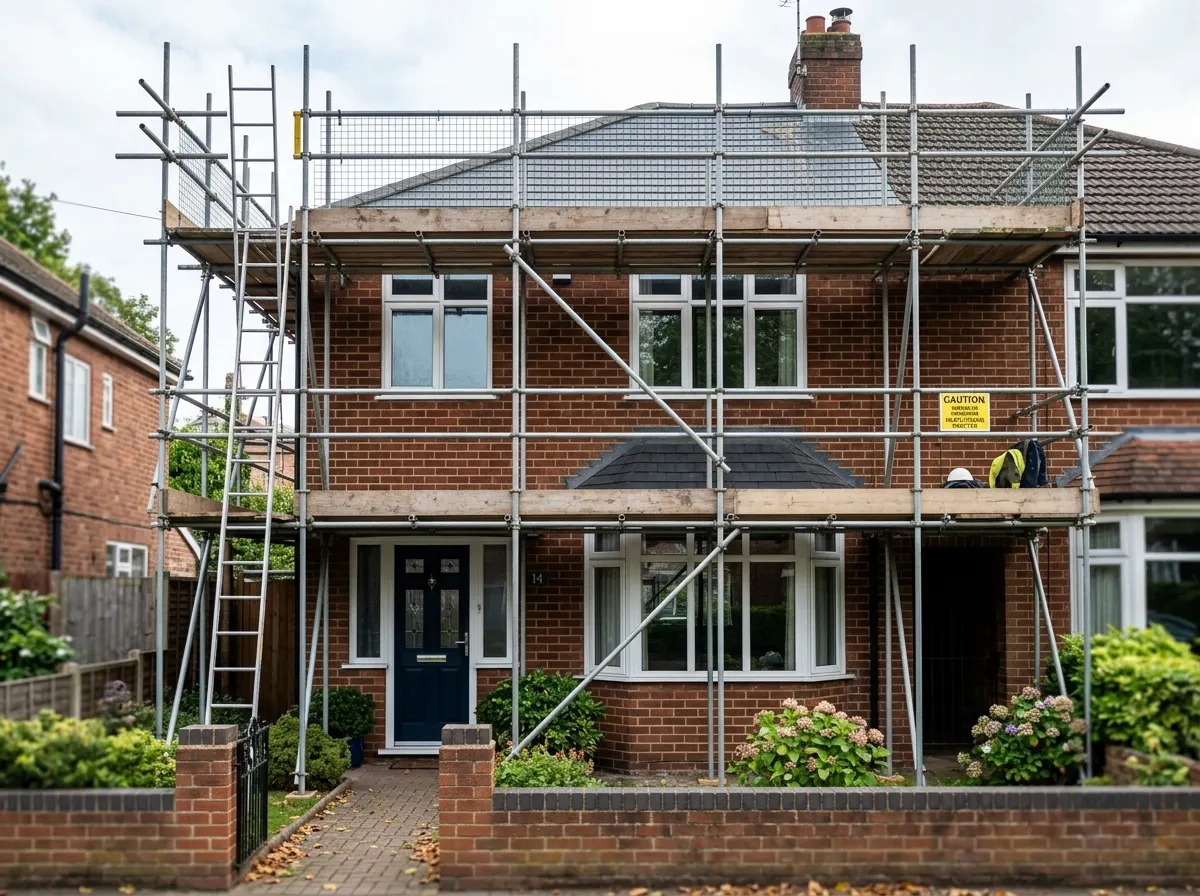
Independent Scaffolding
StandardThe modern industry standard for housing. It is a double-row structure of vertical tubes standing entirely on its own feet. While it may be "tied" into the building window reveals for stability, it doesn't rely on the building for its structural integrity. It is heavily braced and provides wide, safe platforms for roofers and bricklayers.
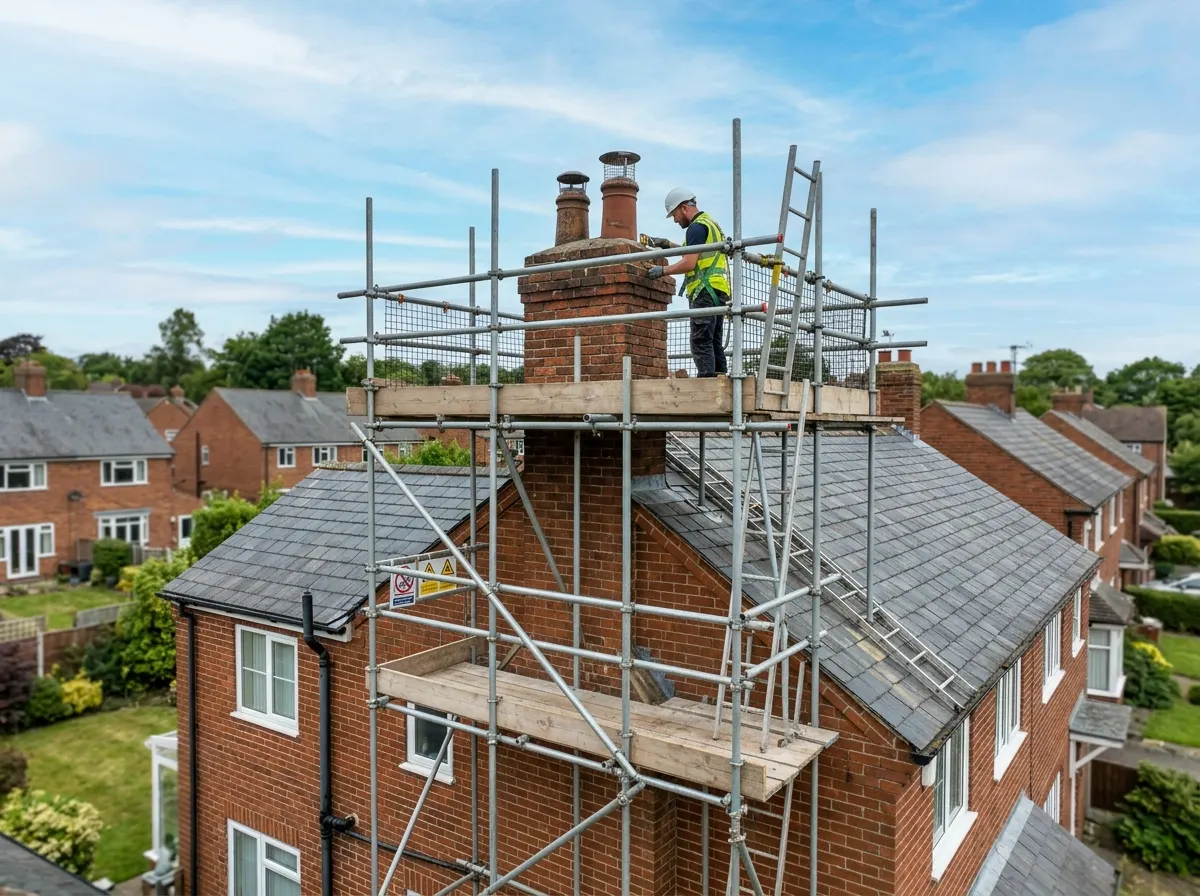
Chimney Saddle Scaffold
Targeted AccessA highly specific rig used solely for chimney repointing, capping, or removal. It is built from the ground up (or built off an existing roof scaffold) and effectively "straddles" the ridge of the roof, providing a safe flat platform on all four sides of the chimney stack without damaging the roof tiles.
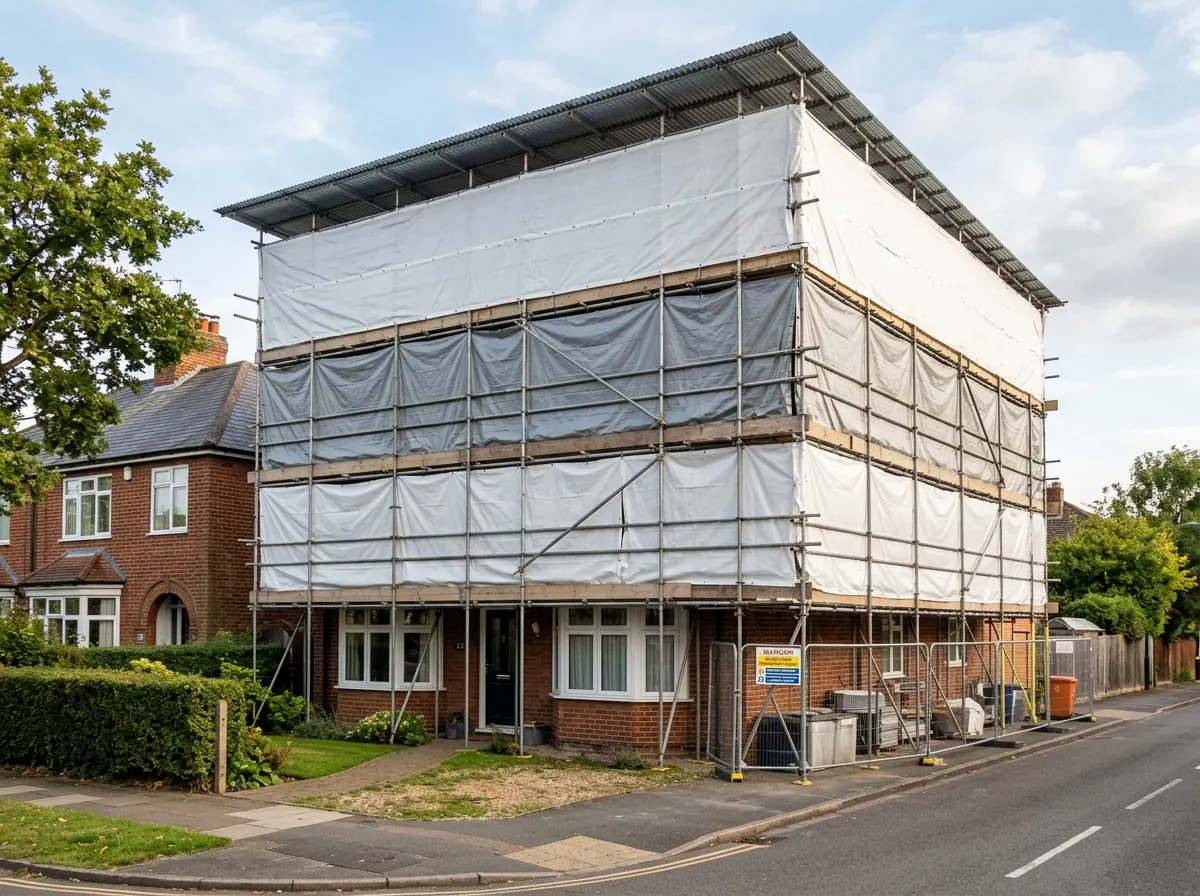
Temporary Roof (Tin Hat)
WeatherproofingA massive structural undertaking. This involves building a standard scaffold up the walls, and then building a giant corrugated iron or heavy-duty shrink-wrap roof over the entire house. Used during loft conversions or major roof-off renovations to ensure the interior is 100% protected from rain for months at a time.
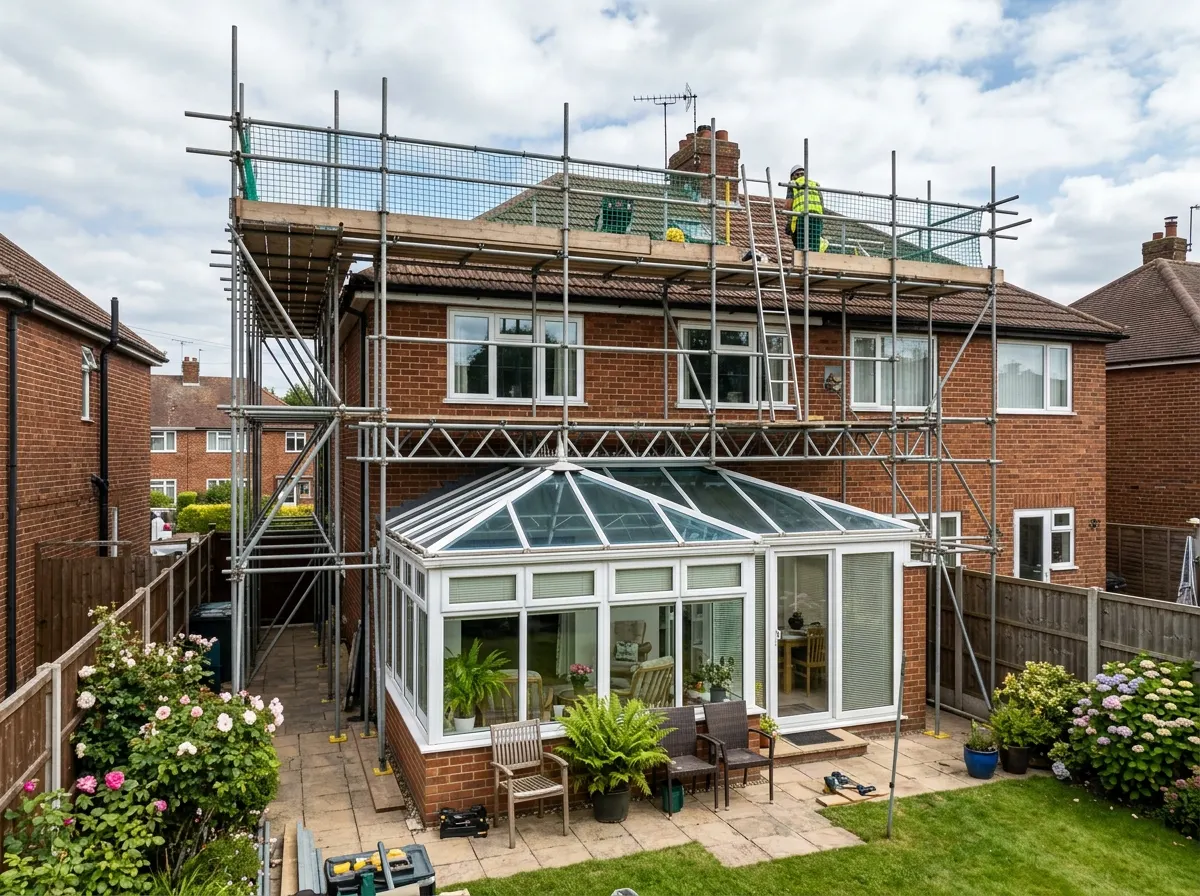
Conservatory Bridging
Complex EngineeringIf you need access to the first-floor windows or roof above a fragile glass conservatory, scaffolders cannot put weight on the glass. They must erect towers on either side of the conservatory and use heavy-duty Apollo alloy beams to "bridge" completely over the gap. This adds significant time and material costs.
Average Scaffolding Costs (2026)
The table below outlines typical UK costs based on the size of the project. These prices generally include the erection, the dismantle, and a standard 6 to 8-week hire period.
| Project Type | Typical Scope | Estimated Cost (Up to 8 Weeks) |
|---|---|---|
| Single Tower (Edge Access) | Access for fixing a gutter downpipe or rendering a small patch. | £250 – £400 |
| Chimney Access (Saddle) | Built over the ridge to access the stack for repointing/removal. | £400 – £650 |
| 1 Side (Terrace / Front only) | Full width up to the eaves (typically 2 lifts). E.g., for fascia replacement. | £500 – £800 |
| 3 Sides (Semi-Detached) | Front, side, and back. Standard for a full roof replacement. | £900 – £1,500 |
| 4 Sides (Detached Wrap) | Full perimeter wrap up to eaves on a standard 4-bed house. | £1,500 – £2,500+ |
| Temporary Roof (Tin Hat) | Full wrap-around scaffold PLUS a waterproof corrugated roof over the house. | £2,500 – £5,000+ |
Hidden Costs & Quote Inflators
Scaffolding quotes can skyrocket if your house presents access issues or interacts with the general public.
Street & Pavement Licences
If your house fronts directly onto a public pavement (common with terraced houses), the scaffolding poles must sit on council land. You legally cannot do this without a Pavement Licence from the local authority. The scaffolding firm will arrange this, but they pass the fee onto you. This adds £50 to £200+ depending on your council's greed.
Pedestrian Safety Extras
If you need a pavement licence, you are also mandated to protect the public. The council will force the scaffolders to wrap the base poles in high-visibility foam padding, attach battery-operated warning lights for nighttime visibility, and install debris netting. These extras add £100+.
Restricted Access / Hand-Balling
Scaffolding tubes are immensely heavy. If the truck cannot park close to your house (e.g., pedestrianised areas or long gardens with no side access), the scaffolders must carry tonnes of steel by hand ("hand-balling") through your house or down an alleyway. This turns a half-day erection into a full 2-day slog, drastically inflating the labour bill.
Scaffold Alarms
Scaffolding is basically a giant ladder granting burglars access to your upstairs windows. If your house is empty during renovations, or your home insurance mandates it, you will need to hire a scaffolding alarm system with PIR sensors. This adds £250 to £400 to the quote.
Safety Red Flags & Scaffolding Cowboys
If scaffolding collapses, people die. Never accept the cheapest cash-in-hand quote without checking these absolute non-negotiables:
Missing the "Scafftag"
By law, scaffolding must be inspected by a competent person upon completion, and then every 7 days thereafter. A plastic "Scafftag" must be attached to the ladder access point, physically signed and dated. If there is no tag, the scaffold is legally unsafe to use.
No Handover Certificate
When the scaffolders finish building the rig, they must issue you or your builder a "Handover Certificate" confirming the structure complies with TG20:13/21 standards. Reputable roofing firms will refuse to step onto the scaffold without seeing this document.
Cash Upfront Demands
Never pay 100% upfront. Scaffolding materials are highly valuable and frequently stolen. Standard industry practice is to pay a percentage once the scaffold is fully erected, and the final balance upon successful dismantling and removal from your property.
Can you DIY scaffolding?
Erecting traditional steel tube-and-fitting scaffolding yourself is highly illegal without CISRS qualifications. However, for small jobs, there are DIY-friendly alternatives that save hundreds of pounds in hire fees.
What you CAN DIY:
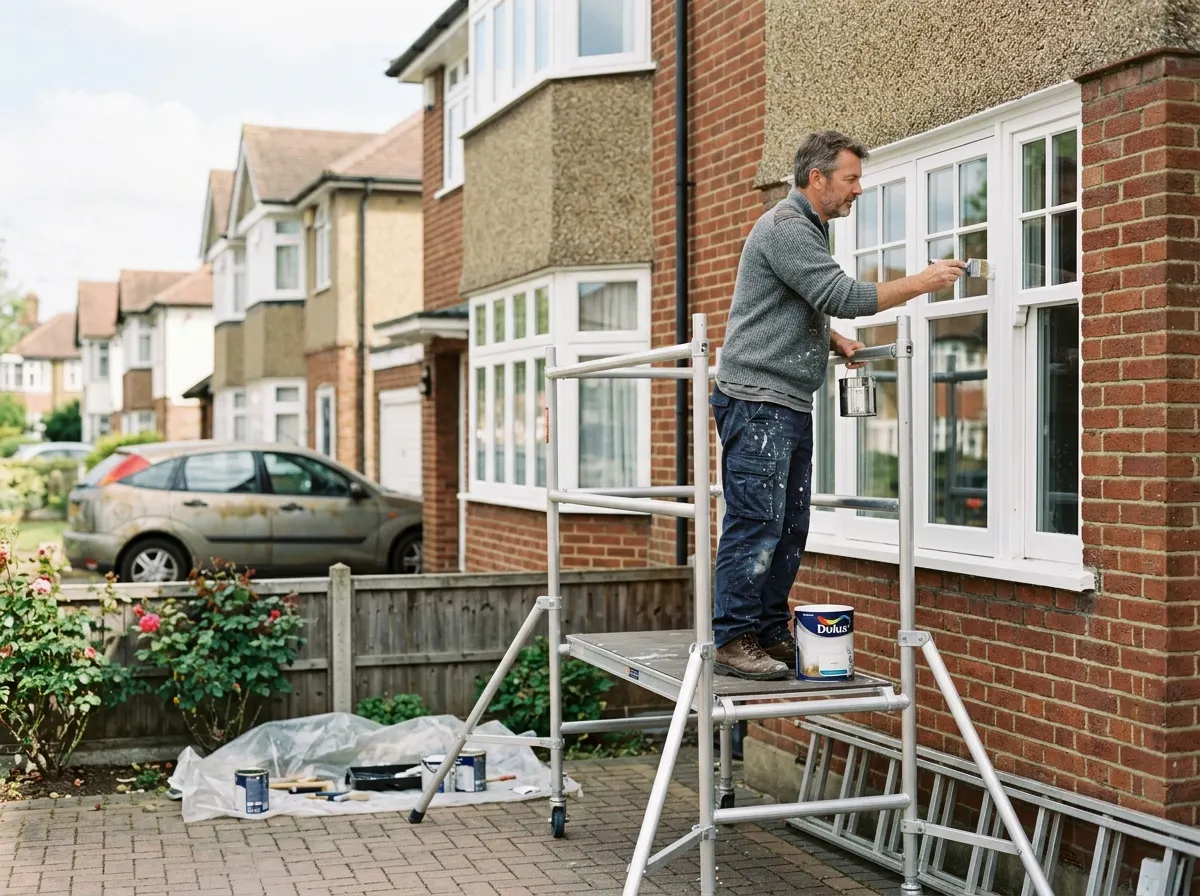
- ✓ Aluminium Mobile Towers: For jobs like painting rendering, clearing gutters, or trimming tall hedges, you can hire lightweight aluminium access towers (like Boss towers) from local tool hire shops (e.g., HSS or Jewson) for roughly £80 to £150 a week. They slot together safely and have locking caster wheels.
Strictly Pro Only
Heavy Roofing Work: Mobile towers are not suitable for heavy materials. If you are stacking hundreds of concrete roof tiles, the weight will cause a mobile tower to buckle. You must hire heavy-duty fixed scaffolding.
Uneven Ground: Never use a mobile tower on sloping lawns or muddy ground. They must only be used on flat, solid concrete/paving.
Frequently Asked Questions
How long can I hire scaffolding for on a standard home project?
Most initial scaffolding quotes automatically include a standard hire period of 6 to 8 weeks. This is usually plenty of time for a full roof replacement, chimney rebuild, or exterior rendering job. If your builders experience project delays, the scaffolding firm will charge an ongoing weekly rental fee, typically ranging from £50 to £100 for every additional week.
Do I legally need a council licence or permit for scaffolding?
If the scaffolding structure is erected entirely within the private boundaries of your own garden or driveway, no council licence is required. However, if the scaffolding poles or ladder towers rest on a public pavement, road, or highway, you legally require a street works licence/permit from your local council, which usually costs between £50 and £200 depending on your local authority.
Who is legally responsible if someone gets hurt on the scaffolding?
The scaffolding contractor is legally responsible for ensuring the structure is structurally sound, tied in properly, and erected to strict NASC (SG4:15) safety standards. However, as the homeowner, you retain a duty of care to hire competent, insured professionals. If you hire uninsured cowboy firms and the structure collapses onto a pedestrian, you could face serious legal liabilities.
Should I arrange the scaffolding myself or let my builder handle it?
It is almost always better to let your main contractor (such as your roofer or renderer) organise and sub-contract the scaffolding. They maintain trusted relationships with local scaffolders and know the precise lift heights, platform configurations, and weight load capacities required for the job. If you try to arrange it yourself and get the specifications wrong, your tradespeople may refuse to work.
How quickly can scaffolding be erected and dismantled?
For a standard 3-bedroom semi-detached house, an experienced team of three scaffolders can typically erect the entire perimeter structure in a single working day. Dismantling is faster, usually taking half a day. However, booking the scaffolding firm to return for dismantling once work finishes can sometimes take 1 to 2 weeks depending on their busy schedules.
Will putting up scaffolding cause damage to my property or driveway?
Properly installed scaffolding shouldn't cause structural damage, but the steel poles and wooden sole-boards are exceptionally heavy. Scaffolders may need to temporarily move satellite dishes or downpipes, and grass directly underneath metal base-plates will likely die off. Minor scuffs to brick mortar edges or impressions in asphalt driveways are common during the physical erection process.
How much does scaffolding cost to hire for a domestic roof job?
In 2026, hiring and erecting scaffolding for a standard 3-bedroom semi-detached house typically costs between £700 and £1,500 depending on the height, roof accessibility, and whether chimney stacks or temporary tin-hat roof covers are needed. Tower scaffolds for smaller localised repairs generally range from £300 to £500.
Can scaffolding be left freestanding against the house wall?
No. Under health and safety regulations, any scaffolding exceeding a certain height or exposed to high winds must be securely "tied in" to the building structure using anchor bolts drilled into the mortar joints. Once the scaffolding is eventually dismantled, the professional scaffolders are responsible for neatly filling and sealing those tie holes back up with matching mortar.
Need safe access to your roof?
Use our AI to get a precise estimate based on your property size and access requirements, then connect with fully insured, CISRS-certified scaffolding firms near you.
Did you find this page helpful?
Let us know if this guide helped you plan your project.