How much does floor screeding cost?
 By Tom Ellis
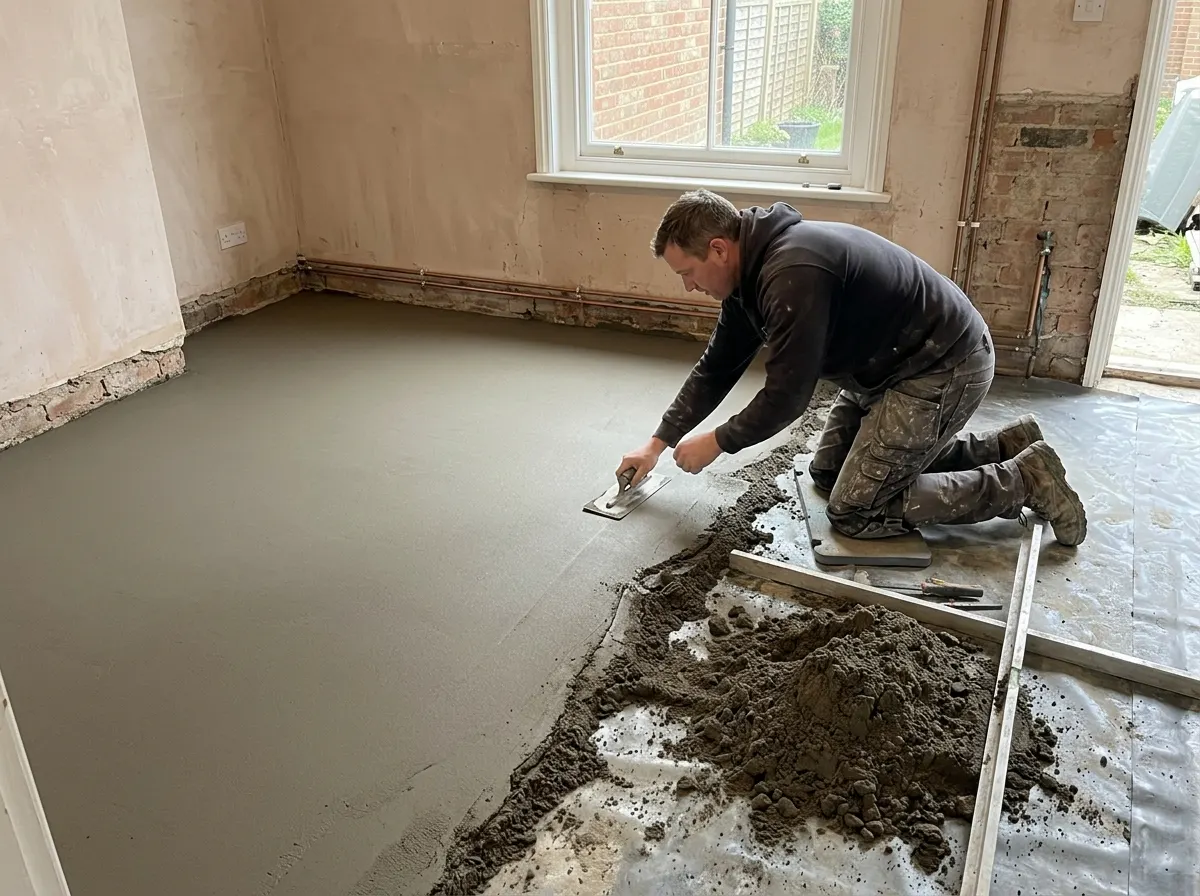
A perfect floor finish begins long before you lay your tiles, laminate, or carpet. Concrete sub-bases are structural and inherently uneven. Screed is the vital, smooth layer applied over the top to give you a perfectly level, flawless surface.
Whether you are laying a traditional sand and cement mix in a small bathroom, or pumping thousands of litres of liquid screed over a newly installed underfloor heating system, getting the preparation and mixture right is critical. This comprehensive 2026 guide breaks down the costs per square metre, floor prep, and curing times.
Prices move month to month. See how they are changing in the Penguin Index, or compare common jobs across the UK in our UK Home Improvement Cost Report.
£15 - £25 / m²
Supplied and fitted cost for standard sand and cement screed, trowelled flat by hand.
£18 - £30 / m²
Supplied and pumped cost. Highly self-levelling and the absolute best choice for covering underfloor heating pipes.
£25 - £40+ / m²
Specialist accelerated screeds designed to cure in days rather than months to keep commercial/fast-paced projects moving.
Jump to a Section
Get an instant estimate for your floor
Types of Floor Screed
Screed isn't a one-size-fits-all product. The type you choose dictates how fast you can walk on it, how level it naturally sits, and how effectively it transfers heat.
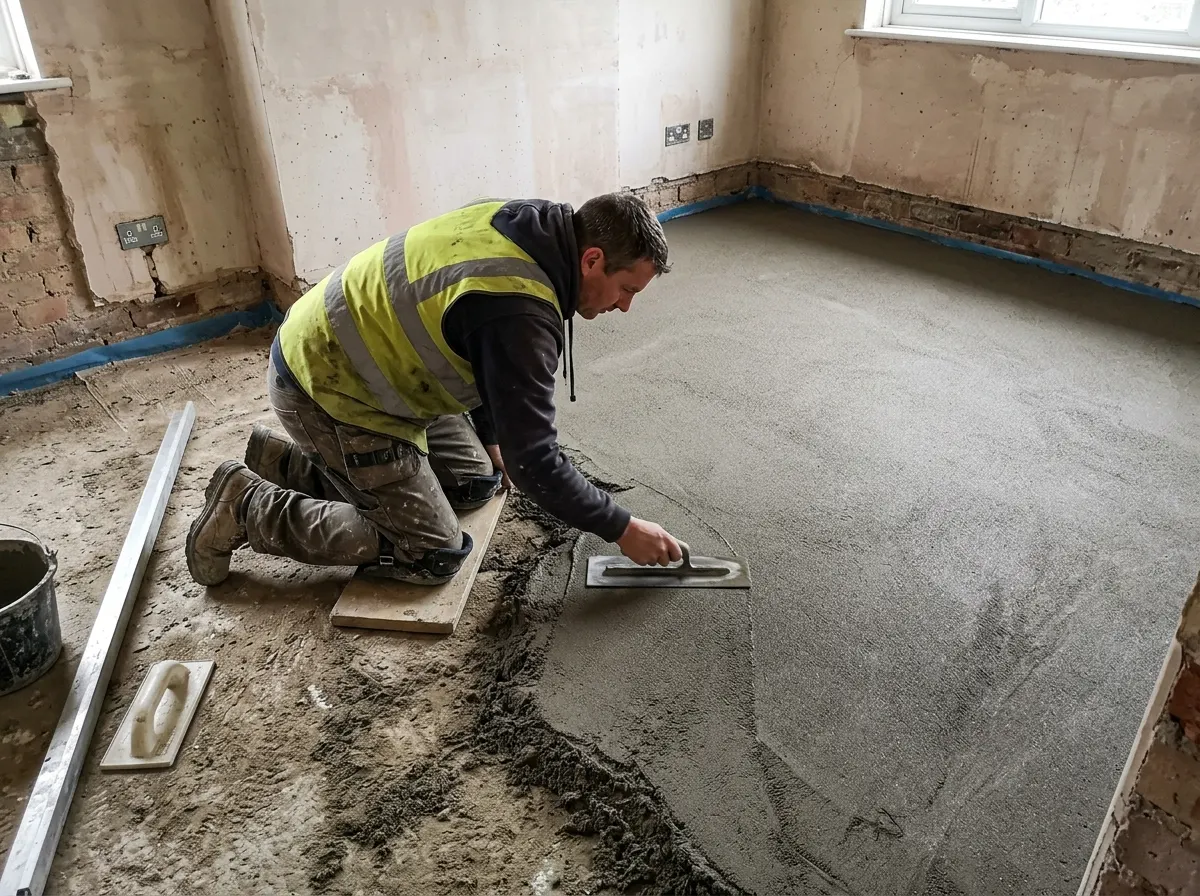
Traditional Sand & Cement
The classic 'semi-dry' method. A 1:3 to 1:5 ratio mix of sharp sand and cement is mixed on site, dumped in piles, and manually levelled by a tradesperson using a straight edge and trowel. It is cheap, versatile, and ideal for sloping wet-rooms, but highly labour-intensive.
Budget Friendly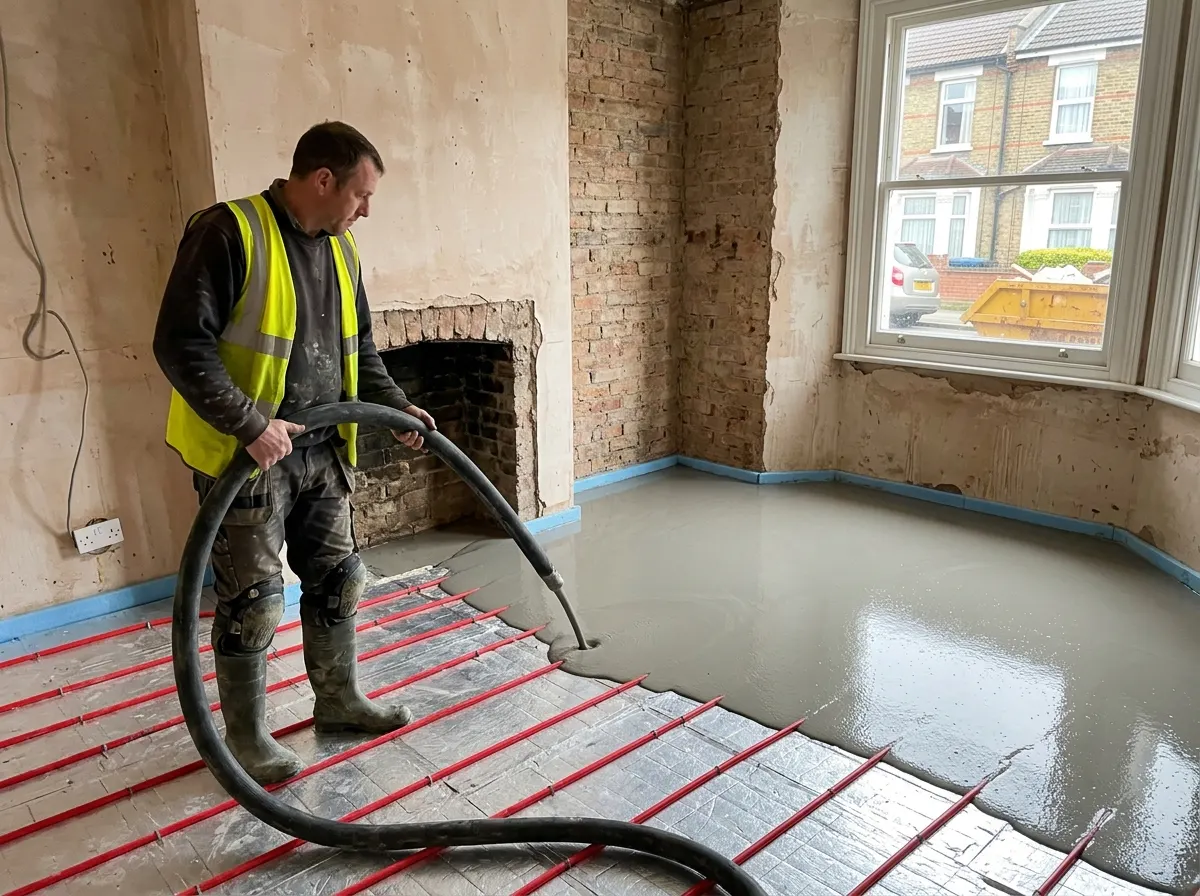
Liquid / Flowing Screed
Often made from Anhydrite (calcium sulphate) or cement-based binders. It arrives premixed in a mixer truck and is pumped into the building through a hose. It flows like water, perfectly self-levelling across huge areas in minutes. It completely encapsulates underfloor heating pipes without leaving air pockets.
Best for Underfloor Heating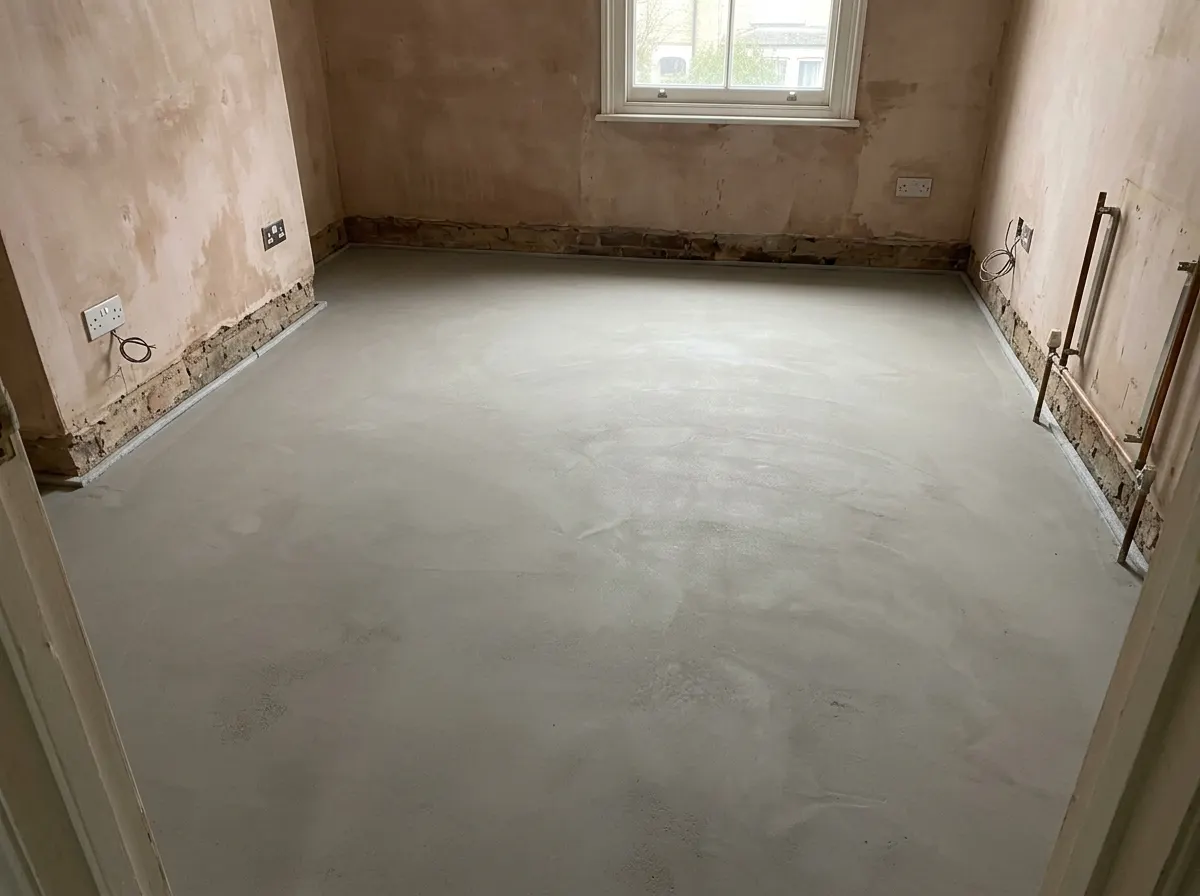
Fast-Drying / Accelerated
Standard screeds dry at a rate of 1mm per day, meaning a 50mm floor can take two months before you can lay luxury vinyl tiles (LVT) or wood over it. Fast-drying screeds contain special chemical additives that allow the floor to accept coverings in just a few days. They are significantly more expensive.
Time Saver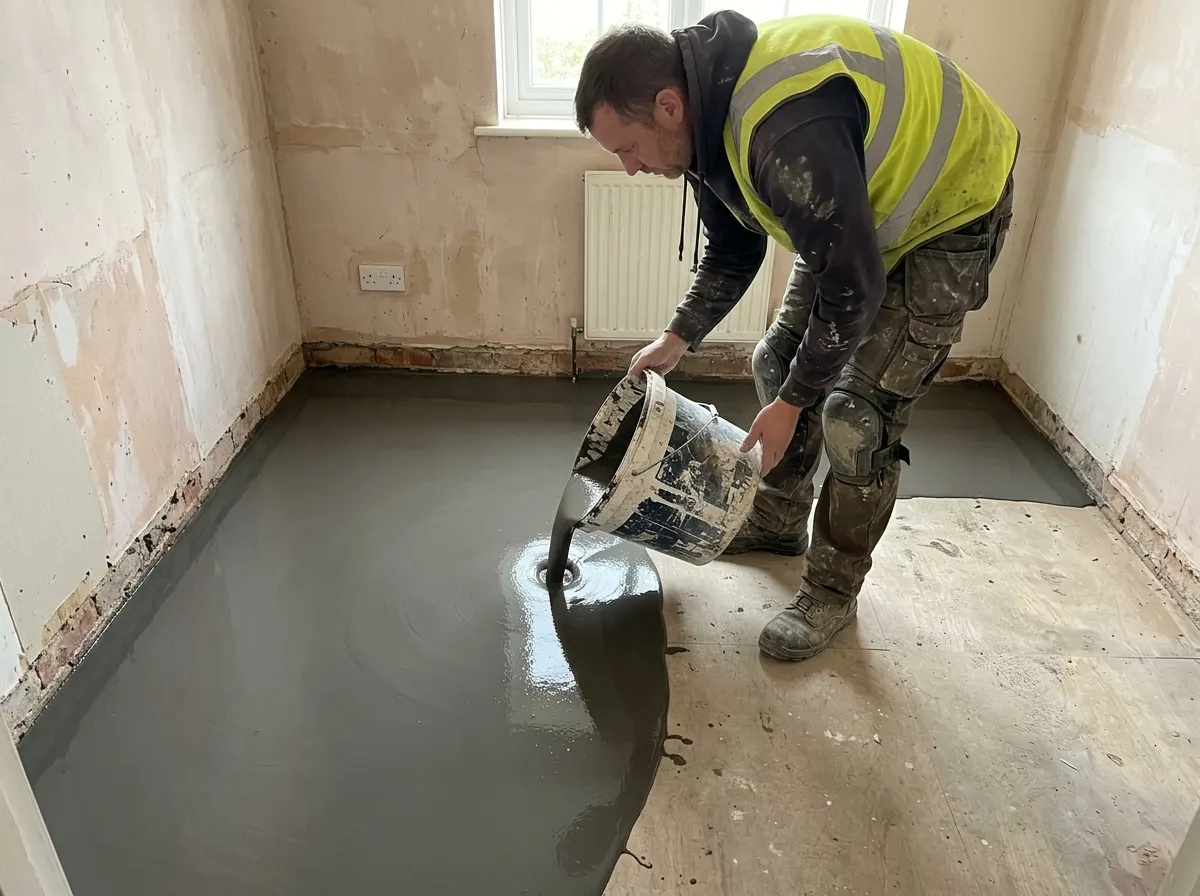
Latex / Self-Levelling Compound
Not a structural screed for building up deep floors. This is a very thin, highly fluid layer (typically 2mm to 10mm thick) poured over an existing uneven concrete floor or old screed just before fitting the final floor coverings (like LVT or laminate) to ensure absolute perfection.
Thin Finishing CoatThe Preparation Phase
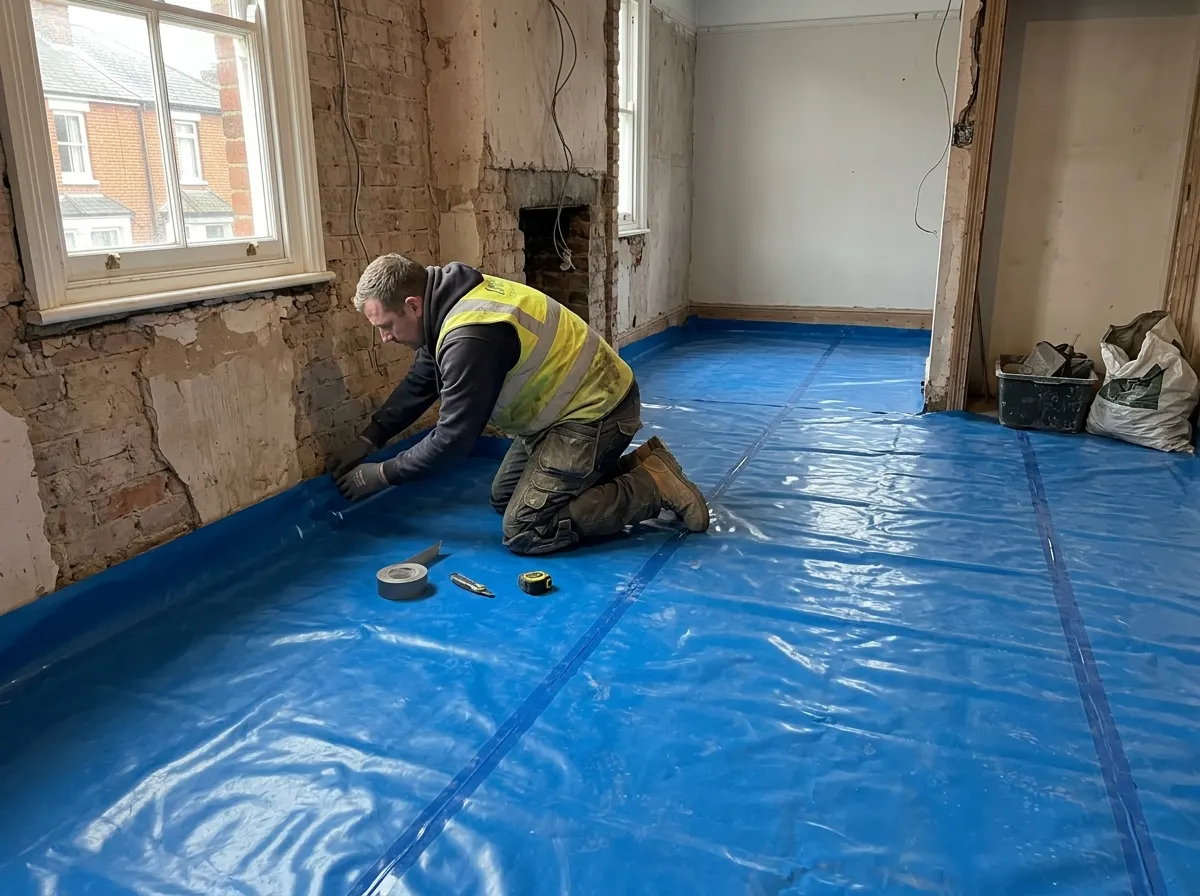
A screeder rarely just turns up and pours. The concrete sub-floor must be meticulously prepared. If you are managing your own extension or self-build, you must ensure the following layers are installed:
- 1. DPM (Damp Proof Membrane): A heavy plastic sheet laid over the concrete to stop rising damp penetrating the screed.
- 2. PIR Insulation: Thick foil-backed rigid insulation boards (like Celotex) laid tightly together to stop heat escaping into the ground.
- 3. Edge Expansion Strips: A foam strip pinned around the perimeter walls. Screed expands as it heats up; without this foam cushion, the expanding floor will crack or push your walls out.
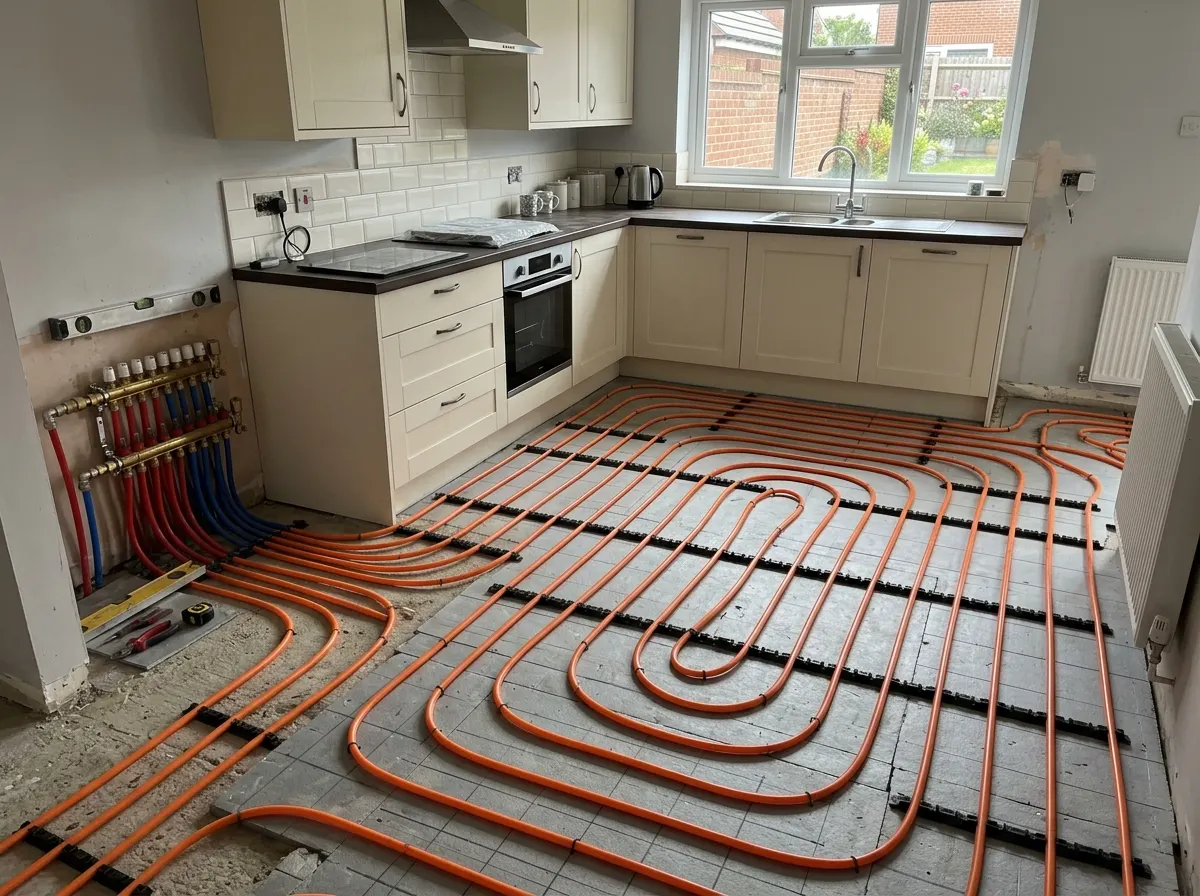
- 4. Underfloor Heating (UFH): Water pipes clipped to the insulation, rigorously pressure-tested for leaks before the screed is poured.
If the screeding company is providing and laying the DPM and PIR insulation, expect it to add £15 to £30 per square metre to your overall quotation.
Material & Labour Costs (per m²)
The figures below represent the complete average costs. 'Supplied & Fitted' includes the screed material, delivery, mixing/pumping, and the highly skilled tradesperson labour to level it.
Supplied & Fitted Estimates
Average total costs per m² assuming standard depths (approx 50mm-75mm for sand/cement, or 40mm-50mm for liquid). Minimum order charges will apply for small rooms.
- Traditional Sand & Cement (Hand laid) £15 – £25 / m²
- Liquid / Flowing Screed (Pumped) £18 – £30 / m²
- Fast-Drying Screed £25 – £40+ / m²
- Self-Levelling Compound (3mm-5mm thick) £10 – £20 / m²
- Floor Prep (Insulation + DPM installed) + £15 – £30 / m²
Labour & Additional Costs
If you are sourcing materials yourself, or have a very small area that requires a pump, factor in these costs:
- Screeder Day Rate (Labour Only) £200 – £280
- Liquid Screed Pump Hire (If charged separately) £250 – £350 / day
- Screed Sand (Bulk Bag) £50 – £70
- Laitance Sanding (Post-liquid screed prep) £3 – £6 / m²
Screeding Disasters & Red Flags
A failed floor screed is catastrophic. You cannot simply pull it up like a bad carpet—it requires jackhammers. Watch out for these crucial mistakes:
Forced Drying (Cracking)
Screed needs to cure slowly to reach full strength. If you panic and turn the underfloor heating on full blast, or put commercial dehumidifiers in the room immediately, the moisture will evaporate too fast. The screed will severely crack and curl at the edges.
Ignoring 'Laitance'
As liquid anhydrite screed dries, a weak, dusty film forms on the surface known as 'laitance'. This must be mechanically sanded off 7 to 10 days after pouring. If you lay tile adhesive directly onto laitance, all your tiles will inevitably pop loose.
Un-Tested UFH Pipes
Before a drop of screed is poured, the underfloor heating pipes must be filled with water and pressure-tested. If a plumber accidentally pierced a pipe, you need to know before it is entombed in 50mm of solid concrete.
Regional Labour Differences
While the raw cost of sand and cement from a local merchant is fairly consistent nationwide, a screeder's day rate fluctuates based on your location.
Tradespeople in London and the South East typically charge 15% to 25% more than the national average. A 50m² traditional screeding job that costs £1,000 in Wales or the North will likely quote at £1,200 to £1,300 in the capital due to increased living and travel costs.
- London & South East + 15% to 25%
- Midlands & South West National Average
- North, Wales & Scotland - 10% to 15%
Top Cost-Saving Tips
Keep your quotation as low as possible with these strategies:
- ✓ Do the prep yourself: Laying DPM plastic and taping down PIR insulation boards is not highly skilled work. If you prepare the floor flawlessly (including the edge strips), you will save hundreds on labour.
- ✓ Group small rooms: Liquid screed is highly uneconomical for small rooms due to the fixed pump call-out fee. If you are renovating, wait until the whole ground floor is ready and pour it all in one single morning.
How Long Does Floor Screeding Take?
While laying the screed for a standard ground floor (approx 40-50m²) usually takes just 1 day, the preparation and critical drying times dictate the true project schedule. Below is a detailed breakdown of the process.
Schedule of Works (Standard Liquid Screed)
Sub-Floor Prep & Insulation
The concrete sub-base is swept clean. A Damp Proof Membrane (DPM) is laid, followed by rigid PIR insulation boards. Perimeter expansion foam is fitted around the edges of the room to allow the screed to expand without cracking.
Pouring & Dappling
The liquid screed is pumped directly from a lorry into the property, rapidly filling the floor space. The installers use a dappling bar in a cross-hatching motion to agitate the liquid, removing trapped air bubbles and ensuring a perfectly level finish.
Initial Cure (No Foot Traffic)
The site is locked down. Windows and doors must be kept firmly closed to prevent drafts from drying the surface too quickly, which causes curling and cracking. The floor usually becomes solid enough to handle light foot traffic after 48 hours.
Drying & Sanding
Screed dries at a rate of roughly 1mm per day up to 40mm. Around 7-10 days in, liquid screed will form a crust (laitance) on top. This must be sanded off by a machine before any tiles or wood flooring can be glued down.
Laying Time by Screed Type
What could cause delays?
If wet UFH pipes are being installed, they must be securely clipped down to the insulation and fully pressure-tested for leaks before any screed can be poured, adding 1-2 days to the prep phase.
The 1mm-per-day drying rule only applies under ideal conditions. During cold, wet British winters, drying times can easily double, delaying the final flooring trades for weeks.
Failing to machine-sand the laitance (crust) off liquid screed means tile adhesive won't stick to the actual floor. This oversight will cause entire tiled floors to pop up and fail later on.
DIY Floor Screeding & Levelling
Traditional sand and cement screeding (laying a thick 50mm+ base across a whole house) is incredibly physically demanding and requires immense skill to get perfectly flat. We highly recommend leaving full-depth structural screeding to professional floor layers.
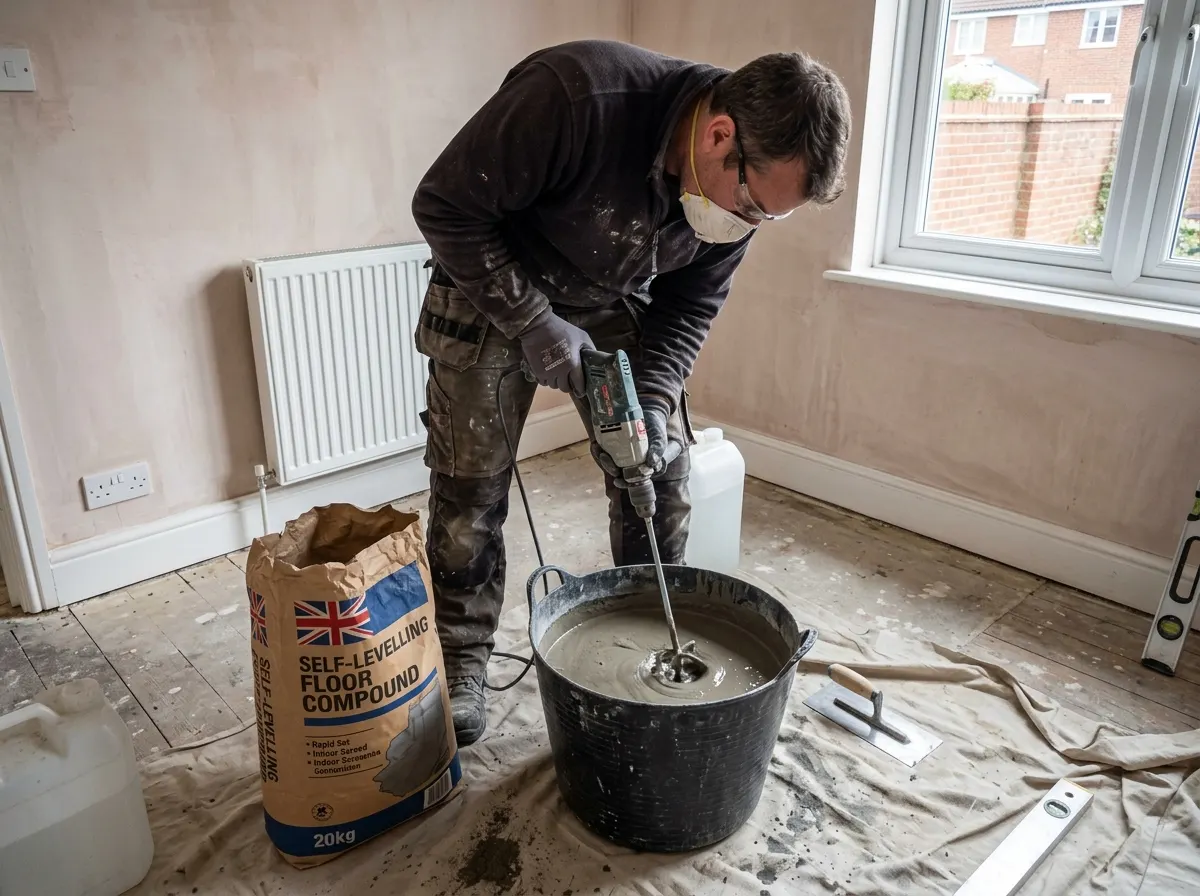
However, if you are simply trying to smooth out an uneven concrete floor before laying luxury vinyl tiles (LVT) or laminate, you can easily use self-levelling compound (latex screed). You mix the powder with water in a bucket, pour it onto the floor, and gently push it into the corners with a trowel. Gravity does 90% of the work, settling the liquid into a perfectly flat, glass-like finish at 2mm to 10mm thick.
| Task (Average 15m² Room) | Professional Cost | DIY Cost (Materials Only) | Potential Saving |
|---|---|---|---|
| Self-Levelling Compound (3mm depth) | Professional Cost £250 – £400 | DIY Cost £60 – £90 (4-6 bags) | Potential Saving Up to £310 |
| Latex Screed over Electric UFH Mats | Professional Cost £300 – £450 | DIY Cost £80 – £120 (Flexible compound) | Potential Saving Up to £330 |
| Traditional Sand/Cement Screed (50mm+) | Professional Cost £450 – £700 | DIY Cost Not Recommended | Potential Saving N/A |
Frequently Asked Questions
The most important things you need to know before booking a professional floor screeder.
How much does floor screeding cost per square metre in the UK?
In 2026, traditional sand and cement screed typically costs £15 to £25 per square metre supplied and fitted. Modern liquid (flowing) screed costs slightly more upfront at £18 to £30 per square metre, but can be pumped and levelled significantly faster across large surface areas, reducing overall labour days.
What is the difference between floor screed and concrete?
Concrete is the structural, load-bearing base of a floor; it contains large, coarse aggregate (stones) which leaves a rough finish. Screed is a much smoother, thinner mixture of fine sharp sand and cement (or anhydrite) applied directly on top of the concrete slab to create a perfectly flat, level surface ready for final flooring like tiles or LVT.
Which type of screed is best for wet underfloor heating (UFH)?
Liquid (flowing) anhydrite screed is widely considered the absolute best choice for wet underfloor heating. Because it flows like a liquid, it self-compacts perfectly around the UFH pipes, leaving no insulating air gaps. This provides vastly superior thermal conductivity, efficiency, and reaction times compared to hand-trowelled sand and cement.
How long does floor screed take to dry completely?
Traditional sand and cement screed dries at a general industry rate of 1mm per day up to 40mm thickness, and 0.5mm per day thereafter. Therefore, a standard 50mm screed can take 60 days to fully cure before it is dry enough to safely lay impermeable flooring like luxury vinyl tiles (LVT). You can, however, usually walk on it after 48 hours.
What is self-levelling compound and when is it used?
Self-levelling compound (latex) is not a structural screed designed for building up deep 50mm floors. It is a very thin, highly fluid mix (typically poured between 2mm to 10mm thick) used strictly to smooth out minor imperfections in an existing concrete subfloor or old screed just before fitting the final delicate floor coverings.
What is the minimum thickness for laying floor screed?
Traditional sand and cement screed should generally be laid at a minimum thickness of 50mm to 65mm for domestic applications. Liquid screed can be laid much thinner, often at a minimum of 40mm overall, or ensuring at least 25mm to 30mm of coverage directly above the underfloor heating pipes to prevent cracking.
Do I need to put insulation under floor screed?
Yes, for ground floors. Under modern UK Building Regulations, any new solid ground floor structure must include rigid PIR insulation boards (like Celotex or Kingspan) laid on top of the damp proof membrane (DPM) and concrete slab, directly beneath the screed layer, to prevent heat loss into the ground.
Can I tile directly onto fresh liquid screed?
Not immediately. Anhydrite liquid screeds form a weak surface layer known as 'laitance' as they dry. This laitance must be mechanically sanded away 7 to 10 days after pouring. If you tile directly onto the unsanded laitance, the tile adhesive will bond to the dust rather than the screed, and your tiles will rapidly pop loose.
Disclaimer: The figures in this guide are carefully calculated averages derived from UK construction industry cost data for 2026. Material prices and labour rates will fluctuate based on local availability, access, floor depth, and exact project specifications.
Related Flooring & Renovation Guides
Underfloor Heating Costs
Prices for installing wet and electric UFH systems.
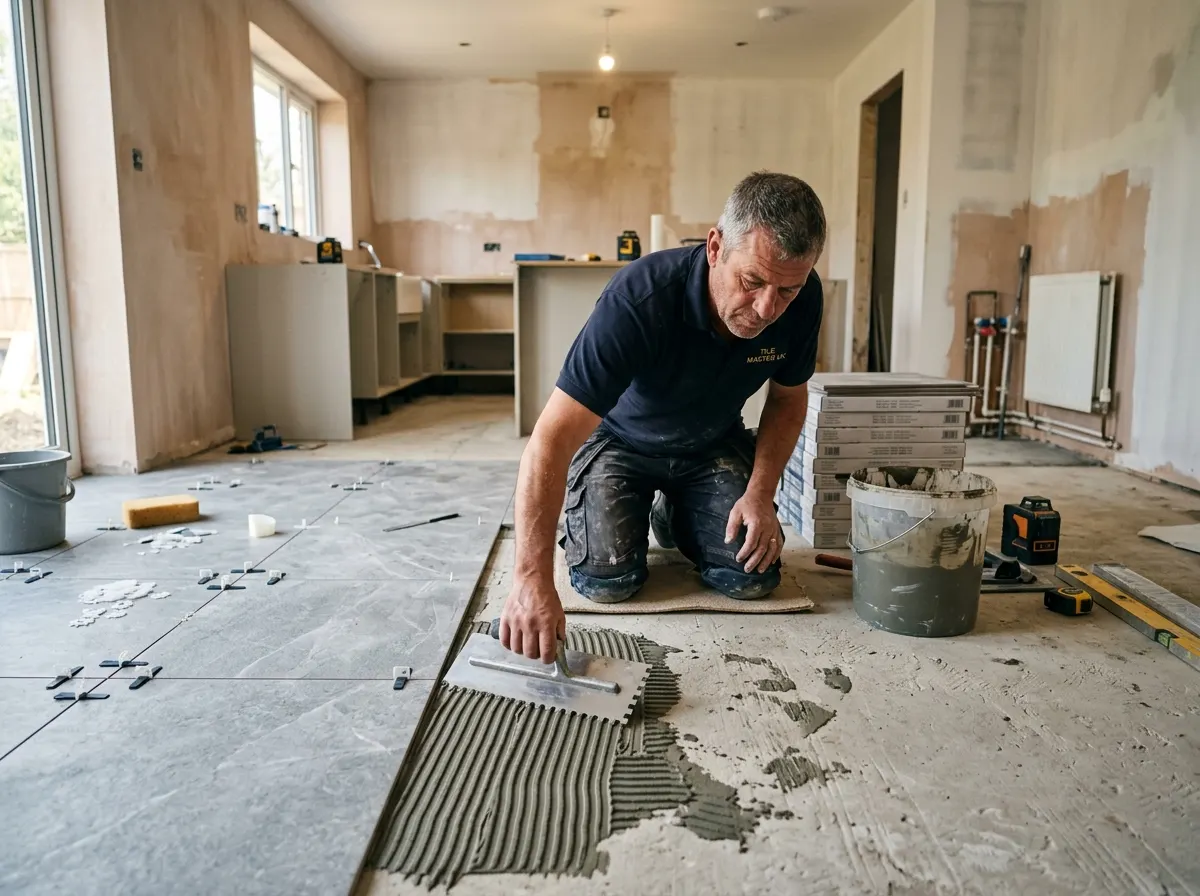
Floor Tiling Costs
Cost per m² for laying ceramic and porcelain floor tiles.
House Extensions
Cost per m² for single and double storey brick extensions.
House Renovation Costs
Cost per m² for full home cosmetic refurbishments.
Ready to level your floors?
Use our AI to get a precise estimate for your exact room size, then connect with Pricing Penguin Accredited screeders near you.
Did you find this page helpful?
Let us know if this guide helped you plan your screeding project.